It’s time to revisit the stack of ancient magazines. Personally, I just love to dig into it. Unfortunately, buying every magazine is a lottery. You never know for sure what exactly will be inside. A magazine can produce a good article with many technical details and photos from all sides, as in the case of the 1976 Dodge Outrageous van, or it can limit itself to a couple of photos and three paragraphs about nothing that happened to the Sweet 16 hot rod. To be honest, the latter happens more often. But it is what it is. Sometimes no other information can be found in principle, and there is absolutely no point in keeping a car behind the scenes in the hope that forty years later something new will suddenly be discovered.
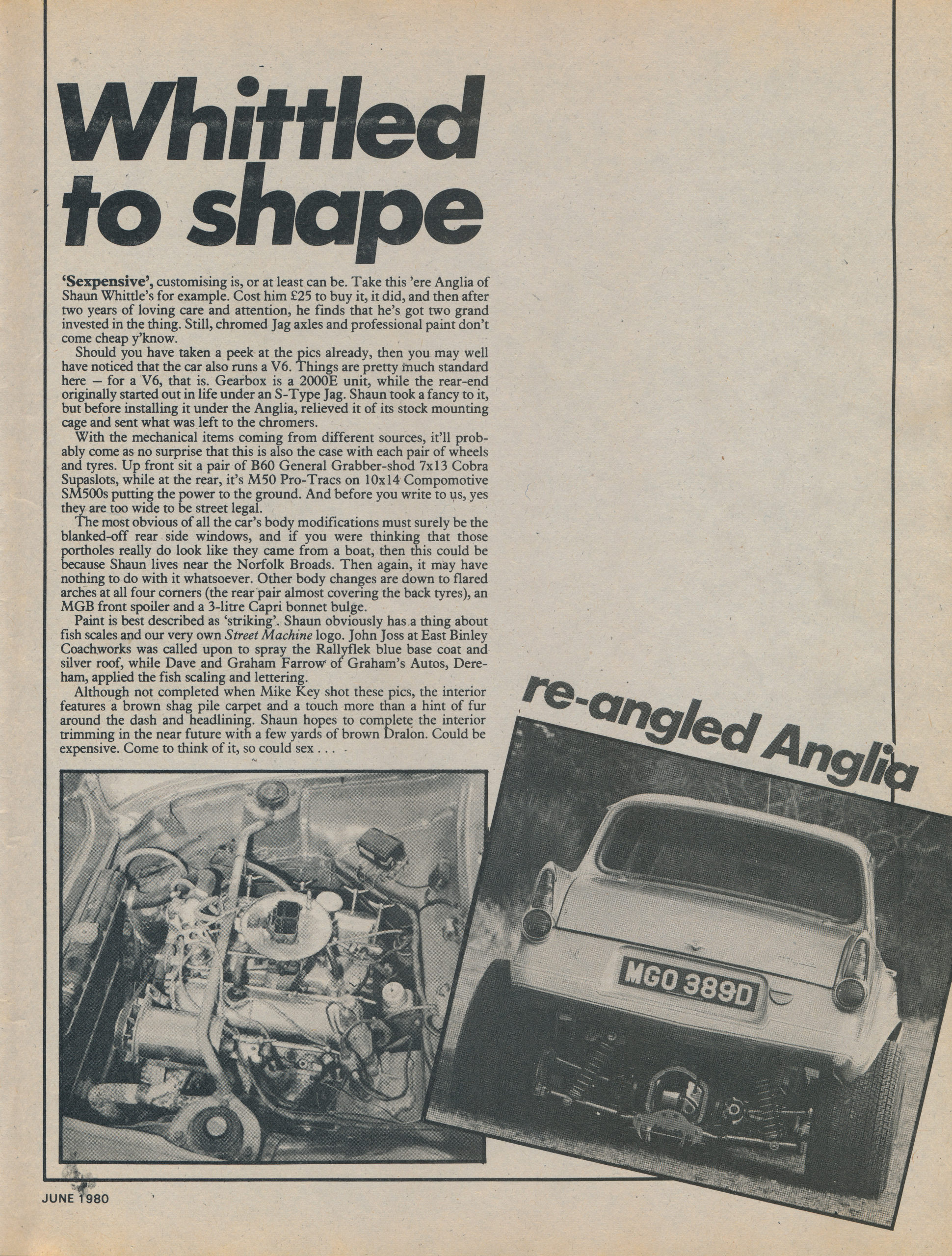
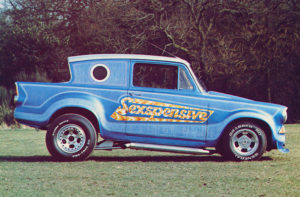
So, the car that received the provocative name Sexspensive is the Ford Anglia, perhaps the most popular model of the 105E, produced from 1959 to 1968. At the factory, it was equipped with an inline four-cylinder engine with a volume of 1 or 1.2 liters. In 1978, a certain Sean Whittle purchased this miracle of technology for just 25 great British pounds, and two years later he suddenly realized that he had already spent several thousand on a car. But what is the result!
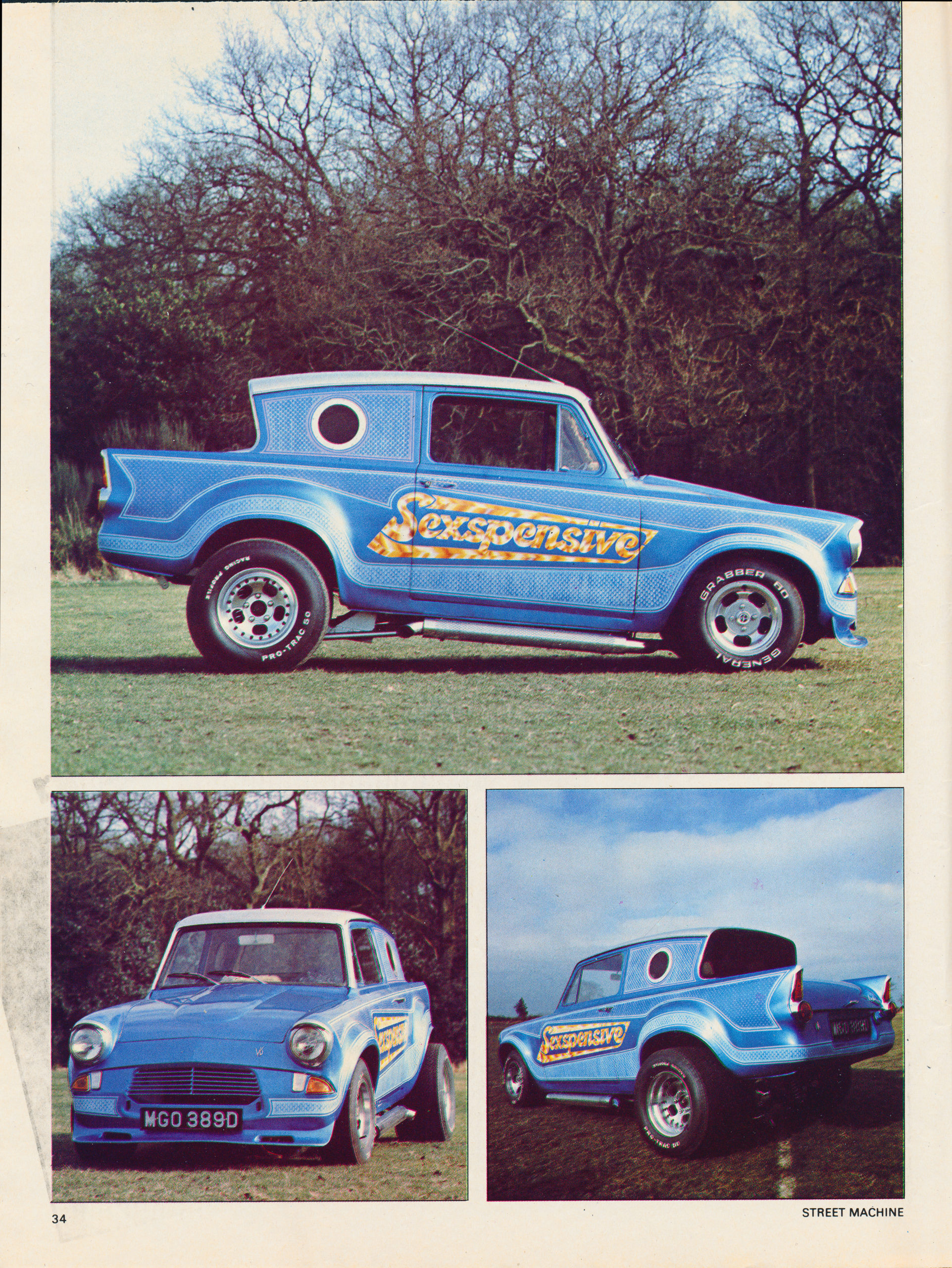
The inline four gave way to a V-shaped six. The engine model is not listed anywhere, but based on the photo, I assume it’s a Ford Essex. It is connected to a Ford 2000E manual transmission, an English classic that has proven itself to be reliable and durable. It still remains one of the most popular parts for a custom British Ford of the 60s or early 70s. Chrome axles and gearbox from Jaguar. The discs on the front are Cobra Supaslots, which are still not difficult to find. And here at the back is the Compomotive SM500, of which only a couple of catalog photos remain in our time.
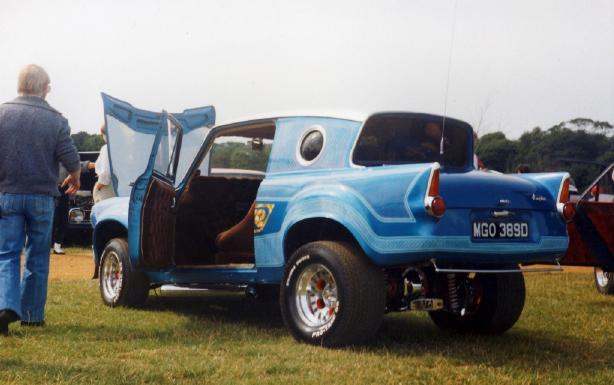 By the way, in Britain everything was quite strict, and according to the law, the rear wheels could not be installed so protruding behind the sides of the car. Nevertheless, there were more than enough cars in this style in those years.
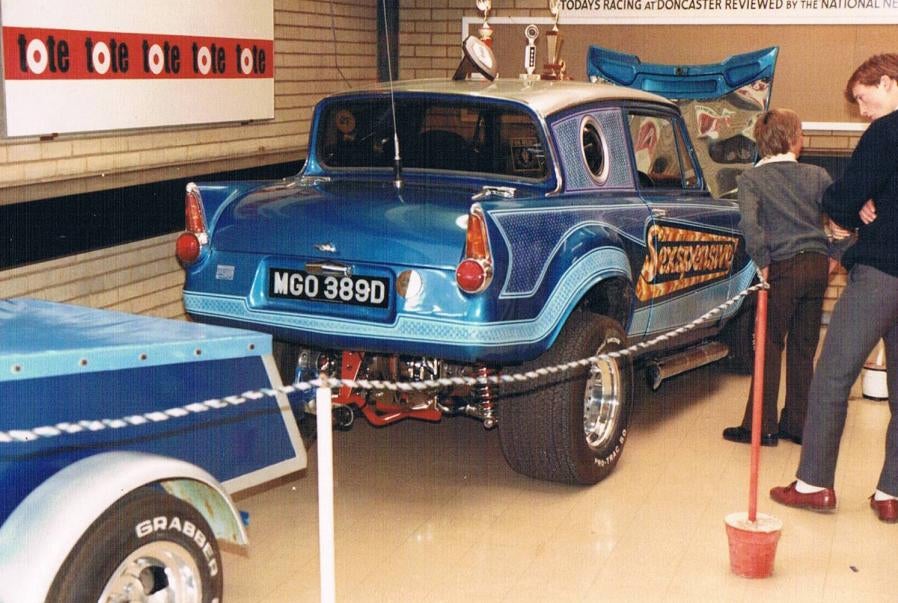
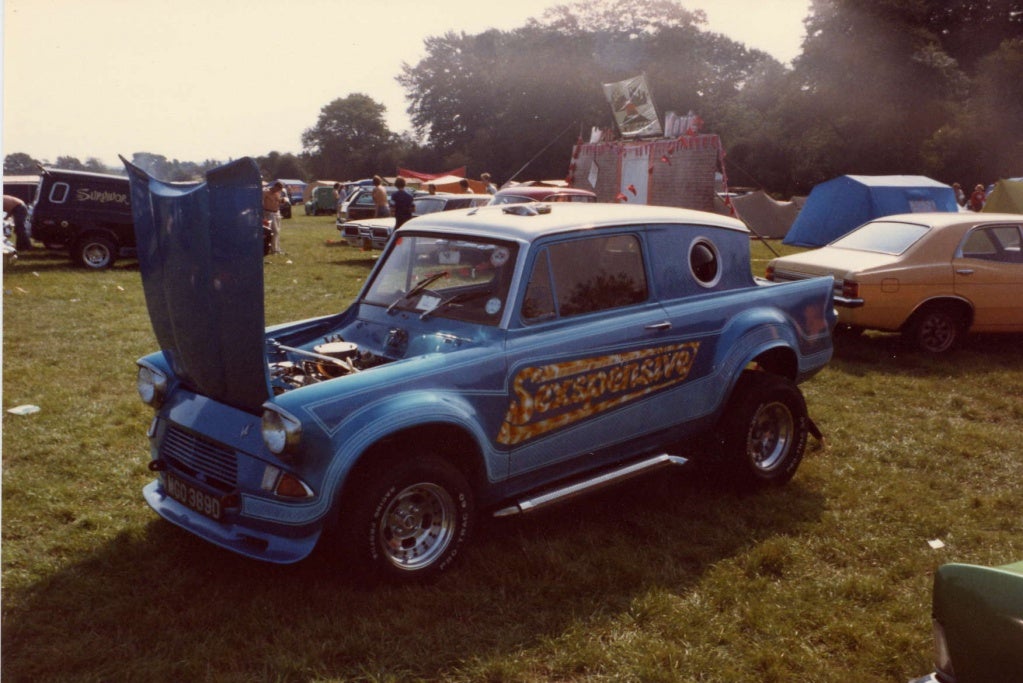
The chrome-plated parts feature a bright blue body, of all the changes, the rear windows, which have turned into a pair of portholes, are the most striking. And, of course, the painting of the car itself, to which three craftsmen had a hand at once: one John Joss applied the main blue color, after which Dave and Graham Farrow painted the car with scales and letters. The result is a real serenade to the seventies that had just passed at the time of the car’s construction. And the rear view, with the chrome suspension and the rubber sticking out from under the body, is the real standard of street freaks from the Chamber of weights and measures.
Unfortunately, no more information about Sexpensive could be found. Since this is clearly not enough for a full-fledged article, I suggest you admire the rest of the very remarkable cars from Street Machine magazine for June 1980. They really deserve your attention, but there is even less information about them than about the main character of the article. So they certainly won’t be able to allocate a separate page on the site, but they are quite suitable for the role of an extremely pleasant bonus.
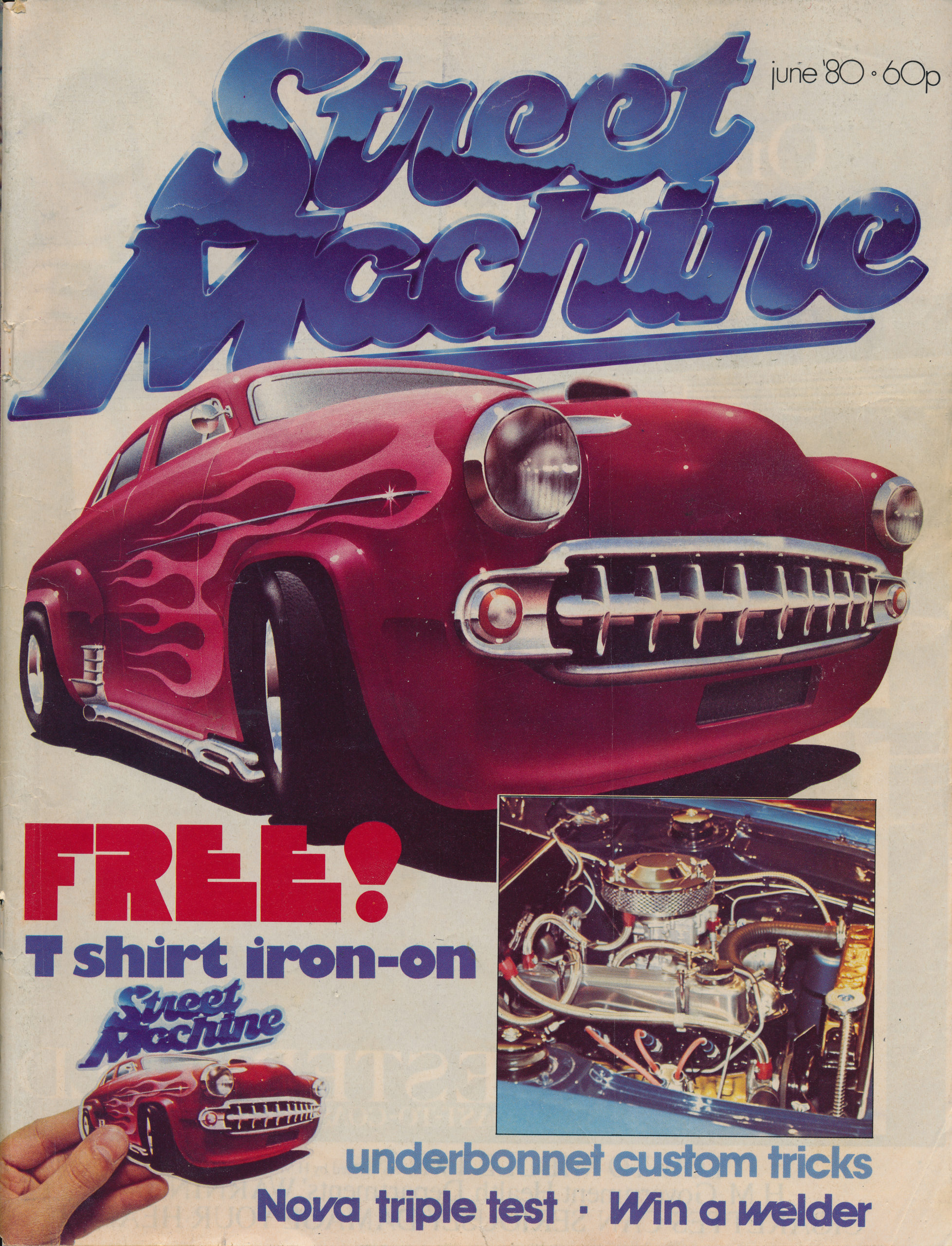
Let’s start with the cover. Yes, the car is painted on it, but I really liked this picture. A good angle, a radical perspective, and, of course, a bug trap over the hood. The last detail on real cars of this type can be seen infrequently.: as a rule, they try to make the lines of the machine as smooth as possible. To be honest, here and now the only other example of this type that comes to my mind is also virtual: the evil lead sleigh from Burnout Paradise.
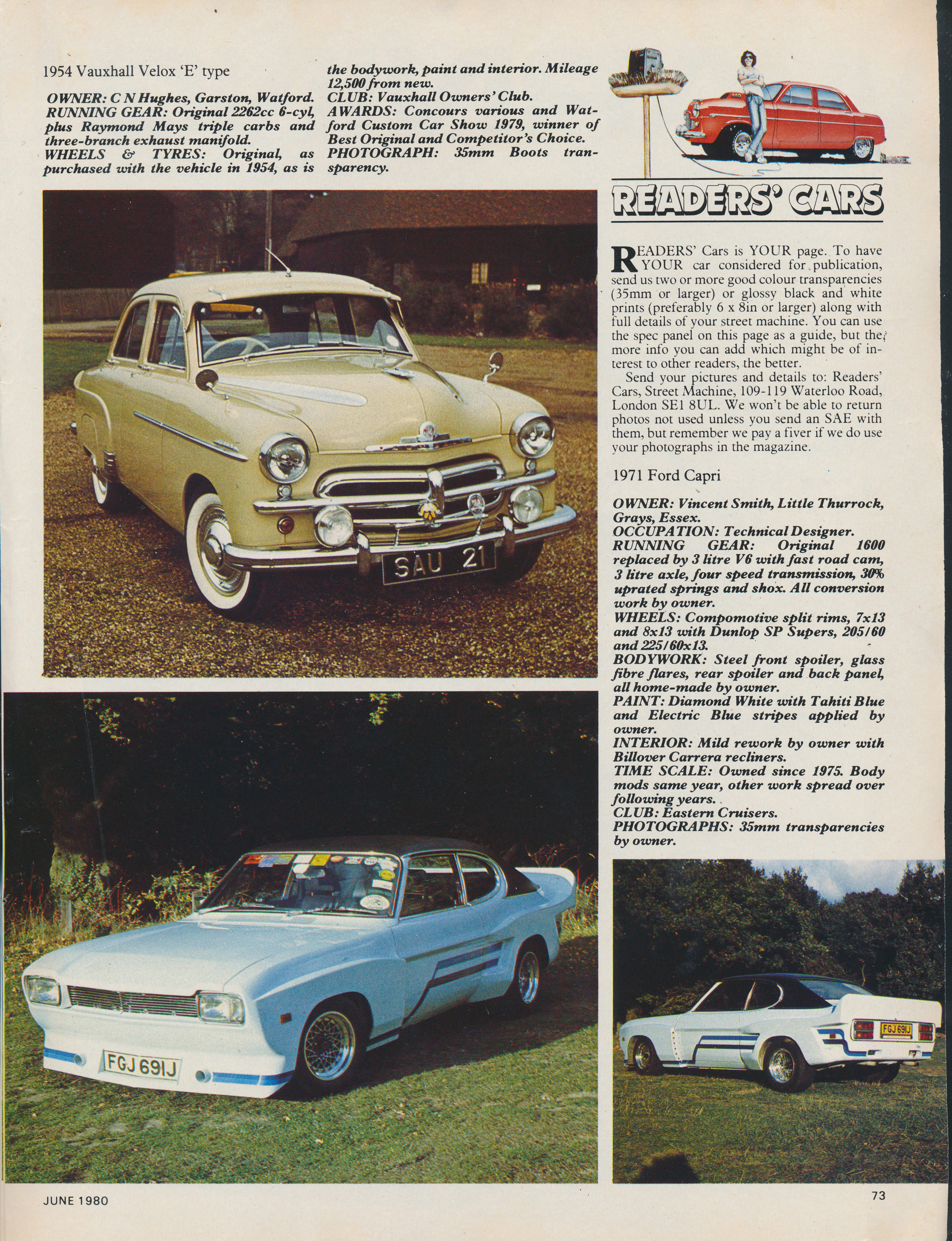
The readers’ cars category includes an extremely cute 1971 Ford Capri with another V6 engine under the hood. All the work on the body – the front bumper, the luxurious arches, the spoiler embedded in the body, the painting – was allegedly done at home, personally by the owner. It reminds me of an El Camino that was already on our website. I would also love to write about this Capri separately, but, unfortunately, no additional information could be found.
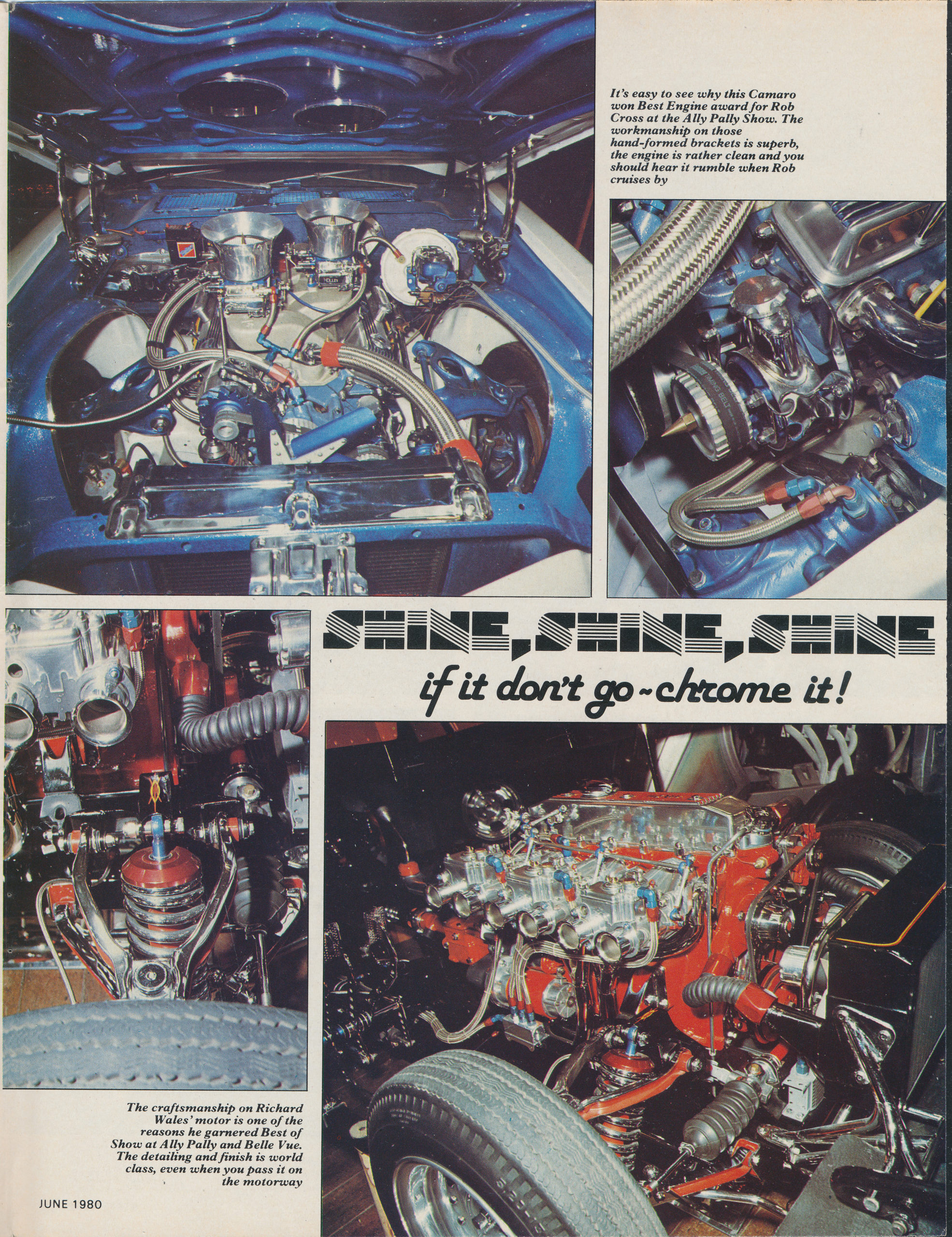
Two extremely beautifully executed motors. I especially liked the top one, mounted in a blue Camaro. Something similar could be seen on a virtual Charger modeled by a Japanese artist, a rendering of which is at the end of a massive article about the fashion of the 70s custom scene. In those years, they were very fond of removing air intakes in some unusual way. Such a serpentine installation is, in my opinion, one of the most interesting examples. And this photo is a rare opportunity to examine it in a little more detail.
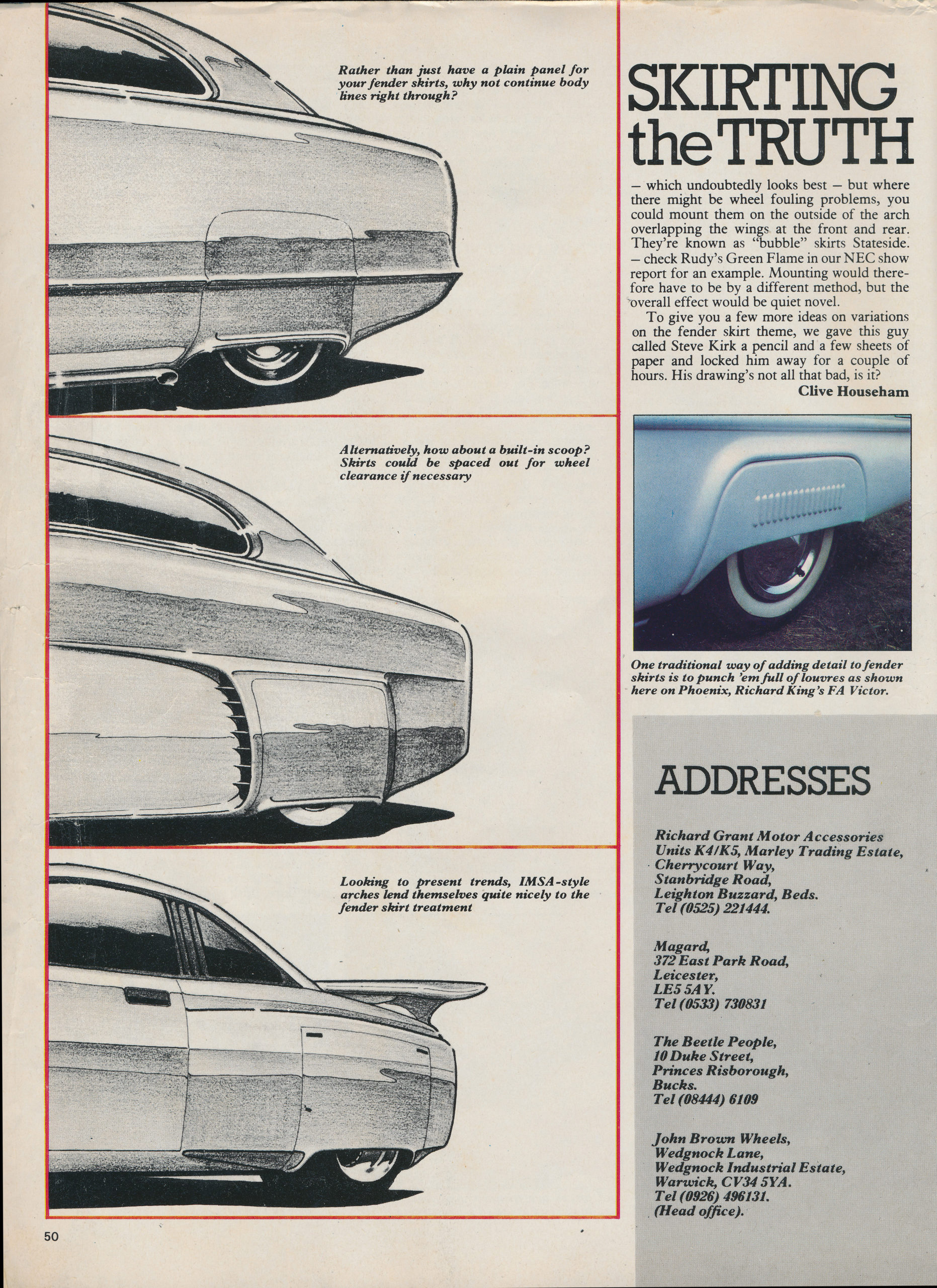
Sketches of unusual skirts. I especially like the third option, which is mounted on a relatively modern car with a spoiler. Such a combination is extremely rare: again, the laws of fashion are extremely strong, and even in a community initially focused on creative solutions, few people dare to really push the boundaries and go against all tastes except their own. As for me, I always respect unusual decisions, no matter how controversial they may be. A lead sleigh with a spoiler is an even rarer phenomenon than a lead sleigh with a bug trap, as on the cover of a magazine.
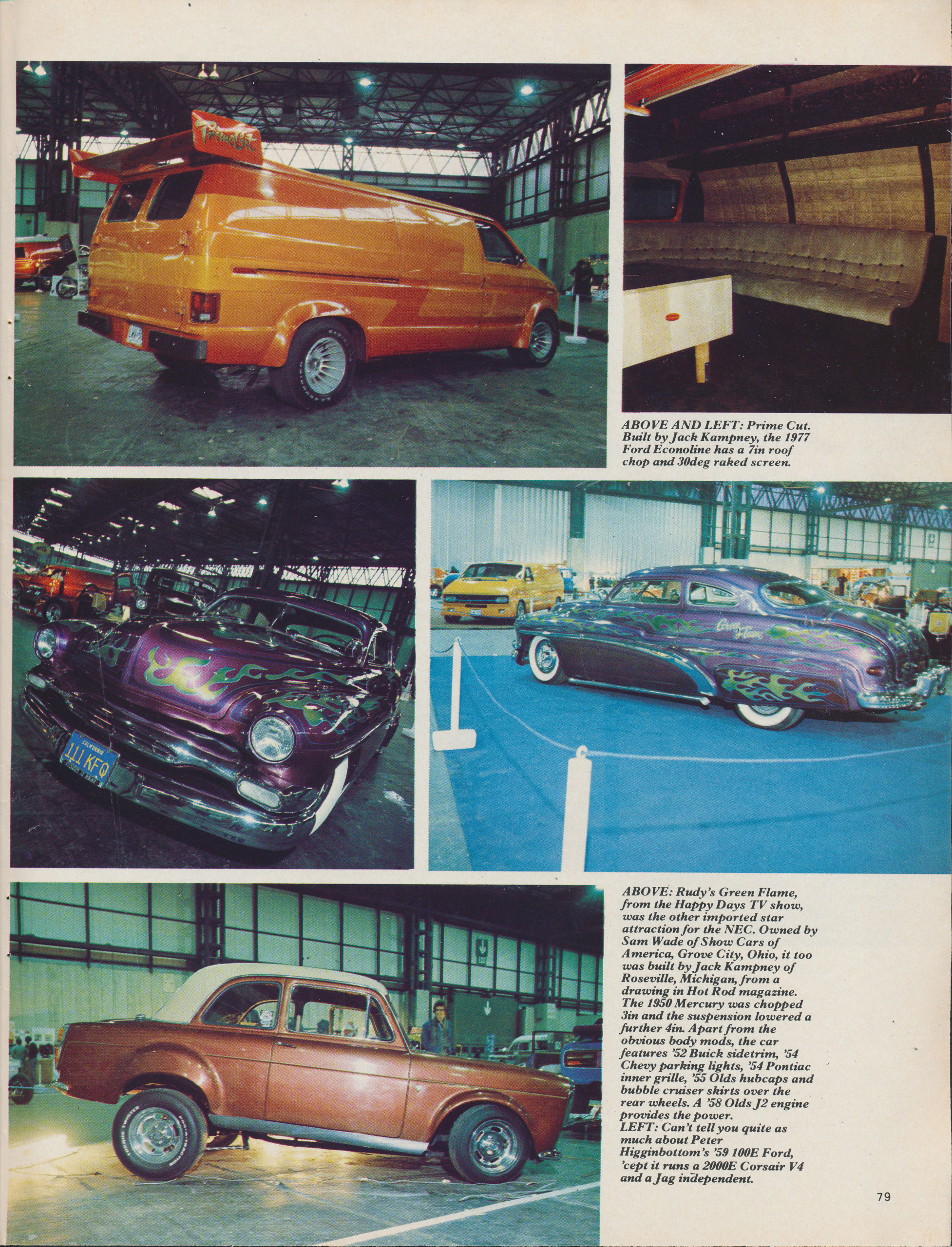
And finally, the juiciest pages of the magazine: photos from one of the car exhibitions of those years. From the top left photo clockwise: 1977 Ford Econoline named Prime Cut in a juicy red color and with a massive, eye-catching spoiler. The name of the car refers to the fact that the roof of the van was cut off by a full 17.5 centimeters. All this is complemented by the canonical tilt on the front wheel: the car looks extremely commendable and muscular. Next: the relatively modest interior of the van, and in the photo below is a front view in the background, and in the foreground is a luxury Mercury called Rudy’s Green Flame, which came to the exhibition from the USA. The bottom photo is a 1959 Ford Popular 100E, in which the standard engine was replaced by a Corsair V4, supplemented by a 2000E gearbox and Jaguar parts. Above it is another photo of Rudy’s Green Flame.
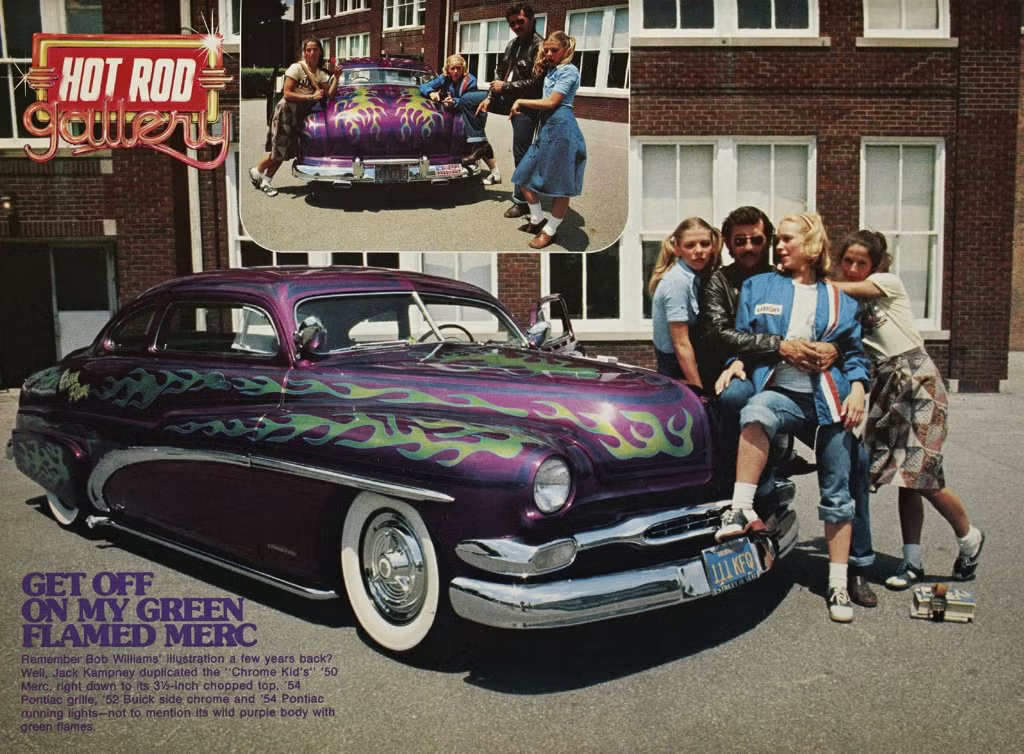
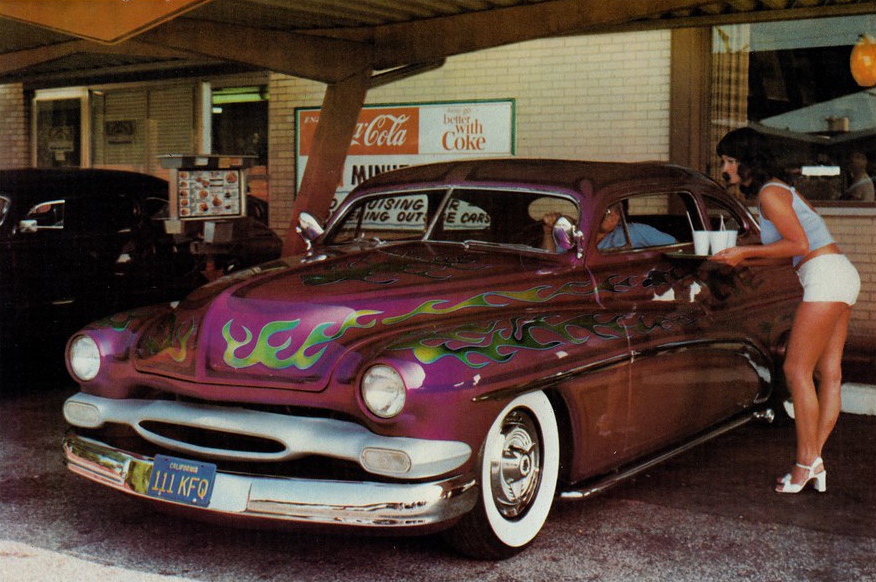
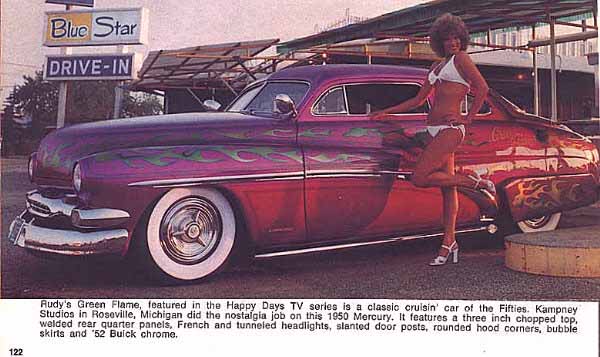
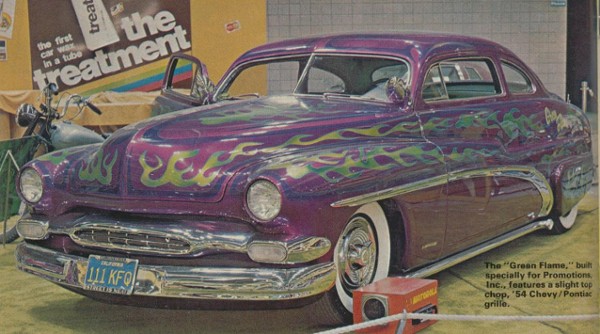
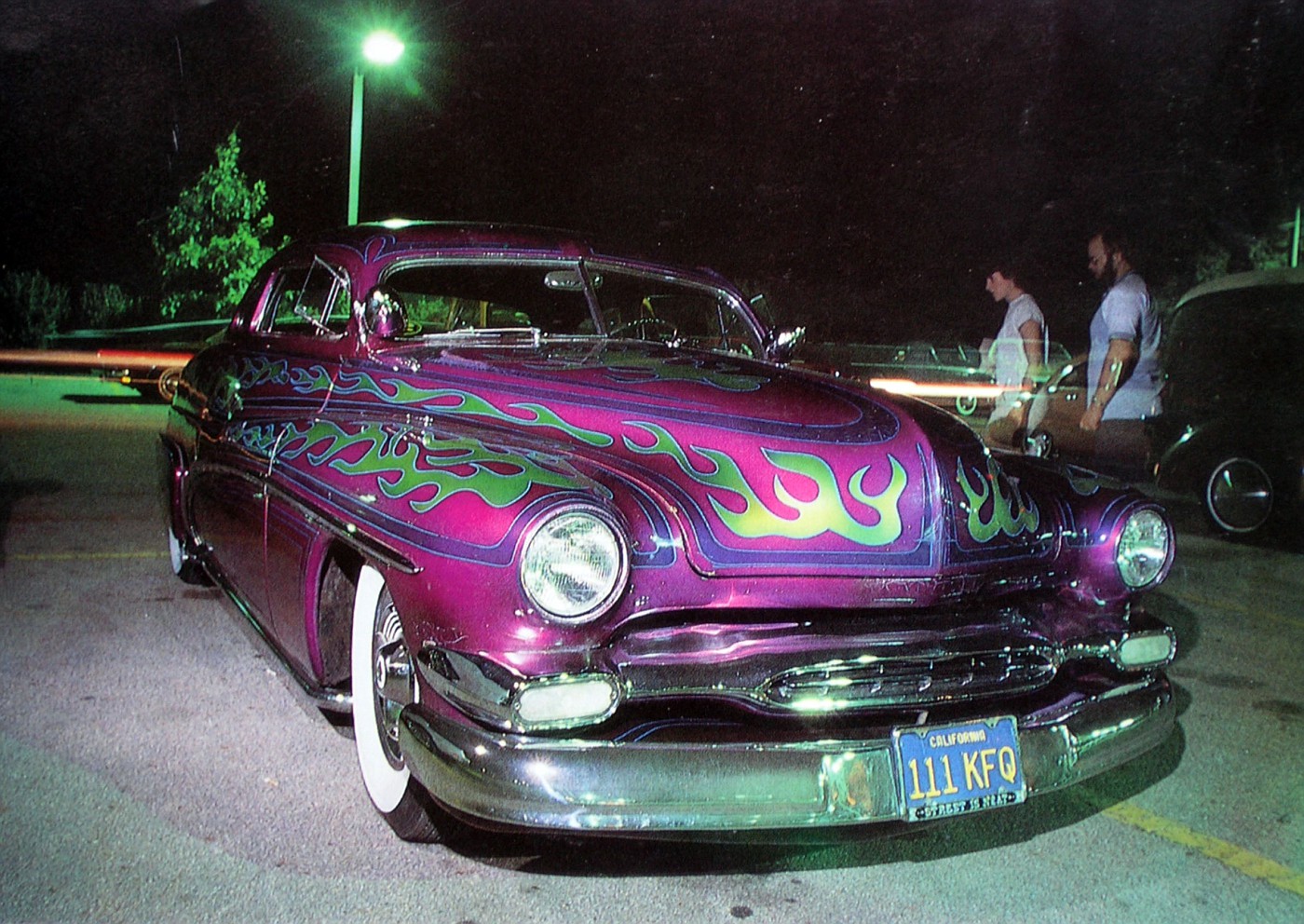
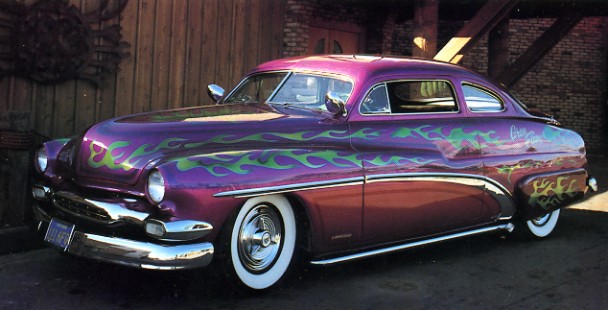
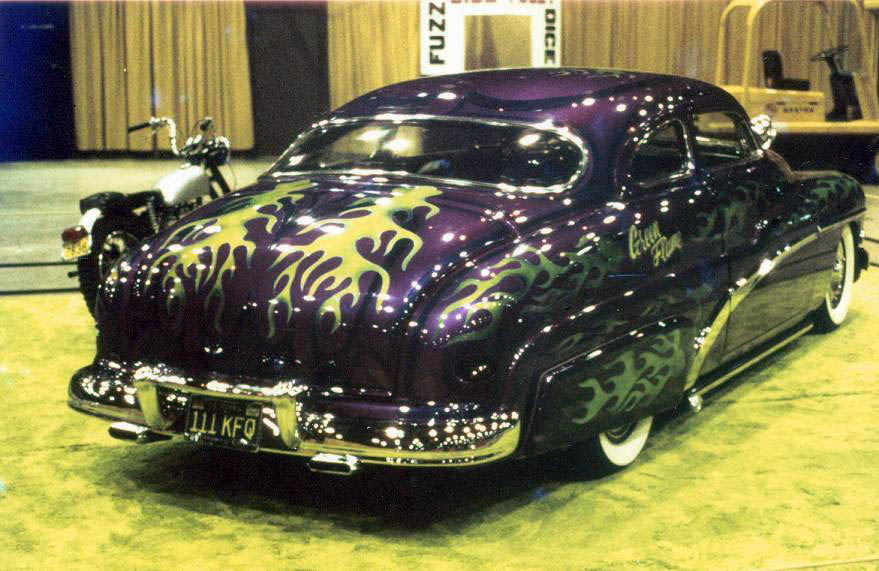
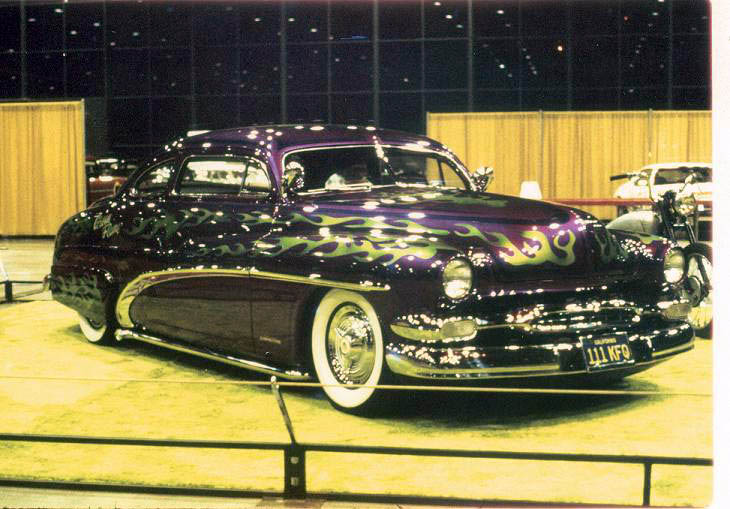
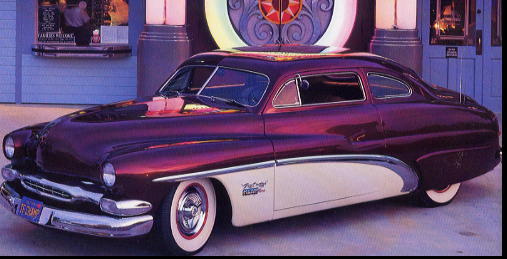
Rudy’s Green Flame is the only car to which additional photos were found. Apparently, this Mercury was relatively famous at some point in time and was often featured in magazines, although I’m still not sure if at least one of them devoted a separate article to this car. It’s also mentioned several times that Mercury was part of the Happy Days series, which I personally haven’t watched yet.However, my Internet searches have not found any confirmation that this car actually appeared on TV screens. It is quite possible that this is a mistake or even a deliberate distortion of the fact to give the car more fame (in the days before the Internet, it was much easier to pull this off).
Rudy’s Green Flame lost 7.5 centimeters of the roof and was lowered by 10, and its appearance is complemented by Chevrolet 54 headlights, Buick 52 side moldings, Oldsmobile 55 hoods and Pontiac 54 radiator grille, which attracts attention because it is far from the most popular choice.. The car’s engine is also interfaced: the Oldsmobile J2, also known as the Rocket. Far from being the most famous nowadays, but certainly legendary in the 50s and 60s, the J2 won many victories in NASCAR and was one of the desired combat engines in the custom scene of those times.
Among other things, I came across another photo of definitely the same Mercury, but in a different paint: either already without a flame, or still without a flame. It is impossible to say for sure whether this photo was taken after some kind of restoration, or vice versa, before Mercury was covered with luxurious fire.
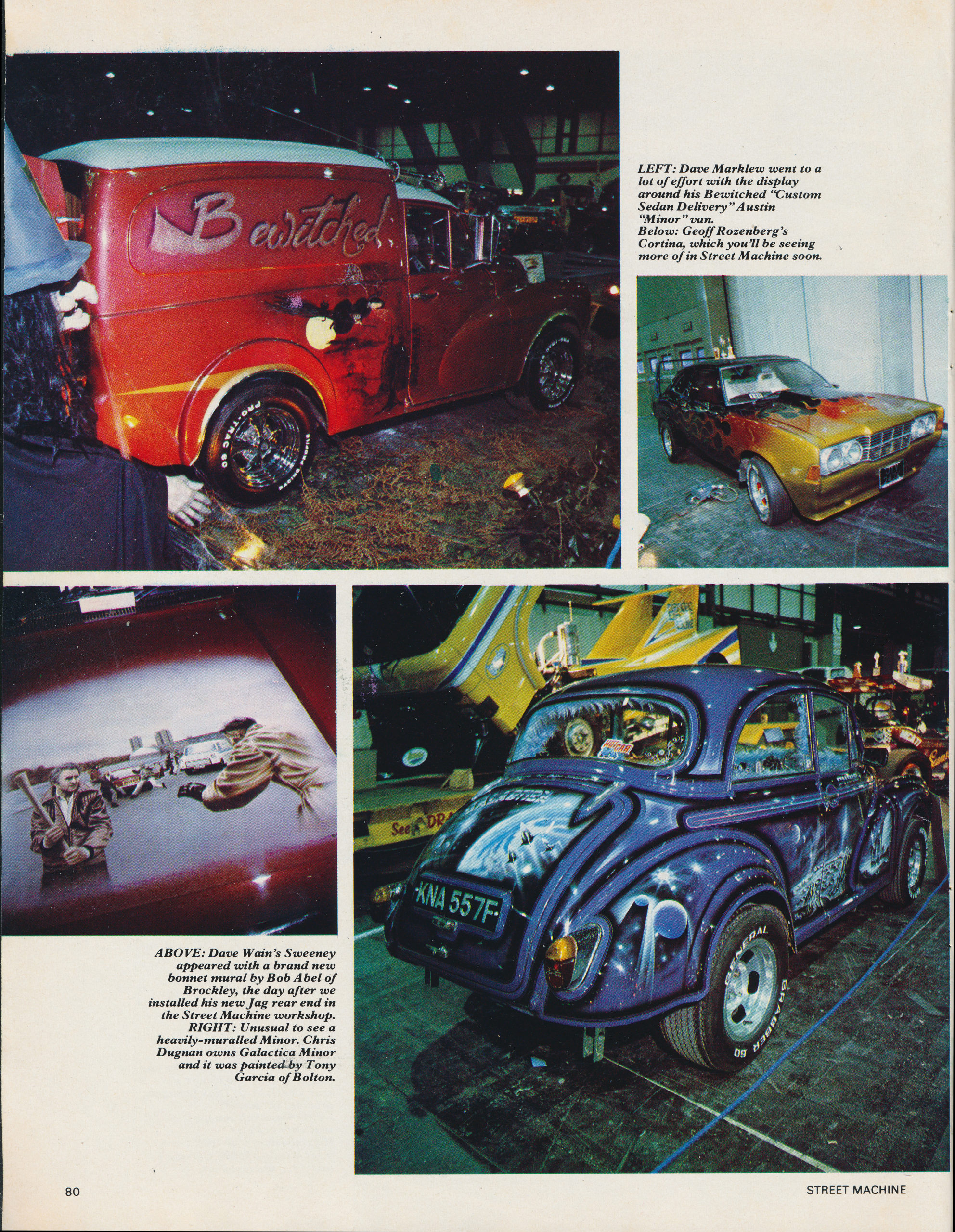
Jeff Rosenberg’s classic Ford Cortina has become quite a popular car. At least one of the subsequent issues of Street Machine magazine devoted a separate article to him, which we will definitely get to one day. But all the other cars from this page, covered with luxurious murals, remained, unfortunately, unknown. I was especially impressed by Chris Dagnan’s Morris Minor, which is painted in such a way that it literally takes your breath away. Small Minors are almost the last choice for such paintings. Just because the canvas is naturally too small, compared to vans.
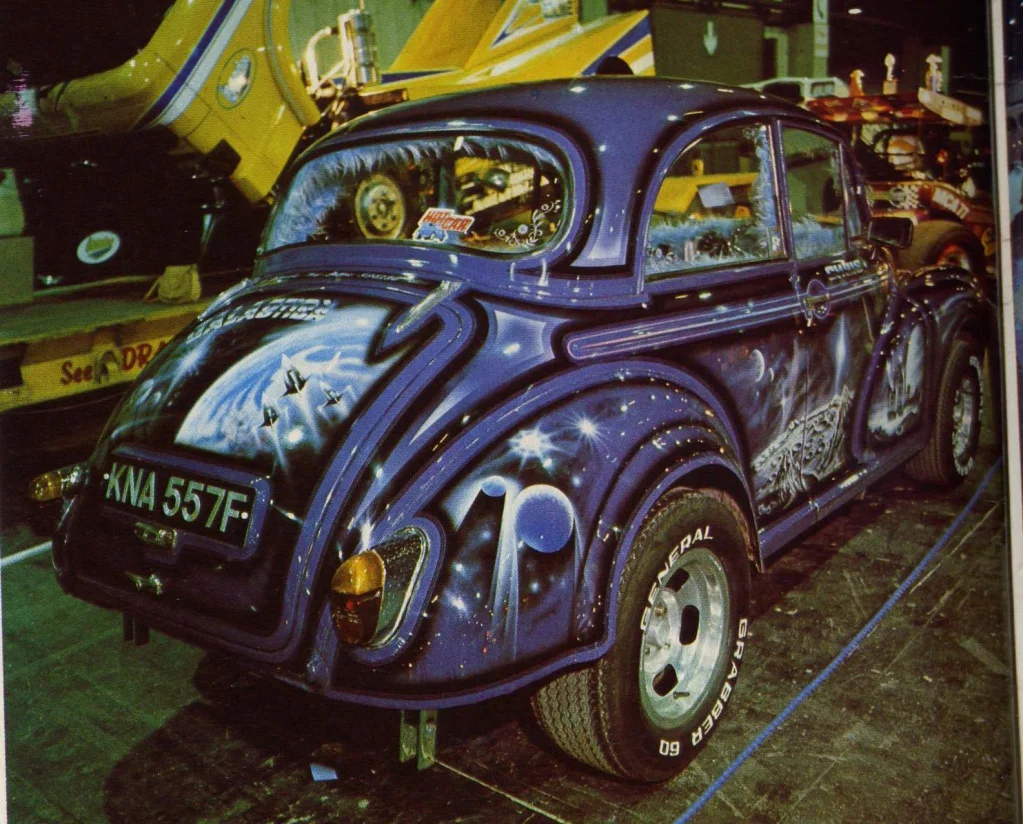
Unfortunately, the network managed to dig up only the very photo that was printed in the Street Machine as a result. I would really like to see all this painting from all sides and in as much detail as possible, but, alas. Galactica, apparently, has reached us only in the amount of a single photo. It’s a pity, because this is, apparently, one of the most gorgeous space-themed murals.
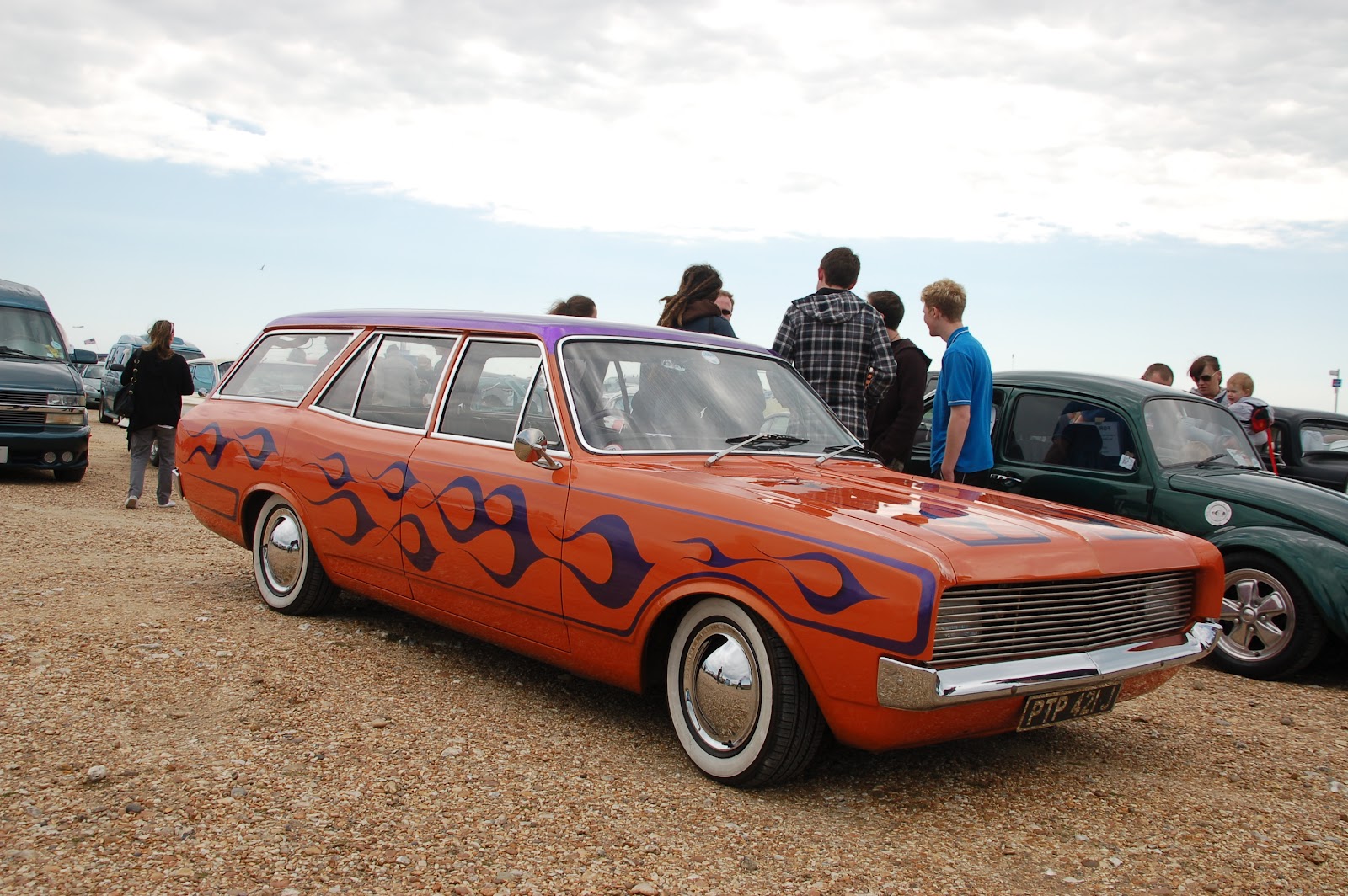
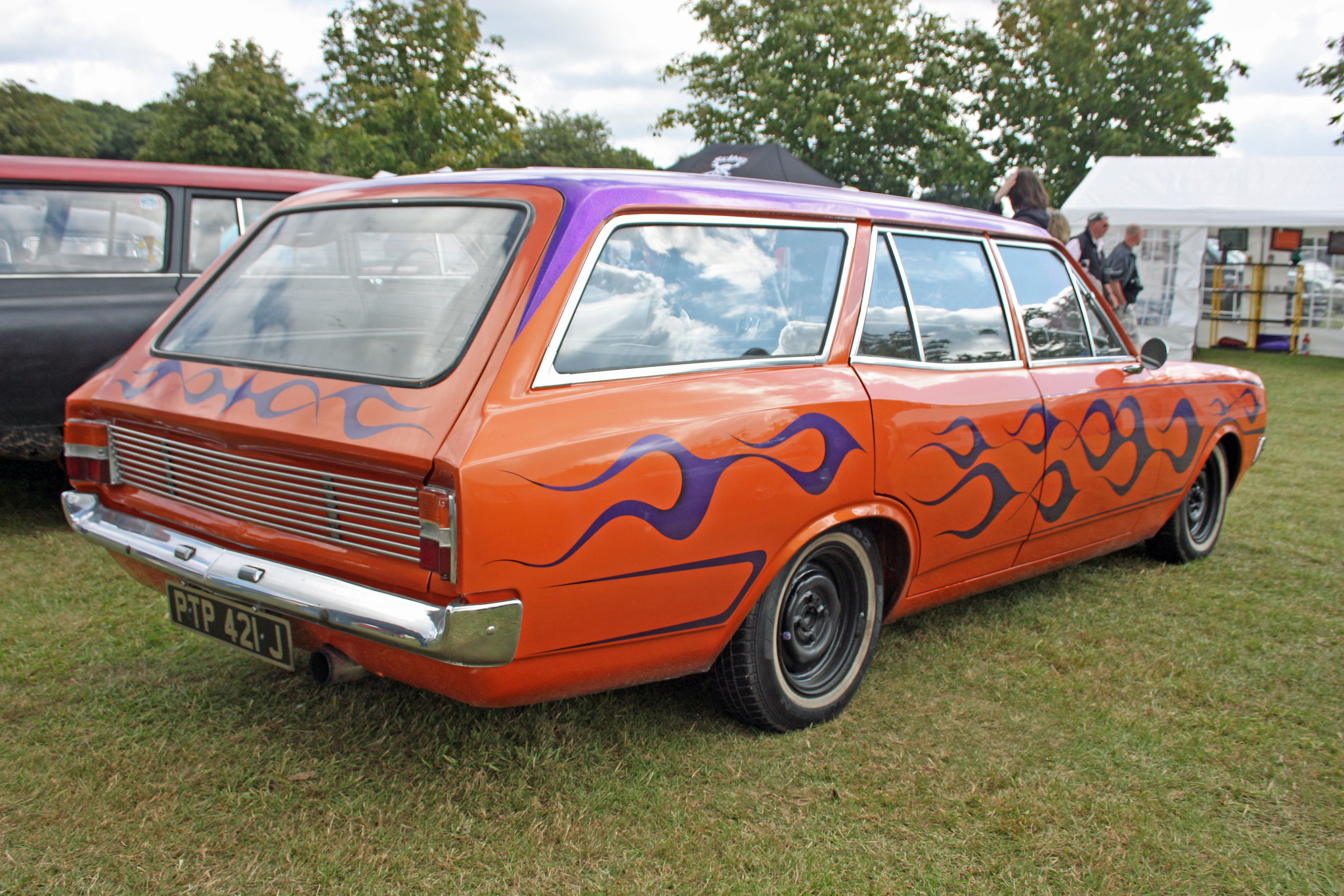
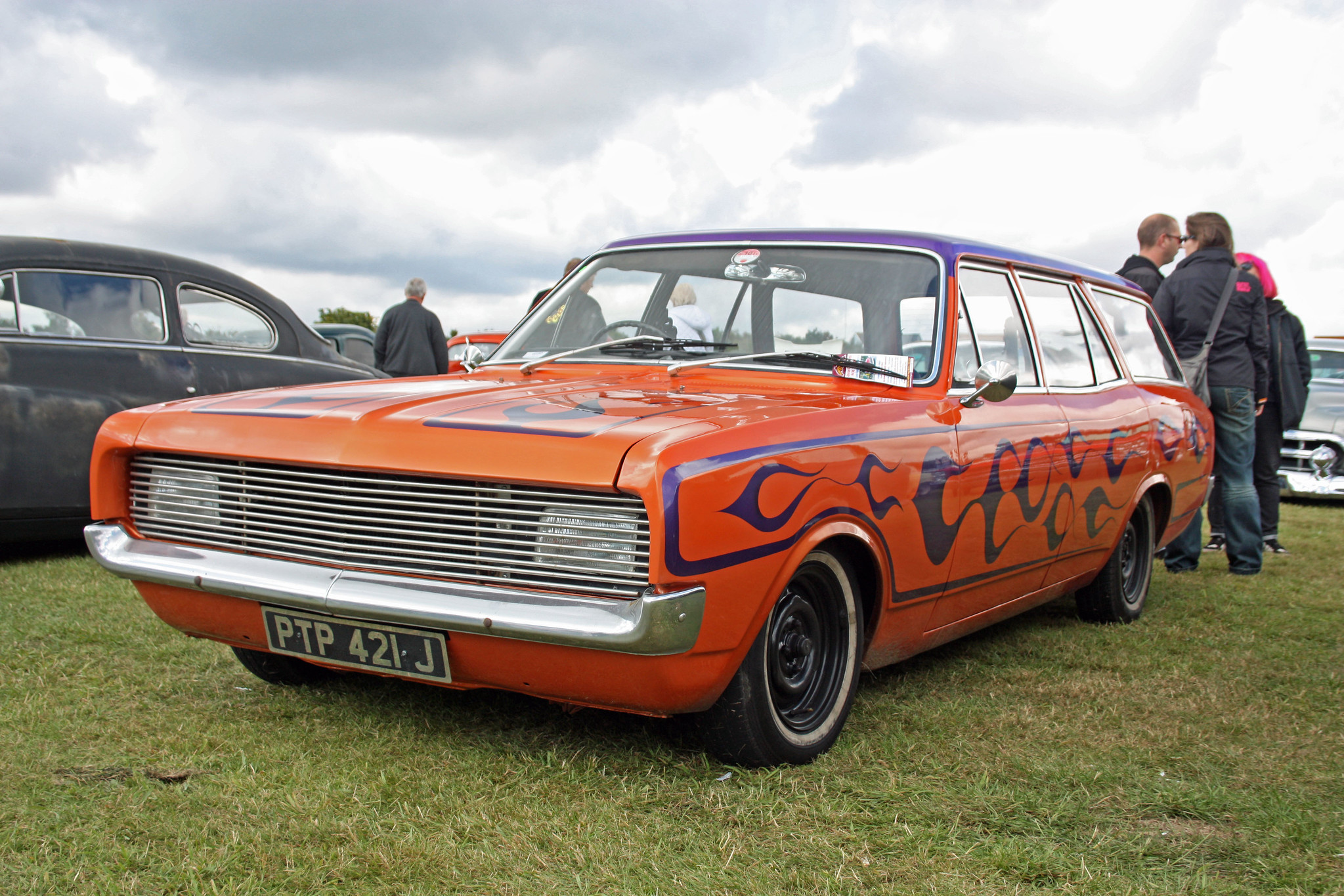
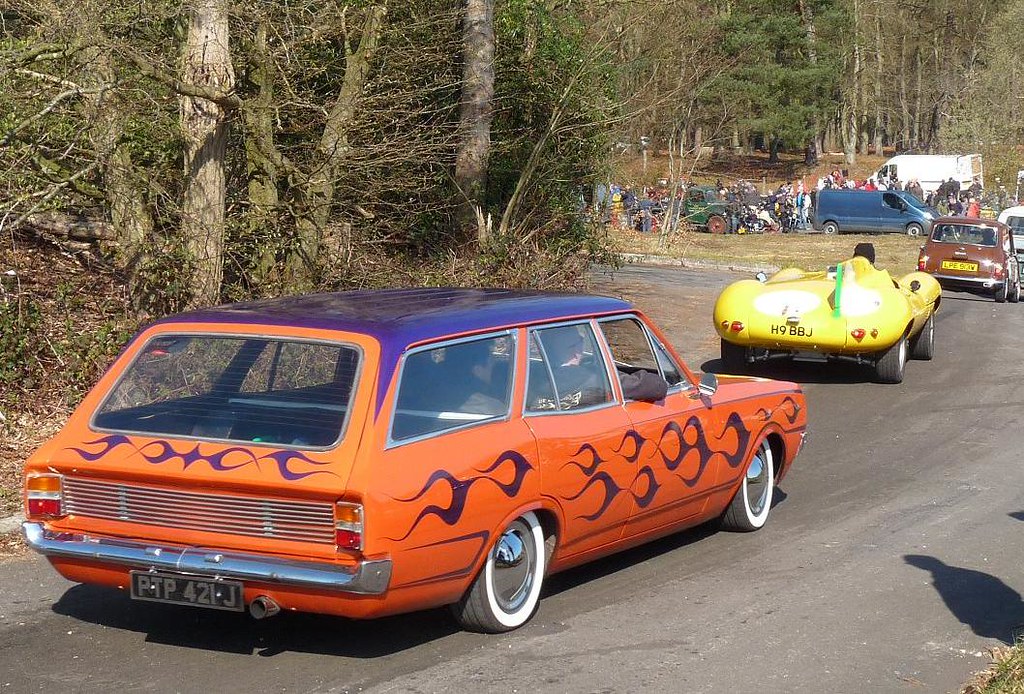
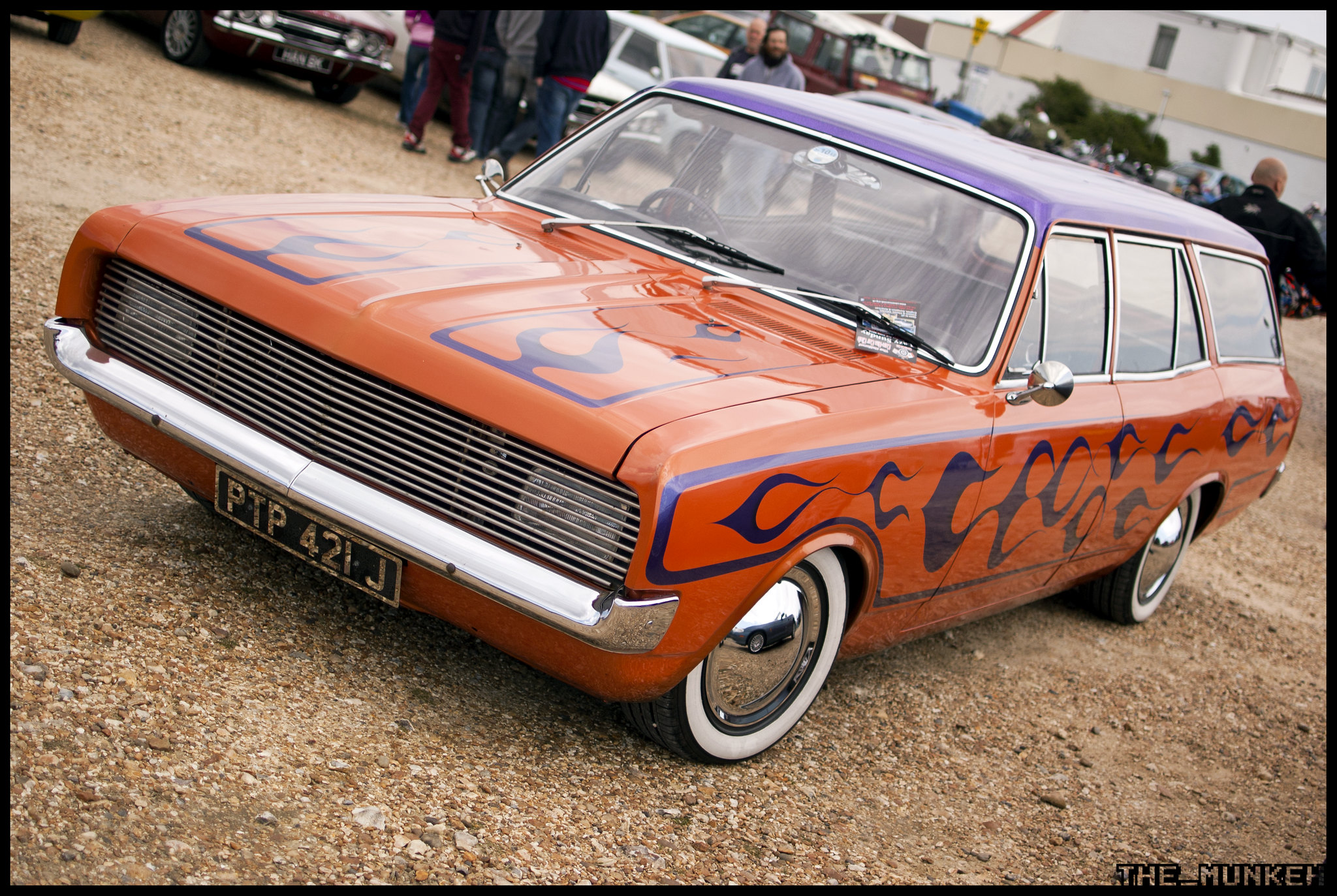
And finally, a bonus to the bonus materials: a very beautifully made Opel Rekord Estate 1900 of the 70th year of manufacture. I came across it by chance when I was trying to find more information about one of the cars in this article. In return, the Internet gave me another beautiful car, about which absolutely nothing is known. Nevertheless, I managed to find a set of very successful photos, which I decided to use immediately. I really like the way this Opel is executed. Bright, contrasting colors – and, at the same time, everything is extremely neat and nothing superfluous. Each line highlights the lines of the body, the flame is beautiful and modest. Chrome-plated radiator grille and overlapping stripes at the back. Rubber with a white side and solid chrome hoods. What a blunder. Beauty.
That’s all for today. That’s about the amount of information I have to work with. There are a lot of beautiful cars, of which God forbid there are three or four photos left. I’m writing an article of this format for the first time, as if it were a kind of review of the outstanding pages of a particular magazine. But I hope you enjoyed it. Sooner or later, a similar format will surely be used again.