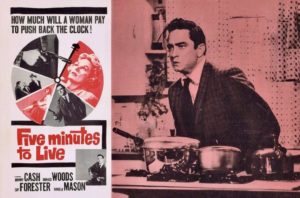
I’ve been wanting to watch this first Johnny Cash movie Five Minutes To Live (1961) for a long time, before that I watched Columbo: Swan Song and Gunfight. And this movie is the first time he’s had a major role, but there’s never been a Russian translation for the movie, so I had to do it myself. As far as we know from the movie My Dear Vivian, then he and his family moved to a suburb of Los Angeles so that Johnny could act in films, but this marked the end of their happy family idyll. And here’s my review.
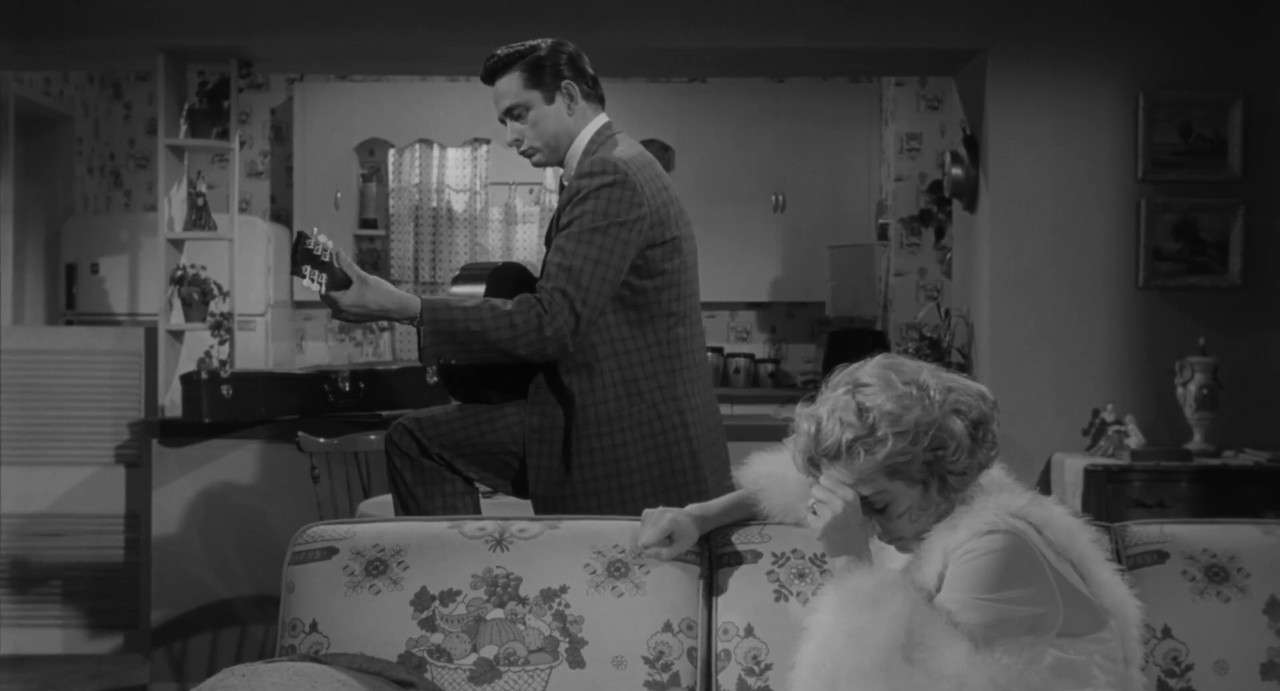
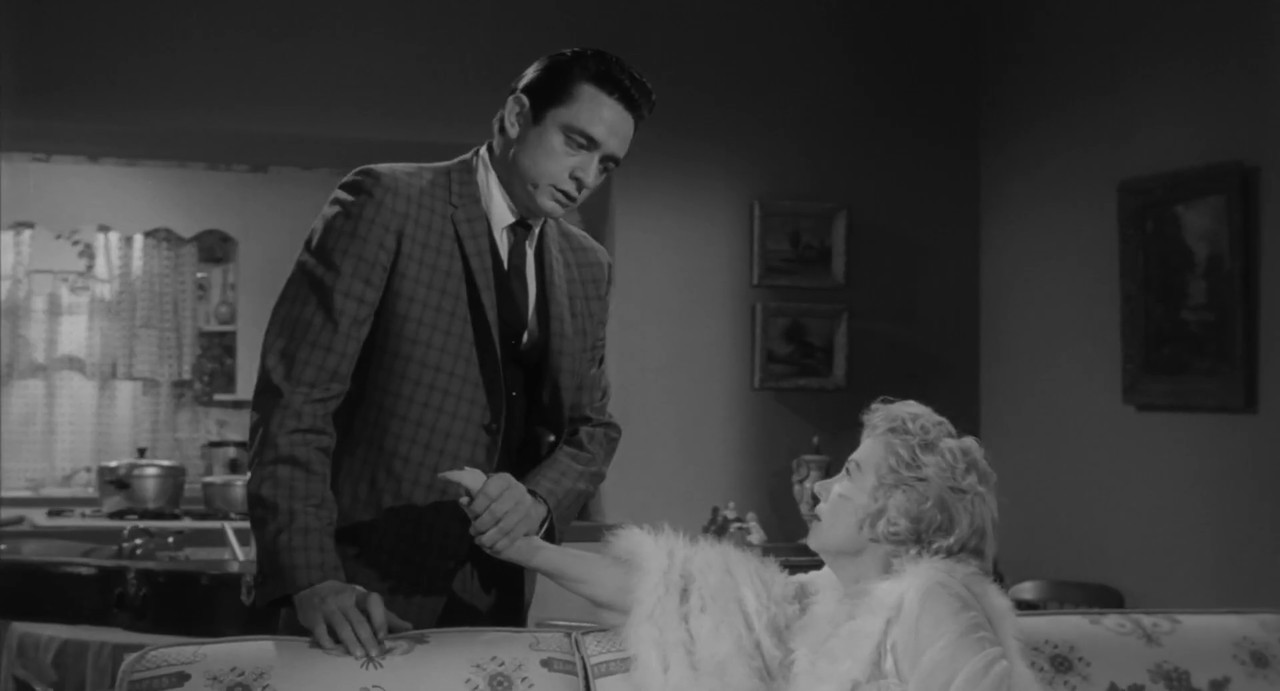
 Johnny comforts a girl by playing her guitar
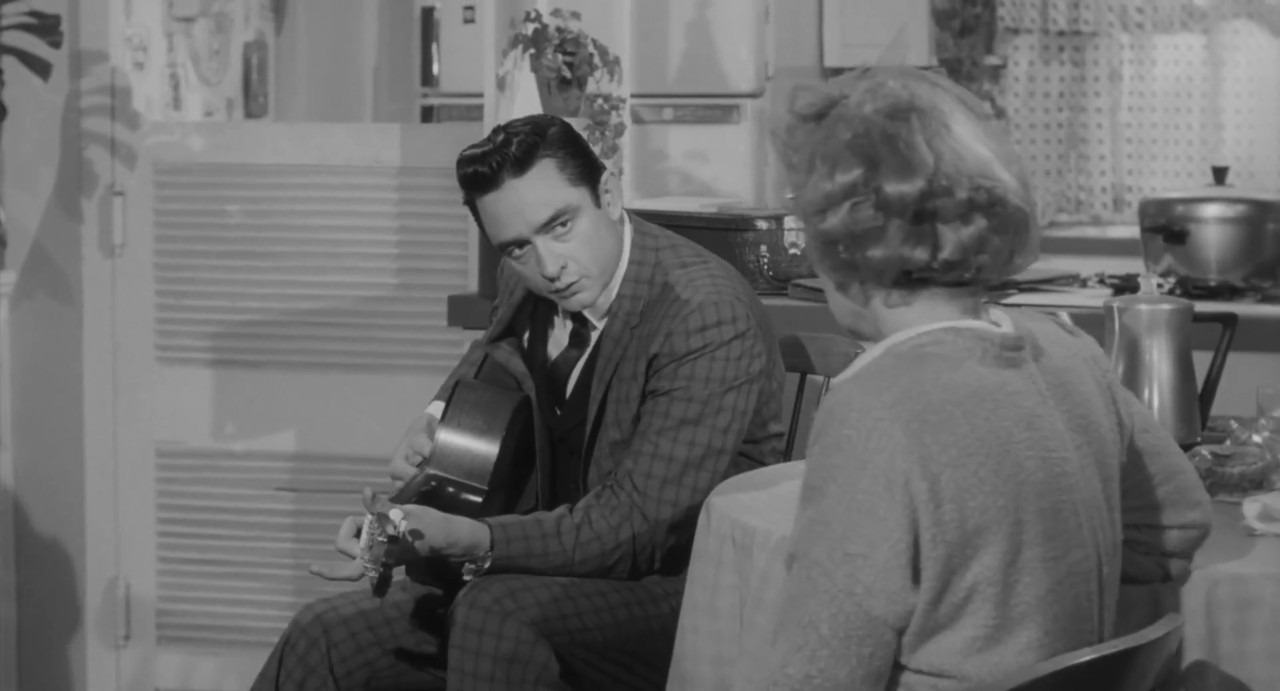
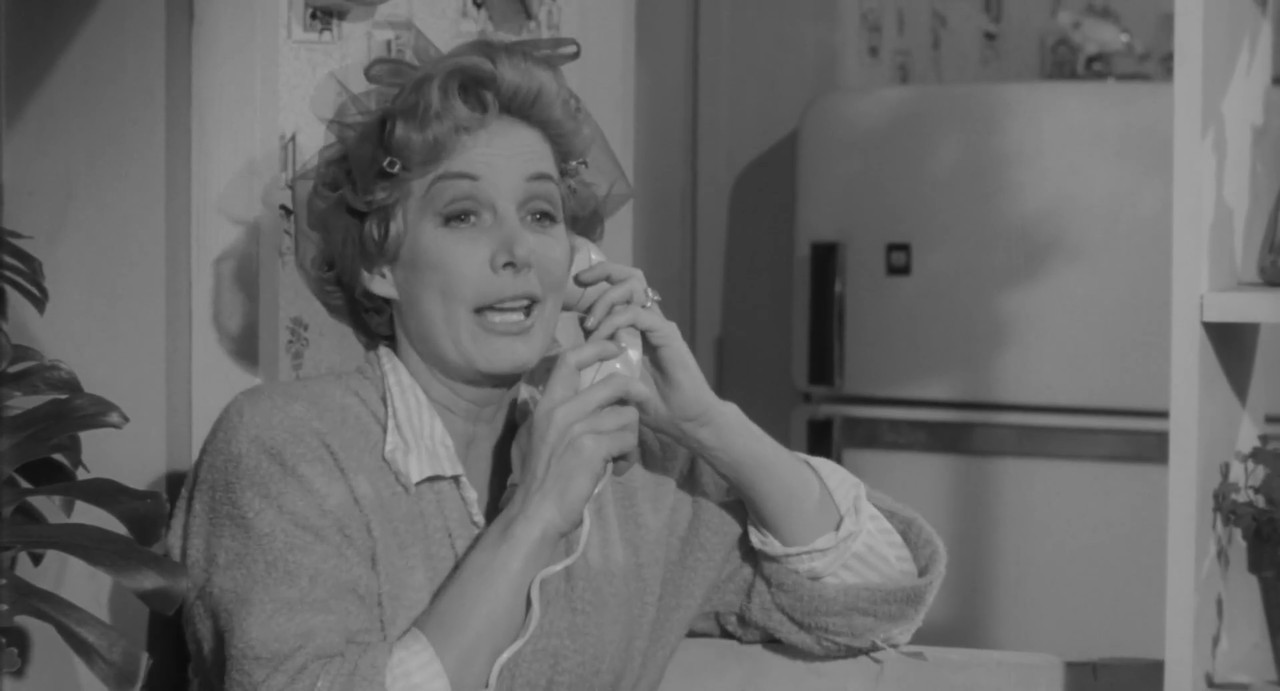
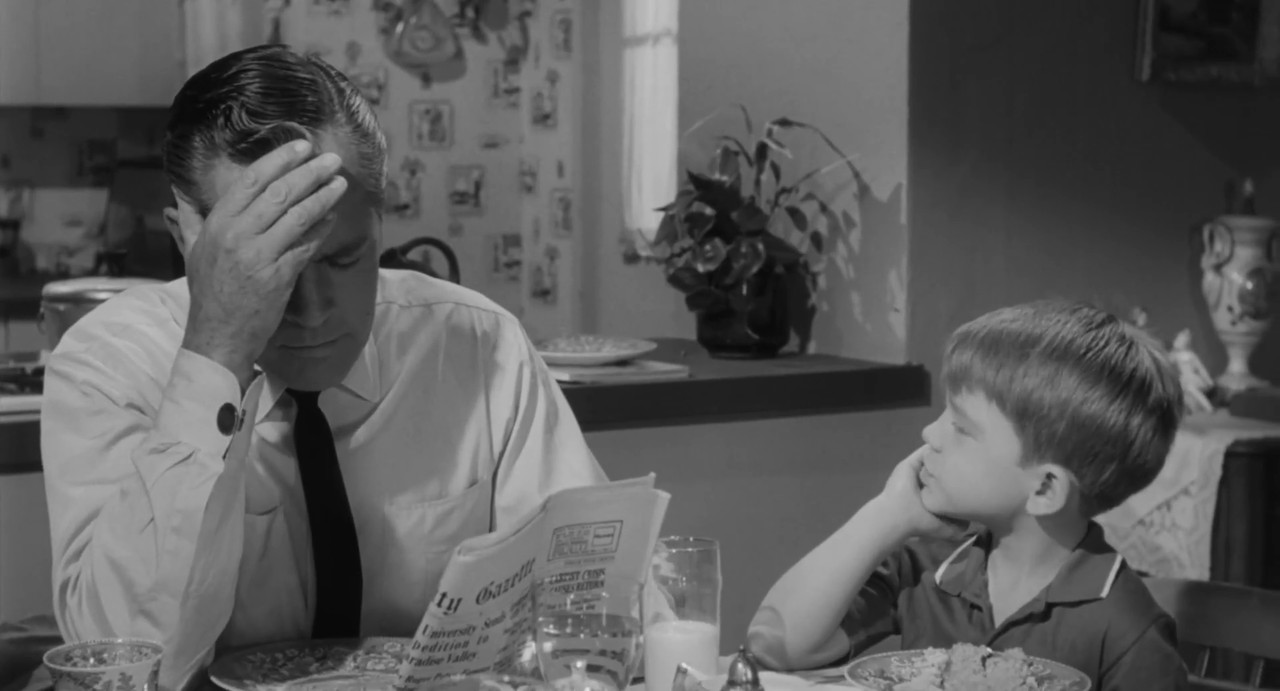
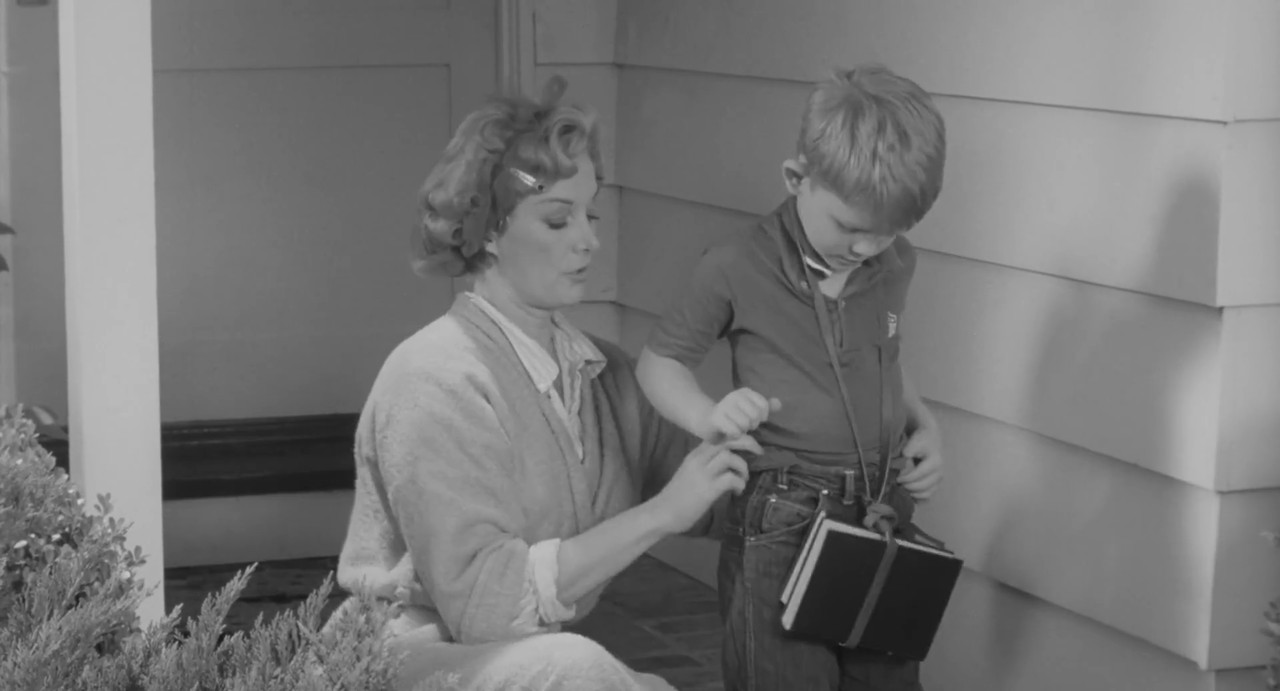
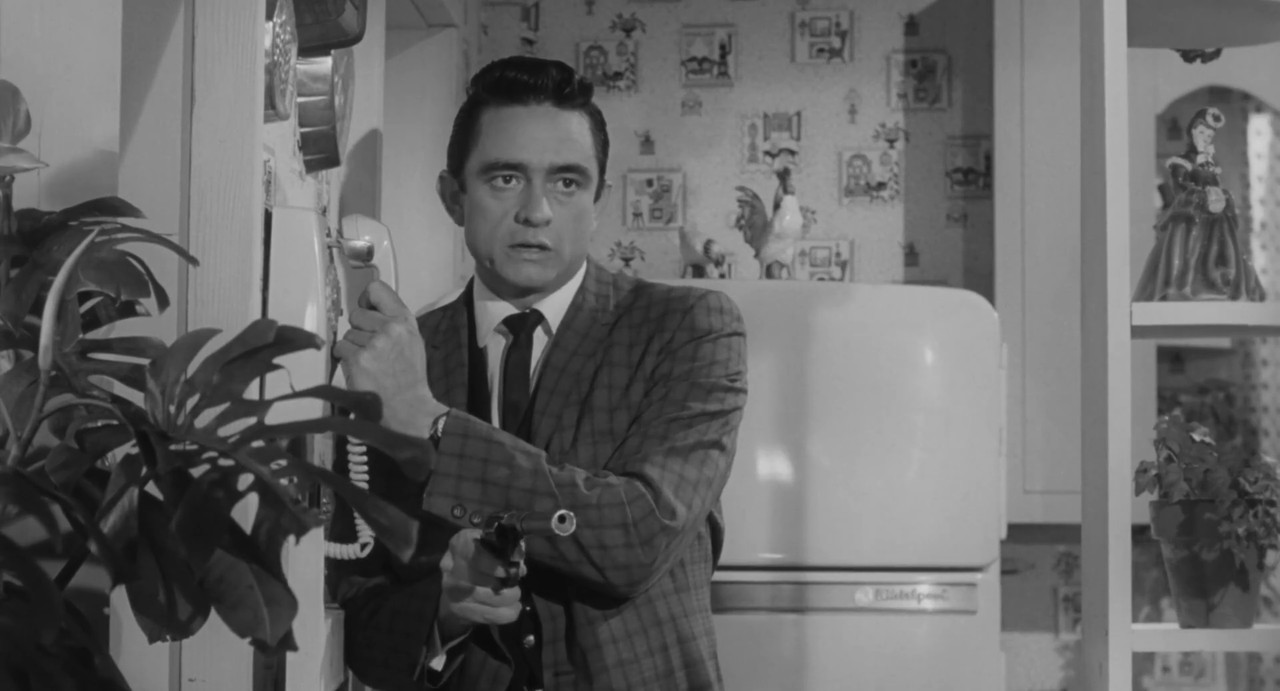
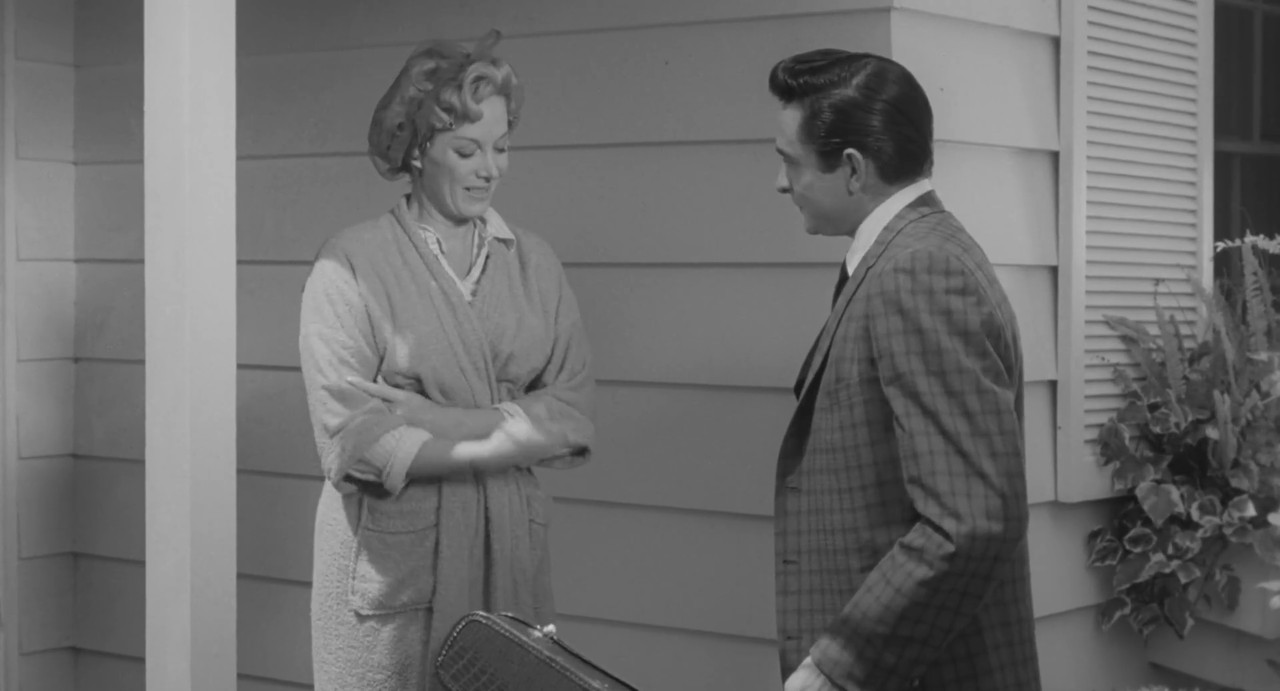
There are certain coincidences with the real Johnny, the action supposedly takes place in the wilderness, but in fact this is a suburbs of the ideal American dream. Johnny plays a criminal and a musician who pretends to be a traveling salesman. In fact, before starting his musical career, Cash also worked as a door-to-door salesman and sold something like refrigerators. But he was not very successful in this, he even discouraged buying the product if he saw that it was too expensive for people. However, he has always been successful when it comes to promoting his own talent and himself as an artist. Cash is a good actor, and it’s very unusual to see him in the role of a purely negative character. Here he is cruel and even mean-spirited, despises the entire business class, disparages the females and tells very sharp jokes about his victim:
– If my husband knew what you were doing, he would have killed you.
– He would probably thank me.
– Well, she may live like a magazine ad, but she don’t look like one.
– Knit!
– I don’t knit.
– You disappoint me, Mrs. Wilson. I thought you were a perfect wife.
The 1950s were marked by the emergence of youth culture, and after the explosion of rock and roll, when it was possible to see the stars firsthand only at concerts or short TV shows, pop idols decided to tame for the big screen, skimming extra cream from them. In 1961, “Too Late Blues” with Bobby Darin, as well as “Wild in the Country” and “Blue Hawaii” with Elvis Presley, were released, which were decent and suitable for the general public.
 "I've never been this close to a perfect wife"
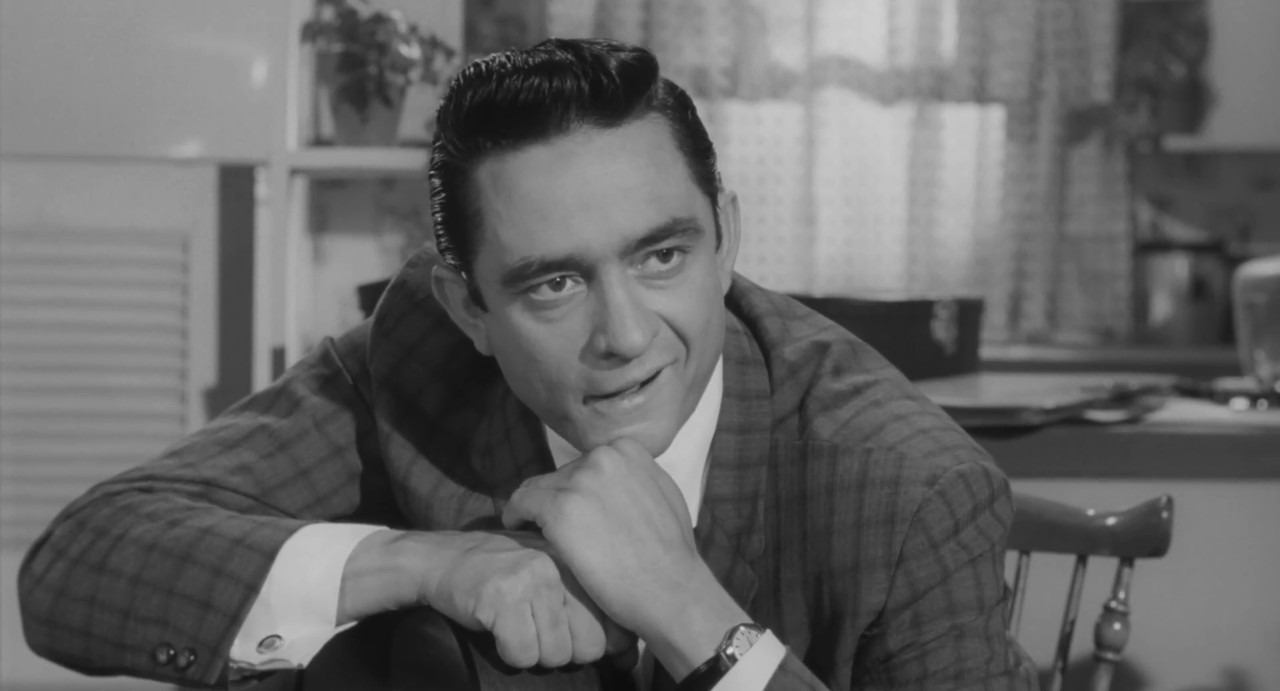
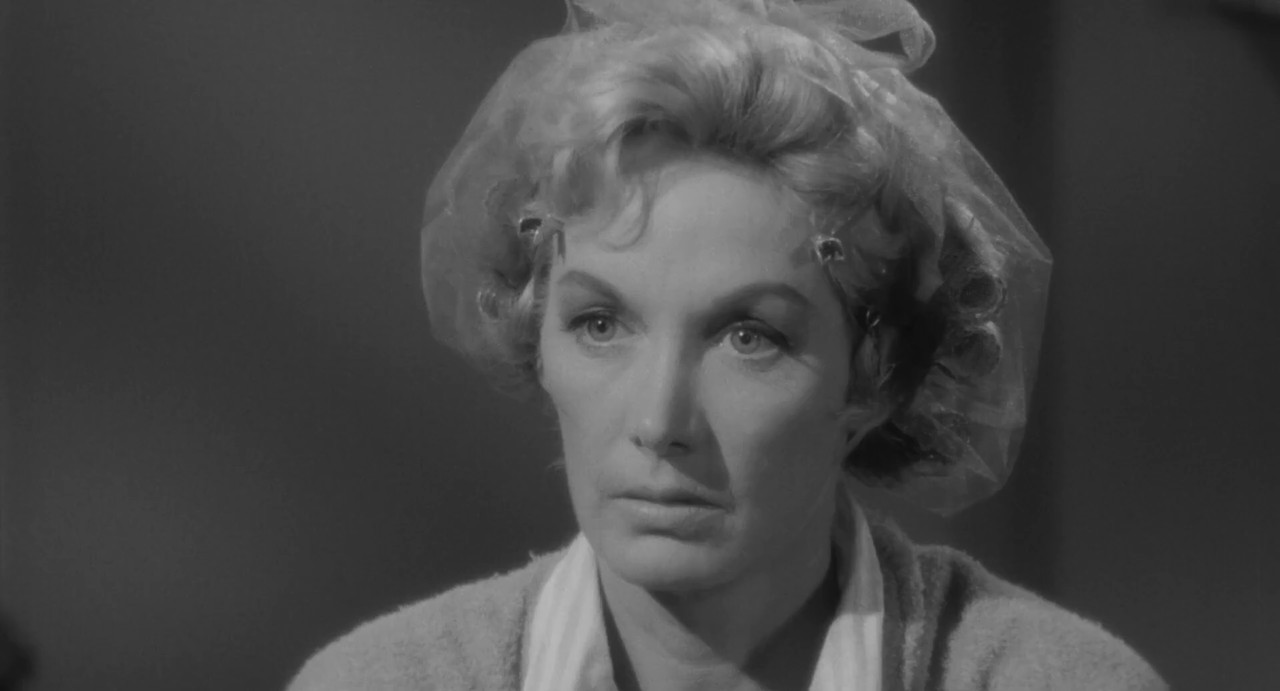
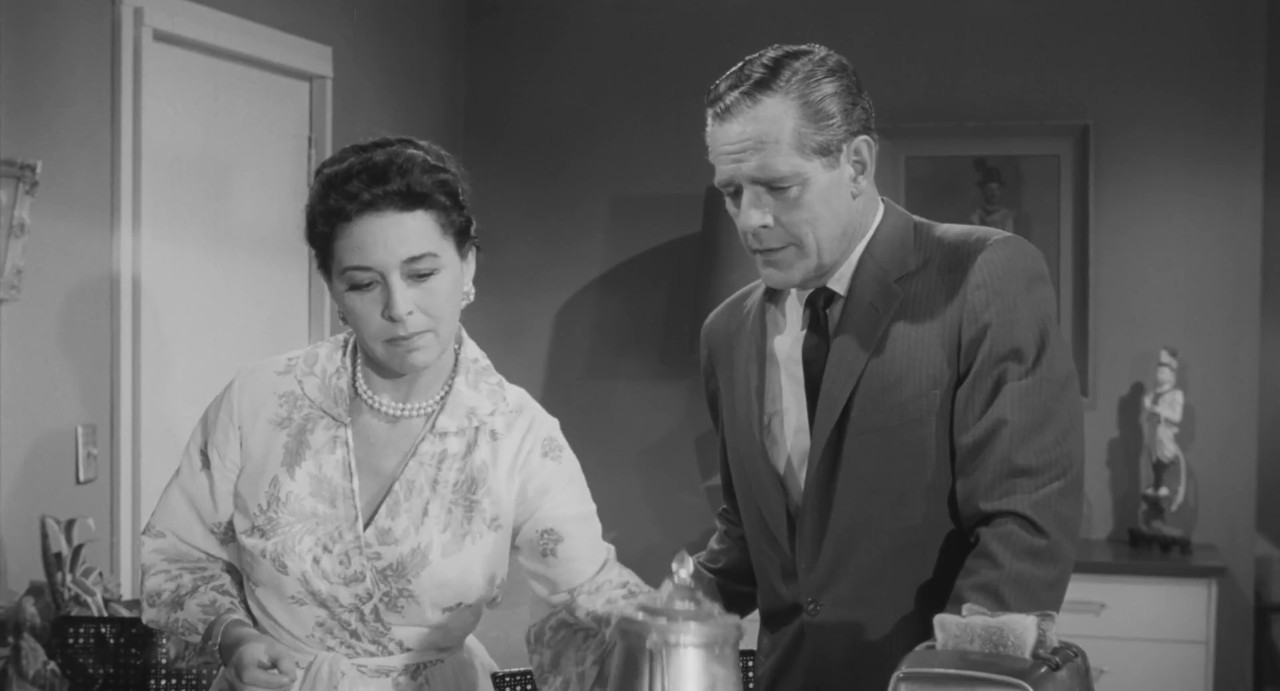
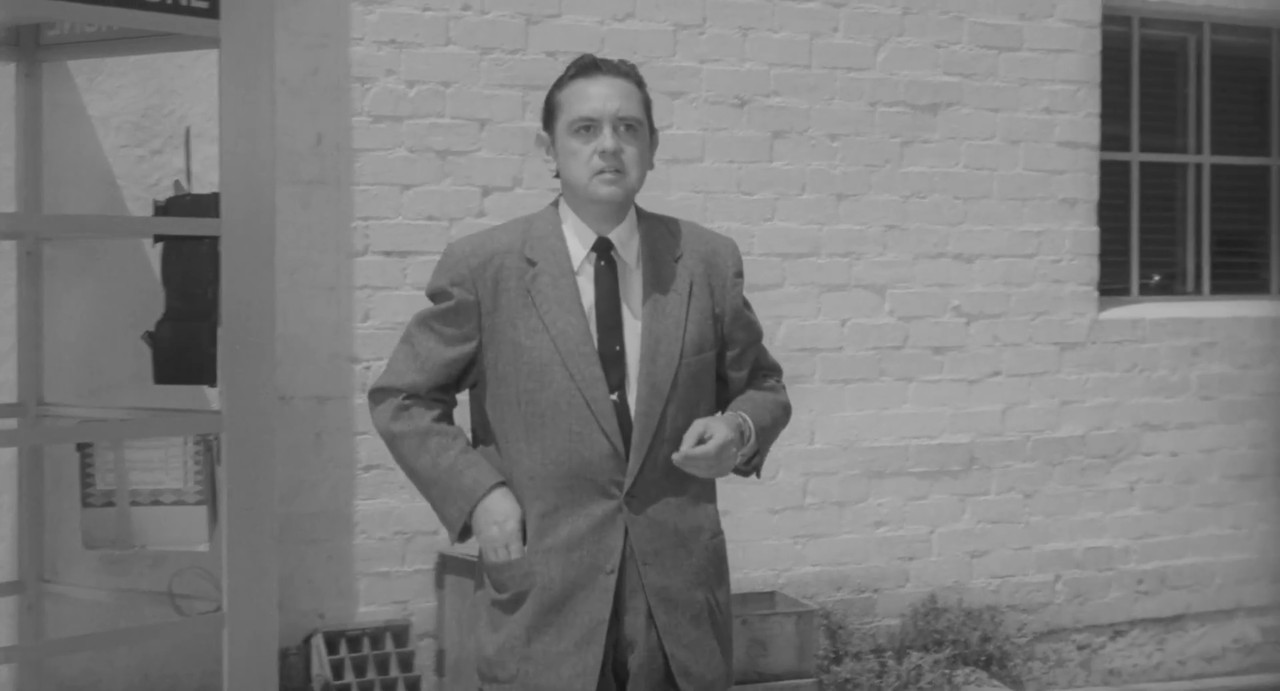
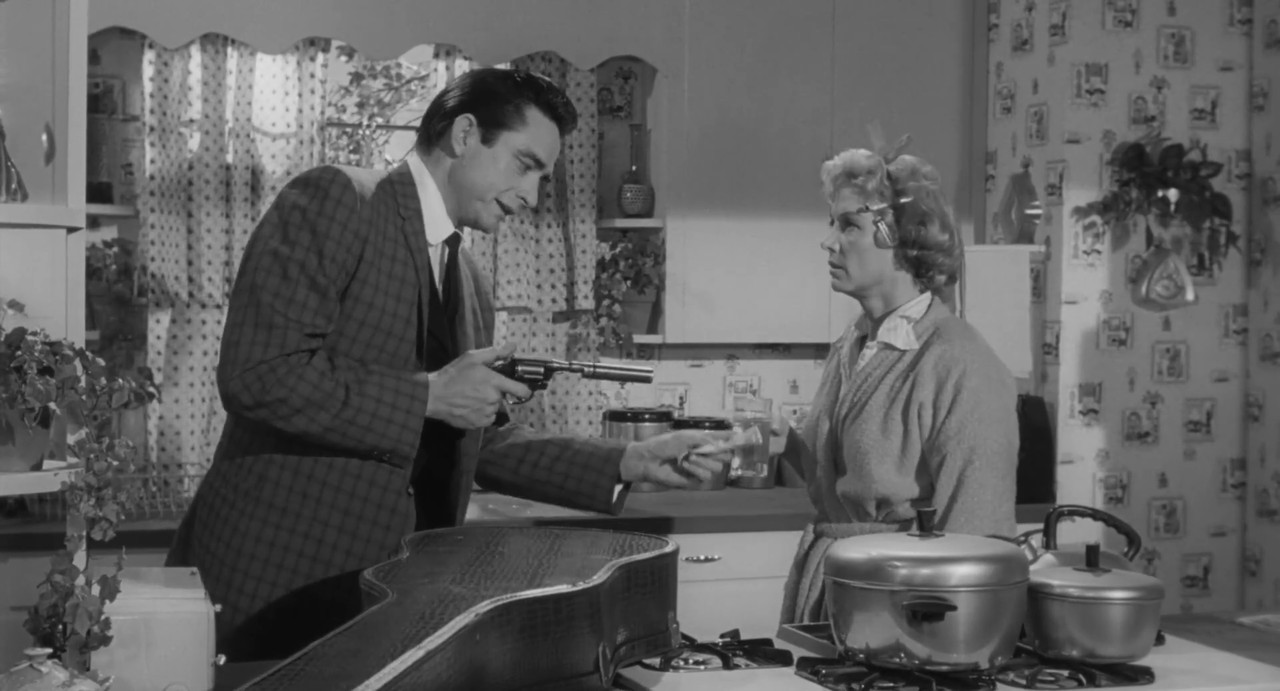
Elvis secretly wished that Colonel Parker would disappear, and he would have the freedom to express himself, starring in more controversial and almost obscene films beyond the control of Hollywood producers. Alas, this was not to be, and Elvis could only dream of playing characters like Johnny in this low-budget film.
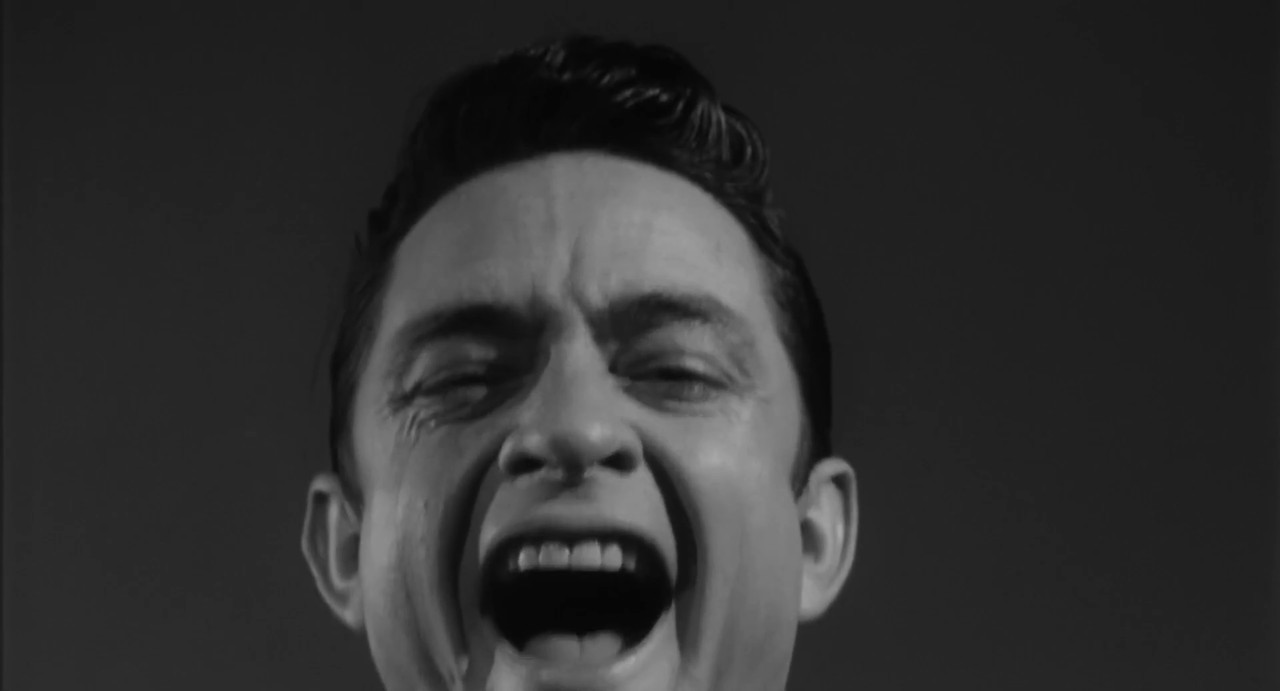
Here, his colleague at Sun Records and the Million Dollar Quartet had no such limitations and let his imagination run wild. It’s even a cult movie in some ways, with its negative and cheap charm. Cash vibrates with joy, mocking and torturing the hostage, wreaking havoc in her house, and it all looks completely believable and sometimes terrifying.
He holds a gun even with more pleasure than a guitar, and when asked: “Are you an artist?” he replies, “No, I’m a killer.” This is just one of the many successful phrases that he utters in his unrestrained and crazy role. The 1961 version is a must-see for fans of low-budget B movies, as well as for all fans of The Man in Black.
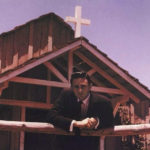
 If you didn't know the plot, this photo could easily be considered for a melodrama: Johnny comforts his beloved.
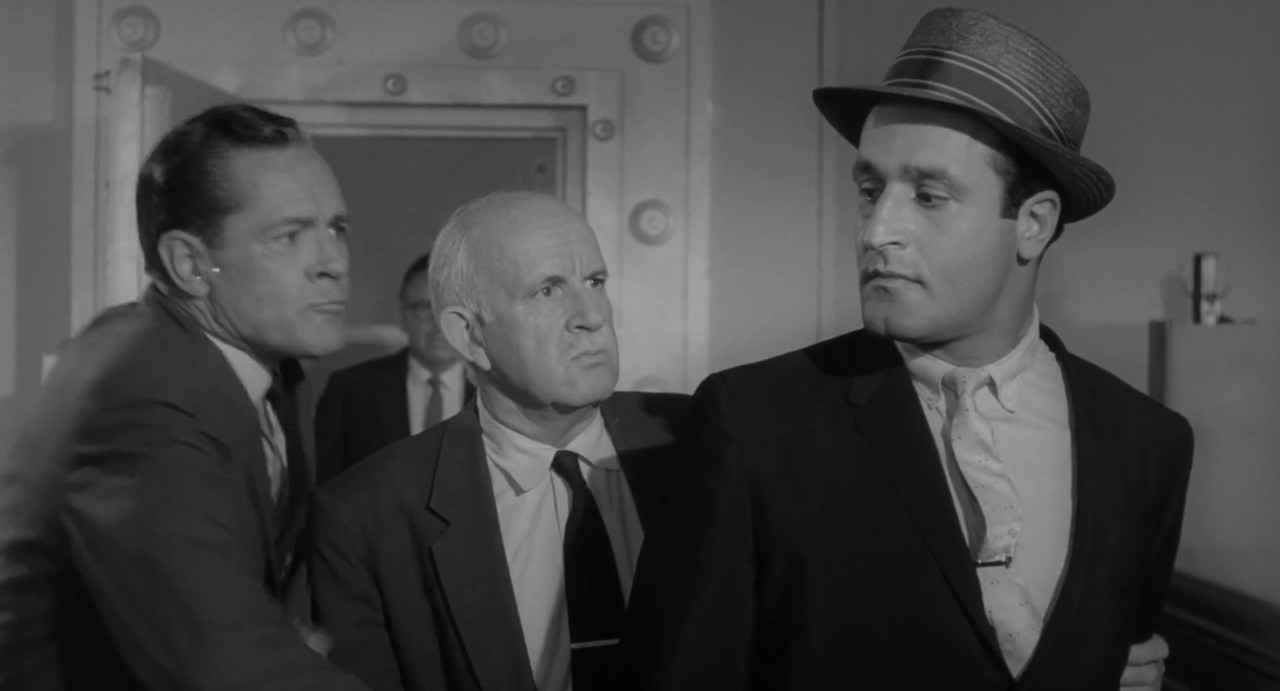
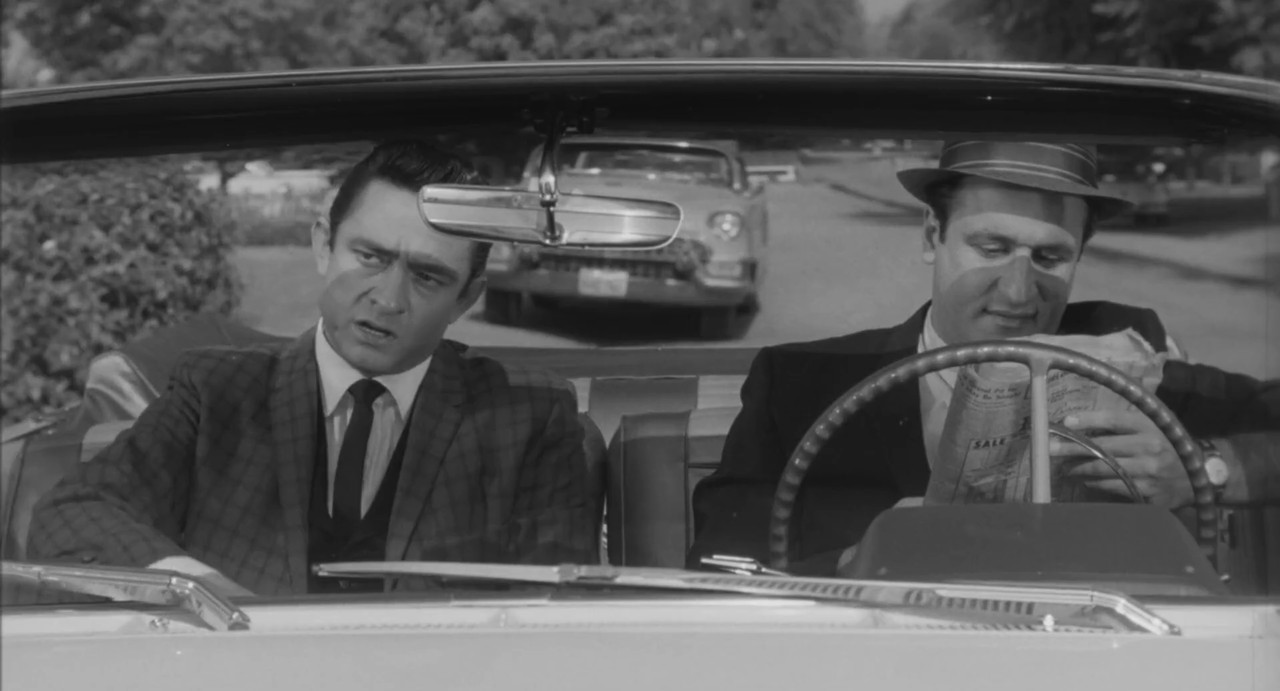
With the growing popularity of Johnny Cash, the film was decided to be re-released in 1966 under a different name, “Door-to-door Maniac”, now it can be seen in much better quality than the 1961 original. But in the end, the new version turned out to be completely different, find 10 differences.
- The Opening Song, I’ve Come To Kill instead of Five Minutes To Live;
- Johnny’s girlfriend Doris Jackson and her timing;
- How far did Johnny go with his hostage;
- Background music;
- The departure scene of the married couple and the ending.
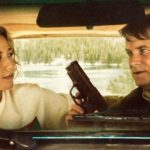
In 1966, they shot another episode with Cash for about 10 minutes and we see how much Johnny has changed, he has become thin as a snake, drugs have never brought anyone to good. And if in the 1961 version he is a charming psycho, then in 1966 he is already an obsessive, uncontrollable and frightening psycho: when the victim asks him to lower the gun, he responds with a smile, well, whatever you say and puts it in his pants… The negligee will fall off and the matter will take a more explicit turn.
 On the screen, a couple of minutes passed between the changes of the main character, and 5 years in his life.
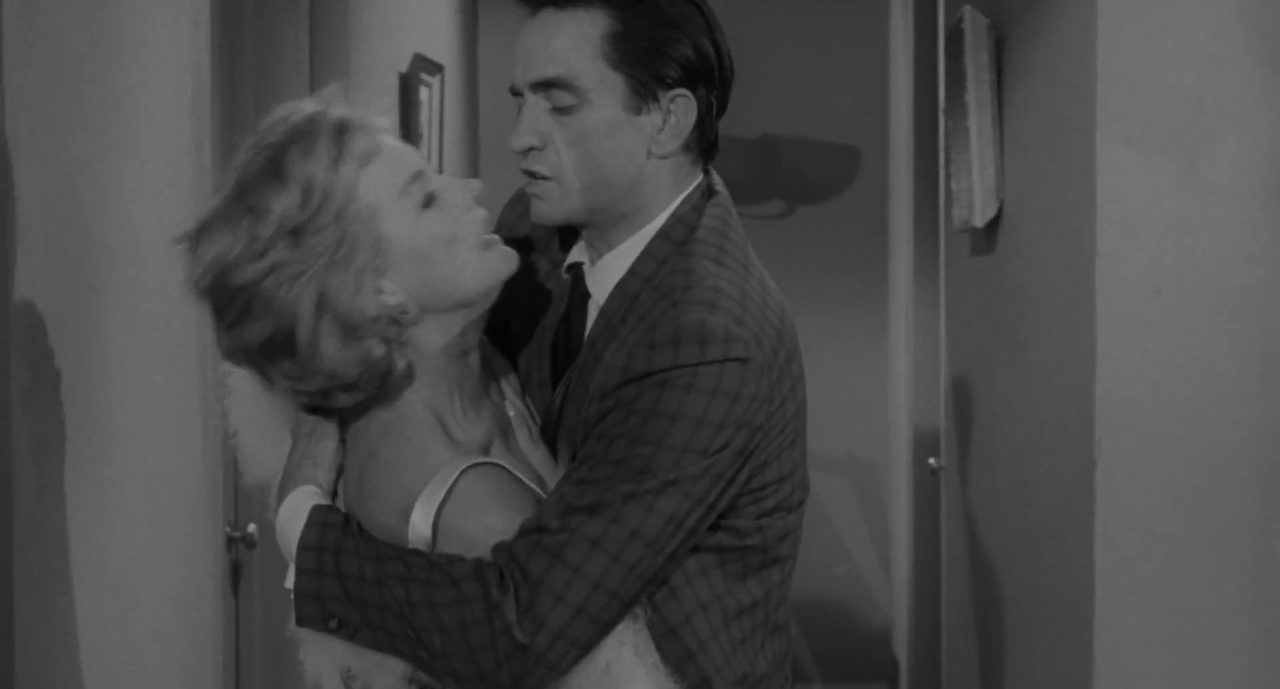
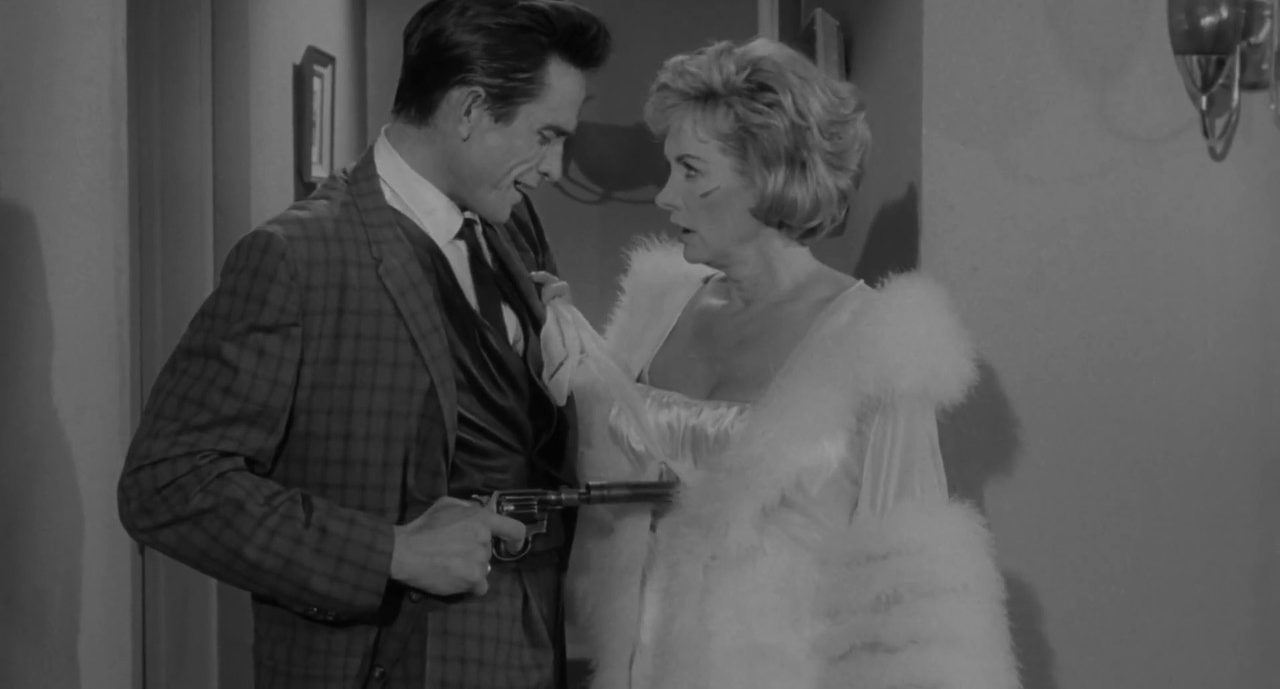
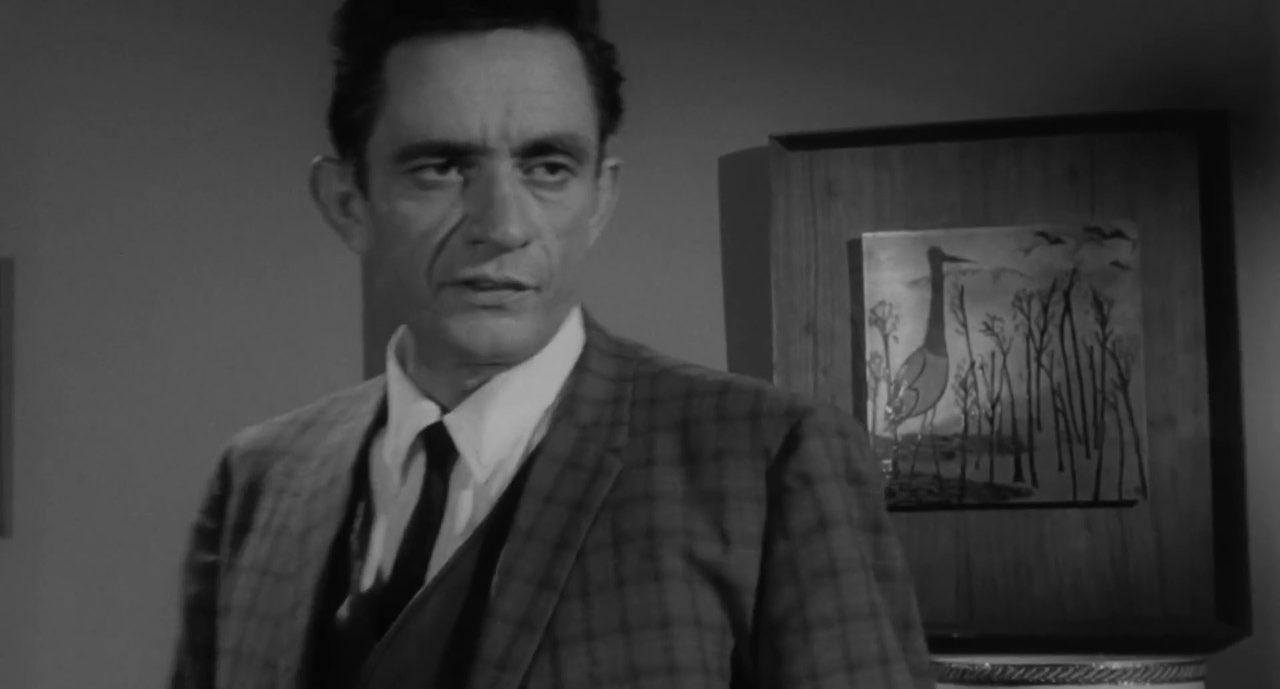
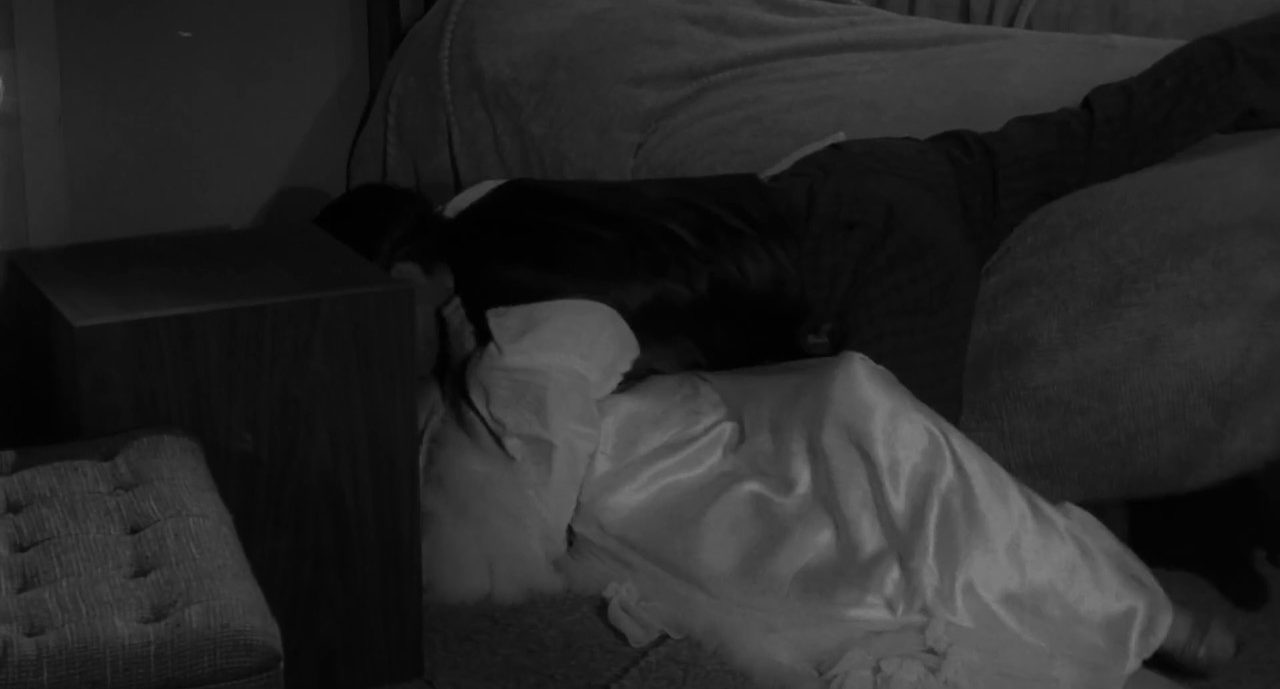
The pre-recorded episodes turned the neo-noir into a thrash grindhouse, the degree of cruelty increased, and the consequences of what happened to the banker’s wife were not kept silent, but they said it in crude and primitive cinematic language. However, the second version was filmed after the assassination of John F. Kennedy and the US transition to full-scale military action in Vietnam, the era of innocence ended, and Johnny-Door-to-door-Maniac became a literal reflection of the new reality.