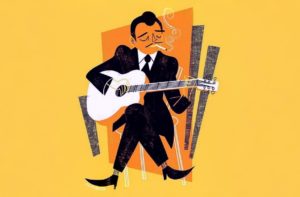
The Hot Club De France was the brainchild of five Carnot Lyceum students who were passionate about jazz and eager to popularize it to the point of widespread presence. At the time of its opening, the club had an emphatically youth name Jazz Club Universitaire, in order to attract enthusiastic vagrants and just students. That’s where Django Reinhardt and Stephane Grappelli met (see Chapter I). Both had similar musical tastes, and Django, who had become quite imbued with the Venuti and Lang duo, was looking for a decent violinist to accompany him. After thousands of words and dozens glasses of wine, Stephane himself did not notice how he ended up at Reinhardt’s camp, where they spent the rest of the night, having run away as good friends. Professional cooperation, however, did not follow: Django was still strumming around the cafeterias, where the earnings were barely enough for one, and Stephane with prim orchestras played a “digestive” variety in respectable hotels.
The situation changed only in 1934, when the band’s leader, double bassist Louis Vola, invited Grappelli to join the band, and he brought with him a gypsy with a guitar (it is known that at that time gypsies walked either with guitars or with horses, less often with bears). Vola praised the gypsy for coming without a horse, invited him to an audition, and it all ended with Django, Stephane, and Louis having a wild improvisational session after their debut on the Claridge’s Hotel stage, which became the first of many. Graduates of the Carnot Lyceum soon heard about these exercises, and they managed to rename their institution the Hot Club De France.
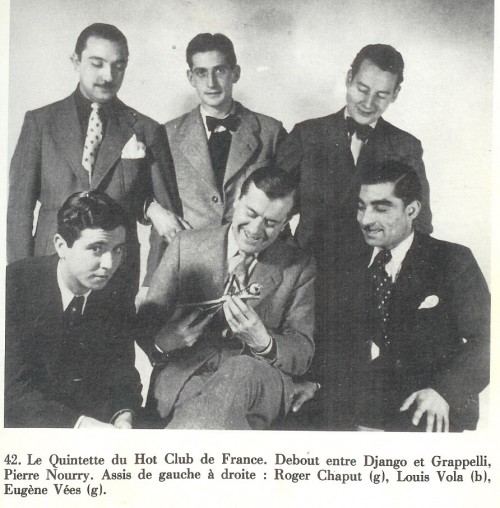
Yesterday’s lyceum students Pierre Nourry and Charles Delaunay, sensitive to swing rhythms, rushed in an instant and, after briefly tapping staccato on chairs with their skinny bottoms, jumped up to the musicians with a specific proposal: the ensemble should be supplemented, after which he would be provided with a regular engagement (French word) in the “Hot Club”. The second guitarist, Roger Chaput, was sitting next to him, and for the third, Joseph Reinhardt, they had to send a messenger to the caravan. And voila (the second French word) – the quintet is ready! To begin with, he made a splash in the narrow circles of Parisian jazzophiles (not to be confused with drosophilas): In American jazz, brass instruments have always been in the lead, strings like the banjo only emphasized the weakest part, the double bass or tuba depicted an elephant’s gait, but the drums syncopated somewhere in between. Here, two rhythm guitars laid out the foundation of the ground beat around the bass pillar, and already on this framework the flesh of violin and guitar improvisations grew. Someone, in a fit of emotion, may have tried to exclaim that this was not real jazz, but was taken aside and quietly guillotined. It was a real jazz that absorbed the Gallic elegy, the minor Hungarian chardash and the enthusiasm of Slavic dances, elegantly seasoned with the melodism of the Italian hills.
Already in September of the same thirty-fourth, the band, which had not yet come up with a name for itself, released a single together with vocalist Bert Marshall under the conspiratorial pseudonym Delaunay’s Jazz: “I Saw Stars”/”I’m Confessin'”. The recording did not express itself properly, as the instrumental part was slightly displaced, giving space to a voice that was the most ordinary for its time. In December, “Tiger Rag”, “Dinah” and “Lady Be Good” were recorded, which finally marked a new phenomenon in jazz.
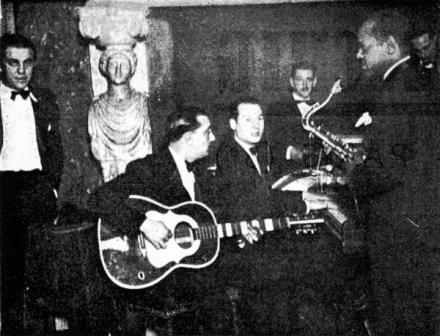
The following year, Reinhardt received more invitations to collaborate than he could count in all previous years, and the main event, of course, was his collaboration with Coleman Hawkins, one of the brightest saxophonists of the swing era. And the quintet did not lie down, having recorded compositions on two full-length albums of the LP format that had not yet been invented. Small records were released under the name “Django Reinhardt et le Quintette du Hot Club de France avec Stephane Grapelli”, then “Stephane Grapelli and His Hot Four”. This was followed by a tour of western Europe with swims to a small island called Great Britain, where drosophilas tired of snobbery (not to be confused with jazzophiles) melancholically drown themselves in five-o-clock tea.
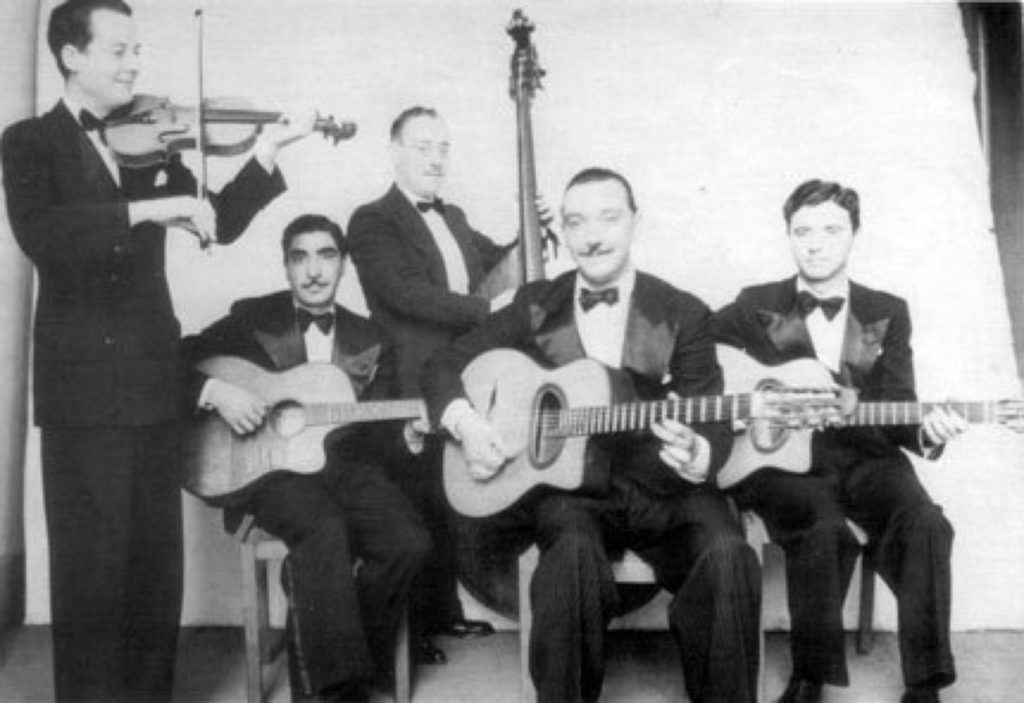
In England, most attempts at swing music descended into either absurdity or insignificance, the Quintet of the Hot Club of France was the warm breeze that dispersed the fog and made the Baskervilles’ dog howl. The music united everyone, there was neither a Greek nor a Jew, to top it all off, in 1937 the iconic “Minor Swing” was released, an improvisation in which there is not a single extra note, and the main melody only opens and completes, framing a leapfrog of magical sound vignettes. In the same year, Coleman Hawkins brought one of the greatest big band arrangers, Benny Carter, to Paris. Of course, Stephane and Django participated in the recording of Coleman Hawkins & His All-Star Band, where Carter played the alto saxophone and a little trumpet. Life seemed easy and carefree, permeated with the harmonies and aromas of fresh coffee and young wine.
Django Reinhardt – Minor Swing (mp3)
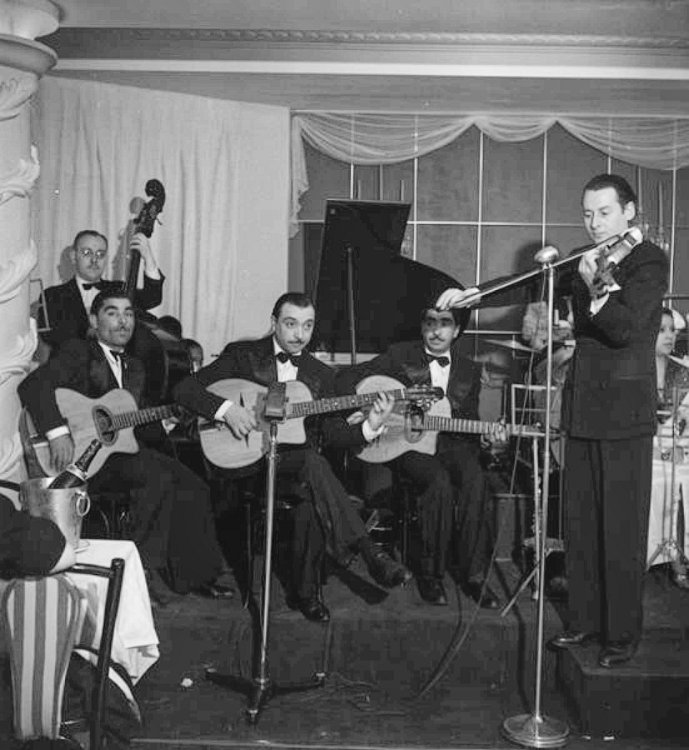
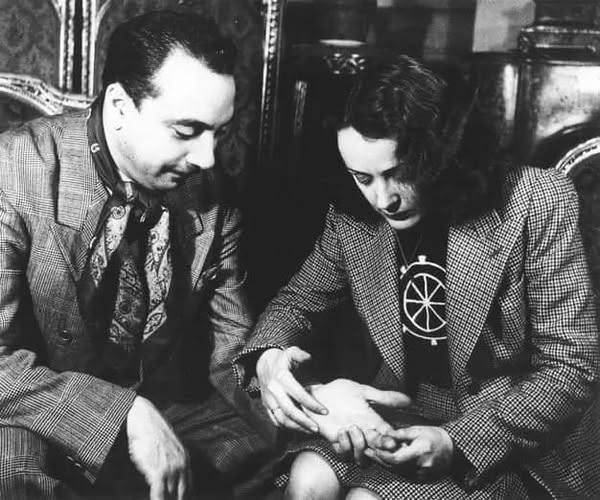
Photo : Émile Savitry
Winston Churchill, a flabby English bulldog, once expressed wisdom: he who chooses shame between war and shame will reap both. The Munich agreement gave the Fuhrer of the third Reich the necessary industrial potential, and if something was missing, then the bankers and industrialists of the United States and a little bit of Great Britain gave it. The spring of French jazz music has passed its peak, although it continued to slide sluggishly into autumn for several historical seconds. Daladier has already confessed his impotence. In 1939, the possessed Adolf seized the country of the Poles, which, in general, happened because of their deeds. Nevertheless, a new war has begun in Europe. The quintet toured England in those days, Stephane, who remembered his father’s stories about the previous war, refused to return to the continent and tried to dissuade his friends, but Django had a camp near Paris, he had to return. In 1940, the Nazis bypassed the stupid Maginot Line through the Ardennes and captured France in forty-three days. Marshal Petain’s government is completely at the mercy of a ridiculous little man with a ridiculous mustache. The fate of the European Gypsies has been decided.
To be continued…