The phenomenon of the Bravo group is obvious and cannot be doubted. From the moment of its foundation, when Aguzarova joined them with a ridiculously forged passport in the name of "Ivona Anders" straight from…


Neo-retro in Russian music is not merely nostalgia for the past, but rather an elegant play with it. The genre emerged in the late 1980s and early 1990s, when musicians, weary of the grandiosity of rock clubs, turned toward the lightness, irony, and melodic charm of 1960s variety music (“estrada”). At its core lies not a precise restoration, but a reinterpretation: twist, Soviet variety music, bossa nova, jazz, and even French chanson are woven together into a sparkling new cocktail.
The Moscow-based band Bravo is generally considered the starting point. Their leader, Evgeny Khavtan, and the inimitable Zhanna Aguzarova cultivated the persona of “Moscow stilyagi” (hipsters/dandies). Their sound was rooted in twist and the sophisticated pop music of the 1960s – blended with rockabilly, new wave, and reggae – while Aguzarova’s flamboyant image became legendary even before she left the group. The mantle of this lighthearted style was later taken up by Valery Syutkin, who brought a sense of elegance and hit-making sensibility to Bravo (as heard on the iconic albums “Stilyagi from Moscow” and “Moscow Beat”).
Running parallel to this was a more theatrical branch of the genre. Irina Bogushevskaya, an alumna of the Moscow State University Student Theater, began her career with a “neo-retro” style program that combined the tradition of the “actor’s song” (theatrical, narrative-driven performance) with elements of pop-jazz. The project by Evgenia Tedzhetova and the band “Salyut” became a benchmark for “sophisticated variety pop-music”: their sound blended elements of bossa nova, the twist, and jazz from the 1930s–60s with contemporary urban lyricism and a touch of self-deprecating humor.
Today, the genre continues to evolve. The St. Petersburg-based group “Birtman” began as a hoax centered on a fictional Soviet variety singer, but it quickly grew into a standalone project where irony regarding everyday life sits alongside the aesthetics of the Soviet variety stage, disco rhythms, and even ska. This “neo-retro” style has found an audience, fueled by a wave of nostalgia – not just for the Soviet past, but for a broader, idealized vision of the “good old days,” a time before scientific and technological progress, globalization, and the politics of global capitalism began to encroach upon the things held most sacred: the ethical, the aesthetic, and the spiritual – beauty, and simple human joy and happiness.
The phenomenon of the Bravo group is obvious and cannot be doubted. From the moment of its foundation, when Aguzarova joined them with a ridiculously forged passport in the name of "Ivona Anders" straight from…

One of my friends from The Boredom Breakers, who went on an untimely sabbatical, often said that rock and roll was most associated with New Year's holidays. The association is generally quite common: the film…
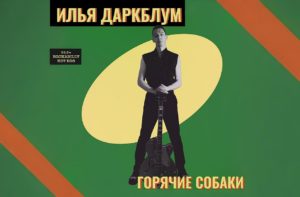
One of the most difficult tasks, along with a completely original billboard album, is a completely Russian-language rockabilly album. We've heard many times, mostly from each other, that the great and mighty is completely unsuitable…
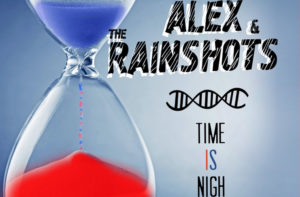
Seventy years have passed since the change of epochs and the beginning of the decline of the Soviet Russian Empire. An absurd little man in an embroidered shirt rhythmically taps his shoe on the podium,…
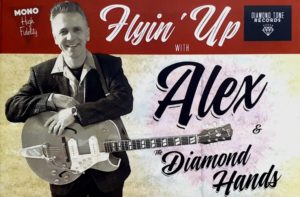
The children of the space power dreamed of flying into space. Not because it was rich and prestigious - the children wanted to see the moon up close, they firmly knew that Solaris was only…