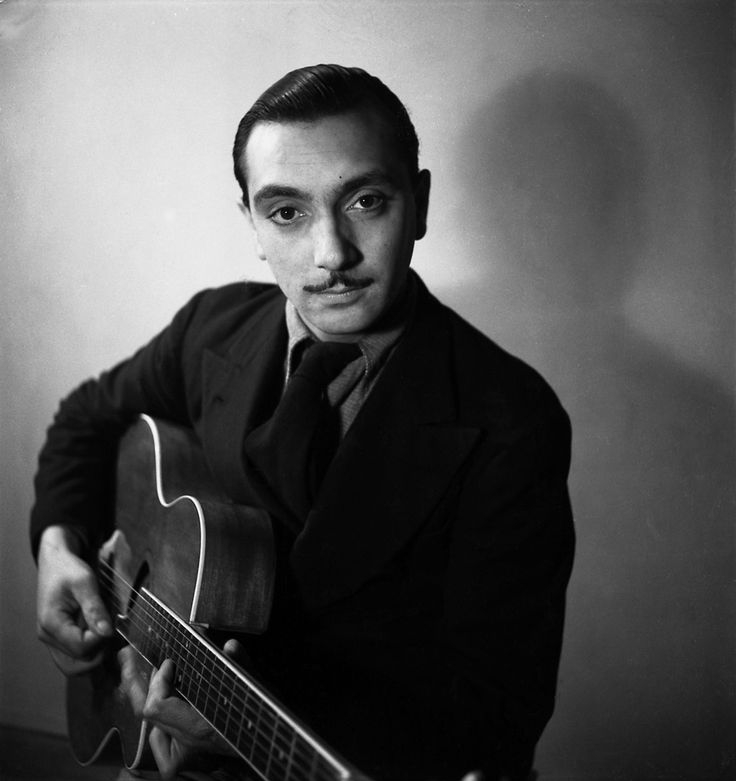
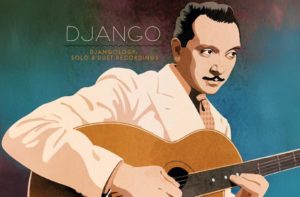
Sylvain Chaume’s brilliant tragicomic cartoon “The Trio from Belleville” begins with Rabelaisian burlesque, in the midst of which, not by chance, but quite naturally, the imposing Monsieur the guitarist appears, masterfully soloing, despite the crippled little finger and ring finger on his left hand. In a difficult passage, he just runs over the fingerboard with his bare heel. The action of this episode takes place in the 1930s, as evidenced by the worn sepia of the film, the bare heel is not just a joke, but a recognition of the virtuosity of a great musician, and Monsieur is none other than Django Reinhardt.
Django Reinhardt
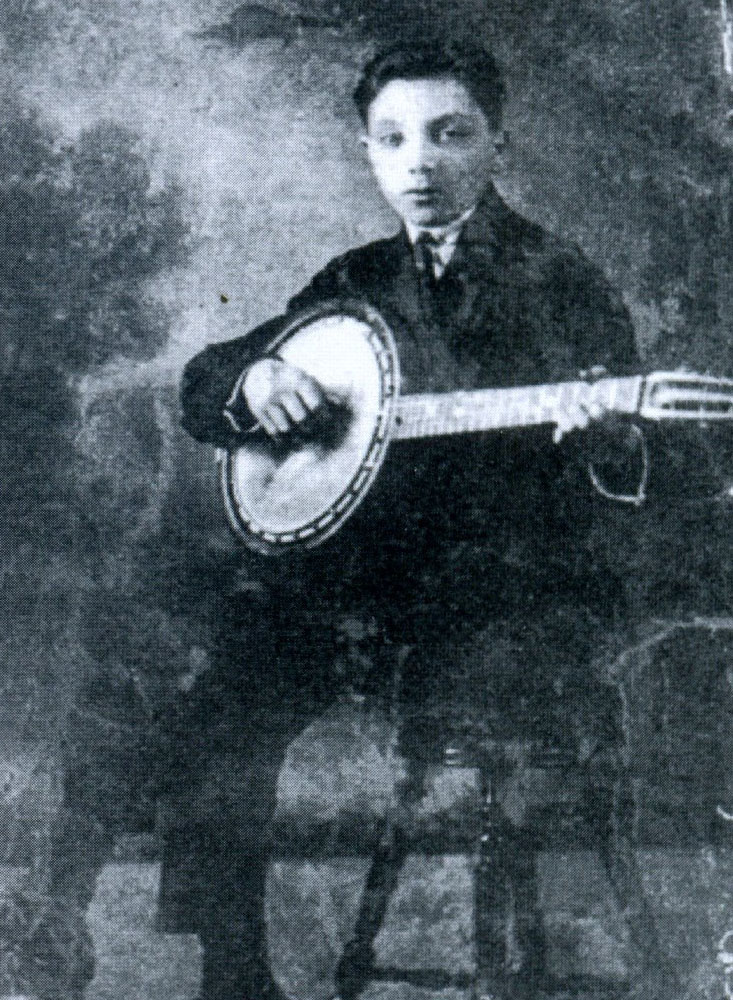
Born in a gypsy camp in Belgium on January 23, 1910, although he did not become a Belgian for obvious reasons. Soon the camp went to the west, Paris is the city of baguettes. As a person who had not reached the age of driving a cart, Django was first assigned to control a violin on crowded pavements, and on his twelfth birthday he was given an outlandish banjo guitar, also known as a ganjo (perhaps hence the nickname “Django” by the nee Jean Reinhardt). The kid instantly mastered a new instrument, and by the age of fifteen, they were no longer ashamed to let him into all the cafes and bistros of the average hand. More and more often, Django began to take his younger brother Joseph with him, who accompanied him on an ordinary six-string.
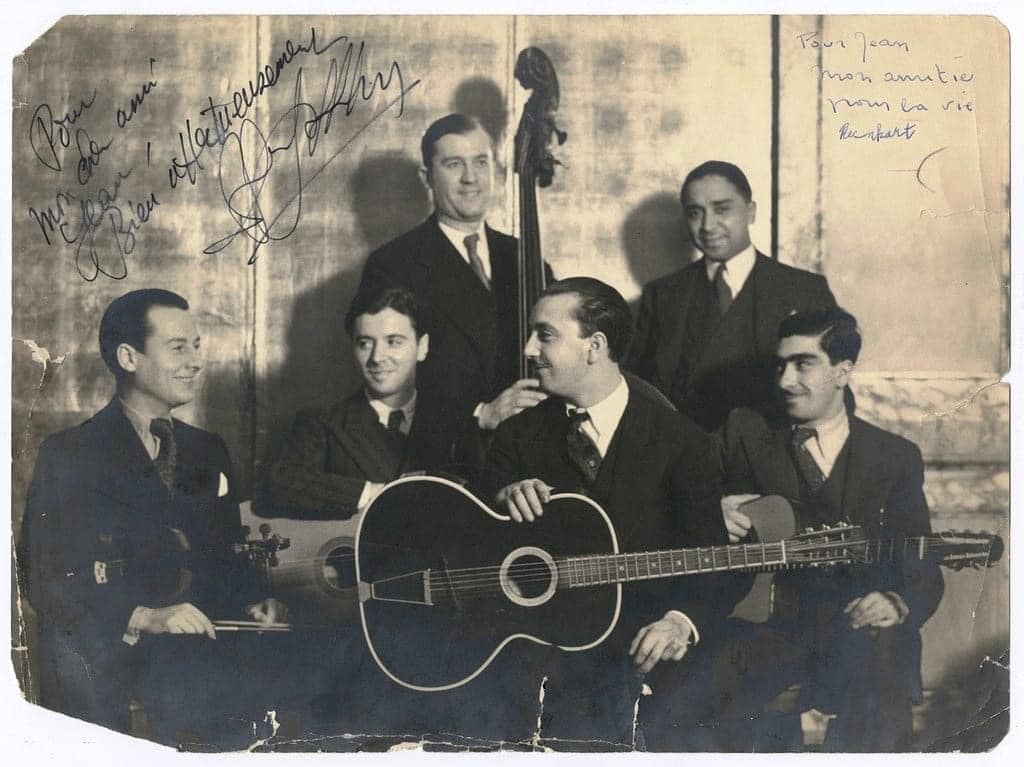
A couple of years later, Reinhardt was ready for marriage, marrying Florine Maya from his camp, whom he called Bella, the Beauty. The wedding took place according to Gypsy laws, without registration at the city hall. In the following 1928, a trio of accordionists Alexander, Wessad and Marceau, famous throughout France, invited Django to record several arrangements for the singer Maurice Chomel. The record, having unexpectedly crossed the English Channel, fell into the hands of Jack Hilton, the main English jazz lover, the leader of his own orchestra, who was already trying to swing, but was in desperate need of fresh soloists, not spoiled by regimental mazurkas. Hilton crossed the English Channel in the opposite direction, found the young Reinhardt and, after a short audition, offered him a contract.
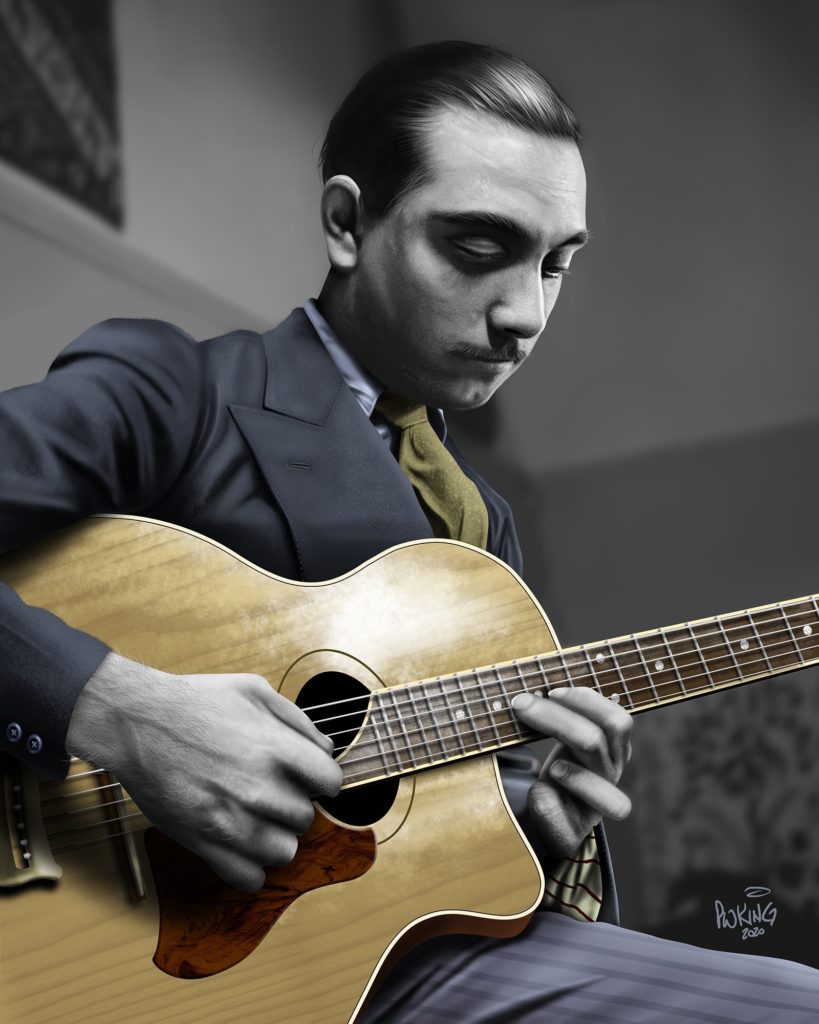
Life seems to have begun to take on an elegant musical form, but the damn celluloid intervened. Bella worked with him making artificial flowers for interiors. It was enough to drop one candle (even Vladimir Lenin would not have been able to electrify the camp of that time), as the damned chemistry burst into flames, engulfing both the cart and Django in seconds. The resulting burns put him in the hospital for a long year and a half. Doctors, faithful to the precepts of medieval farriers, kept trying to amputate the burned leg, but the real tragedy for the musician was the loss of the motor functions of the little finger and ring finger on his left hand. Nevertheless, Joseph, who sincerely loved his older brother, brought a brand-new guitar to the ward to replace the burned-out ganjo. In November 1929, Bella gave her husband a son, Henri Lusson, after which, perhaps at Django’s own insistence, she went to another man, whose last name Baumgartner was recorded for the baby. Life began to take on the dreary forms of Picasso Cubism…
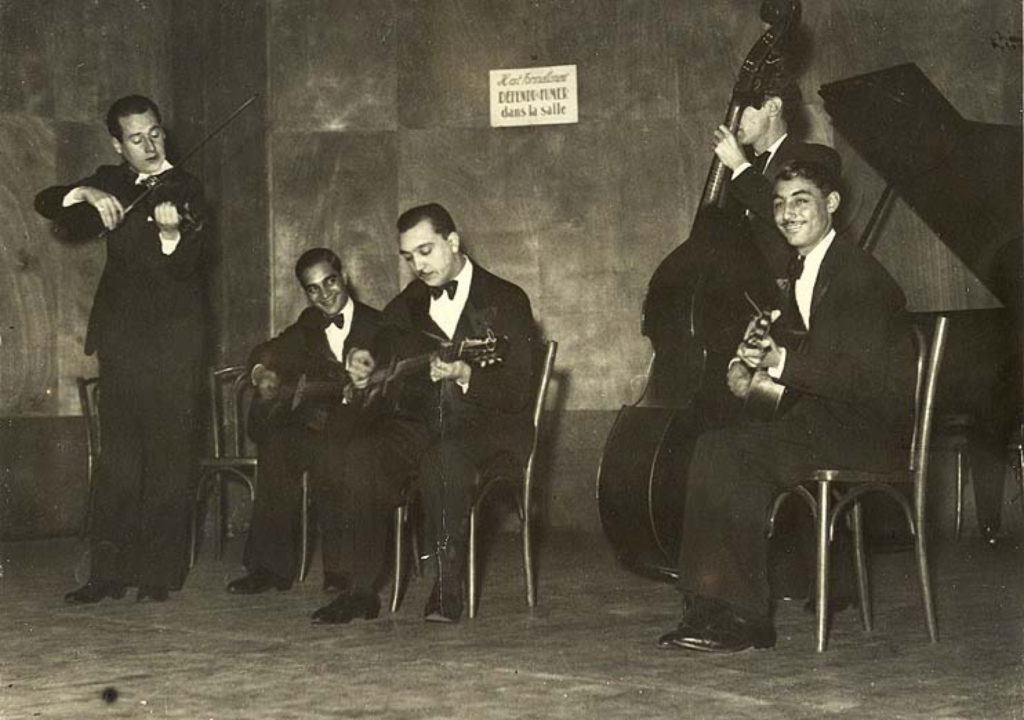
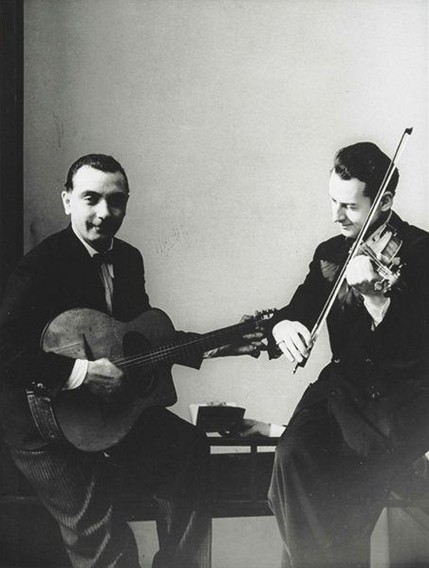
For a couple of years after the infirmary, Reinhardt did not know where to hide, interrupting casual gambling without a stable income, until a higher power pushed him against Emile Savitri, born Dupont, one of those Duponts, a surrealist artist who soon became a famous photographer. Emil scrolled through Django’s extensive collection of American jazz, where, in addition to cornetist Armstrong and pianist Ellington, there were violinist Joe Venuti and guitarist Eddie Lang. If Armstrong’s cornet made it clear what jazz is, then guitar and violin led to the realization of how to do it here and now. It was like being kicked by a stolen horse. Django went to the newly opened “Hot Club”.
Stephane Grappelli
Ernesto Grappelli worked in Paris as an interpreter for the Italian press, wrote articles for newspapers, and sold literary translations. In 1914, when the Great War broke out, his wife had been dead for a year, and his six-year-old son Stefano was in his arms. Nevertheless, the French government sent Ernesto to Italy as soon as she announced the draft. Grappelli only managed to get his son into the dance school of his friend, the famous ballerina Isadora Duncan. But Duncan herself hurried, in turn, to leave France, ahead of time providing her chateau, where the school was located, for a military hospital. All the children were taken home, and six-year-old Stefano was sent to a Catholic orphanage. The long four years turned into one long hungry nightmare for all the little inhabitants, although there were not enough beds for everyone, most of them were freezing on the floor. The empires were struggling in the trench warfare, exhausting their rear areas, and the children were left to God alone, food went to the front. Fortunately, Grappelli Sr. returned almost unscathed. Cursing the Italian army, he immediately took the offspring from the nuns and made him a French citizen, although Stephane, now ten years old, probably had his own opinion on this matter.
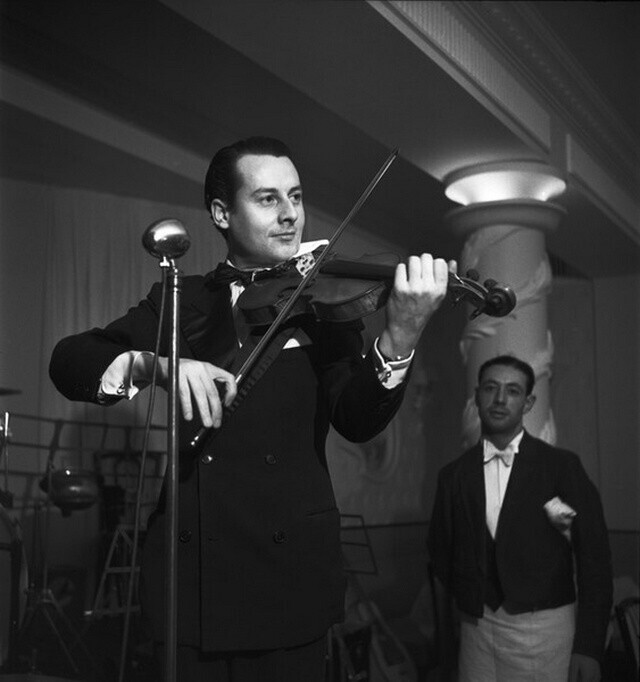
Two years later, on his twelfth birthday, like Jean Reynard two years later, Stephane Grappelli received a musical instrument as a gift – a three-quarter violin, for which dad pawned his weekend suit. At first, Stephane tried to master it on his own, watching his peers, perhaps gypsies, sawing under the canopies of metro stations. It is also possible that no one suggested that a bow made of horsehair needed rosin to connect with the strings, and when asked how to finally extract sound from this piece of wood, the swarthy boy burst out laughing in his face, forcing him to walk home in confused feelings with a useless case under his arm.
Having gained stoicism in the Catholic penates, Stephane was not going to give up, sometimes still taking out long-drawn sounds from the violin case, similar to a distant siren howling about the approach of bombing. In the end, Ernesto Grappelli realized that he had made only half of the gift, and on December 31, 1920, he sent his son to study at the Paris Conservatory. After graduating with a medal, Stephane chose to start an independent life at the age of less than sixteen, leaving his father to establish his personal life. Stephane had already got a job in the orchestra, voicing silent films at the Gaumont cinema, so Ernesto confidently left for Strasbourg with his new wife.
After gaining experience, Stephane got a job in the orchestra of the Ambassador Hotel, which was very prestigious if you were a labourer who played the Pantagruel dances of the gorged “supermen”. The Paul Whiteman orchestra that appeared there once didn’t seem to be anything special until the violinist played a solo in the song “Dinah.” A completely different solo.They didn’t teach these syncopations and phrasings at the conservatory. The violinist was Joe Venuti. So Stephane Grappelli also decided to become a violinist. A jazz violinist. Before that, he was always dabbling in modern pop music. After a little practice, Stephane showed the results of the exercises to his roommate, Michel Varlop.
Varlop, being three years younger than Grappelli, but having in his luggage those four years that Grappelli did not have, Varlop, who grew up full, who did not have the habit of fighting for a crust of bread, Varlop said that it was cool, and then played something heartbreakingly virtuoso from Chopin, like. There was a lot of wine. Stephane has sworn off playing the violin, switching to the piano. That’s why I got a job in the orchestra of a certain Gregor. Gregor may have been Armenian, but he had a weakness for cognac, which he also used to treat musicians. After another heavy boozy session, he offered Stephane a violin. The hungover Stephane played. Gregor made a point: Stephane no longer studied the keys, playing the violin exclusively. A little later, Gregor will leave for Latin America to avoid punishment for an accident in which people died. Saxophonist Andre Ekian will take his place. What about Stephane? Stephane went to the newly opened “Hot Club”…
To be continued…