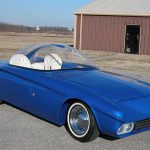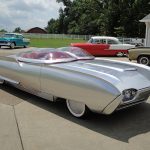

The heroine of this article was casually mentioned by me in the material about the most significant of all Darryl Starbird’s cars, the Predicta. In the process of writing that article, I found out that there was no information about Le Perle on the Internet – and I was very disappointed by this: while Predicta was dismantled to a cogwheel, its predecessor undeservedly remained in the shadows, and disappeared into the river of time. The story of the blue beauty seemed incomplete without any information about her older sister, but the world is small: tapping on the keyboard an article about a completely different car, I came across a mention of the magazine Speed Mechanics, on the cover of one of the issues of which Le Perle was emblazoned. On the same day, another vintage magazine was bought, which crossed half the planet and very soon fell into my hands.
That was just over a year ago – unfortunately, like many of my other projects, I had to shelve the article about Le Perle. But the time has come, so let me share the little that was written about Le Perle in the August 1961 issue of Speed Mechanics magazine. As it turned out, the article was written by Darryl Starbird himself, which means that although there is little information, it is the most reliable.
The history of Le Perle
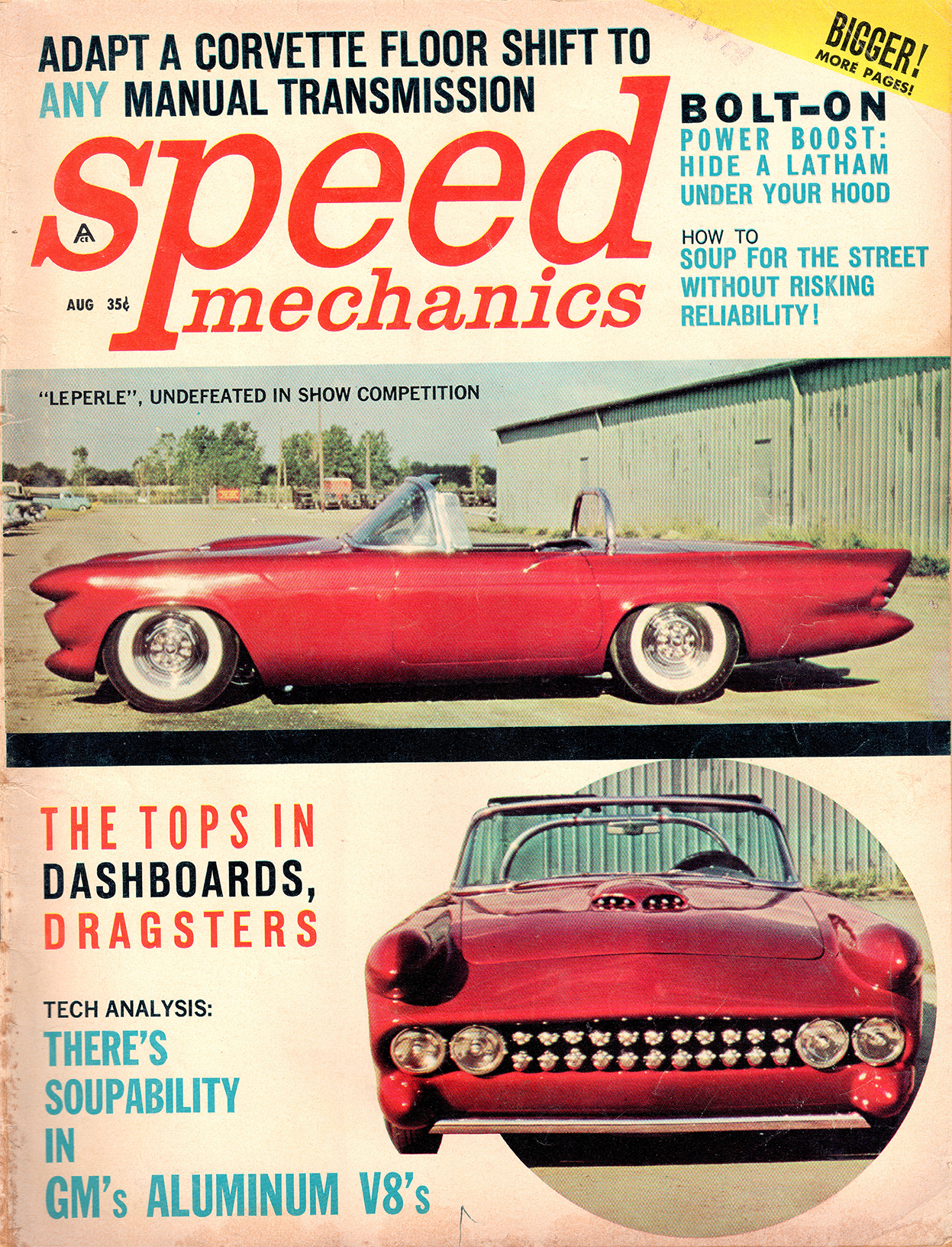 Speed Mechanics (August 1961) with Le Perle on the cover.
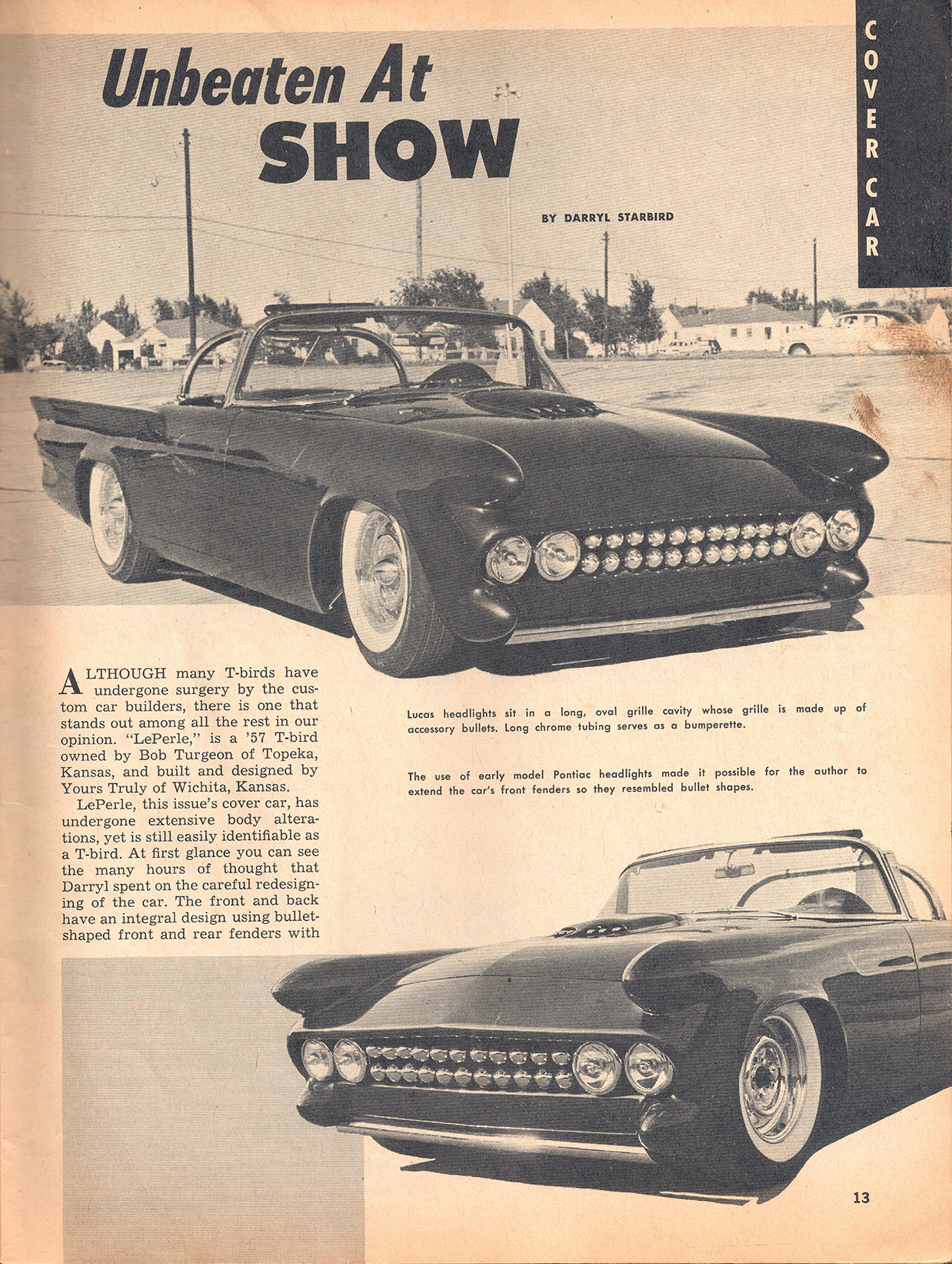
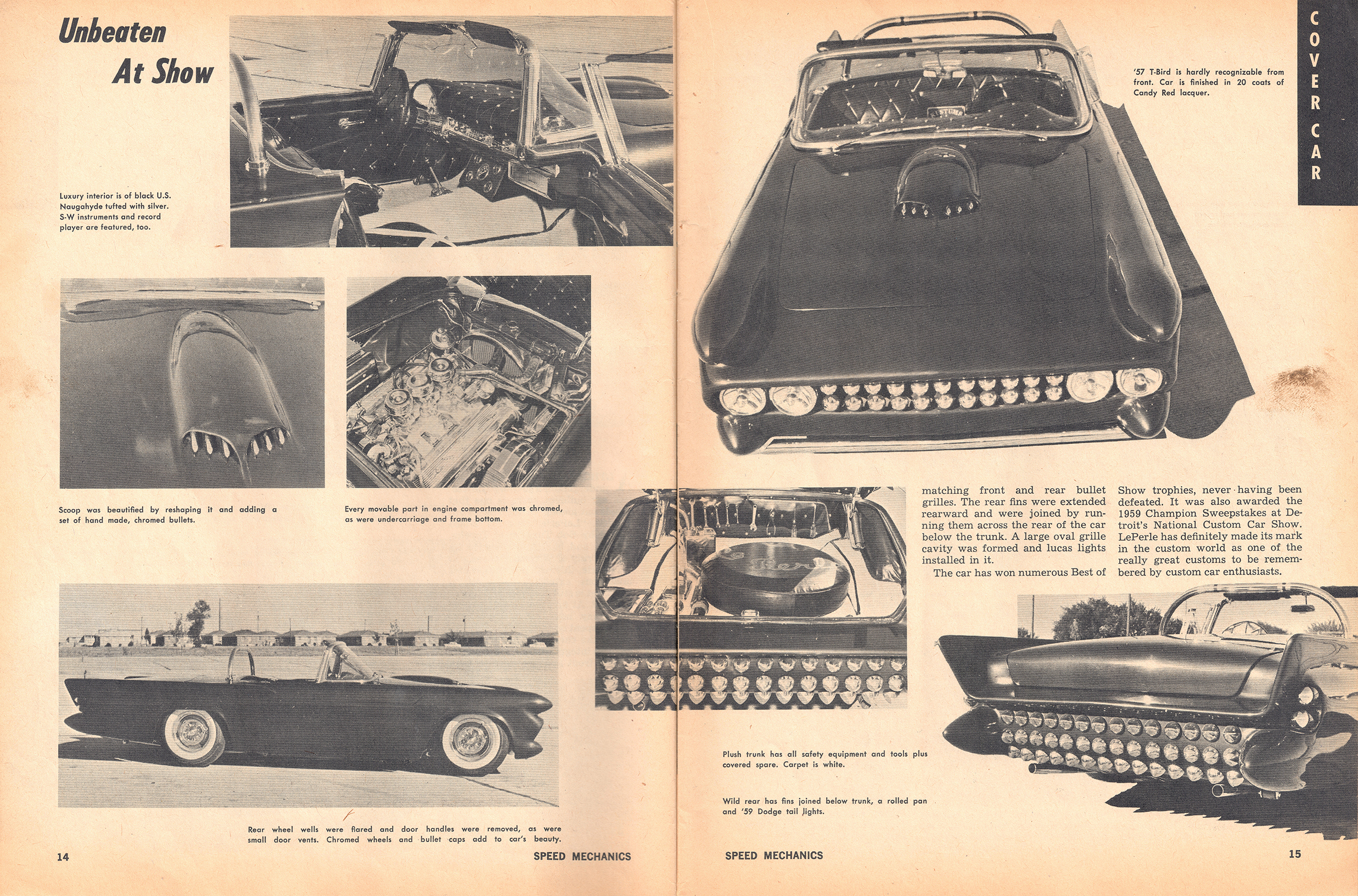
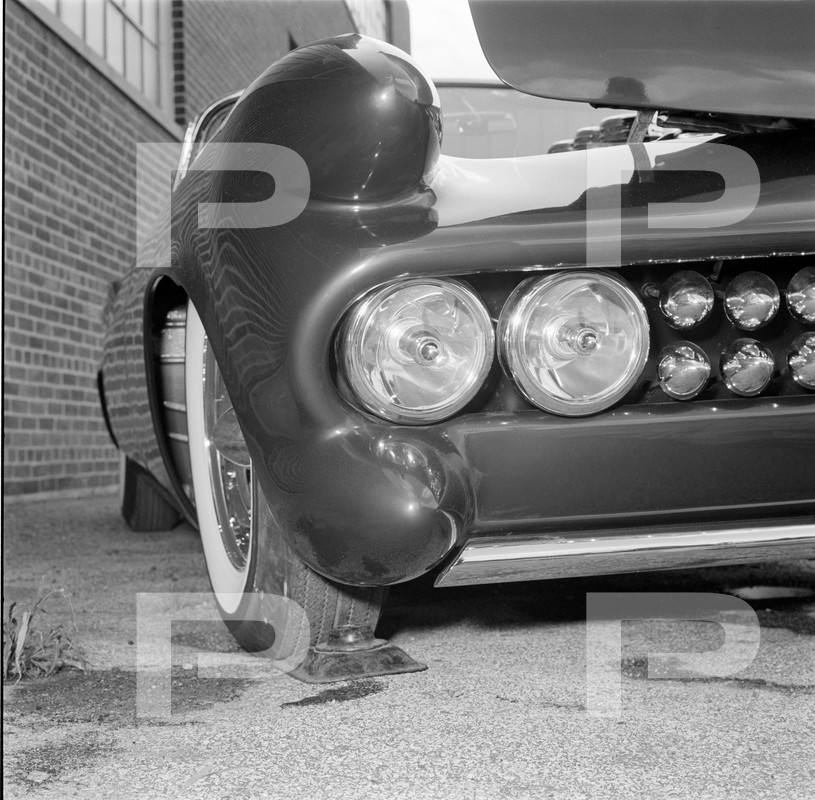
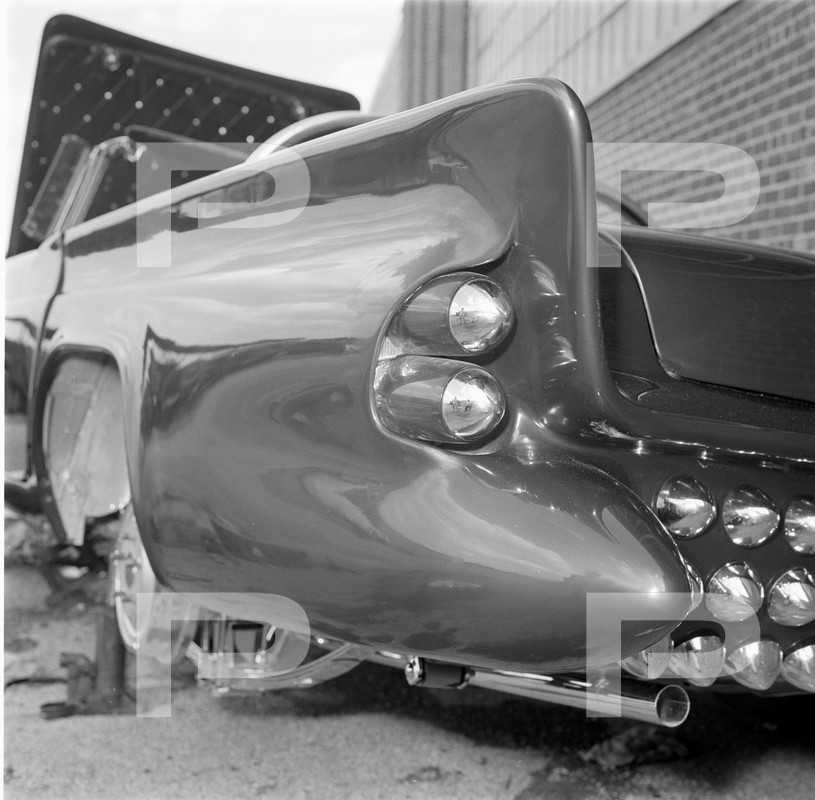
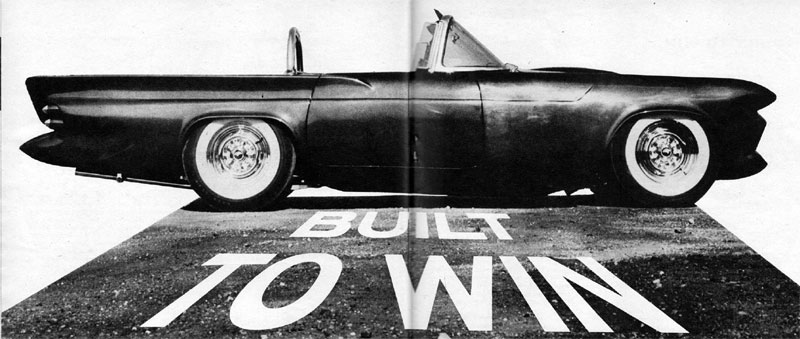
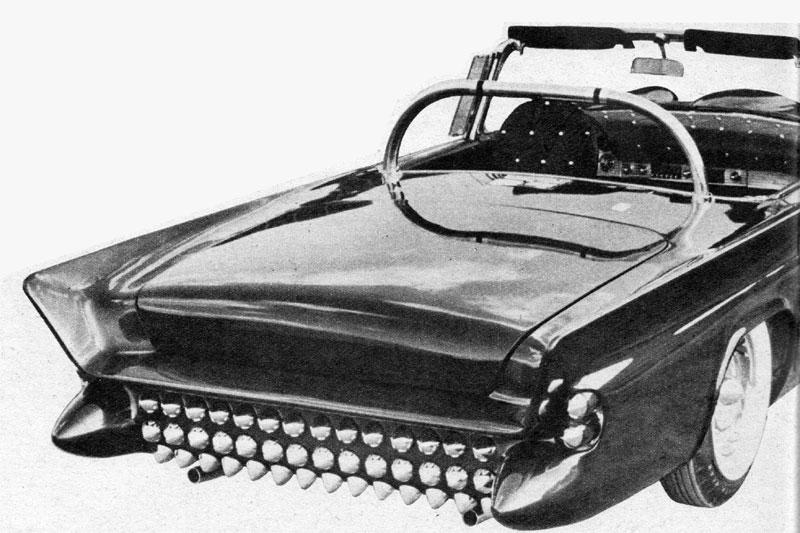
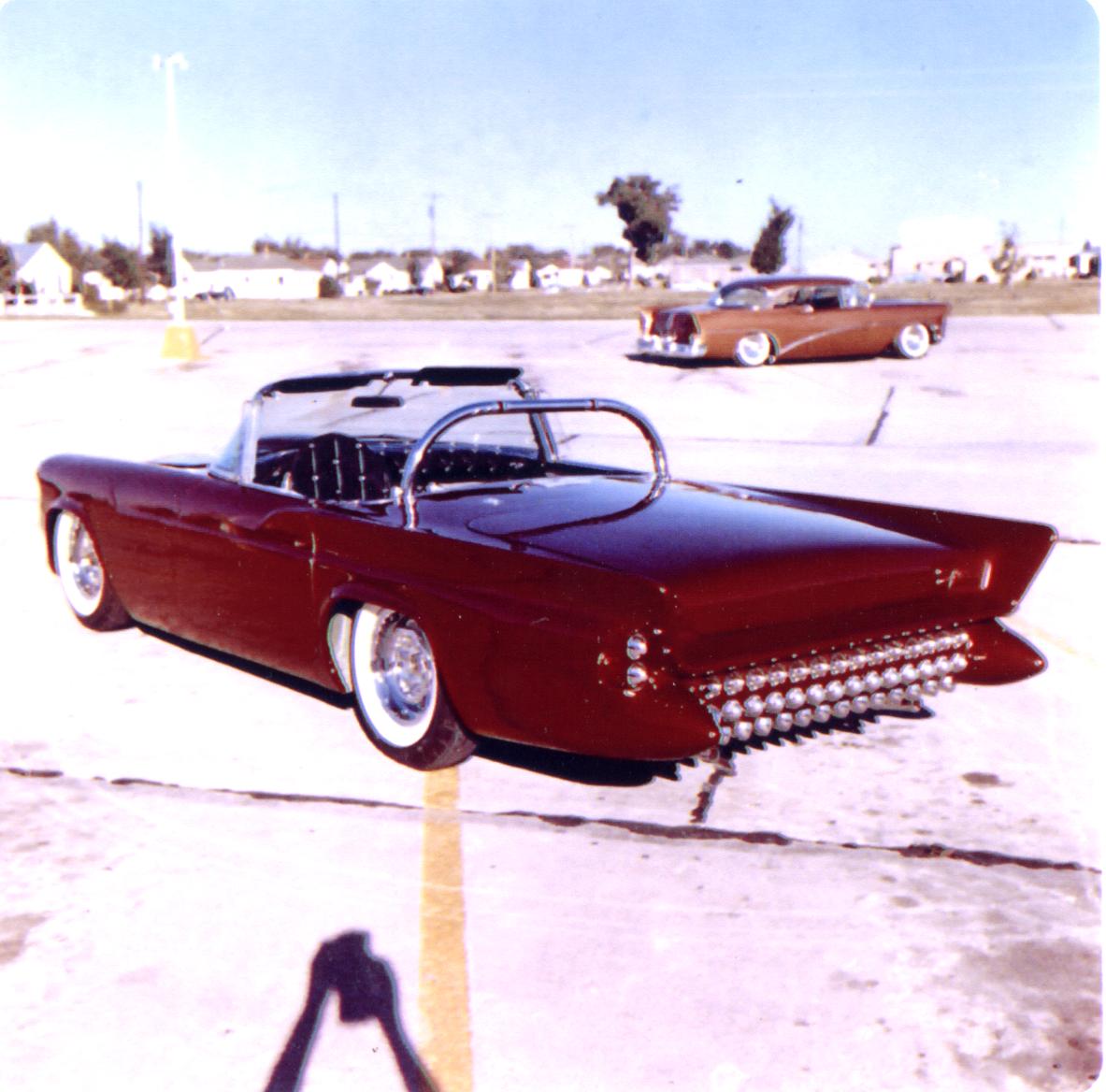
So, in Kansas in the early sixties, Le Perle appeared – the 1957 Ford Thunderbird that Darryl built for Bob Turgeon, and one look at the factory Thunderbird makes it clear the full amount of work done by Starbird. Using early-model Pontiac optics instead of standard headlights, Darryl extended the front fenders of the car forward, giving them the shape of bullets. Comrade Starbird did the same with the rear fenders of the car, installing along the way the taillights from Dodge ’59 instead of the factory ones. The design of the fenders is repeated by many chrome bullets, which play the role of a new oval-shaped radiator grille in front, and are mounted in three rows at the rear instead of the rear bumper – in exactly the same way Darryl executed the radiator and rear bumper on Predicta after the first redesign.
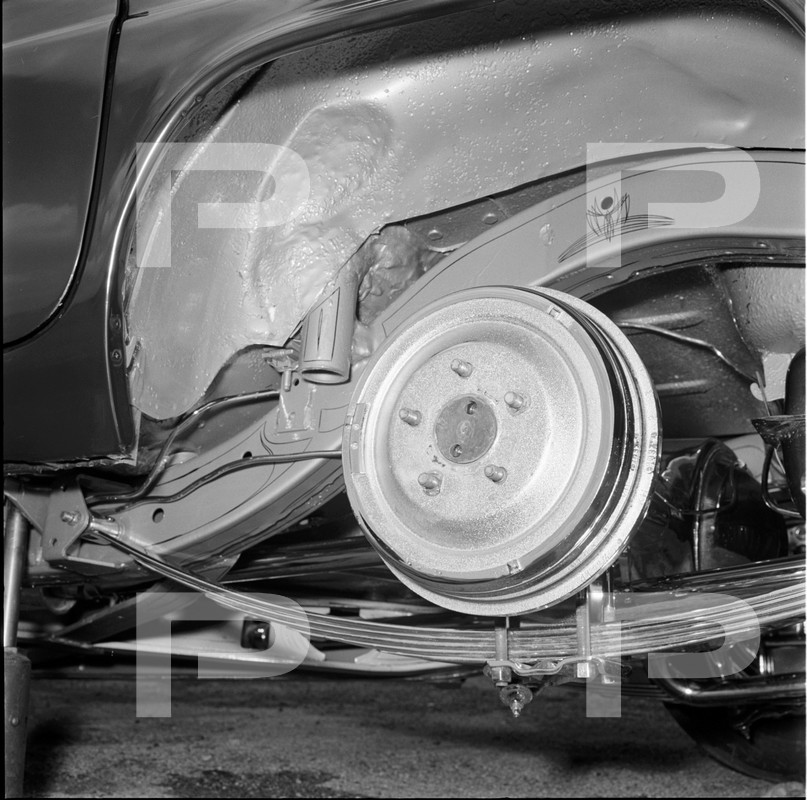
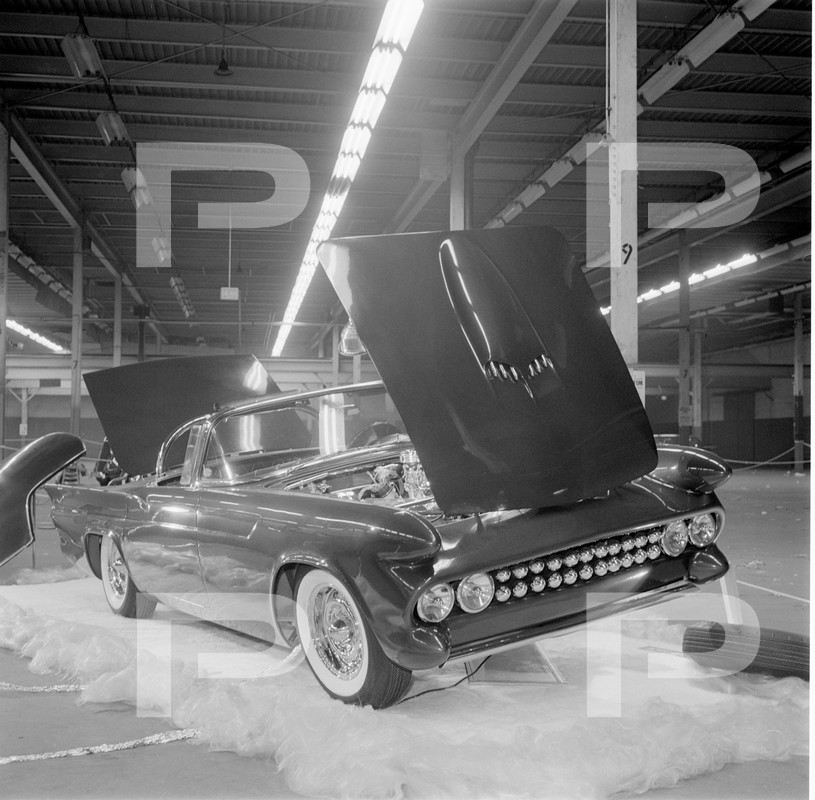 Unfortunately, the best quality photos of a car exist only with such a watermark, which makes it absolutely impossible to identify the person who stuck it on. It would be better if they advertised an e-mail or a website, honestly. For a long time, RockThisTown tried to find a non-branded option, but the attempts were unsuccessful - a connection was even established with Darryl Starbird himself, but he said that he had not had these photos for a long time.
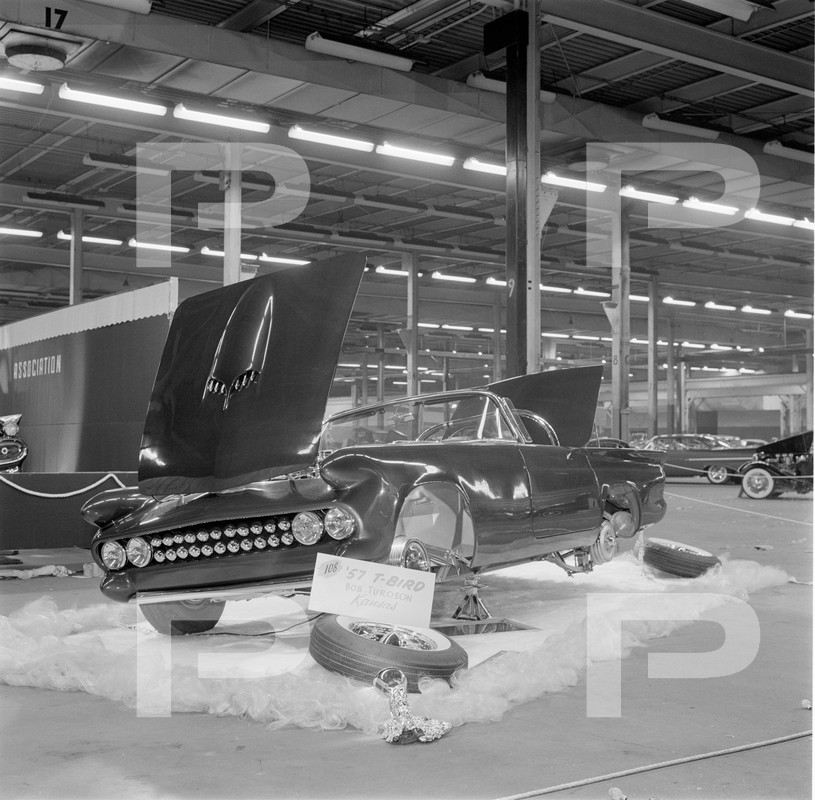
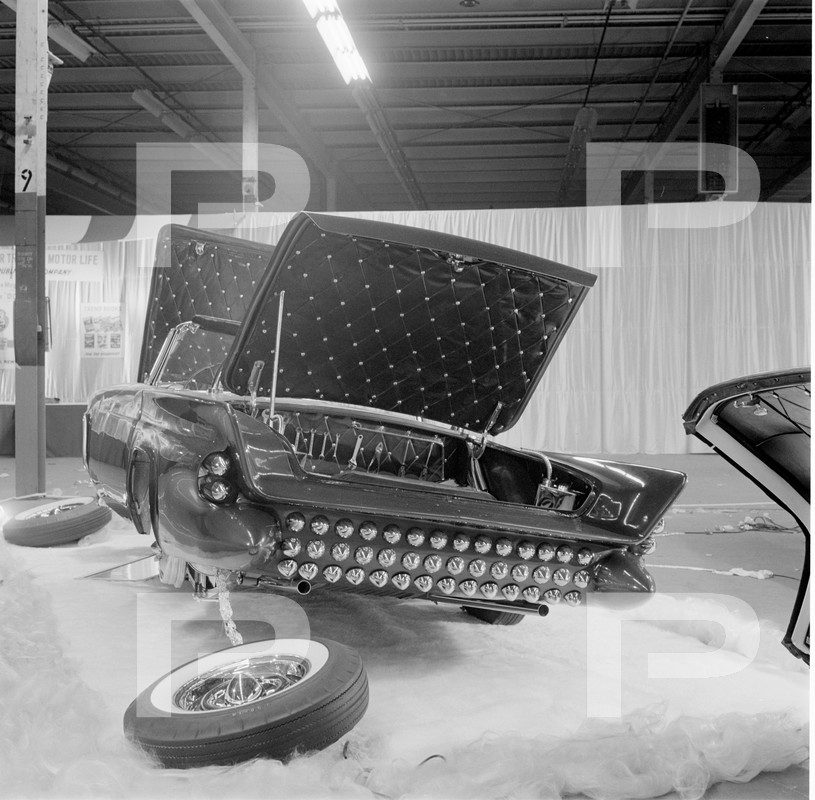
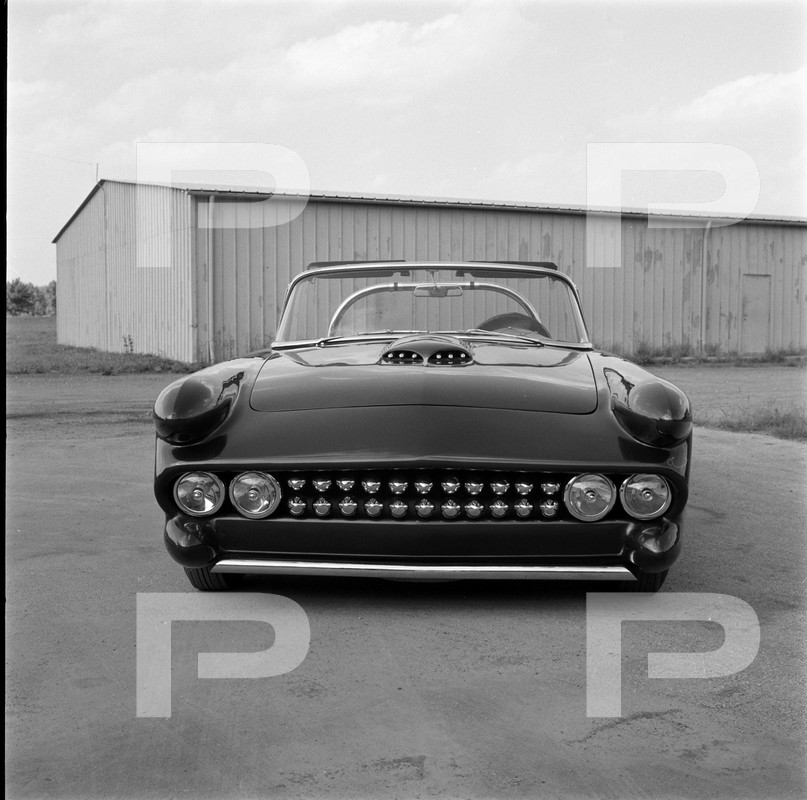
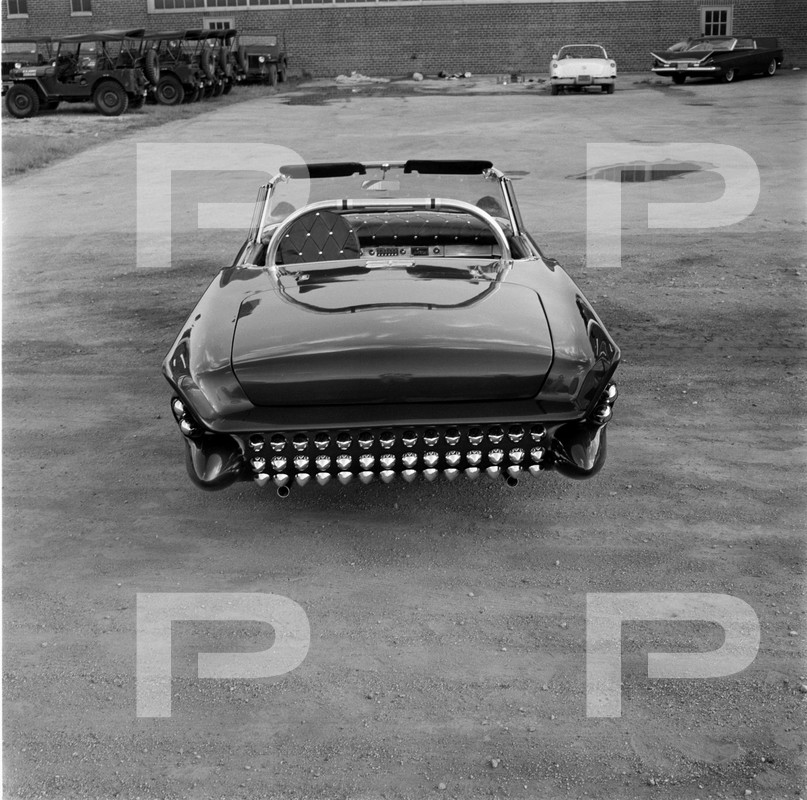
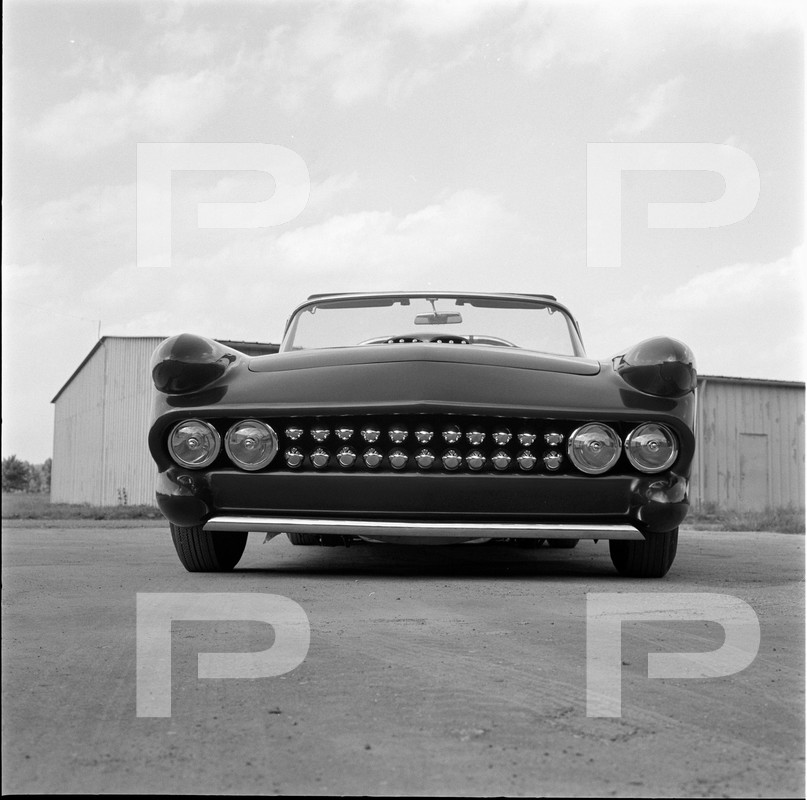
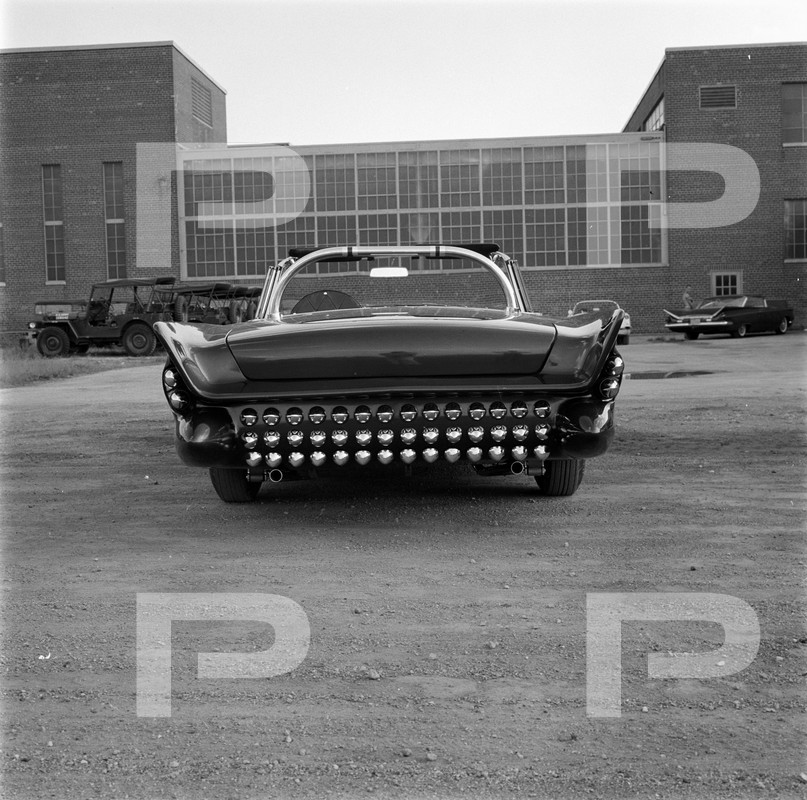
In addition to redesigning the front and rear fenders, Starbird extended the rear fins and neatly connected them under the trunk of the car. The rear wheel arches were redesigned and slightly widened, and the door handles and small air vents were removed. The disk caps are still made in the shape of bullets. Bullets can also be found in the air intake on the hood, the shape of which has also changed noticeably. An engine awaits us under the hood, each part of which has been chrome-plated. The photo clearly shows that the standard carburetor has been replaced with something more beautiful – there are no words about this in the article, but I would venture to assume that we have three two-chamber carburetors in front of us. Tri-Power could hardly have been obtained from the factory on the ’57 Thunderbird, so most likely, this is also the work of Comrade Starbird.
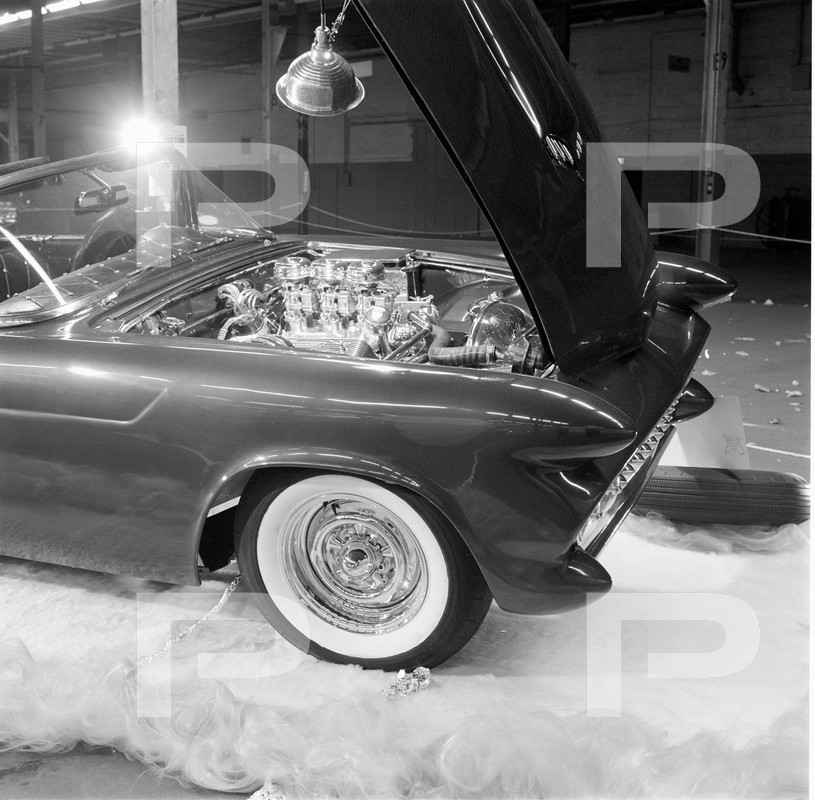 Just look at all these details. And especially pay attention to the pinstripe on the frame: the decoration of the car frame is always there... a certain special touch, something almost imperceptible, hidden from the eyes of most. Nevertheless, most craftsmen decorate the frame of their cars in full. That's almost it... an intimate detail.
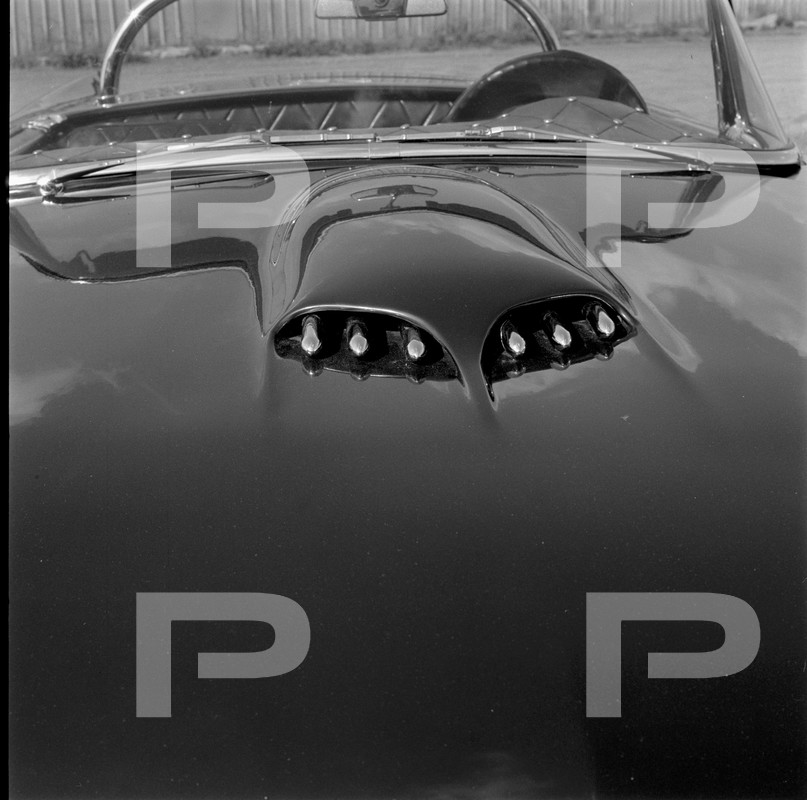
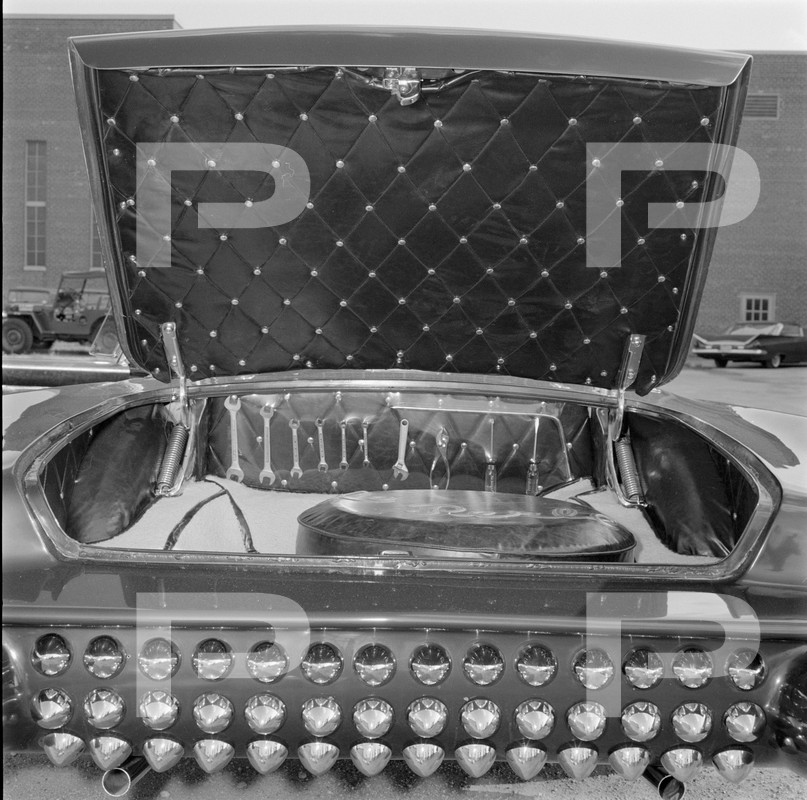
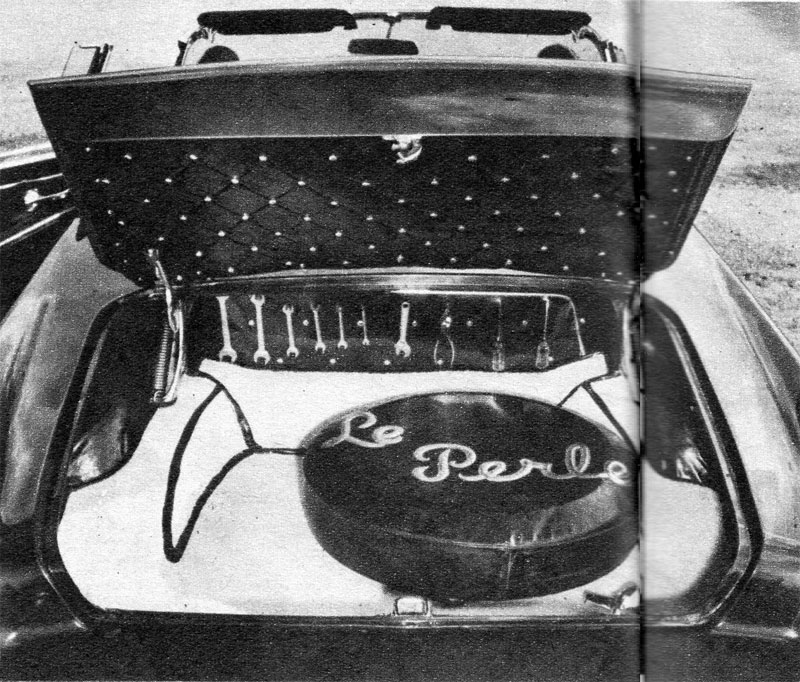
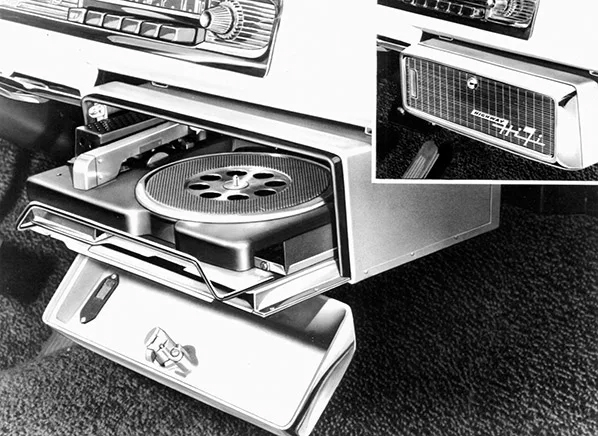
A set of various tools and a spare tire are waiting in the trunk with a snow-white carpet. The interior is made of black faux Naugahyde leather, quilted with silver. And look – what is it there, in front of the passenger seat? Yes, this is Highway Hi-Fi – one of the few car vinyl turntables! Yes, cats, there was such a thing as a vinyl record player for a car. You probably guessed this by looking at TVs and phones in custom designs and concept cars of that time.
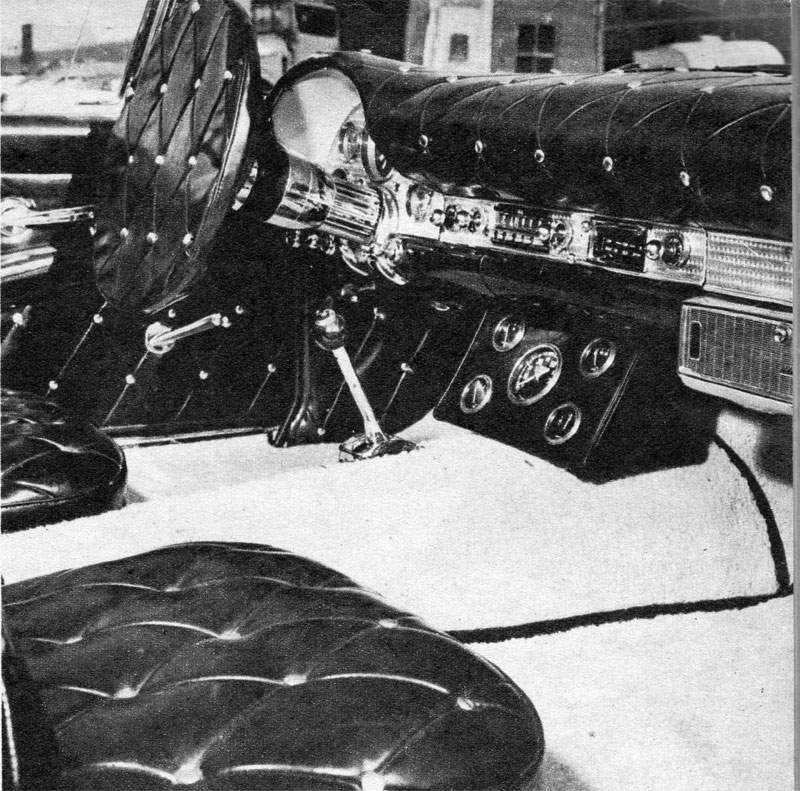 These photos, apparently, are scans from some other article written in a magazine unknown to me. Nevertheless, it is here that you can see the interior of the car and some other details in detail.
Car Vinyl Turntables
Honestly, Highway Hi-Fi deserves a few lines in a separate order – I’ve wanted to talk about this thing for a long time, but at the same time I didn’t want to write a separate article specifically about gadgets without a car. So, special discs have been developed specifically for Highway Hi-Fi: They look similar to regular 45-rpm singles, but are much thicker and designed for a speed of 16 2/3 revolutions per minute. The speed was determined by the fact that it was necessary to cram a little more than one song onto one side of the record – 16 and two-thirds turns allowed 60 minutes of sound to be recorded. The thickness of the plate was explained by a much heavier tonearm – no one wanted the needle to jump on every bump. It was very convenient to load the plates: the developers of this device eliminated the need to lift and carefully place the needle on the edge of the disc – instead, it was enough just to press the button.
In addition to Highway Hi-Fi, there were several other models of automotive vinyl turntables on the pages of history – for example, from RCA and a very stylish device from Philips/Norelco. But all of them were designed for the most common 45 rpm records, and therefore are somewhat less interesting than Highway Hi-Fi, whose happy owners nowadays are trying with varying success to convert the unit to a speed of 45.
Why are car vinyl turntables so rare? Well, each of them had their own problem. For example, in the case of Highway Hi-Fi, it is worth mentioning at least that the number of records was very limited: only 42 discs were designed for a speed of 16 2/3. Plus, evil tongues say that despite all the tricks, the needle still jumped – and this at a price of 200 bucks, when for one and a half thousand you can It was worth taking a whole car. Already in ’57, Highway Hi-Fi ceased to be an option approved by the factory, and after ’59 it disappeared altogether.
He was replaced by the already mentioned RCA Victrola – this unit cost only fifty dollars and it was possible to load up to 14 records into it, which he could play one after another. If you downloaded the EP records, you could listen to music for two and a half hours without a break! His competitor was also the aforementioned Auto Mignon from Philips/Norelco – you could only play one record, and you still had to keep the rest in the box in the back seat, but this player just looked bombastic.
And no matter what anyone says, the needle didn’t jump on these two models. At least one test reports that the car walked over cobblestones, large holes and broken pavement – the player was “immune to bad roads, car shaking and sudden braking.” There is also a good video with a disassembled Auto Mignon that proves the same thing.
But here another problem arises: an ordinary 45 mm thin disc is not designed for strong needle pressure, and therefore the plates wore out much faster. And this is not counting other minor bugs: for example, Victrola had a habit of turning slow ballads into the Flight of a Bumblebee. In general, RCA stopped production already in the 61st, and Auto Mignon lasted until the 63rd. It would probably be possible to put the idea into practice over time and come up with some kind of technological solution – for example, laser vinyl disc players were definitely invented somewhere in the late 80s – but the madman Munz already in the 62nd year began to sell his magnetic tape cartridges to the people… In short, the format war on the automotive front was lost before it even really started.
Returning to Le Perle, I would like to note that the last paragraph tells about the numerous awards that this car has won. Darryl claims that at the time of writing, his beauty had won the title of the best at any auto show, never giving up that spot to another car. Le Perle also took the 1959 Champion Sweepstakes award at the National Custom Car Show in Detroit. And, of course, it has already been mentioned many times that Predicta appeared only thanks to the heroine of this article. So, even if Le Perle has not reached our days, it has definitely left its mark in the world of custom cars.
https://www.consumerreports.org/cro/news/2014/04/record-players-were-the-infotainment-systems-of-the-1950s-and-60s/index.htm
http://customrodder.forumactif.org/t3420-1957-ford-thunderbird-bob-turgeon-le-perle-star-kustom-shop/
https://www.youtube.com/watch?v=rWOtaEQwi9k
https://www.youtube.com/watch?v=y337Yfls1gU
https://www.youtube.com/watch?v=aKfaEb1n2F4
https://www.youtube.com/watch?v=S0hRzEihsR4