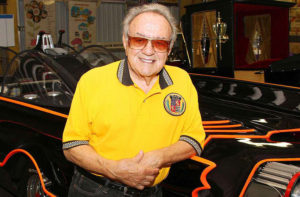
I bet that a lot of people who have heard about George Barris and got acquainted with his creations were surprised by the fact that Barris is called the King of Customizers. And the thing is that Comrade Barris’ most famous – and most controversial – cars, which he built for various stars, television series and films, were created after George received his title of King. And he got it, of course, not at all for the Batmobile and the gold-studded Cargoyle, or even for the Cadillac built for Elvis Presley.
No, the nickname of the King of Customizers was given to Comrade Barris by the customizers themselves, for much earlier projects. They didn’t appear on TV screens and Elvis wasn’t driving them, which is why Barris’ old projects are much less well-known among the people as a whole, but they brought George fame on the custom scene, and they are still really revered and praised among customizers.
George Barris and Elvis
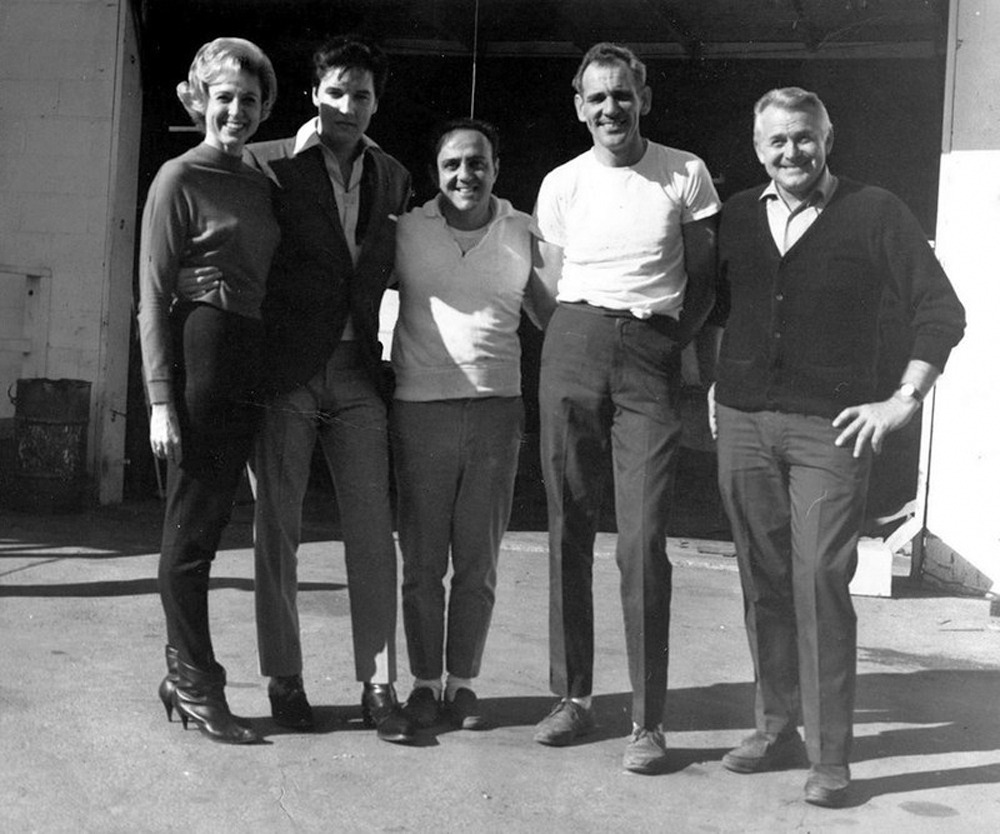
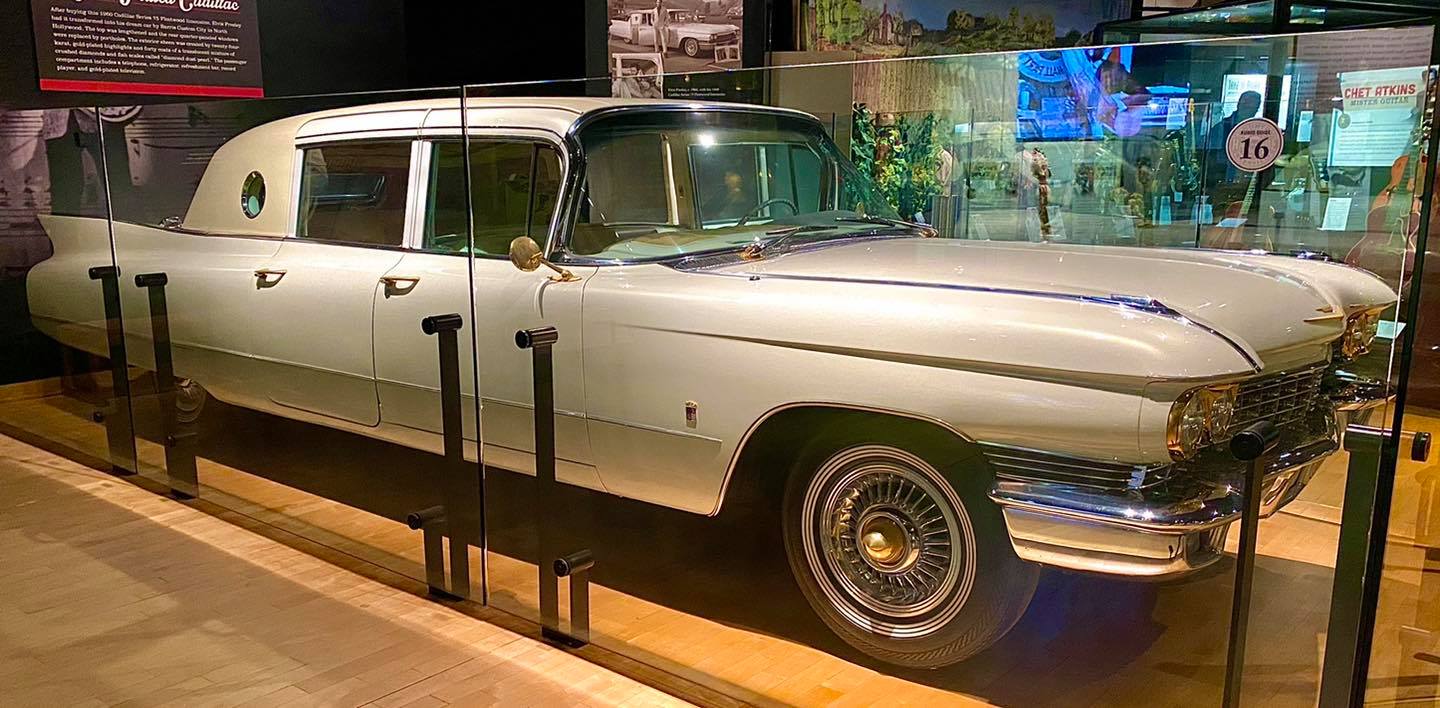 Perhaps the most famous car that Comrade Barris built for Comrade Presley is the 1960 Cadillac Series 75 Fleetwood Limousine. The car is known for going on its own promotional tour instead of Elvis, who was busy promoting his latest film at the time. Cadillac left Barris's workshop in 1962 - by that time, George had already built a Batmobile and become famous in Hollywood, so the limo was filled with a bunch of all sorts of husks, like gold-plated telephones and copies of gold Elvis records mounted in the roof. This whole pile of gold will serve as a great contrast to George's earlier works, examples of which are presented below.
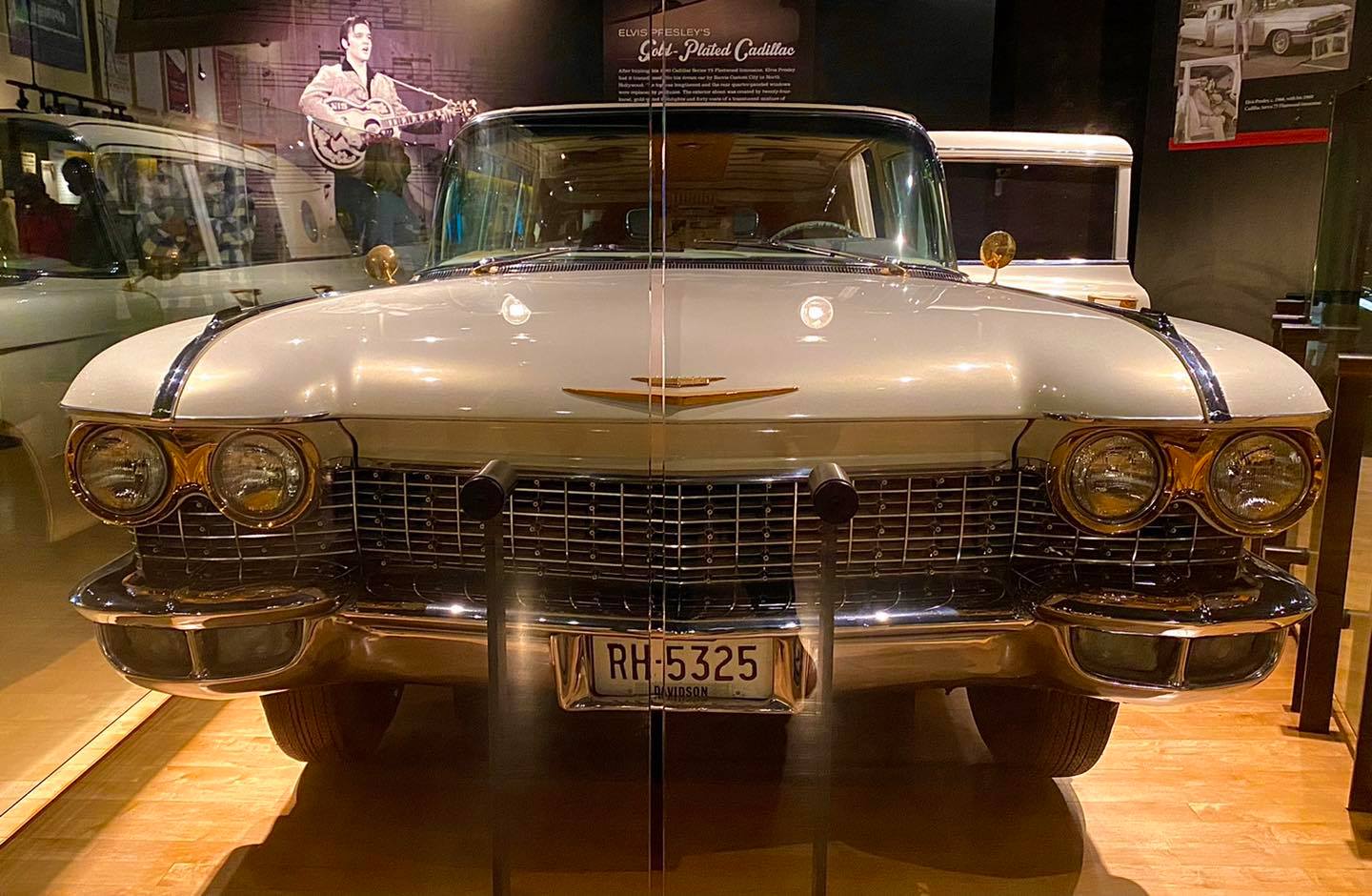 Perhaps the most famous car that Comrade Barris built for Comrade Presley is the 1960 Cadillac Series 75 Fleetwood Limousine. The car is known for going on its own promotional tour instead of Elvis, who was busy promoting his latest film at the time. Cadillac left Barris's workshop in 1962 - by that time, George had already built a Batmobile and become famous in Hollywood, so the limo was filled with a bunch of all sorts of husks, like gold-plated telephones and copies of gold Elvis records mounted in the roof. This whole pile of gold will serve as a great contrast to George's earlier works, examples of which are presented below.
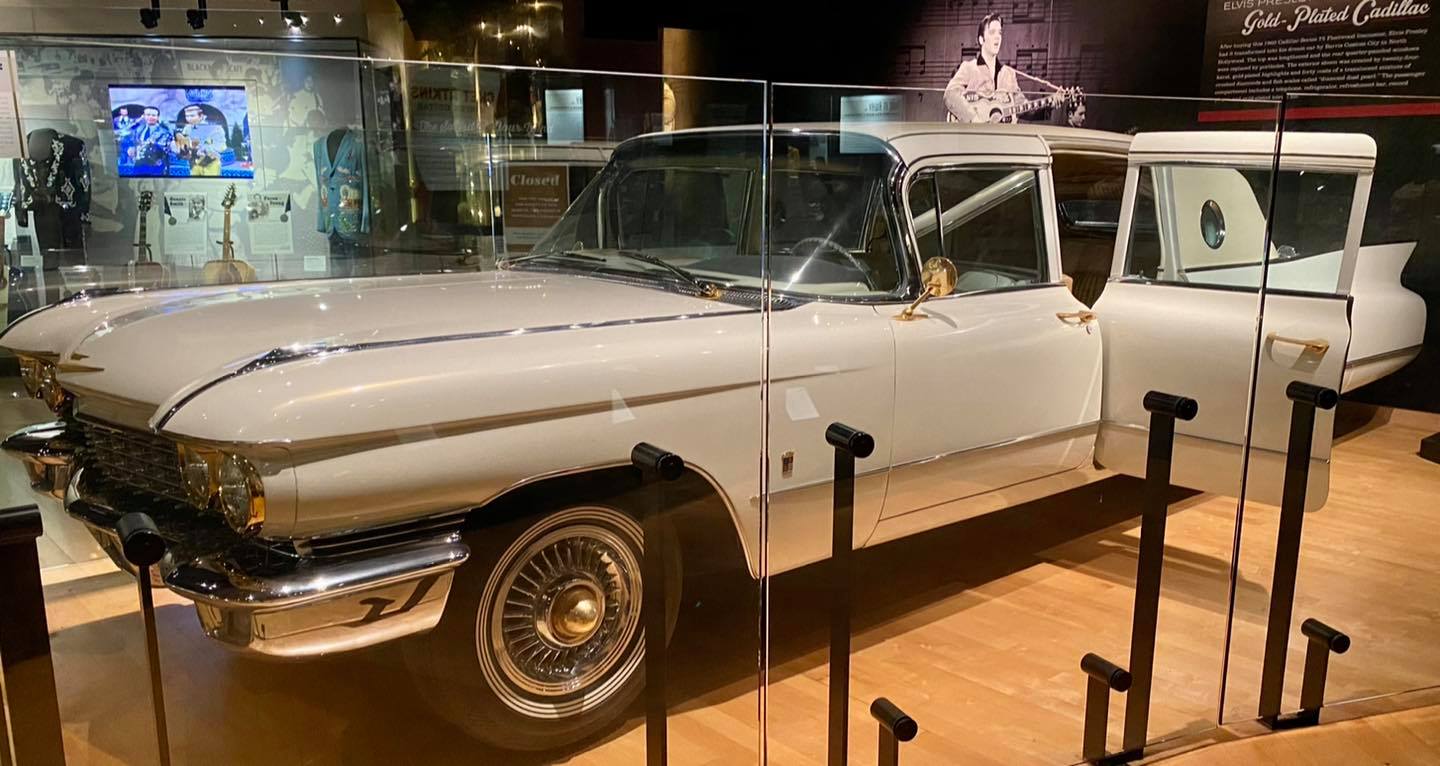 Perhaps the most famous car that Comrade Barris built for Comrade Presley is the 1960 Cadillac Series 75 Fleetwood Limousine. The car is known for going on its own promotional tour instead of Elvis, who was busy promoting his latest film at the time. Cadillac left Barris's workshop in 1962 - by that time, George had already built a Batmobile and become famous in Hollywood, so the limo was filled with a bunch of all sorts of husks, like gold-plated telephones and copies of gold Elvis records mounted in the roof. This whole pile of gold will serve as a great contrast to George's earlier works, examples of which are presented below.
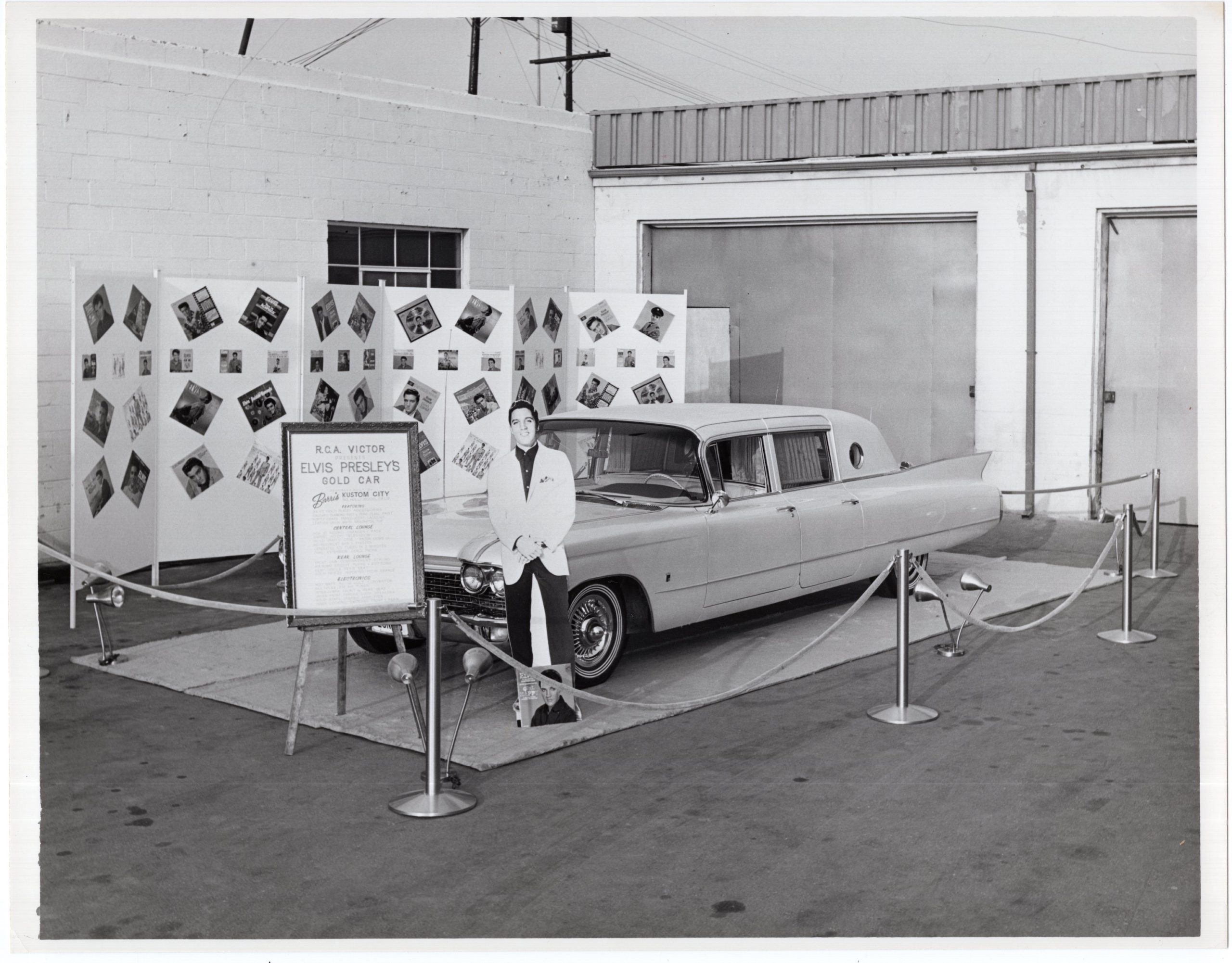 Perhaps the most famous car that Comrade Barris built for Comrade Presley is the 1960 Cadillac Series 75 Fleetwood Limousine. The car is known for going on its own promotional tour instead of Elvis, who was busy promoting his latest film at the time. Cadillac left Barris's workshop in 1962 - by that time, George had already built a Batmobile and become famous in Hollywood, so the limo was filled with a bunch of all sorts of husks, like gold-plated telephones and copies of gold Elvis records mounted in the roof. This whole pile of gold will serve as a great contrast to George's earlier works, examples of which are presented below.
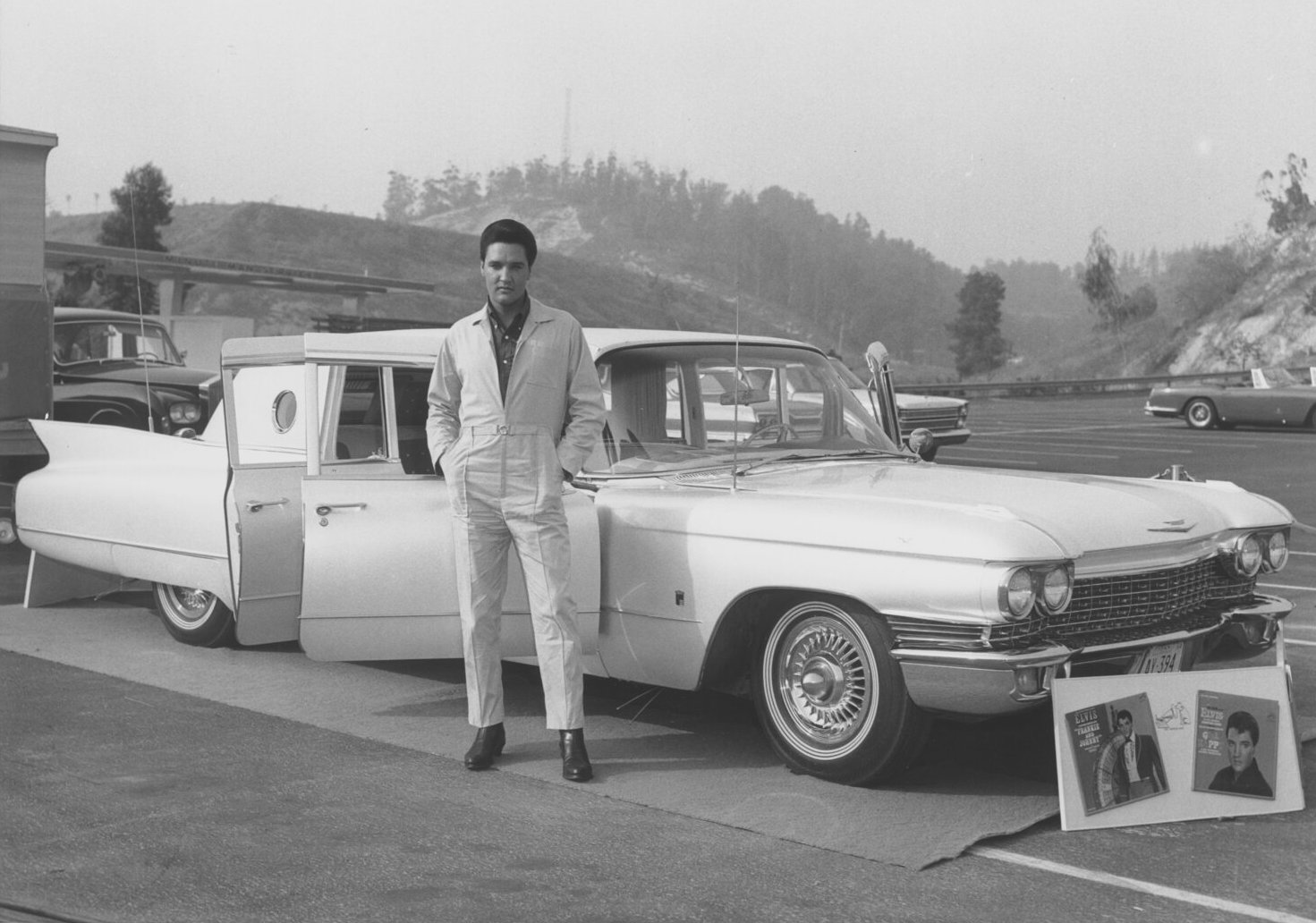 Perhaps the most famous car that Comrade Barris built for Comrade Presley is the 1960 Cadillac Series 75 Fleetwood Limousine. The car is known for going on its own promotional tour instead of Elvis, who was busy promoting his latest film at the time. Cadillac left Barris's workshop in 1962 - by that time, George had already built a Batmobile and become famous in Hollywood, so the limo was filled with a bunch of all sorts of husks, like gold-plated telephones and copies of gold Elvis records mounted in the roof. This whole pile of gold will serve as a great contrast to George's earlier works, examples of which are presented below.
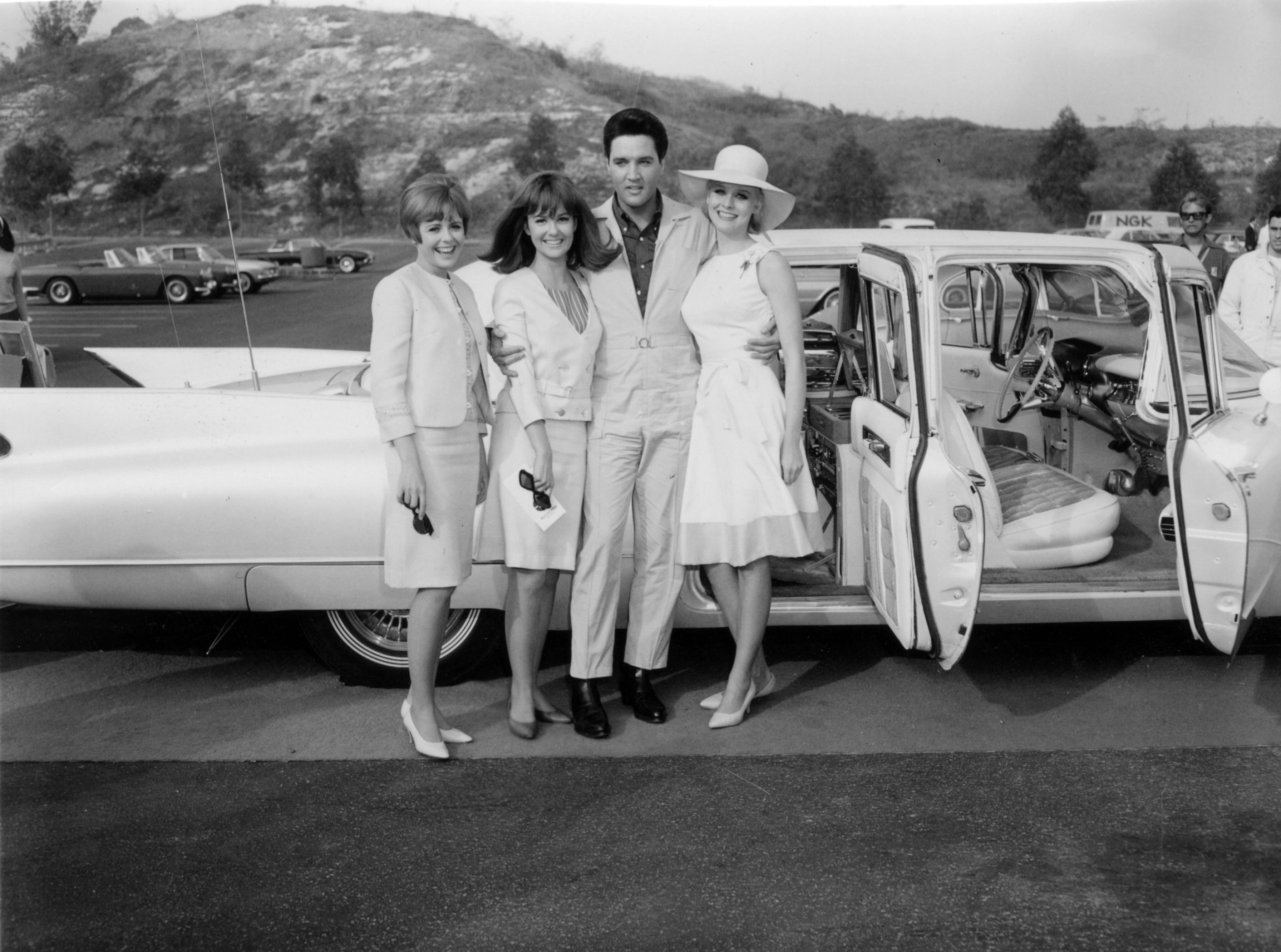 Perhaps the most famous car that Comrade Barris built for Comrade Presley is the 1960 Cadillac Series 75 Fleetwood Limousine. The car is known for going on its own promotional tour instead of Elvis, who was busy promoting his latest film at the time. Cadillac left Barris's workshop in 1962 - by that time, George had already built a Batmobile and become famous in Hollywood, so the limo was filled with a bunch of all sorts of husks, like gold-plated telephones and copies of gold Elvis records mounted in the roof. This whole pile of gold will serve as a great contrast to George's earlier works, examples of which are presented below.
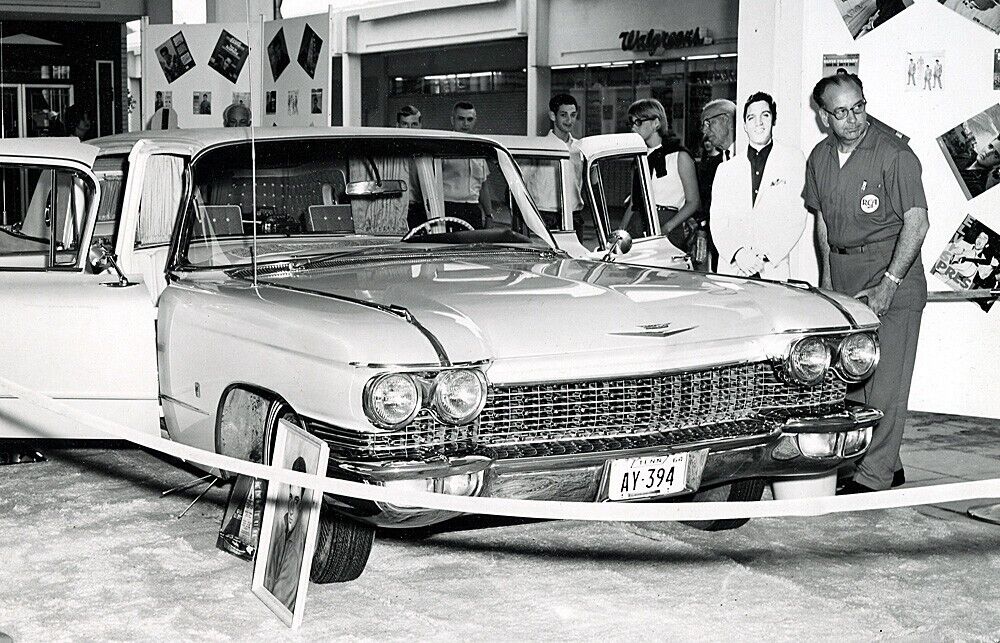 Perhaps the most famous car that Comrade Barris built for Comrade Presley is the 1960 Cadillac Series 75 Fleetwood Limousine. The car is known for going on its own promotional tour instead of Elvis, who was busy promoting his latest film at the time. Cadillac left Barris's workshop in 1962 - by that time, George had already built a Batmobile and become famous in Hollywood, so the limo was filled with a bunch of all sorts of husks, like gold-plated telephones and copies of gold Elvis records mounted in the roof. This whole pile of gold will serve as a great contrast to George's earlier works, examples of which are presented below.
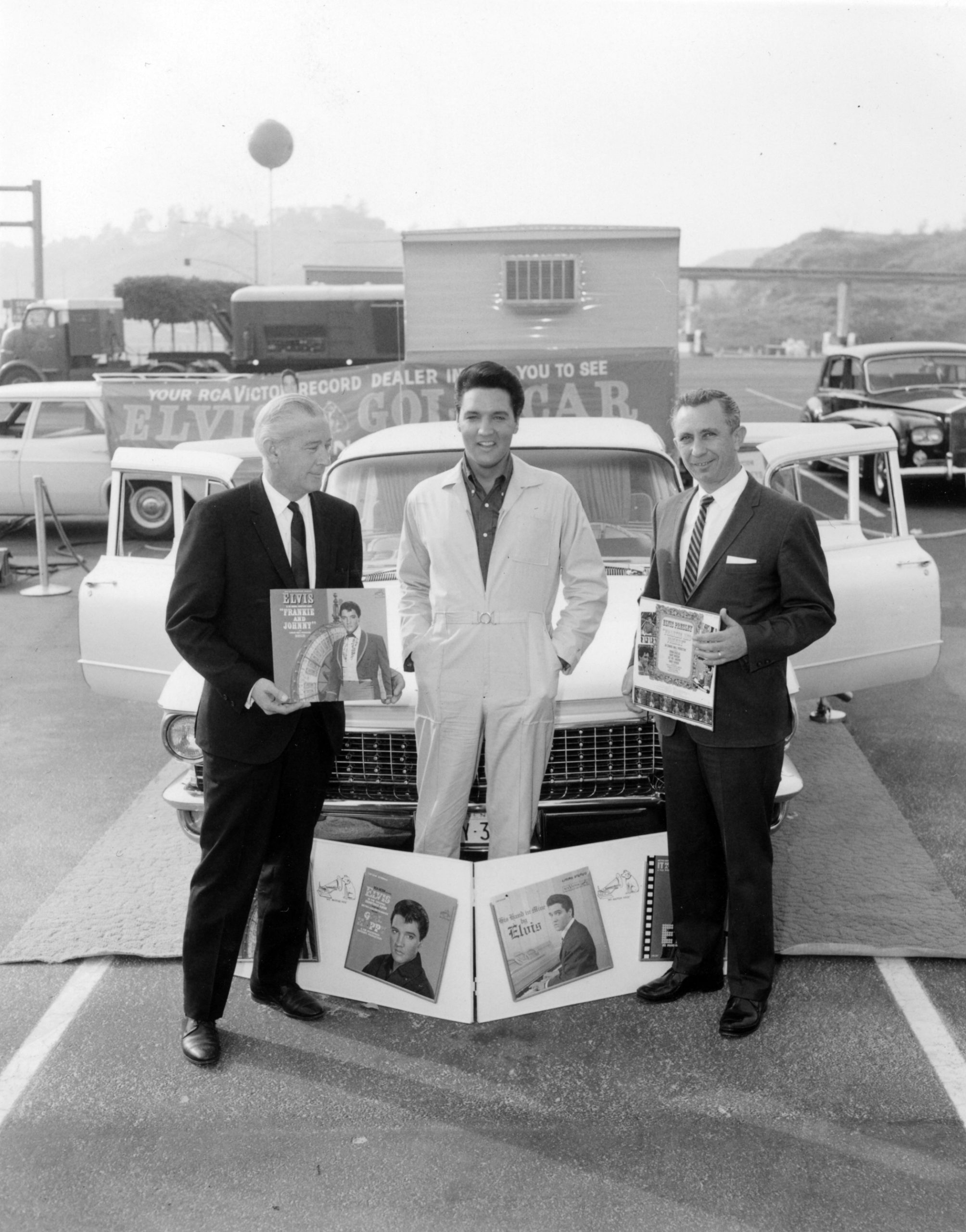 Perhaps the most famous car that Comrade Barris built for Comrade Presley is the 1960 Cadillac Series 75 Fleetwood Limousine. The car is known for going on its own promotional tour instead of Elvis, who was busy promoting his latest film at the time. Cadillac left Barris's workshop in 1962 - by that time, George had already built a Batmobile and become famous in Hollywood, so the limo was filled with a bunch of all sorts of husks, like gold-plated telephones and copies of gold Elvis records mounted in the roof. This whole pile of gold will serve as a great contrast to George's earlier works, examples of which are presented below.
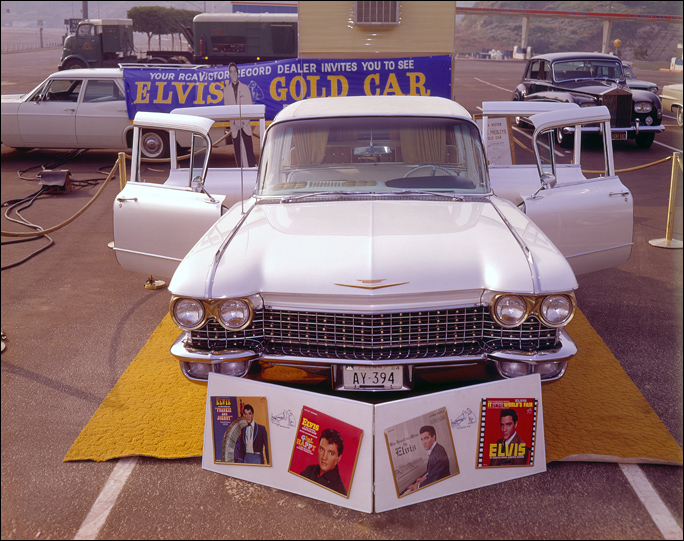 Perhaps the most famous car that Comrade Barris built for Comrade Presley is the 1960 Cadillac Series 75 Fleetwood Limousine. The car is known for going on its own promotional tour instead of Elvis, who was busy promoting his latest film at the time. Cadillac left Barris's workshop in 1962 - by that time, George had already built a Batmobile and become famous in Hollywood, so the limo was filled with a bunch of all sorts of husks, like gold-plated telephones and copies of gold Elvis records mounted in the roof. This whole pile of gold will serve as a great contrast to George's earlier works, examples of which are presented below.
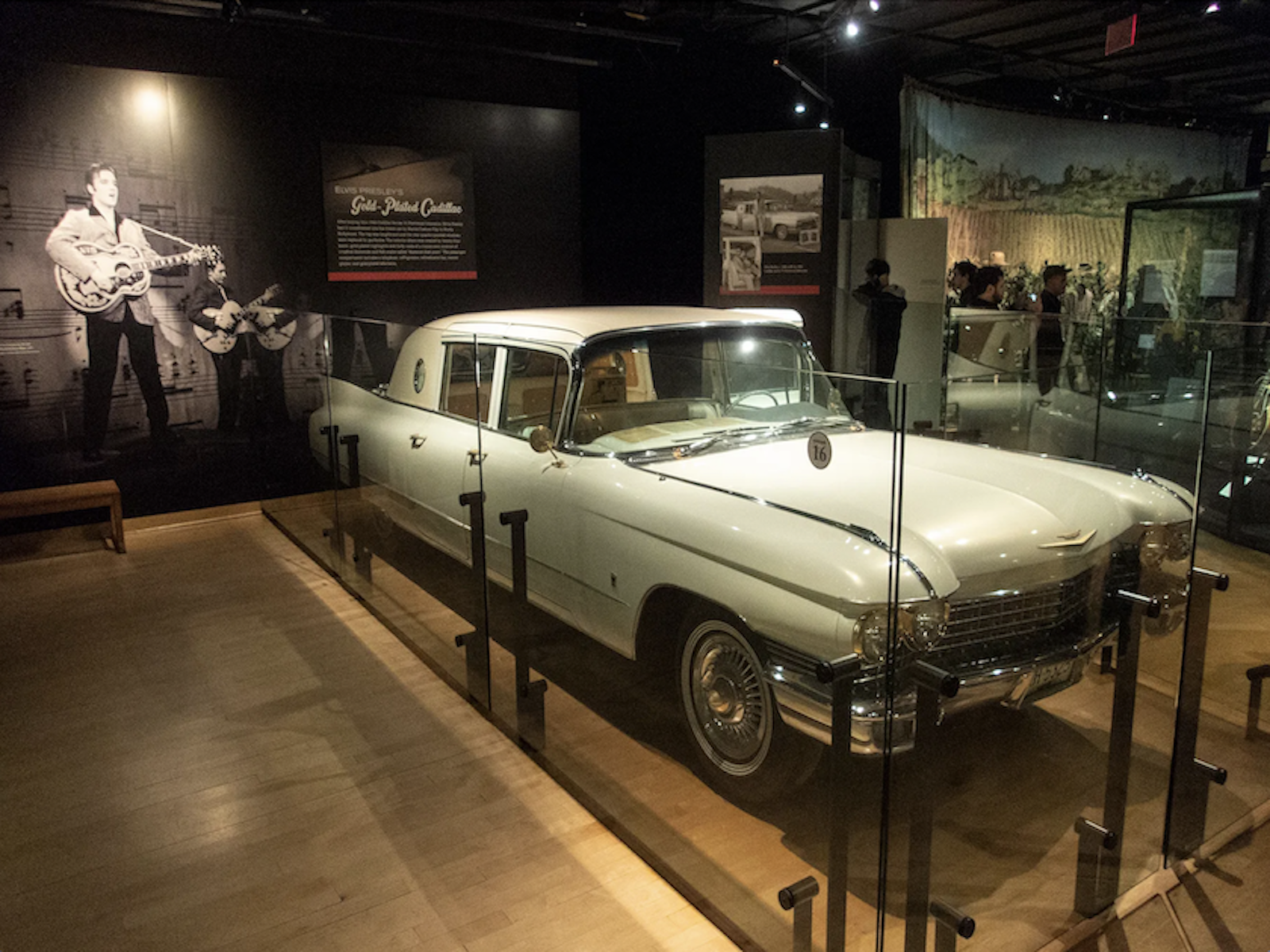 Perhaps the most famous car that Comrade Barris built for Comrade Presley is the 1960 Cadillac Series 75 Fleetwood Limousine. The car is known for going on its own promotional tour instead of Elvis, who was busy promoting his latest film at the time. Cadillac left Barris's workshop in 1962 - by that time, George had already built a Batmobile and become famous in Hollywood, so the limo was filled with a bunch of all sorts of husks, like gold-plated telephones and copies of gold Elvis records mounted in the roof. This whole pile of gold will serve as a great contrast to George's earlier works, examples of which are presented below.
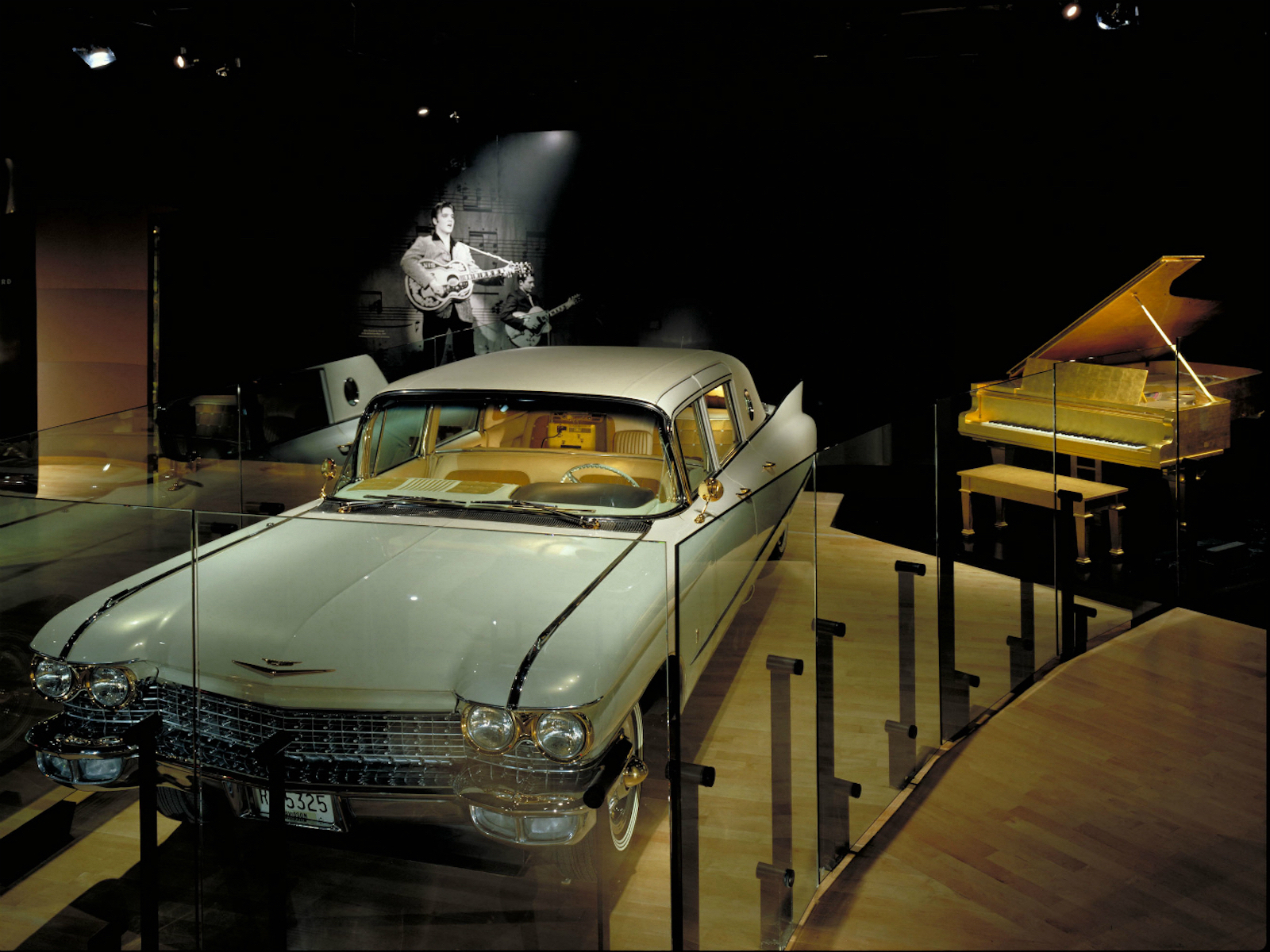 Perhaps the most famous car that Comrade Barris built for Comrade Presley is the 1960 Cadillac Series 75 Fleetwood Limousine. The car is known for going on its own promotional tour instead of Elvis, who was busy promoting his latest film at the time. Cadillac left Barris's workshop in 1962 - by that time, George had already built a Batmobile and become famous in Hollywood, so the limo was filled with a bunch of all sorts of husks, like gold-plated telephones and copies of gold Elvis records mounted in the roof. This whole pile of gold will serve as a great contrast to George's earlier works, examples of which are presented below.
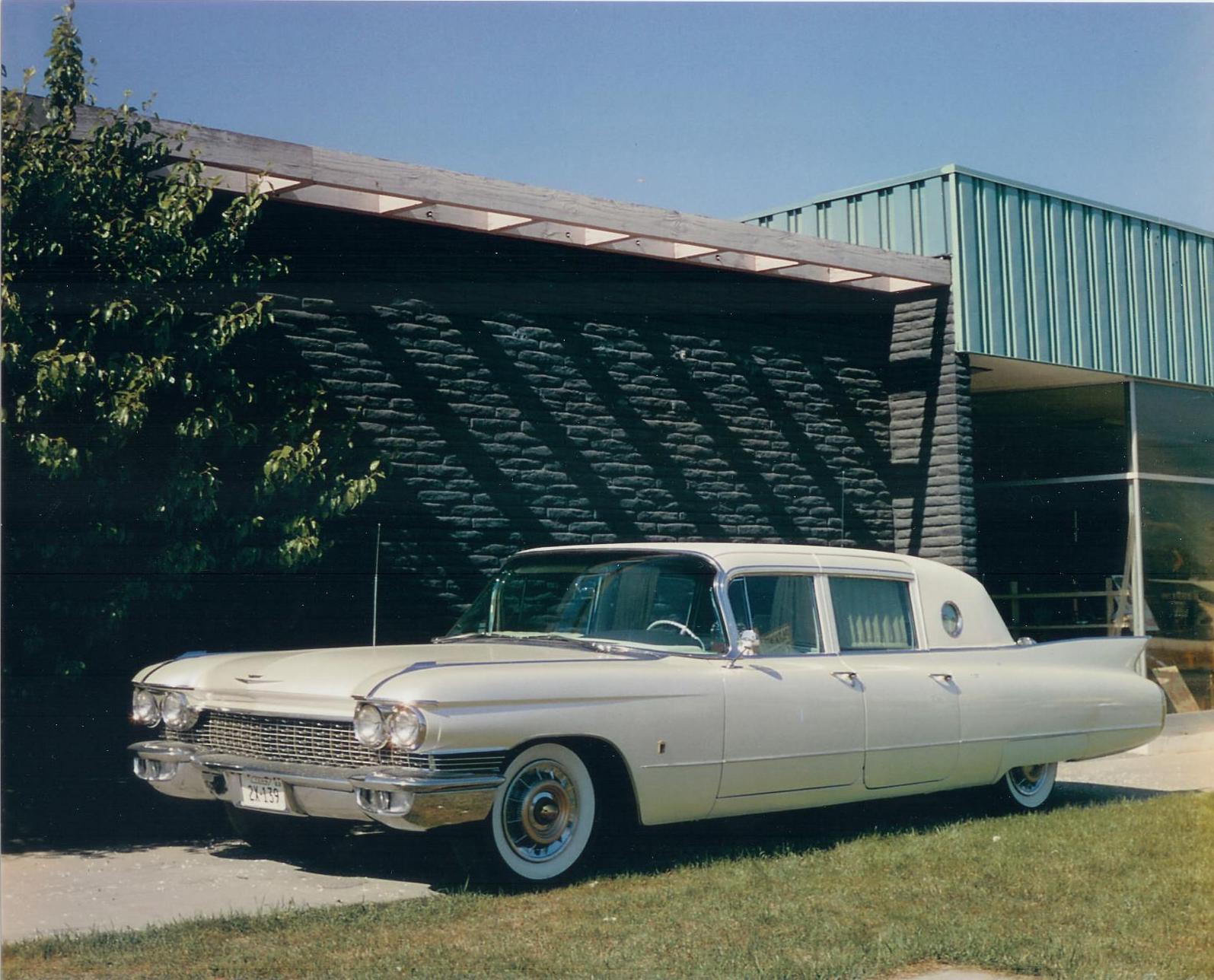 Perhaps the most famous car that Comrade Barris built for Comrade Presley is the 1960 Cadillac Series 75 Fleetwood Limousine. The car is known for going on its own promotional tour instead of Elvis, who was busy promoting his latest film at the time. Cadillac left Barris's workshop in 1962 - by that time, George had already built a Batmobile and become famous in Hollywood, so the limo was filled with a bunch of all sorts of husks, like gold-plated telephones and copies of gold Elvis records mounted in the roof. This whole pile of gold will serve as a great contrast to George's earlier works, examples of which are presented below.
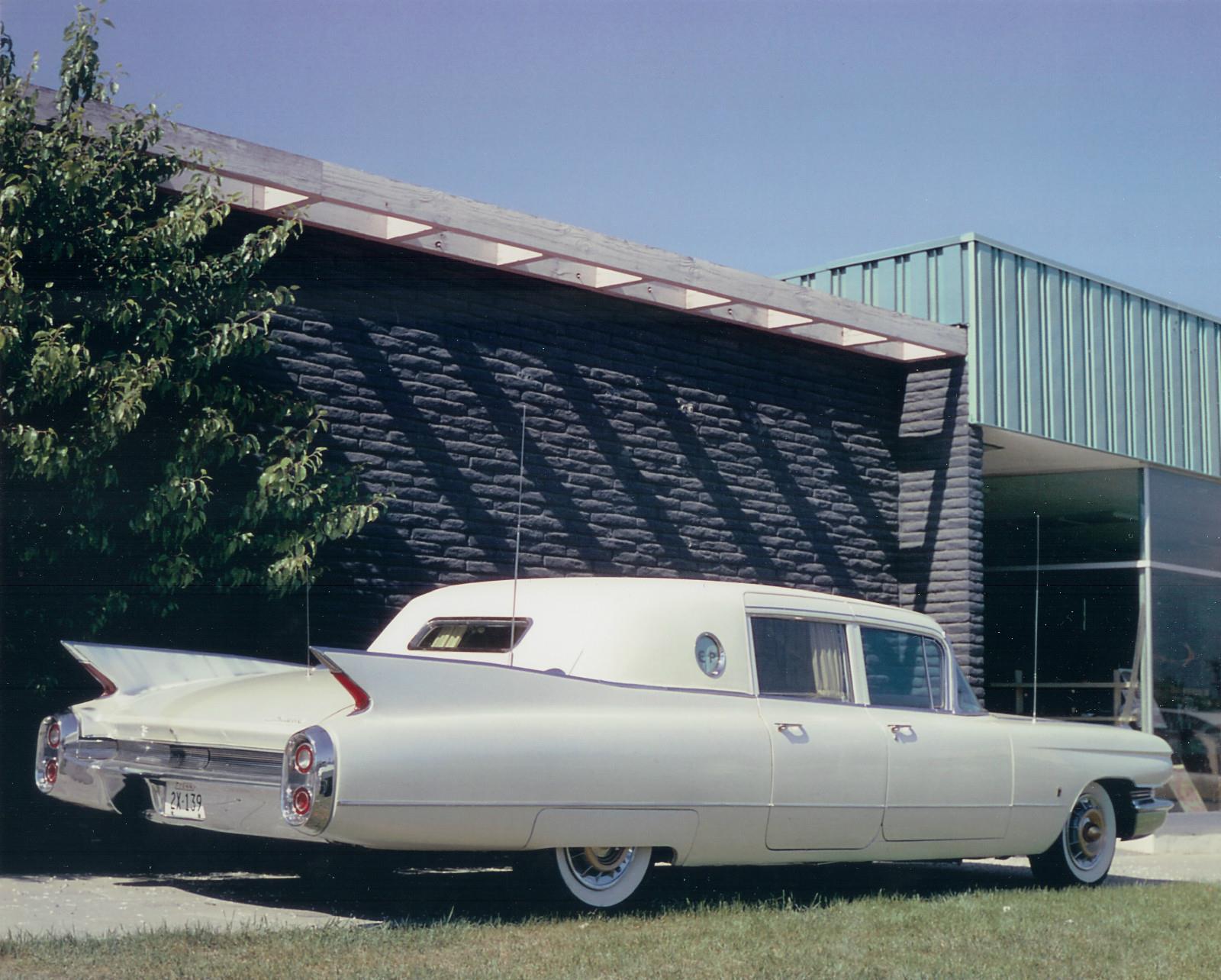 Perhaps the most famous car that Comrade Barris built for Comrade Presley is the 1960 Cadillac Series 75 Fleetwood Limousine. The car is known for going on its own promotional tour instead of Elvis, who was busy promoting his latest film at the time. Cadillac left Barris's workshop in 1962 - by that time, George had already built a Batmobile and become famous in Hollywood, so the limo was filled with a bunch of all sorts of husks, like gold-plated telephones and copies of gold Elvis records mounted in the roof. This whole pile of gold will serve as a great contrast to George's earlier works, examples of which are presented below.
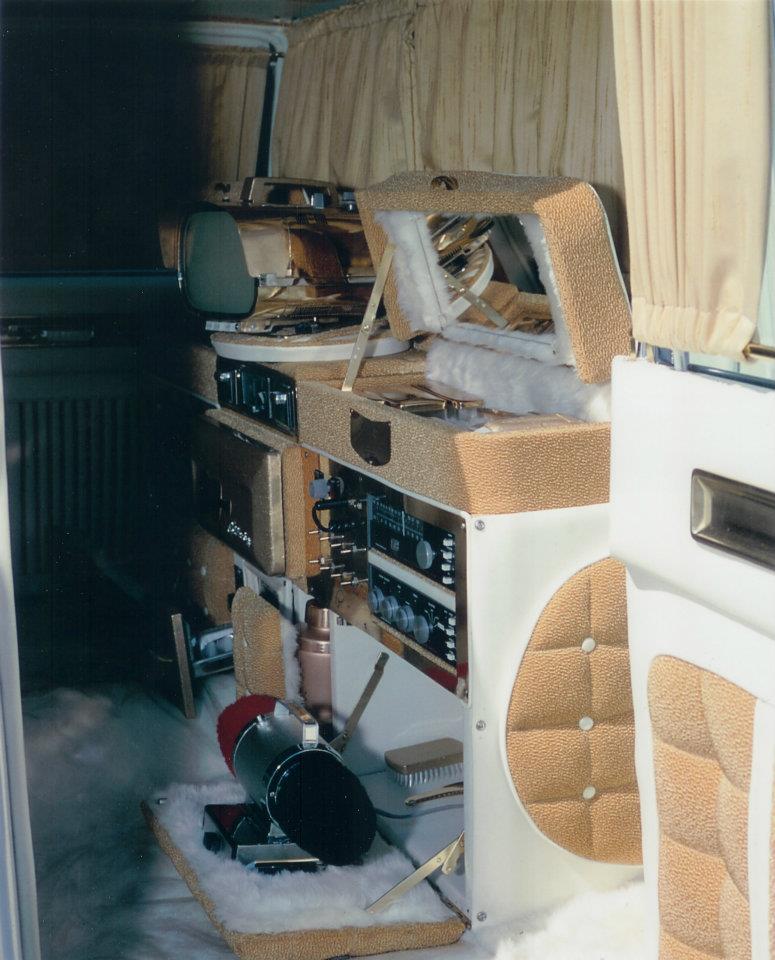 Perhaps the most famous car that Comrade Barris built for Comrade Presley is the 1960 Cadillac Series 75 Fleetwood Limousine. The car is known for going on its own promotional tour instead of Elvis, who was busy promoting his latest film at the time. Cadillac left Barris's workshop in 1962 - by that time, George had already built a Batmobile and become famous in Hollywood, so the limo was filled with a bunch of all sorts of husks, like gold-plated telephones and copies of gold Elvis records mounted in the roof. This whole pile of gold will serve as a great contrast to George's earlier works, examples of which are presented below.
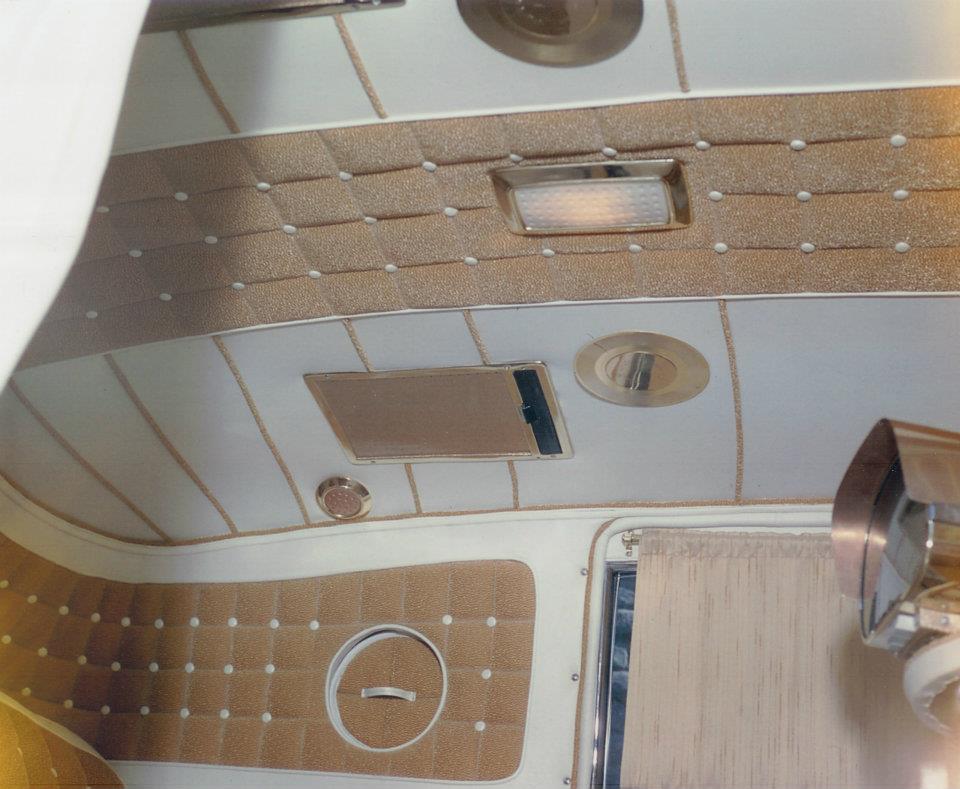 Perhaps the most famous car that Comrade Barris built for Comrade Presley is the 1960 Cadillac Series 75 Fleetwood Limousine. The car is known for going on its own promotional tour instead of Elvis, who was busy promoting his latest film at the time. Cadillac left Barris's workshop in 1962 - by that time, George had already built a Batmobile and become famous in Hollywood, so the limo was filled with a bunch of all sorts of husks, like gold-plated telephones and copies of gold Elvis records mounted in the roof. This whole pile of gold will serve as a great contrast to George's earlier works, examples of which are presented below.
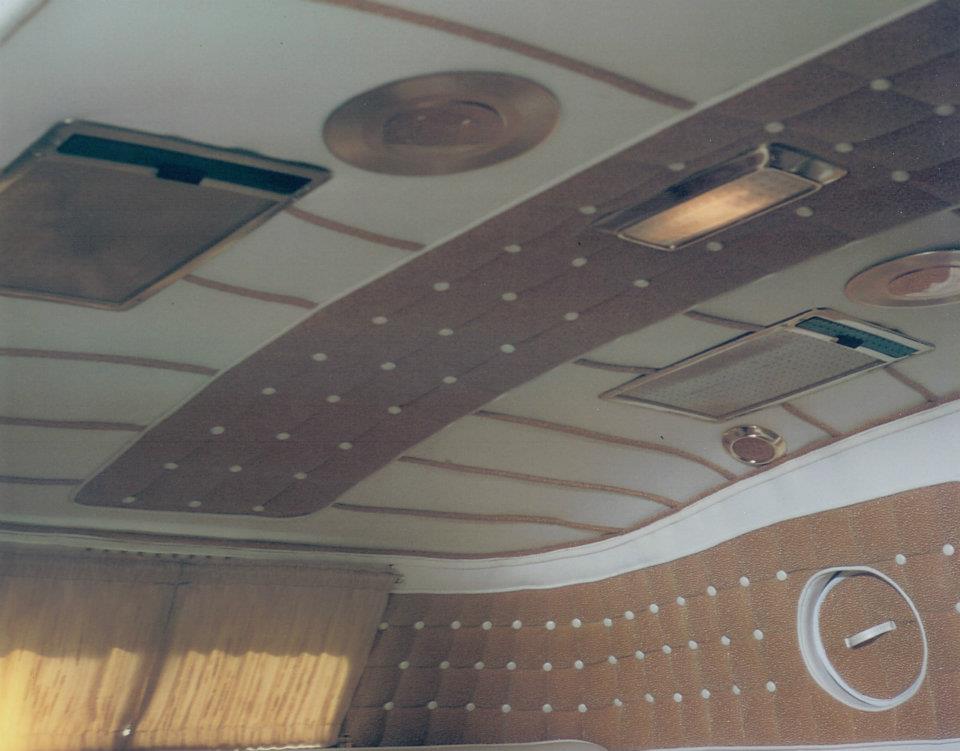 Perhaps the most famous car that Comrade Barris built for Comrade Presley is the 1960 Cadillac Series 75 Fleetwood Limousine. The car is known for going on its own promotional tour instead of Elvis, who was busy promoting his latest film at the time. Cadillac left Barris's workshop in 1962, when George had already built the Batmobile and become famous in Hollywood, so the limo was packed with a bunch of all kinds of husks, like gold-plated telephones and copies of Elvis's gold records mounted in the roof. This whole pile of gold will serve as a great contrast to George's earlier works, examples of which are presented below.
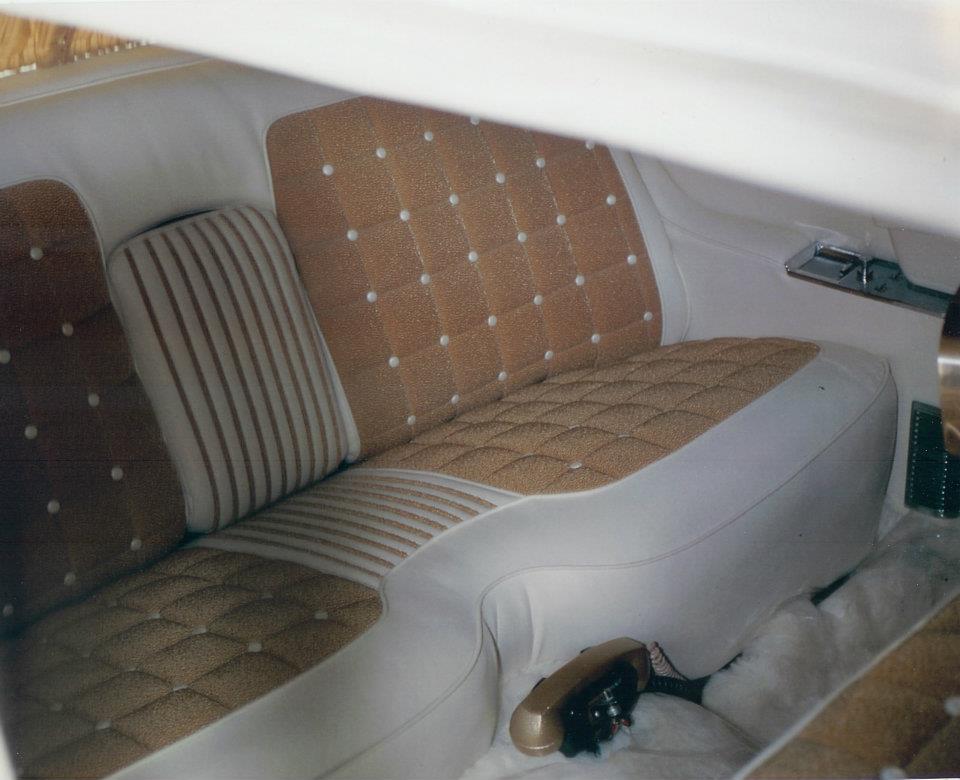 Perhaps the most famous car that Comrade Barris built for Comrade Presley is the 1960 Cadillac Series 75 Fleetwood Limousine. The car is known for going on its own promotional tour instead of Elvis, who was busy promoting his latest film at the time. Cadillac left Barris's workshop in 1962 - by that time, George had already built a Batmobile and become famous in Hollywood, so the limo was filled with a bunch of all sorts of husks, like gold-plated telephones and copies of gold Elvis records mounted in the roof. This whole pile of gold will serve as a great contrast to George's earlier works, examples of which are presented below.
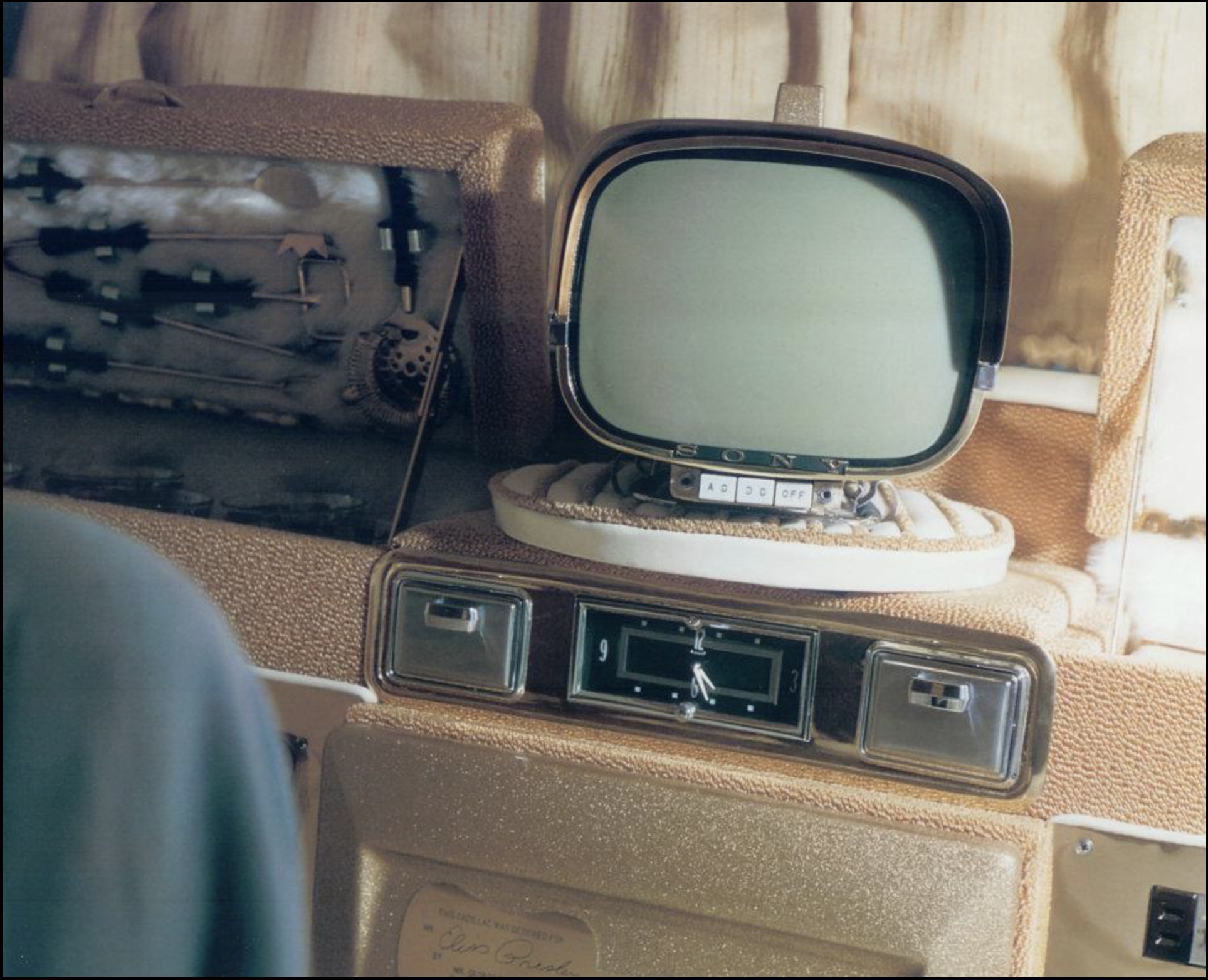 Perhaps the most famous car that Comrade Barris built for Comrade Presley is the 1960 Cadillac Series 75 Fleetwood Limousine. The car is known for going on its own promotional tour instead of Elvis, who was busy promoting his latest film at the time. Cadillac left Barris's workshop in 1962 - by that time, George had already built a Batmobile and become famous in Hollywood, so the limo was filled with a bunch of all sorts of husks, like gold-plated telephones and copies of gold Elvis records mounted in the roof. This whole pile of gold will serve as a great contrast to George's earlier works, examples of which are presented below.
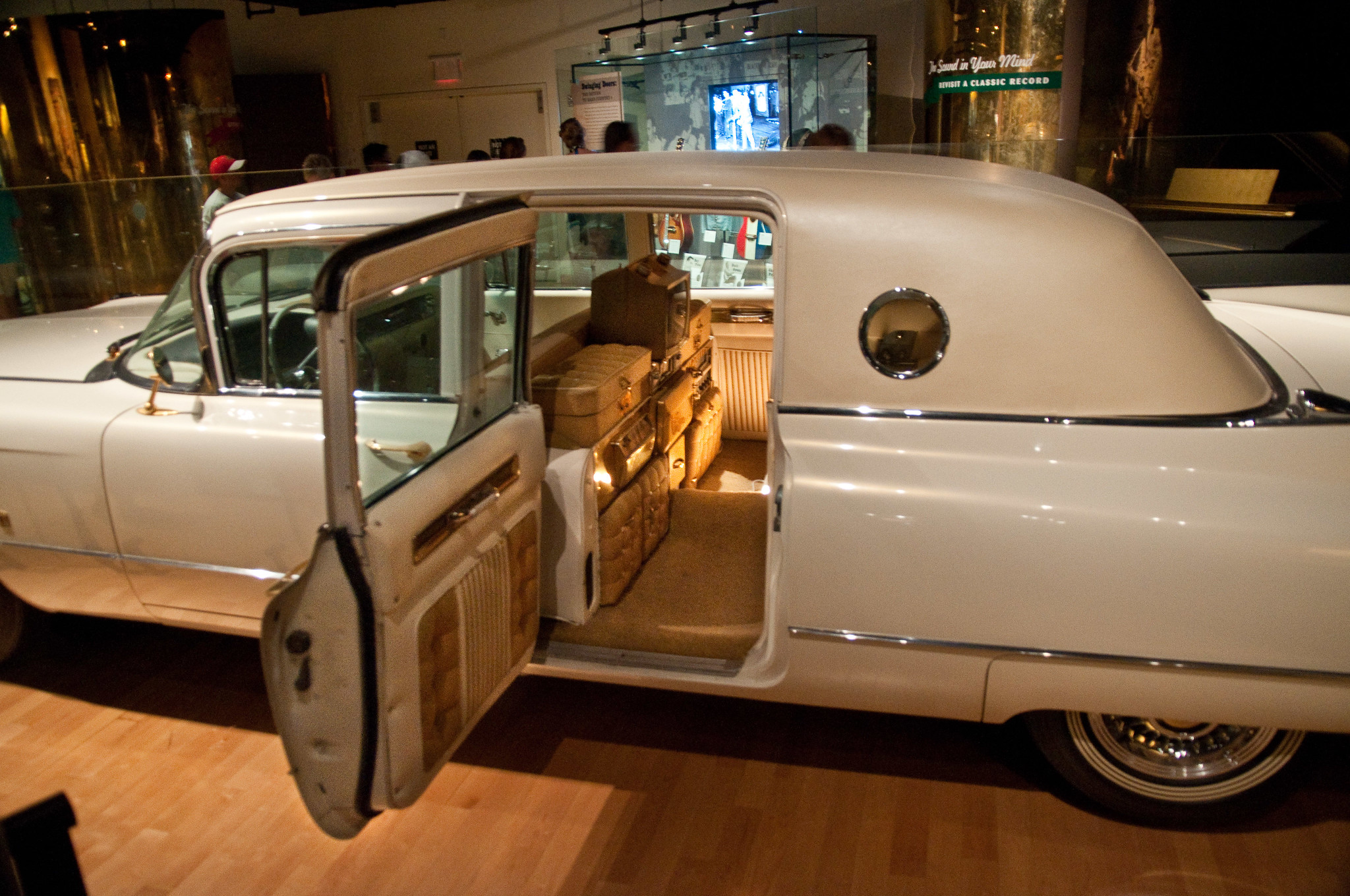 Perhaps the most famous car that Comrade Barris built for Comrade Presley is the 1960 Cadillac Series 75 Fleetwood Limousine. The car is known for going on its own promotional tour instead of Elvis, who was busy promoting his latest film at the time. Cadillac left Barris's workshop in 1962 - by that time, George had already built a Batmobile and become famous in Hollywood, so the limo was filled with a bunch of all sorts of husks, like gold-plated telephones and copies of gold Elvis records mounted in the roof. This whole pile of gold will serve as a great contrast to George's earlier works, examples of which are presented below.
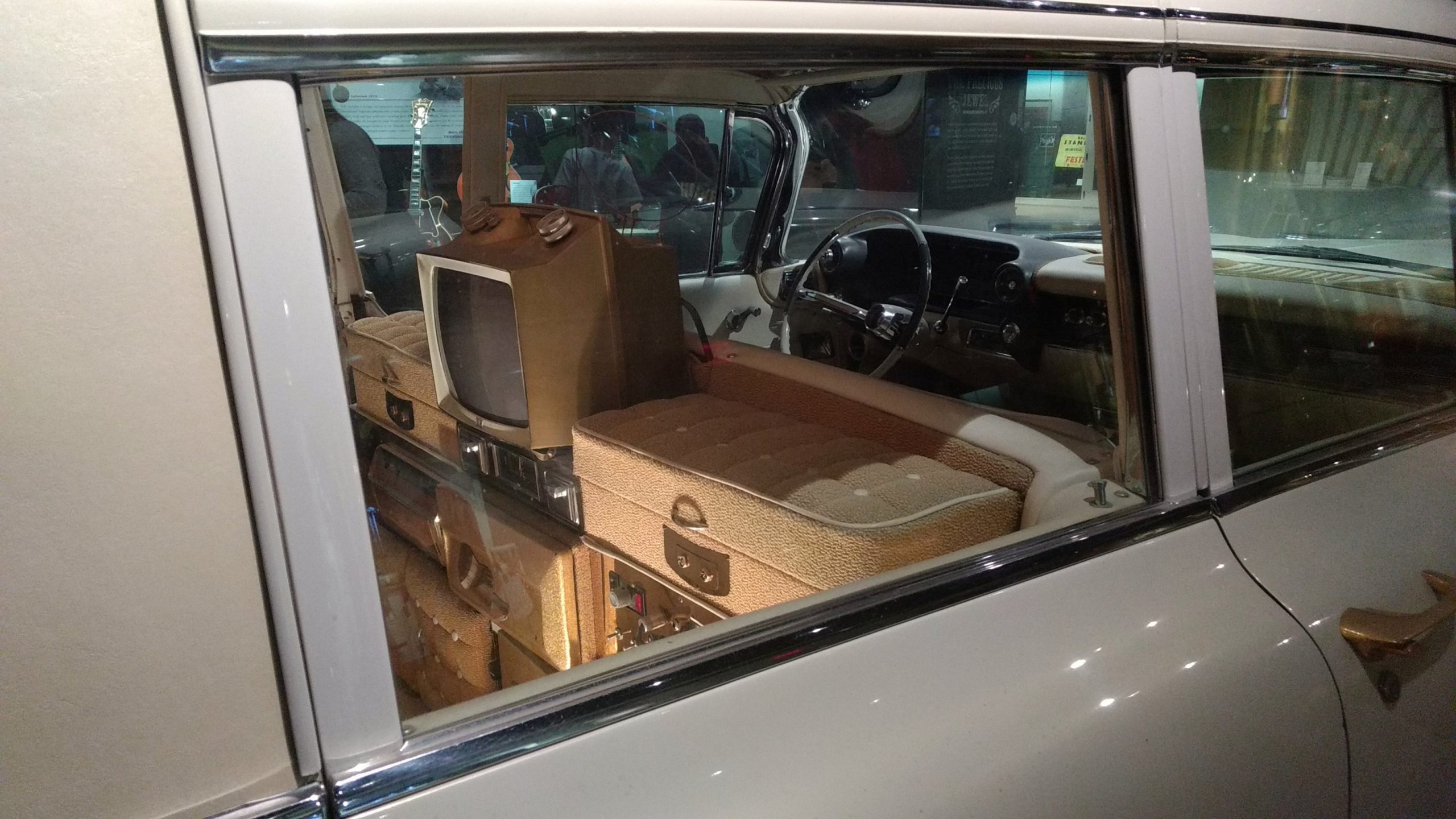 Perhaps the most famous car that Comrade Barris built for Comrade Presley is the 1960 Cadillac Series 75 Fleetwood Limousine. The car is known for going on its own promotional tour instead of Elvis, who was busy promoting his latest film at the time. Cadillac left Barris's workshop in 1962 - by that time, George had already built a Batmobile and become famous in Hollywood, so the limo was filled with a bunch of all sorts of husks, like gold-plated telephones and copies of gold Elvis records mounted in the roof. This whole pile of gold will serve as a great contrast to George's earlier works, examples of which are presented below.
The Story of George Barris: How it All Began
George Barris first appeared on the custom car scene around 1940. Comrade Barris, who was about fifteen years old at the time, hung around various car repair shops, watching the work of professionals. In one of these workshops, called Brown’s Body Shop, George was lucky enough to meet none other than Harry Westergaard himself. To be honest, and to my regret, it seems to me that this name is unlikely to mean anything to anyone today, but in a nutshell, if George Barris became the trendsetter of automotive fashion in the 50s, then Comrade Westergaard became the trendsetter of the 40s, and indeed the pioneer of the custom car scene in as a whole. To give you an idea of how significant Harry Westergaard’s contribution to the American culture of the 1940s was, I’ll give you one example. Surely many of the readers have played – or at least heard of the game L.A. Noire. So, in this game there are five cars with the word Custom in the name. Apart from the DeSoto Custom, which was simply given that name at the DeSoto factory, the remaining four cars are real custom cars of that era. So: of the remaining four, three cars were built with the direct participation of Harry Westergaard.
It was under the guidance of such a significant figure that George Barris was lucky to study. However, in addition to Westergaard, there was another person to whom George, apparently, owes a considerable part of his fame. We are talking about his undeservedly forgotten brother, Sam Barris. Despite the fact that, for the most part, Sam’s teacher was his younger brother George, it was the older brother who discovered his passion for working with car bodies, while Barris, Dr., preferred to generate and promote ideas.
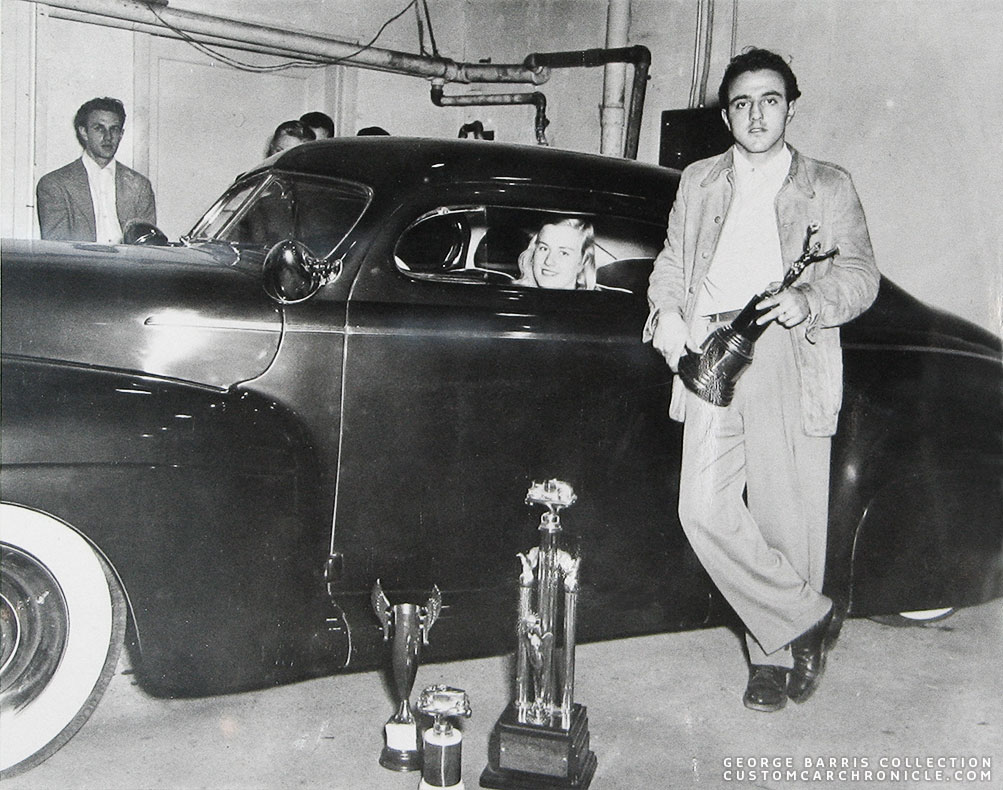 George quickly figured out exactly how advertising and mass media work, and therefore - among other things - he took a lot, a lot of photos. A great many photographs of cars of those years - including, for example, some of Harry Westergaard's cars - are the work of George Barris (and the camera). In particular, in one of the photos presented, George poses with a prize in his hands next to the winner of the exhibition, a 1941 Ford by Jesse Lopez... despite the fact that the car was built entirely by Lopez himself and Barris' brother Sam.
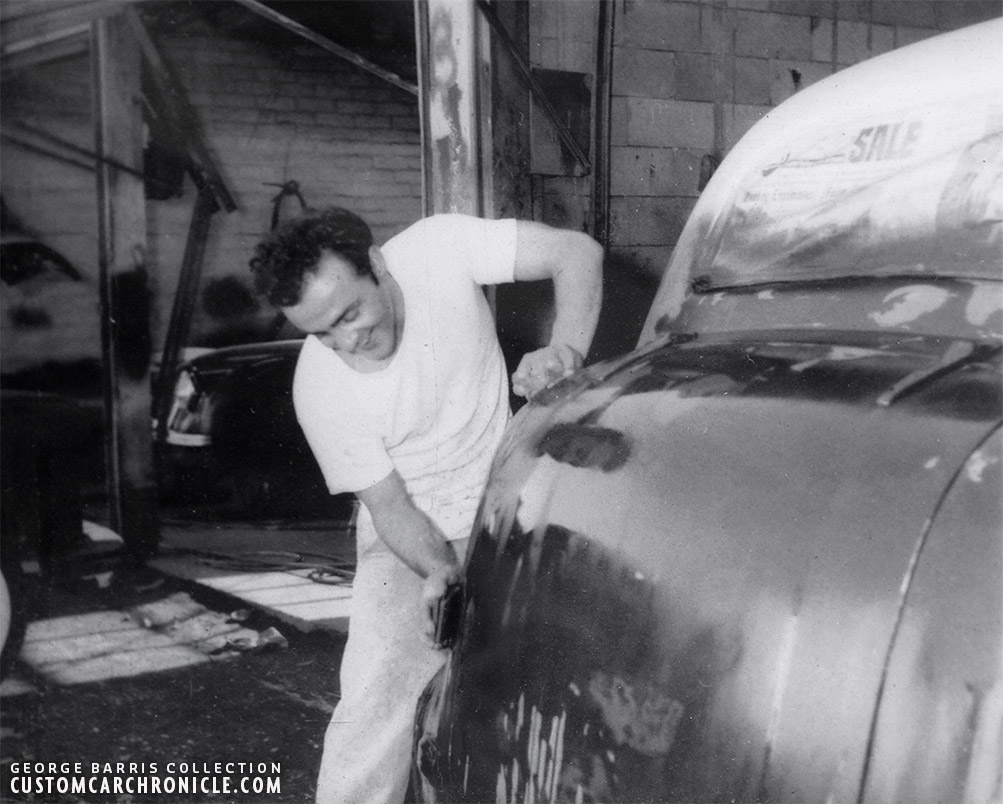 George quickly figured out exactly how advertising and mass media work, and therefore - among other things - he took a lot, a lot of photos. A great many photographs of cars from those years - including, for example, some of Harry Westergaard's cars - are the work of George Barris (and the camera). In particular, in one of the photos presented, George poses with a prize in his hands next to the winner of the exhibition, a 1941 Ford by Jesse Lopez... despite the fact that the car was built entirely by Lopez himself and Barris' brother Sam.
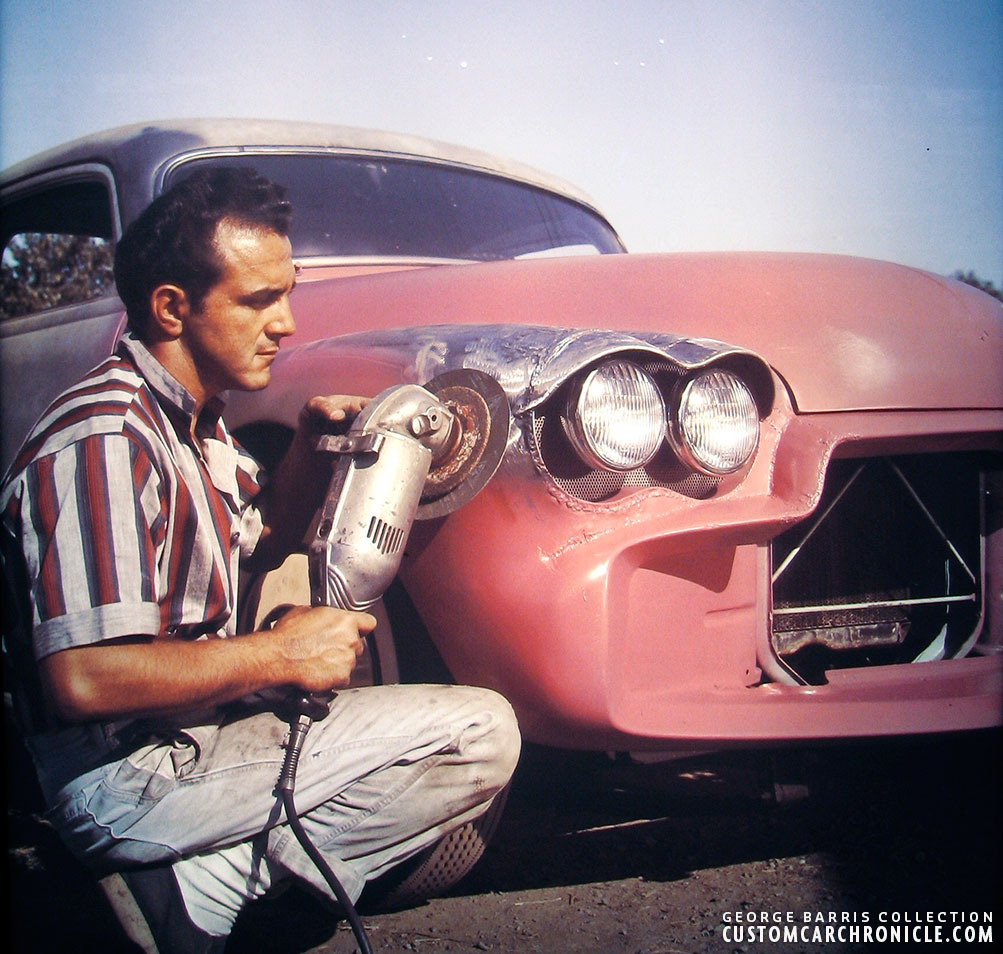 George quickly figured out exactly how advertising and mass media work, and therefore, among other things, he took a lot, a lot of photos. A great many photographs of cars of those years - including, for example, some of Harry Westergaard's cars - are the work of George Barris (and the camera). In particular, in one of the photos presented, George poses with a prize in his hands next to the winner of the exhibition, a 1941 Ford by Jesse Lopez... despite the fact that the car was built entirely by Lopez himself and Barris' brother Sam.
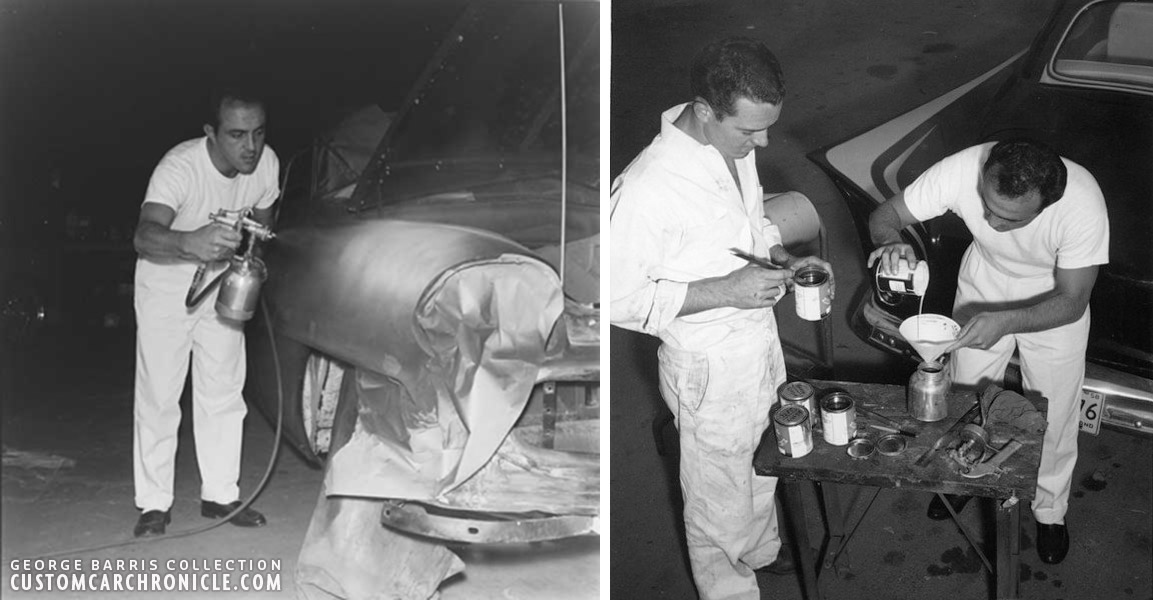 George quickly figured out exactly how advertising and mass media work, and therefore - among other things - he took a lot, a lot of photos. A great many photographs of cars from those years - including, for example, some of Harry Westergaard's cars - are the work of George Barris (and the camera). In particular, in one of the photos presented, George poses with a prize in his hands next to the winner of the exhibition, a 1941 Ford by Jesse Lopez... despite the fact that the car was built entirely by Lopez himself and Barris' brother Sam.
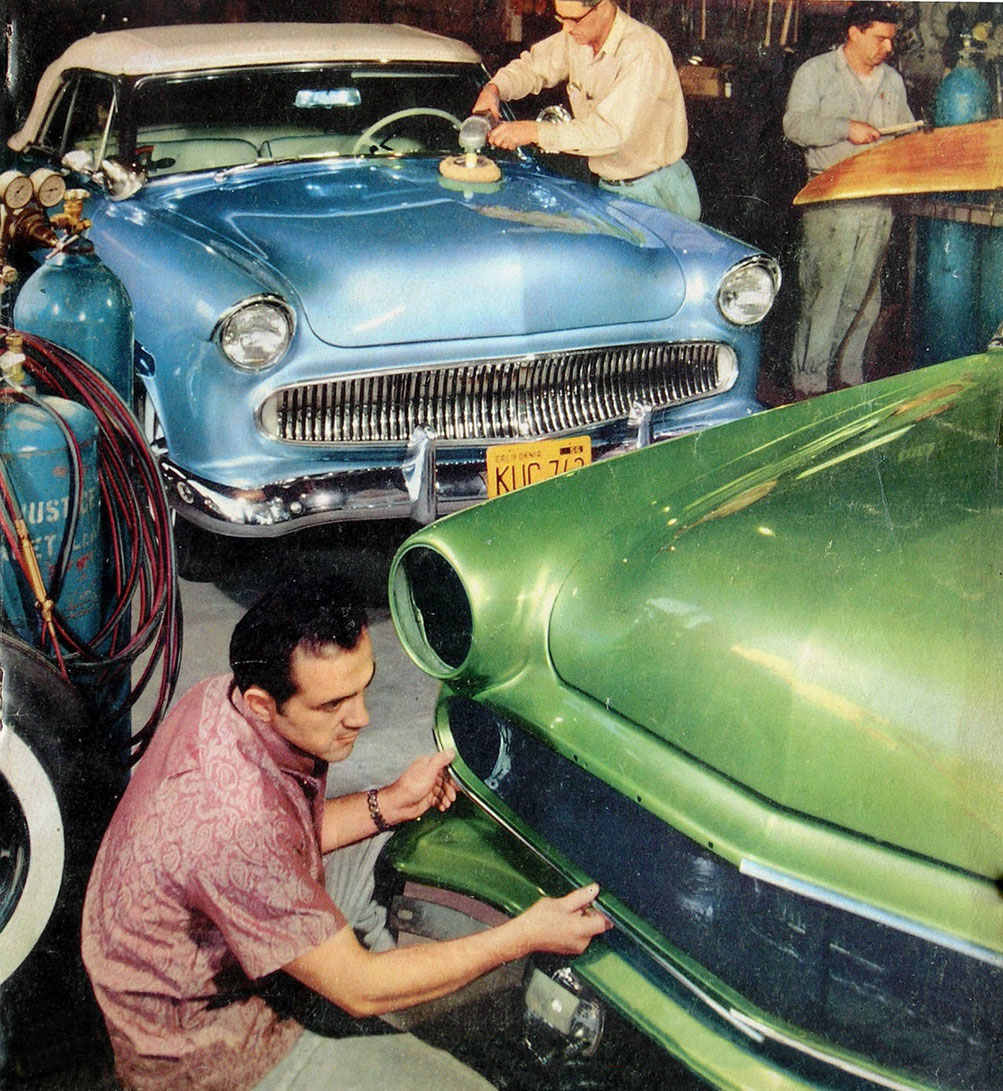 George quickly figured out exactly how advertising and mass media work, and therefore, among other things, he took a lot, a lot of photos. A great many photographs of cars of those years - including, for example, some of Harry Westergaard's cars - are the work of George Barris (and the camera). In particular, in one of the photos presented, George poses with a prize in his hands next to the winner of the exhibition, a 1941 Ford by Jesse Lopez... despite the fact that the car was built entirely by Lopez himself and Barris' brother Sam.
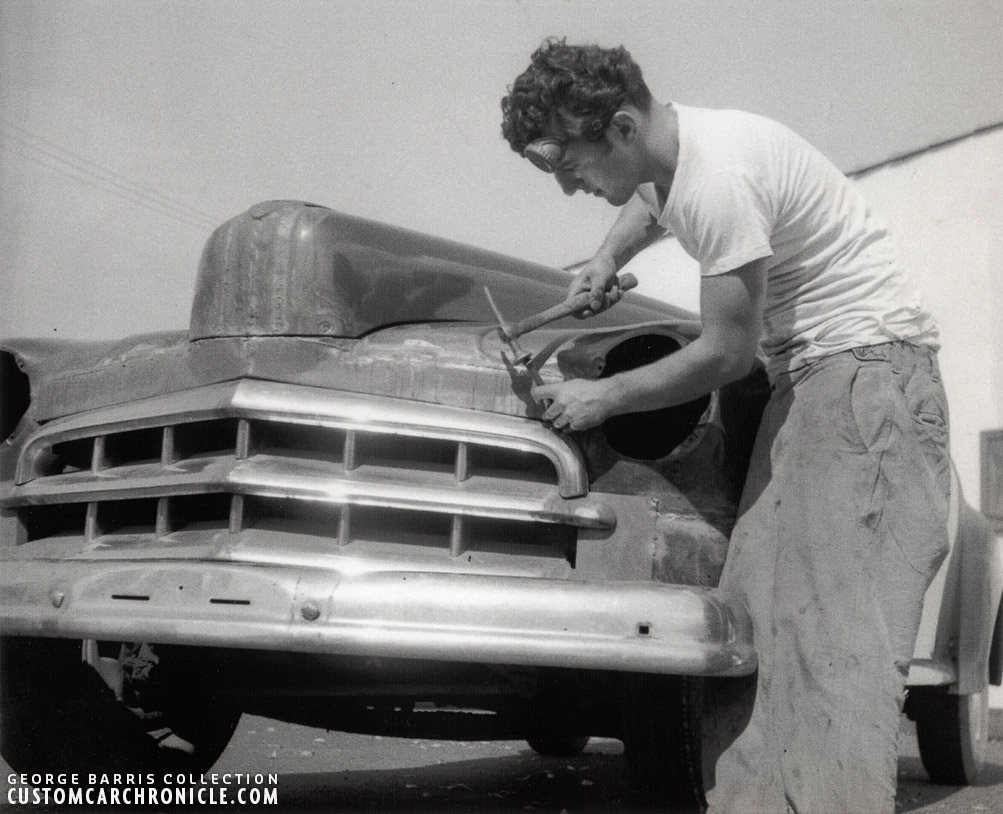 George quickly figured out exactly how advertising and mass media work, and therefore - among other things - he took a lot, a lot of photos. A great many photographs of cars of those years - including, for example, some of Harry Westergaard's cars - are the work of George Barris (and the camera). In particular, in one of the photos presented, George poses with a prize in his hands next to the winner of the exhibition, a 1941 Ford by Jesse Lopez... despite the fact that the car was built entirely by Lopez himself and Barris' brother Sam.
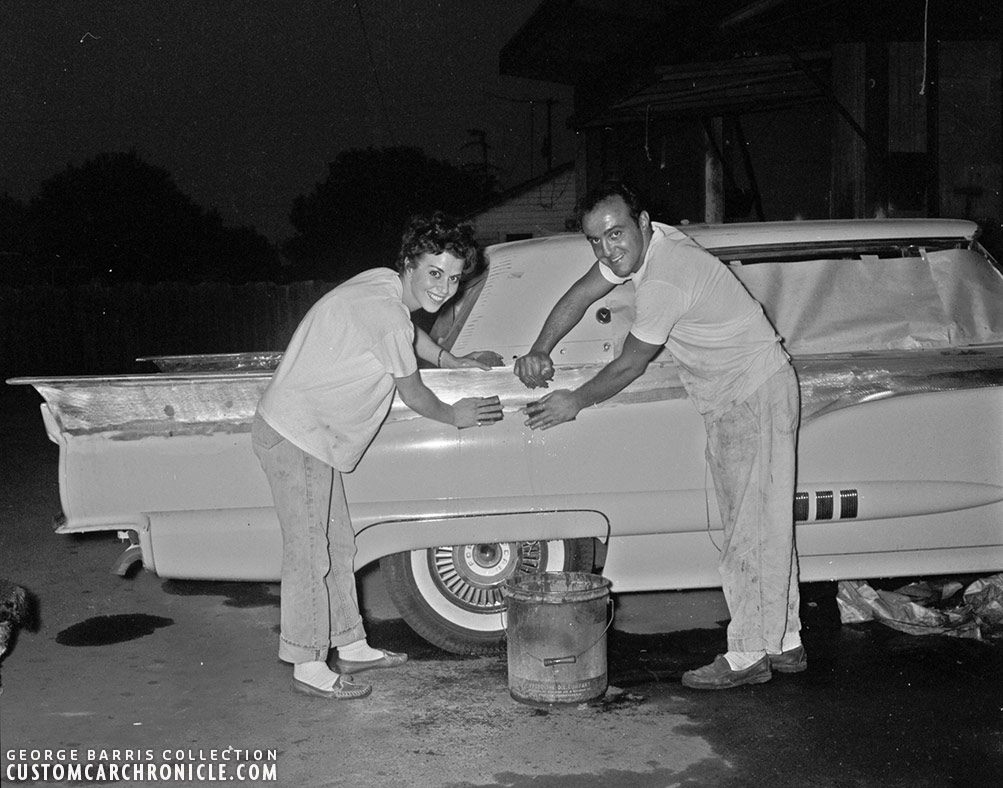 George quickly figured out exactly how advertising and mass media work, and therefore, among other things, he took a lot, a lot of photos. A great many photographs of cars of those years - including, for example, some of Harry Westergaard's cars - are the work of George Barris (and the camera). In particular, in one of the photos presented, George poses with a prize in his hands next to the winner of the exhibition, a 1941 Ford by Jesse Lopez... despite the fact that the car was built entirely by Lopez himself and Barris' brother Sam.
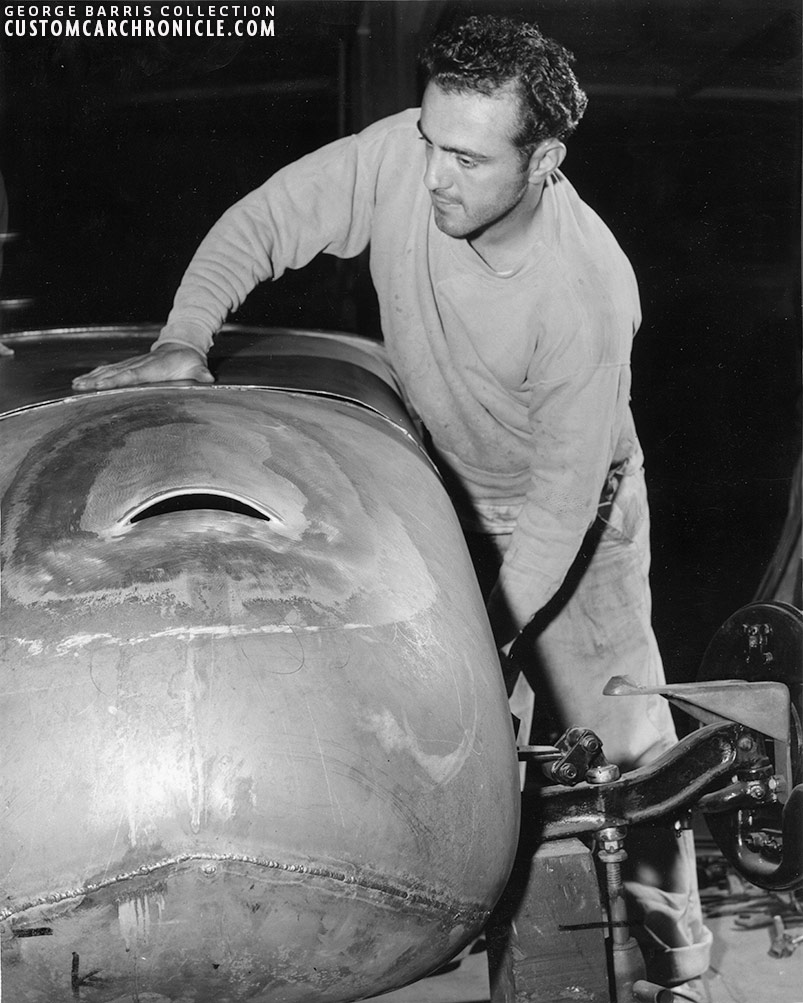 George quickly figured out exactly how advertising and mass media work, and therefore - among other things - he took a lot, a lot of photos. A great many photographs of cars from those years - including, for example, some of Harry Westergaard's cars - are the work of George Barris (and the camera). In particular, in one of the photos presented, George poses with a prize in his hands next to the winner of the exhibition, a 1941 Ford by Jesse Lopez... despite the fact that the car was built entirely by Lopez himself and Barris' brother Sam.
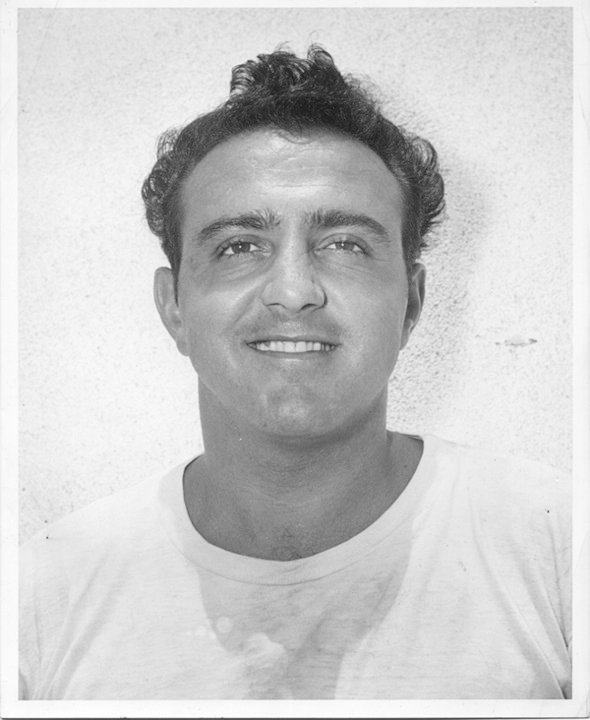 George quickly figured out exactly how advertising and mass media work, and therefore - among other things - he took a lot, a lot of photos. A great many photographs of cars of those years - including, for example, some of Harry Westergaard's cars - are the work of George Barris (and the camera). In particular, in one of the photos presented, George poses with a prize in his hands next to the winner of the exhibition, a 1941 Ford by Jesse Lopez... despite the fact that the car was built entirely by Lopez himself and Barris' brother Sam.
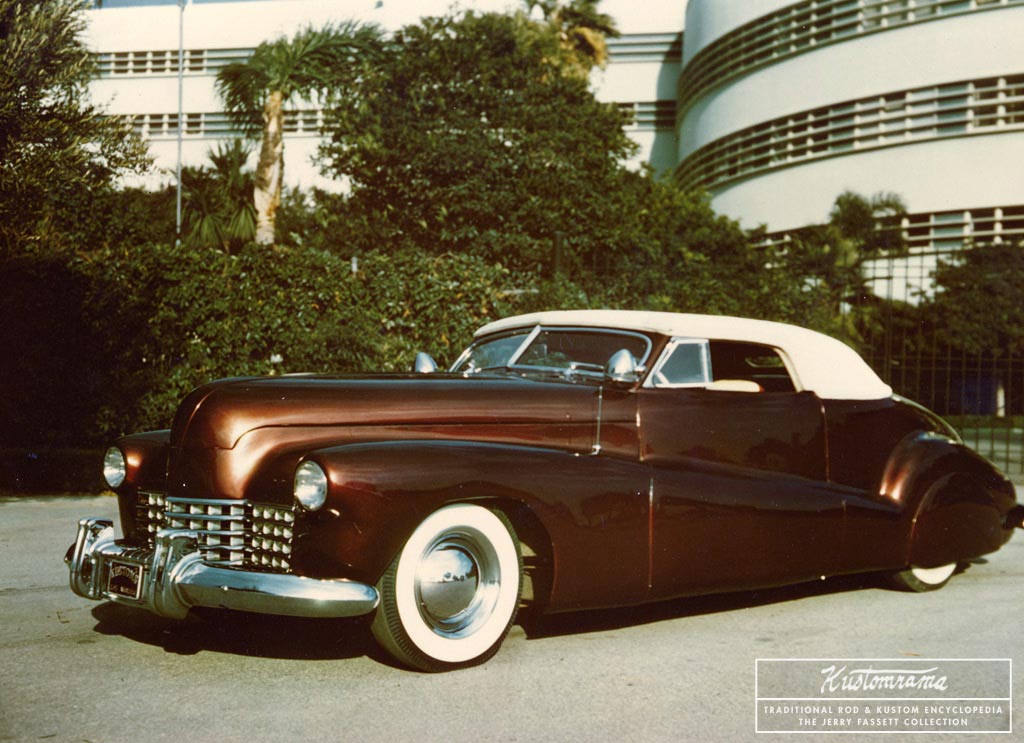
After becoming the winner of the 1948 Hot Rod Exposition, George did not miss the opportunity to enter into a partnership with one of the organizers, Robert Peterson, the owner of the Peterson Publishing Company. George enjoyed not only photographing, but also writing about his projects, and Comrade Peterson began to spread information about the work of the Barris brothers throughout America. Sam and George’s cars were more beautiful than each other, the magazines were selling well, and the partnership was growing. Over time, the name Barris somehow regularly appeared in magazines such as Car Craft, Rod & Custom, Custom Cars and, of course, Hot Rod Magazine – and this is not a complete list.
Legendary Barris customizations
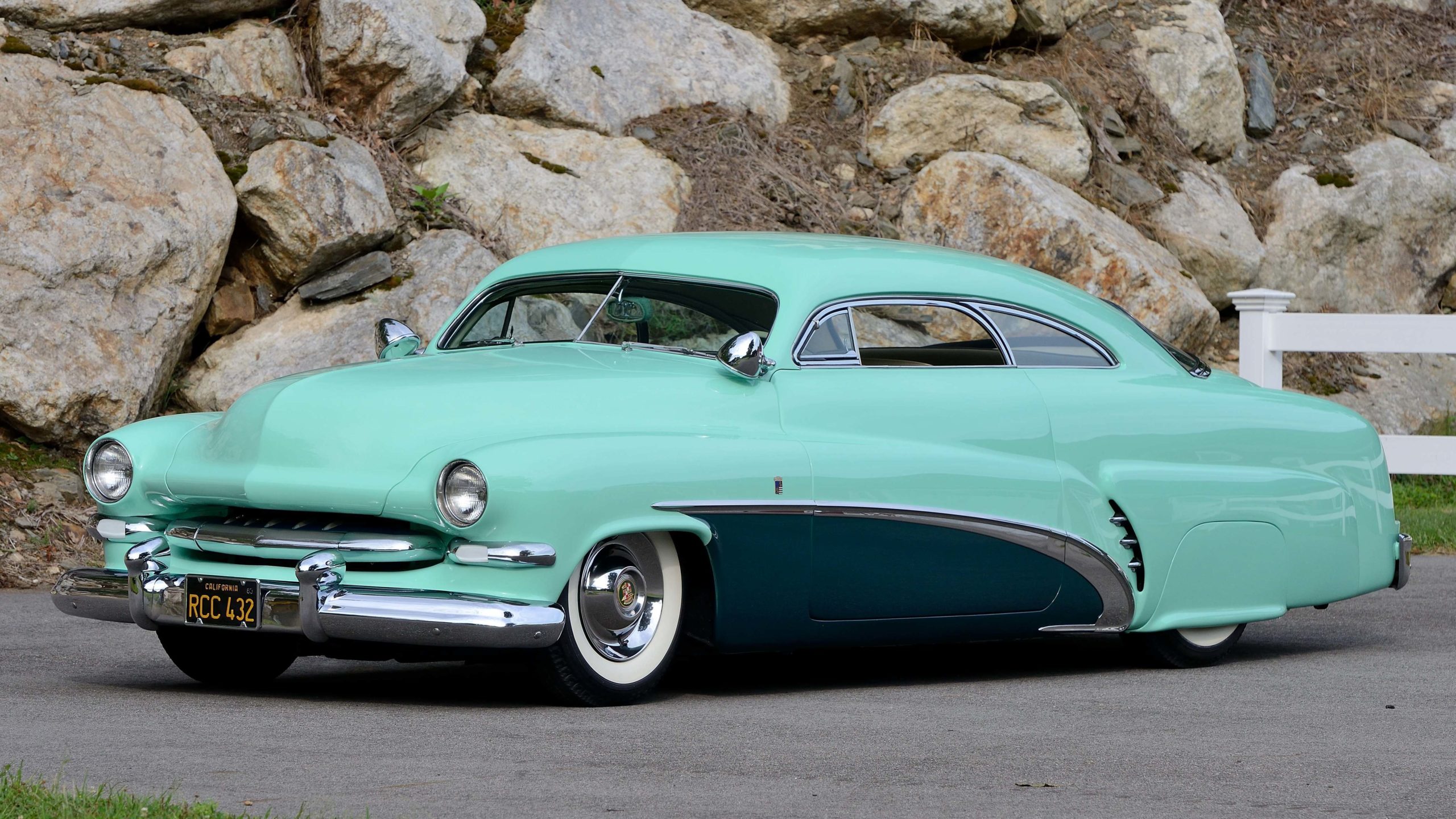 And now, a truly legendary car appears: the Hirohata Merc, built by the Barris brothers in the image and likeness of Sam Barris' personal Mercury... only better. And here it is necessary to understand what exactly is captured in the photographs. The fact is that at that time the Barris cars were among the first of their kind. It's now that we all know what a "lead sled" is, while the Barris brothers - and more specifically, it was Sam Barris who built, if not the first lead sled in the world, then certainly one of the first. And Mercury for Bob Hirohata became the best among those that existed at that time. An exceptional design, radical down to the color scheme: while everyone painted their custom designs in dark metallic, George preferred to paint the main part of the case in an unexpectedly light green for that time.
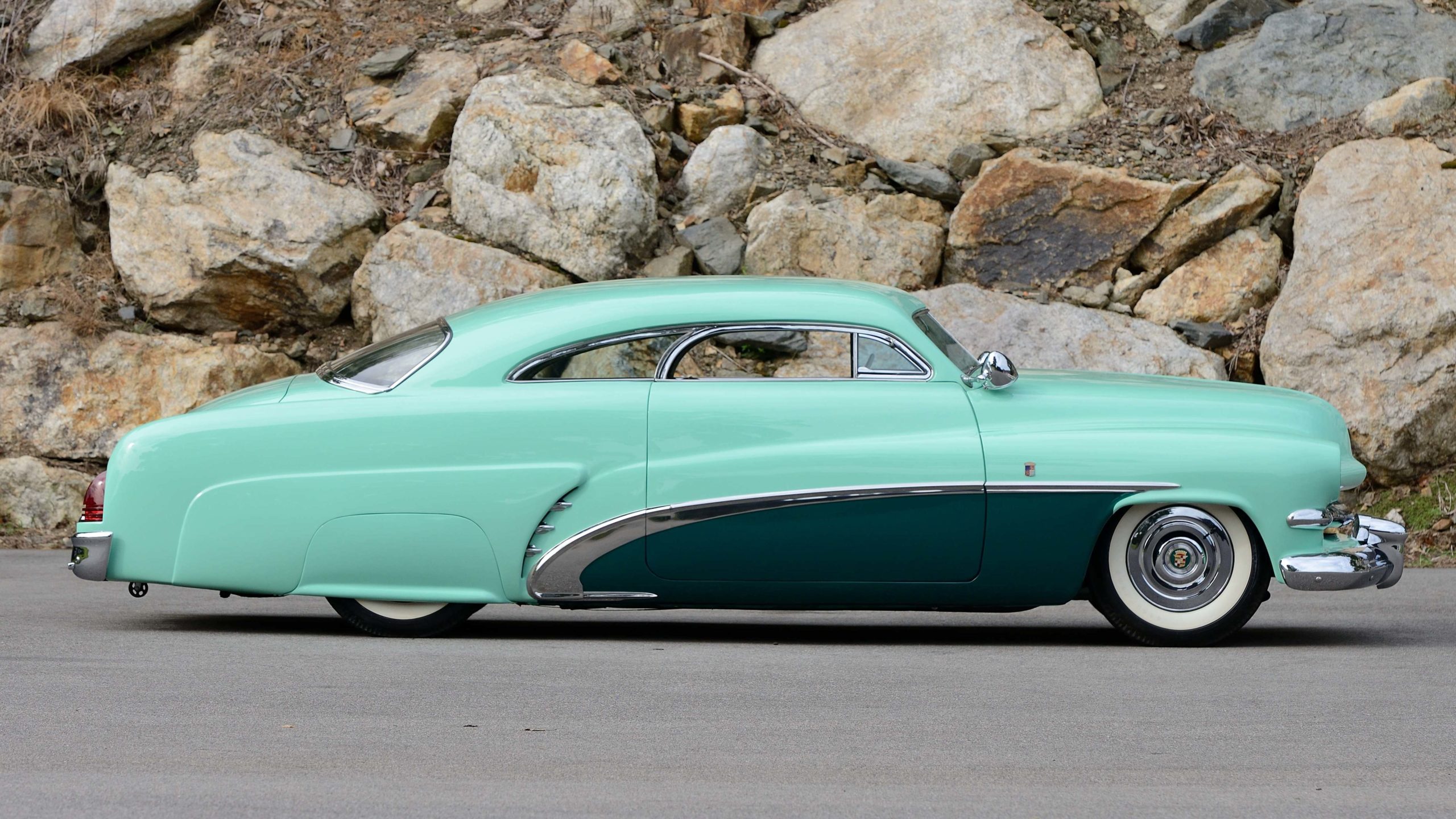 And now, a truly legendary car appears: the Hirohata Merc, built by the Barris brothers in the image and likeness of Sam Barris' personal Mercury... only better. And here it is necessary to understand what exactly is captured in the photographs. The fact is that at that time the Barris cars were among the first of their kind. It's now that we all know what a "lead sled" is, while the Barris brothers - and more specifically, it was Sam Barris who built, if not the first lead sled in the world, then certainly one of the first. And Mercury for Bob Hirohata became the best among those that existed at that time. An exceptional design, radical down to the color scheme: while everyone painted their custom designs in dark metallic, George preferred to paint the main part of the case in an unexpectedly light green for that time.
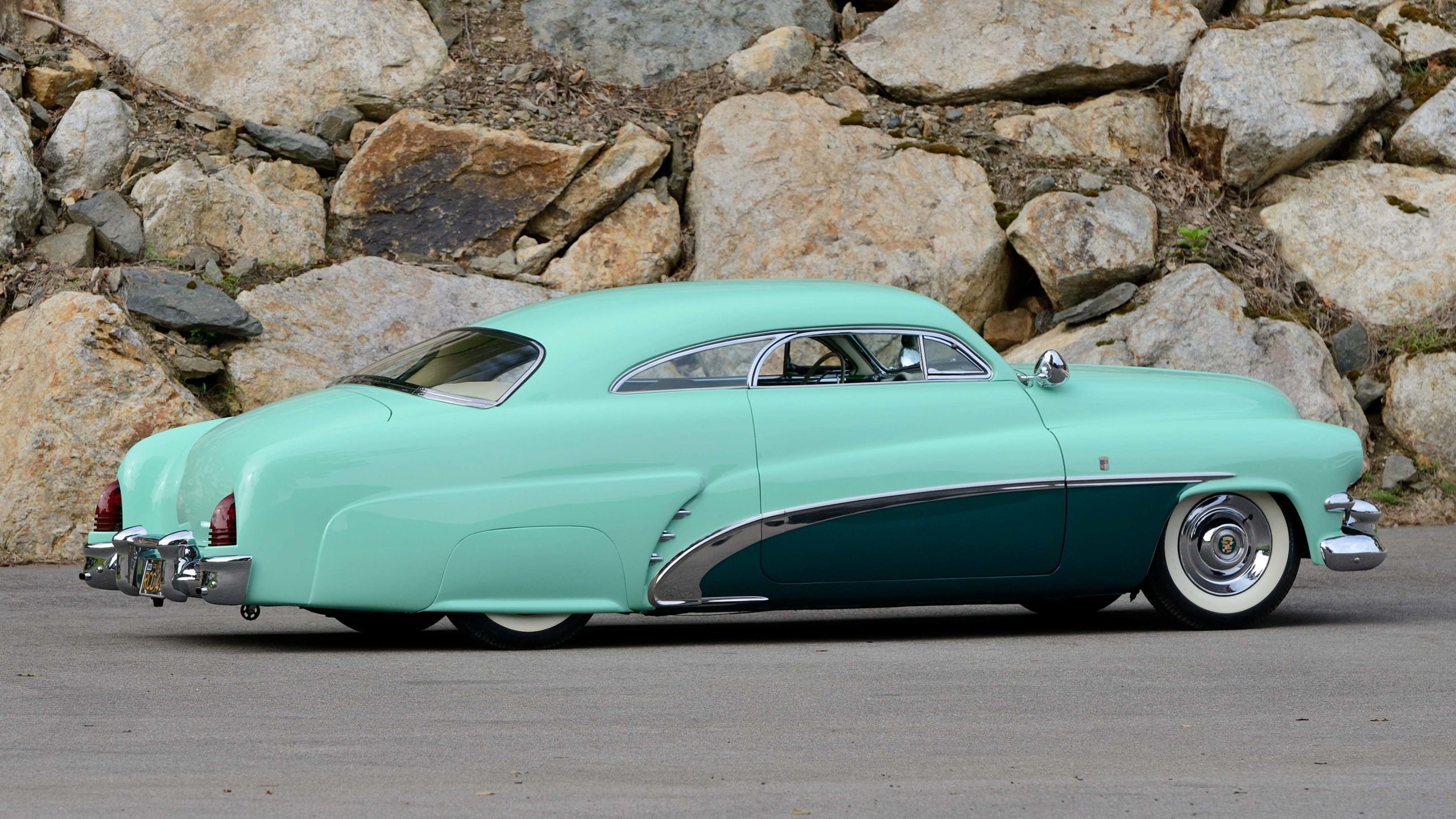 And now, a truly legendary car appears: the Hirohata Merc, built by the Barris brothers in the image and likeness of Sam Barris' personal Mercury... only better. And here it is necessary to understand what exactly is captured in the photographs. The fact is that at that time the Barris cars were among the first of their kind. It's now that we all know what a "lead sled" is, while the Barris brothers - and more specifically, it was Sam Barris who built, if not the first lead sled in the world, then certainly one of the first. And Mercury for Bob Hirohata became the best among those that existed at that time. An exceptional design, radical down to the color scheme: while everyone painted their custom designs in dark metallic, George preferred to paint the main part of the case in an unexpectedly light green for that time.
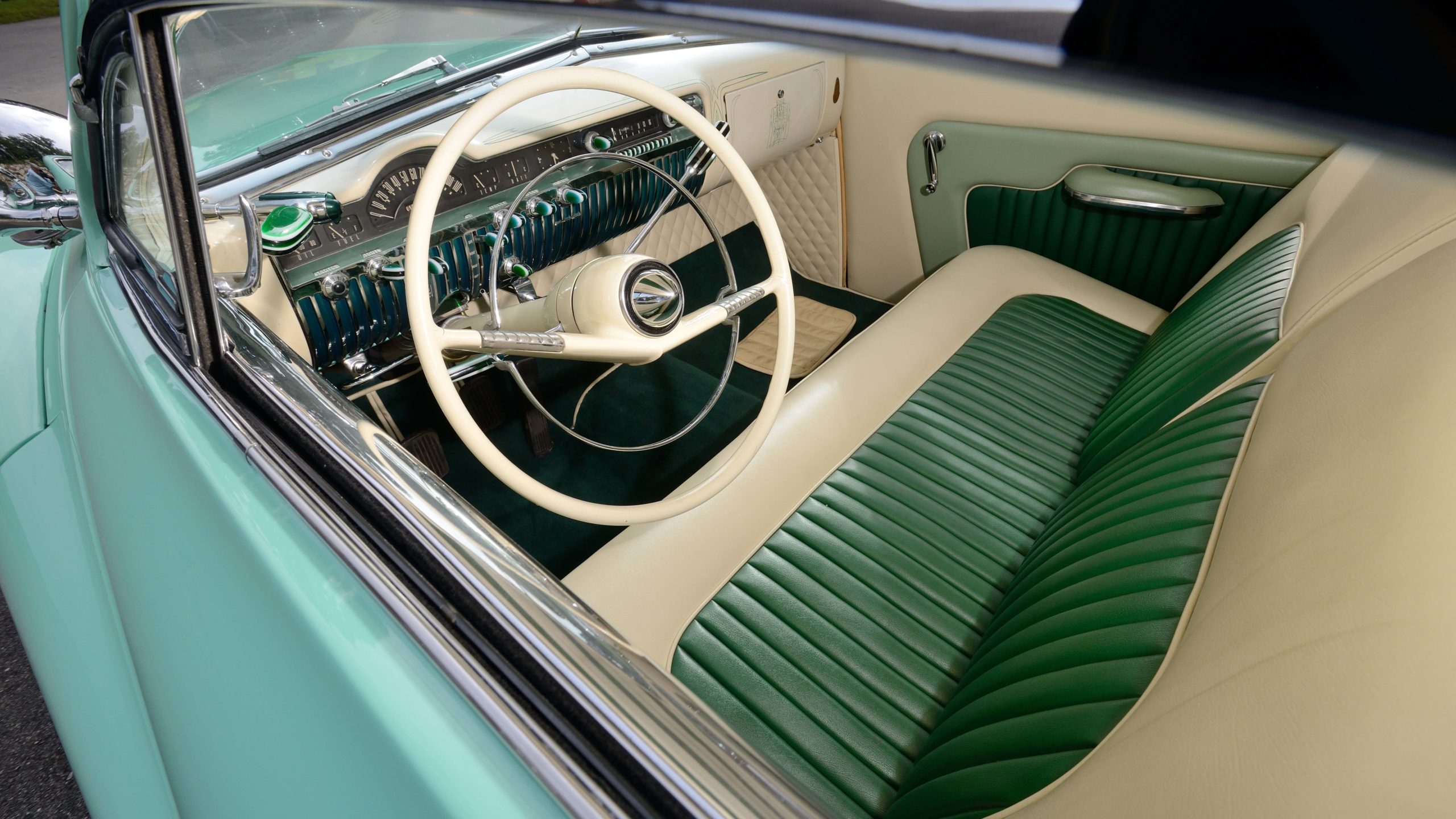 And now, a truly legendary car appears: the Hirohata Merc, built by the Barris brothers in the image and likeness of Sam Barris' personal Mercury... only better. And here it is necessary to understand what exactly is captured in the photographs. The fact is that at that time the Barris machines were among the first of their kind. It's now that we all know what a "lead sled" is, while the Barris brothers - and more specifically, it was Sam Barris who built, if not the first lead sled in the world, then certainly one of the first. And Mercury for Bob Hirohata became the best among those that existed at that time. An exceptional design, radical down to the color scheme: while everyone painted their custom designs in dark metallic, George preferred to paint the main part of the case in an unexpectedly light green for that time.
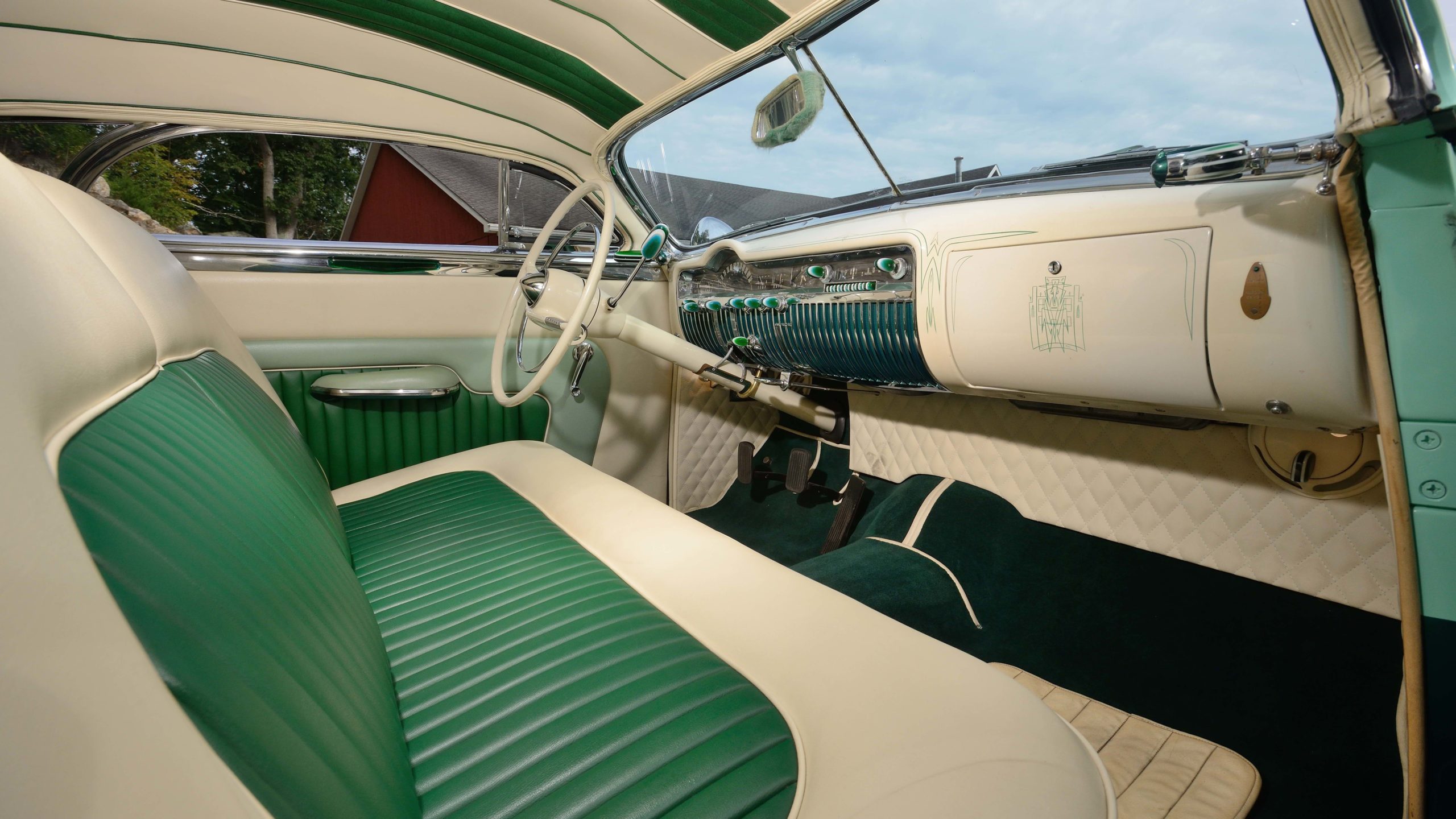 And now, a truly legendary car appears: the Hirohata Merc, built by the Barris brothers in the image and likeness of Sam Barris' personal Mercury... only better. And here it is necessary to understand what exactly is captured in the photographs. The fact is that at that time the Barris machines were among the first of their kind. It's now that we all know what a "lead sled" is, while the Barris brothers - and more specifically, it was Sam Barris who built, if not the first lead sled in the world, then certainly one of the first. And Mercury for Bob Hirohata became the best among those that existed at that time. An exceptional design, radical down to the color scheme: while everyone painted their custom designs in dark metallic, George preferred to paint the main part of the case in an unexpectedly light green for that time.
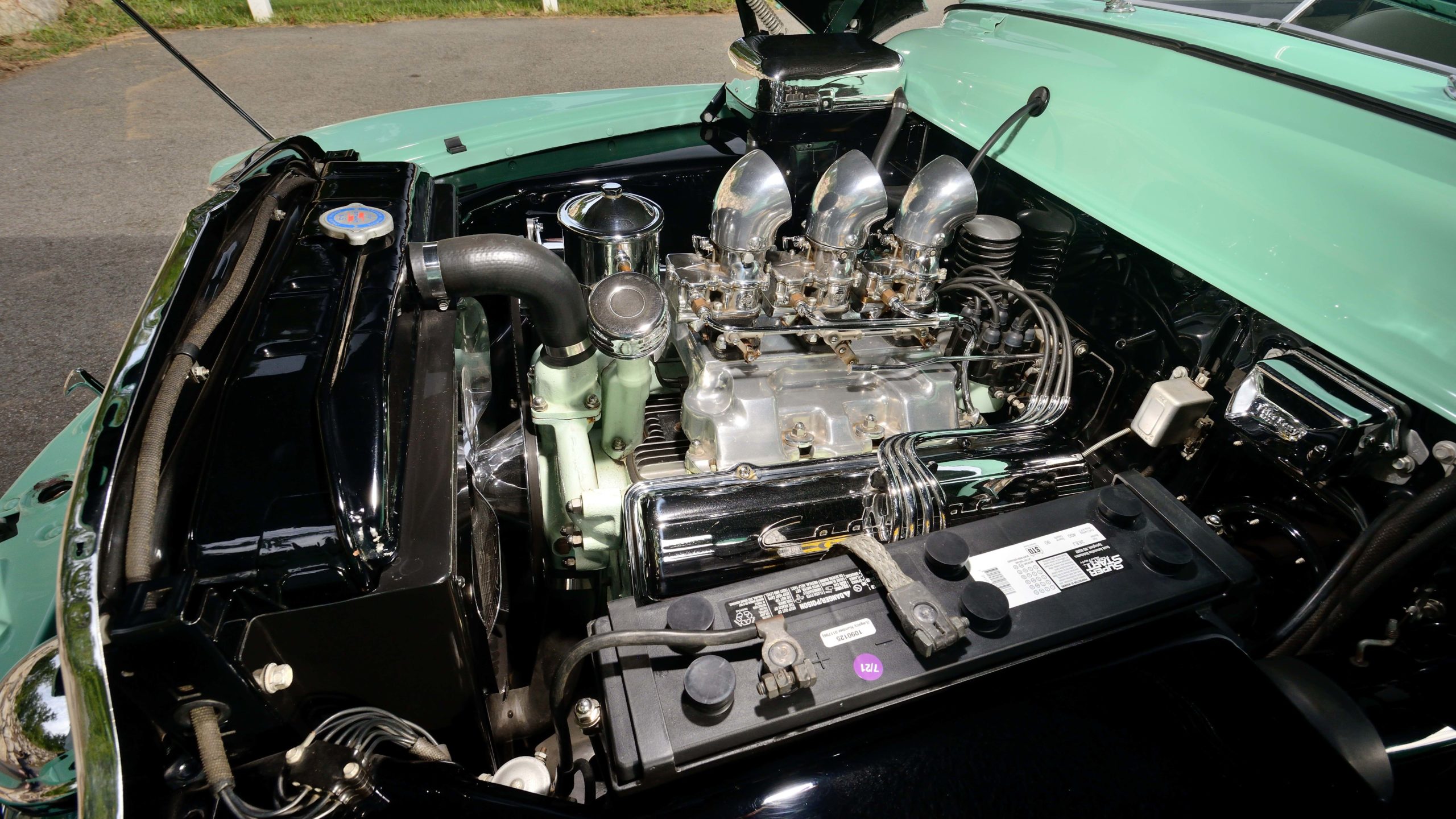 And now, a truly legendary car appears: the Hirohata Merc, built by the Barris brothers in the image and likeness of Sam Barris' personal Mercury... only better. And here it is necessary to understand what exactly is captured in the photographs. The fact is that at that time the Barris cars were among the first of their kind. It's now that we all know what a "lead sled" is, while the Barris brothers - and more specifically, it was Sam Barris who built, if not the first lead sled in the world, then certainly one of the first. And Mercury for Bob Hirohata became the best among those that existed at that time. An exceptional design, radical down to the color scheme: while everyone painted their custom designs in dark metallic, George preferred to paint the main part of the case in an unexpectedly light green for that time.
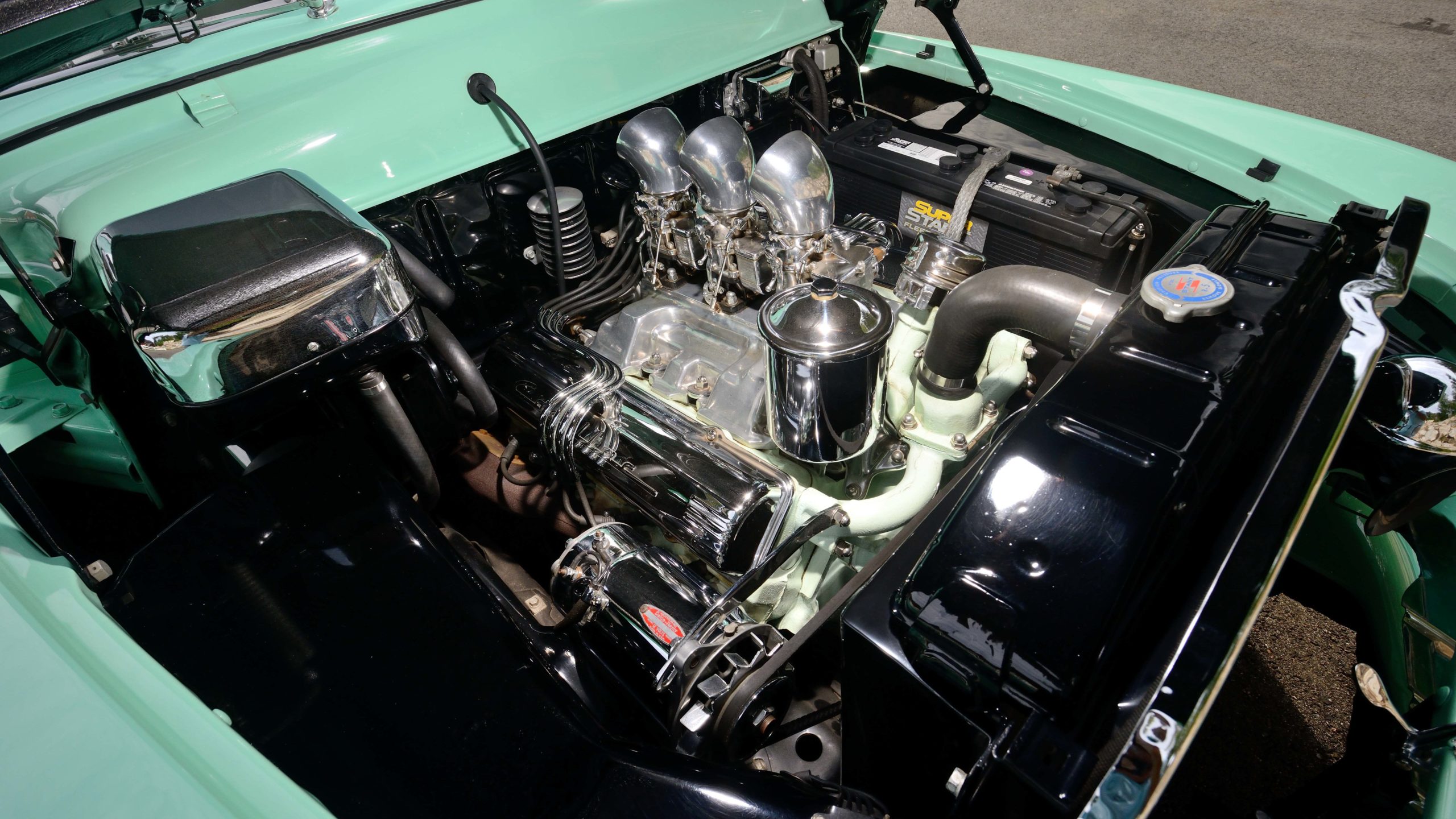 And now, a truly legendary car appears: the Hirohata Merc, built by the Barris brothers in the image and likeness of Sam Barris' personal Mercury... only better. And here it is necessary to understand what exactly is captured in the photographs. The fact is that at that time the Barris cars were among the first of their kind. It's now that we all know what a "lead sled" is, while the Barris brothers - and more specifically, it was Sam Barris who built, if not the first lead sled in the world, then certainly one of the first. And Mercury for Bob Hirohata became the best among those that existed at that time. An exceptional design, radical down to the color scheme: while everyone painted their custom designs in dark metallic, George preferred to paint the main part of the case in an unexpectedly light green for that time.
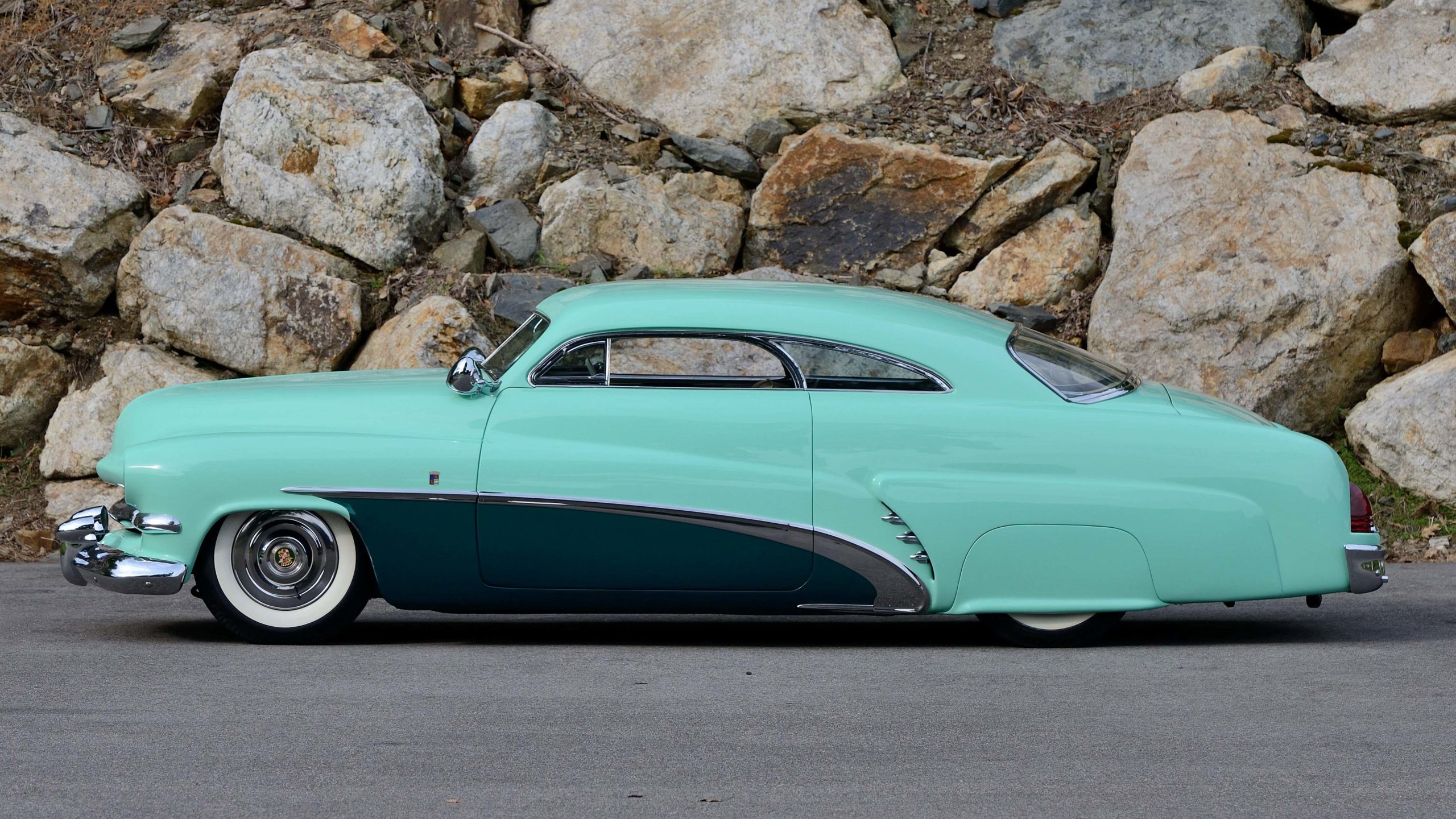 And now, a truly legendary car appears: the Hirohata Merc, built by the Barris brothers in the image and likeness of Sam Barris' personal Mercury... only better. And here it is necessary to understand what exactly is captured in the photographs. The fact is that at that time the Barris cars were among the first of their kind. It's now that we all know what a "lead sled" is, while the Barris brothers - and more specifically, it was Sam Barris who built, if not the first lead sled in the world, then certainly one of the first. And Mercury for Bob Hirohata became the best among those that existed at that time. An exceptional design, radical down to the color scheme: while everyone painted their custom designs in dark metallic, George preferred to paint the main part of the case in an unexpectedly light green for that time.
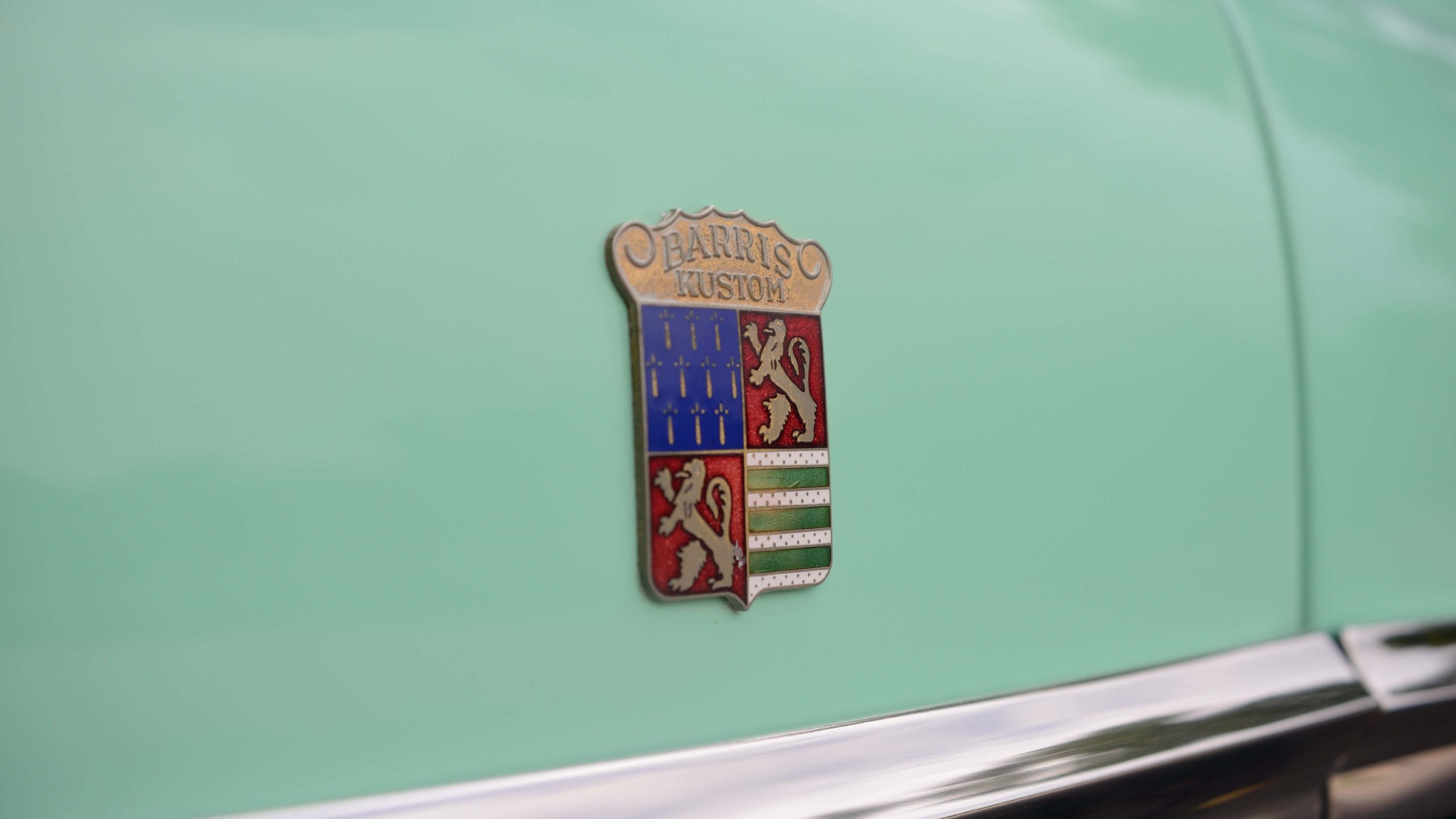 And now, a truly legendary car appears: the Hirohata Merc, built by the Barris brothers in the image and likeness of Sam Barris' personal Mercury... only better. And here it is necessary to understand what exactly is captured in the photographs. The fact is that at that time the Barris cars were among the first of their kind. It's now that we all know what a "lead sled" is, while the Barris brothers - and more specifically, it was Sam Barris who built, if not the first lead sled in the world, then certainly one of the first. And Mercury for Bob Hirohata became the best among those that existed at that time. An exceptional design, radical down to the color scheme: while everyone painted their custom designs in dark metallic, George preferred to paint the main part of the case in an unexpectedly light green for that time.
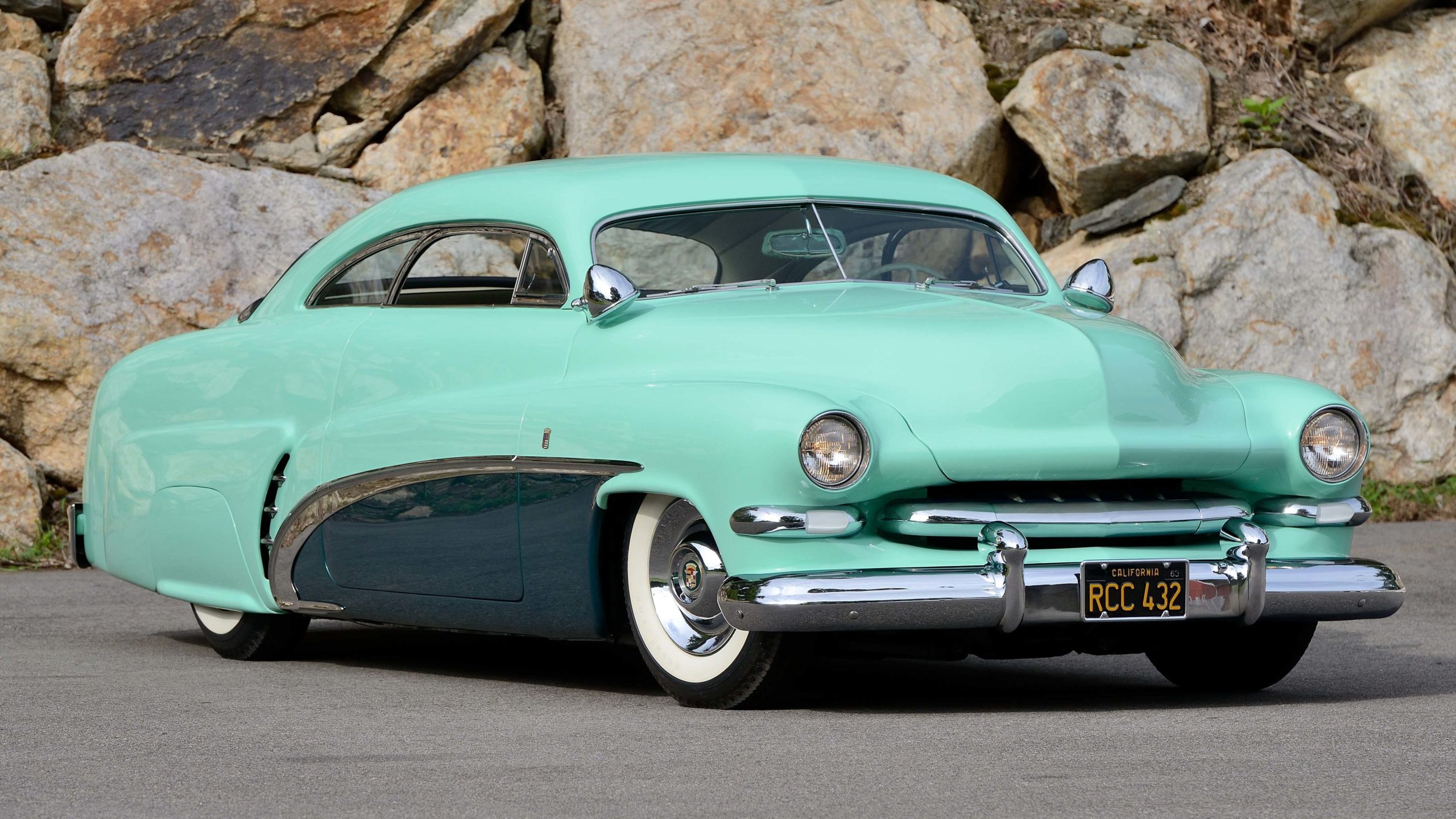 And now, a truly legendary car appears: the Hirohata Merc, built by the Barris brothers in the image and likeness of Sam Barris' personal Mercury... only better. And here it is necessary to understand what exactly is captured in the photographs. The fact is that at that time the Barris cars were among the first of their kind. It's now that we all know what a "lead sled" is, while the Barris brothers - and more specifically, it was Sam Barris who built, if not the first lead sled in the world, then certainly one of the first. And Mercury for Bob Hirohata became the best among those that existed at that time. An exceptional design, radical down to the color scheme: while everyone painted their custom designs in dark metallic, George preferred to paint the main part of the case in an unexpectedly light green for that time.
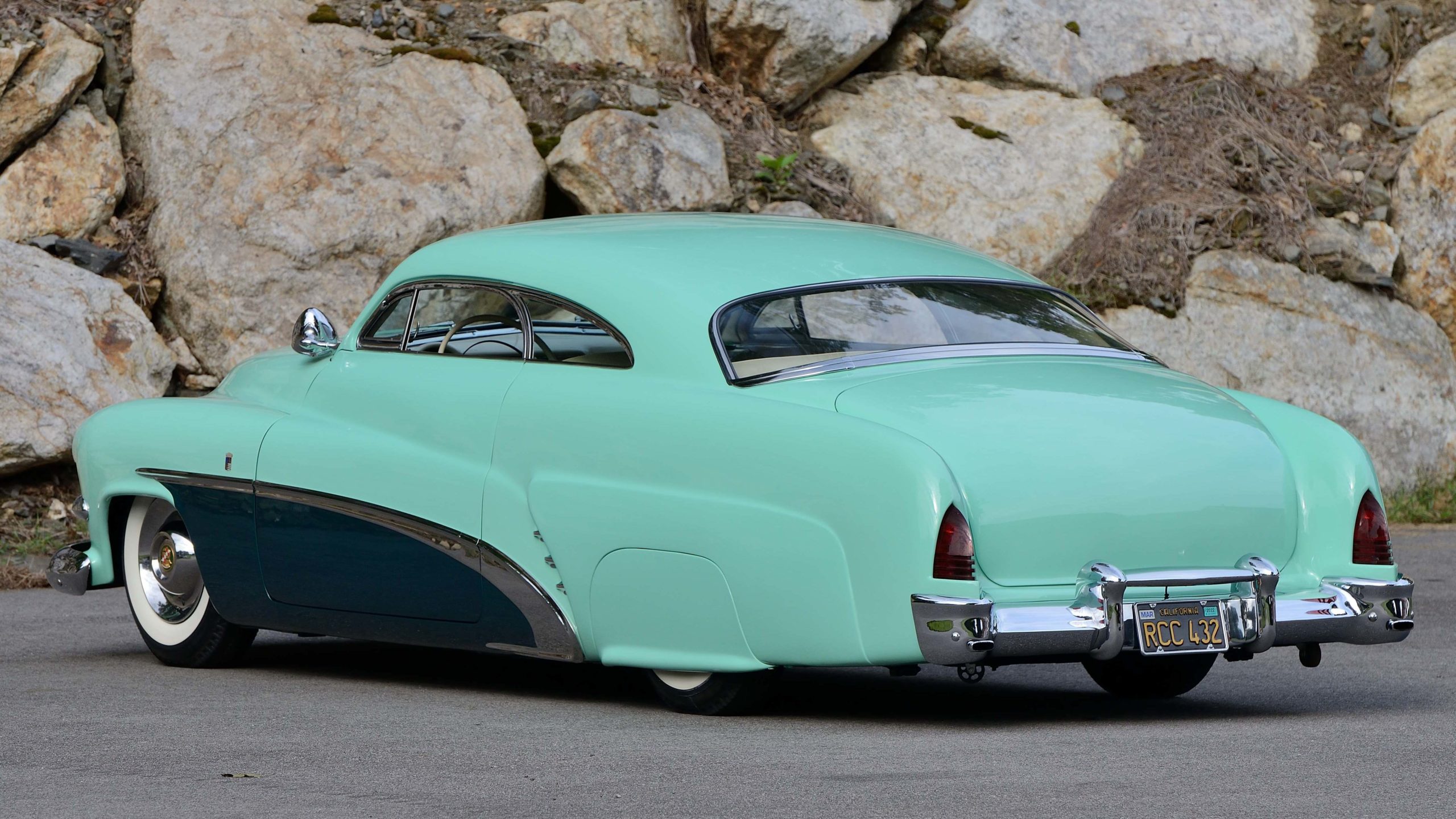 And now, a truly legendary car appears: the Hirohata Merc, built by the Barris brothers in the image and likeness of Sam Barris' personal Mercury... only better. And here it is necessary to understand what exactly is captured in the photographs. The fact is that at that time the Barris cars were among the first of their kind. It's now that we all know what a "lead sled" is, while the Barris brothers - and more specifically, it was Sam Barris who built, if not the first lead sled in the world, then certainly one of the first. And Mercury for Bob Hirohata became the best among those that existed at that time. An exceptional design, radical down to the color scheme: while everyone painted their custom designs in dark metallic, George preferred to paint the main part of the case in an unexpectedly light green for that time.
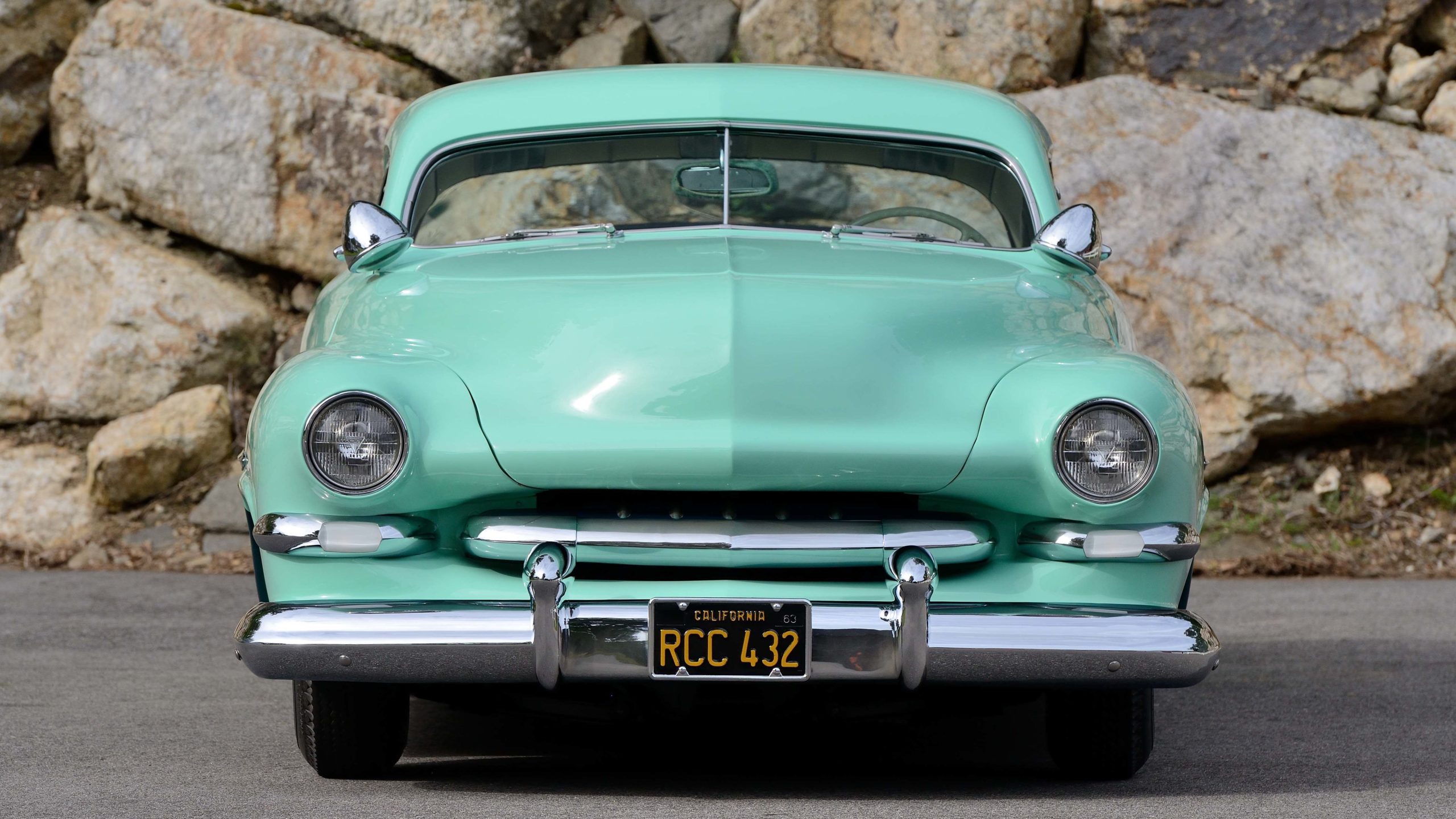 And now, a truly legendary car appears: the Hirohata Merc, built by the Barris brothers in the image and likeness of Sam Barris' personal Mercury... only better. And here it is necessary to understand what exactly is captured in the photographs. The fact is that at that time the Barris machines were among the first of their kind. It's now that we all know what a "lead sled" is, while the Barris brothers - and more specifically, it was Sam Barris who built, if not the first lead sled in the world, then certainly one of the first. And Mercury for Bob Hirohata became the best among those that existed at that time. An exceptional design, radical down to the color scheme: while everyone painted their custom designs in dark metallic, George preferred to paint the main part of the case in an unexpectedly light green for that time.
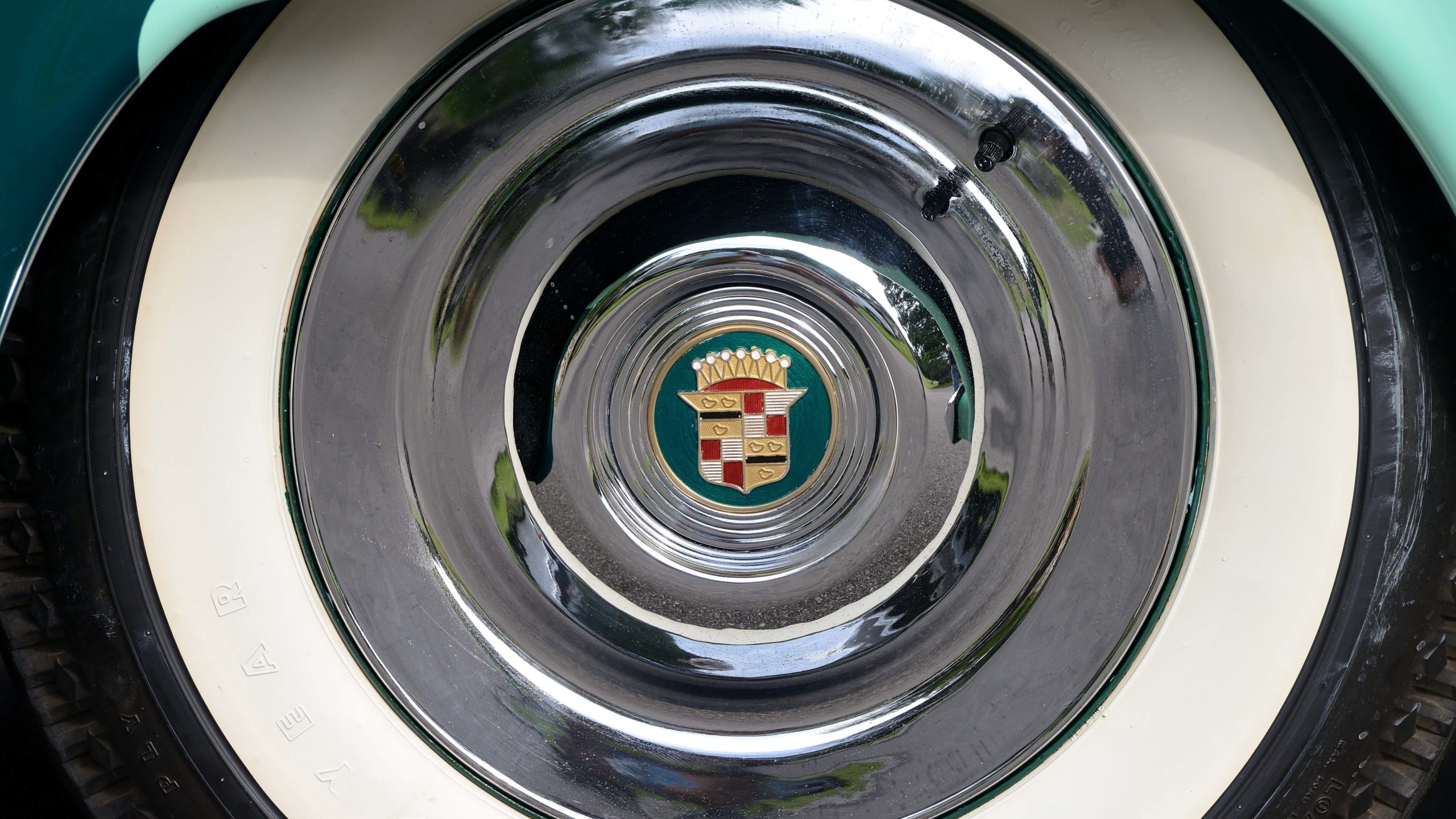 And now, a truly legendary car appears: the Hirohata Merc, built by the Barris brothers in the image and likeness of Sam Barris' personal Mercury... only better. And here it is necessary to understand what exactly is captured in the photographs. The fact is that at that time the Barris cars were among the first of their kind. It's now that we all know what a "lead sled" is, while the Barris brothers - and more specifically, it was Sam Barris who built, if not the first lead sled in the world, then certainly one of the first. And Mercury for Bob Hirohata became the best among those that existed at that time. An exceptional design, radical down to the color scheme: while everyone painted their custom designs in dark metallic, George preferred to paint the main part of the case in an unexpectedly light green for that time.
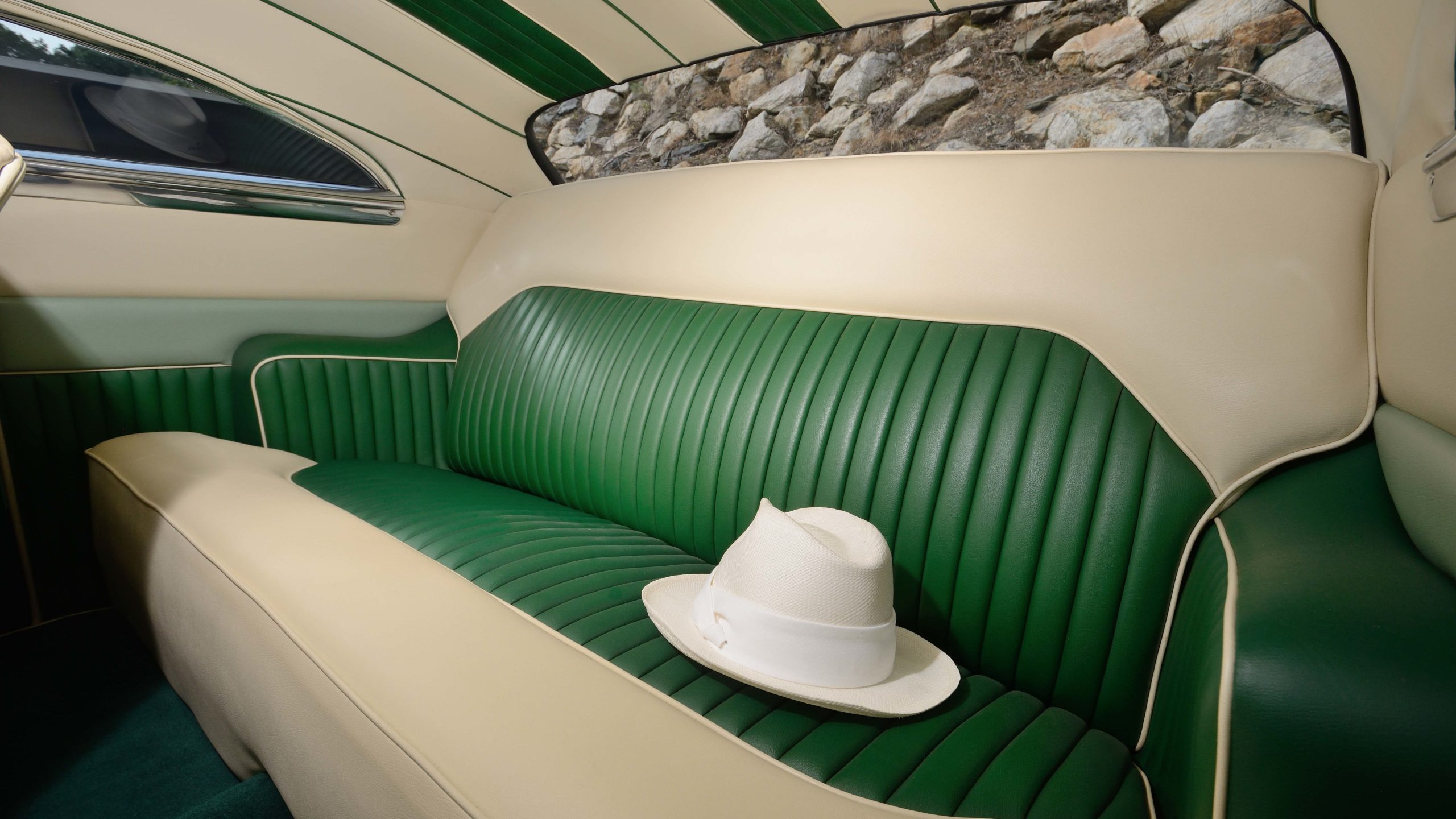 And now, a truly legendary car appears: the Hirohata Merc, built by the Barris brothers in the image and likeness of Sam Barris' personal Mercury... only better. And here it is necessary to understand what exactly is captured in the photographs. The fact is that at that time the Barris cars were among the first of their kind. It's now that we all know what a "lead sled" is, while the Barris brothers - and more specifically, it was Sam Barris who built, if not the first lead sled in the world, then certainly one of the first. And Mercury for Bob Hirohata became the best among those that existed at that time. An exceptional design, radical down to the color scheme: while everyone painted their custom designs in dark metallic, George preferred to paint the main part of the case in an unexpectedly light green for that time.
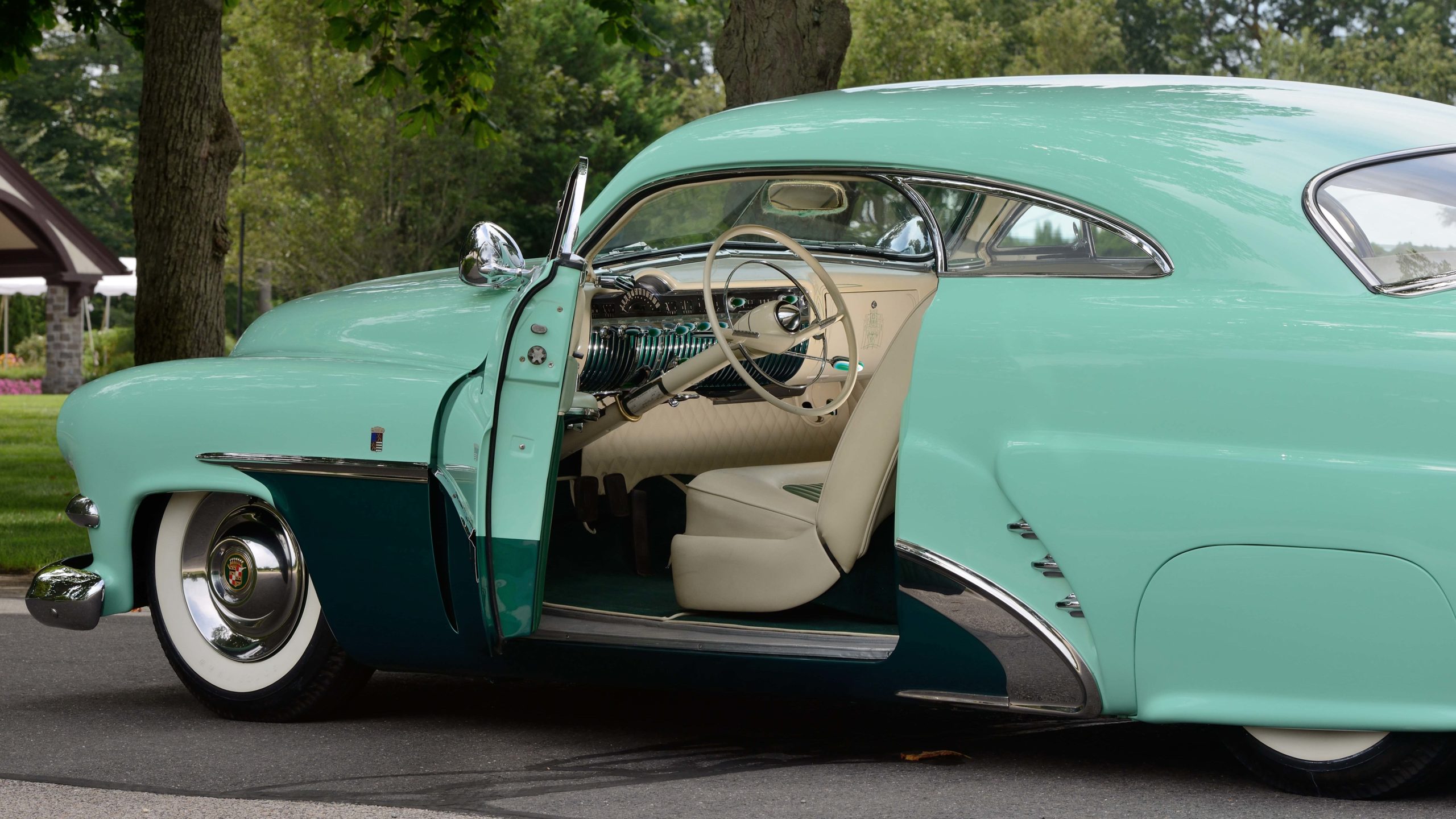 And now, a truly legendary car appears: the Hirohata Merc, built by the Barris brothers in the image and likeness of Sam Barris' personal Mercury... only better. And here it is necessary to understand what exactly is captured in the photographs. The fact is that at that time the Barris cars were among the first of their kind. It's now that we all know what a "lead sled" is, while the Barris brothers - and more specifically, it was Sam Barris who built, if not the first lead sled in the world, then certainly one of the first. And Mercury for Bob Hirohata became the best among those that existed at that time. An exceptional design, radical down to the color scheme: while everyone painted their custom designs in dark metallic, George preferred to paint the main part of the case in an unexpectedly light green for that time.
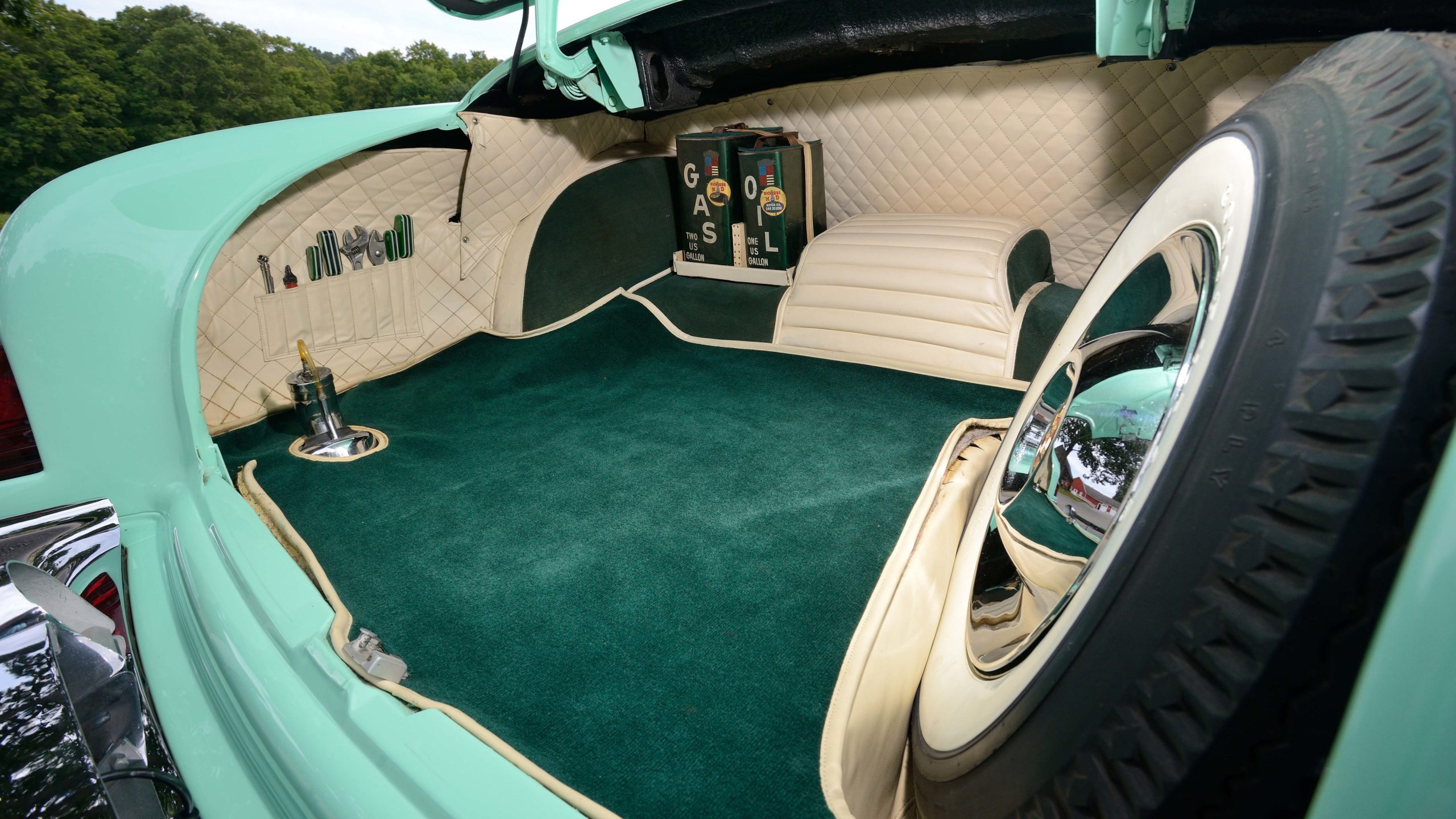 And now, a truly legendary car appears: the Hirohata Merc, built by the Barris brothers in the image and likeness of Sam Barris' personal Mercury... only better. And here it is necessary to understand what exactly is captured in the photographs. The fact is that at that time the Barris cars were among the first of their kind. It's now that we all know what a "lead sled" is, while the Barris brothers - and more specifically, it was Sam Barris who built, if not the first lead sled in the world, then certainly one of the first. And Mercury for Bob Hirohata became the best among those that existed at that time. An exceptional design, radical down to the color scheme: while everyone painted their custom designs in dark metallic, George preferred to paint the main part of the case in an unexpectedly light green for that time.
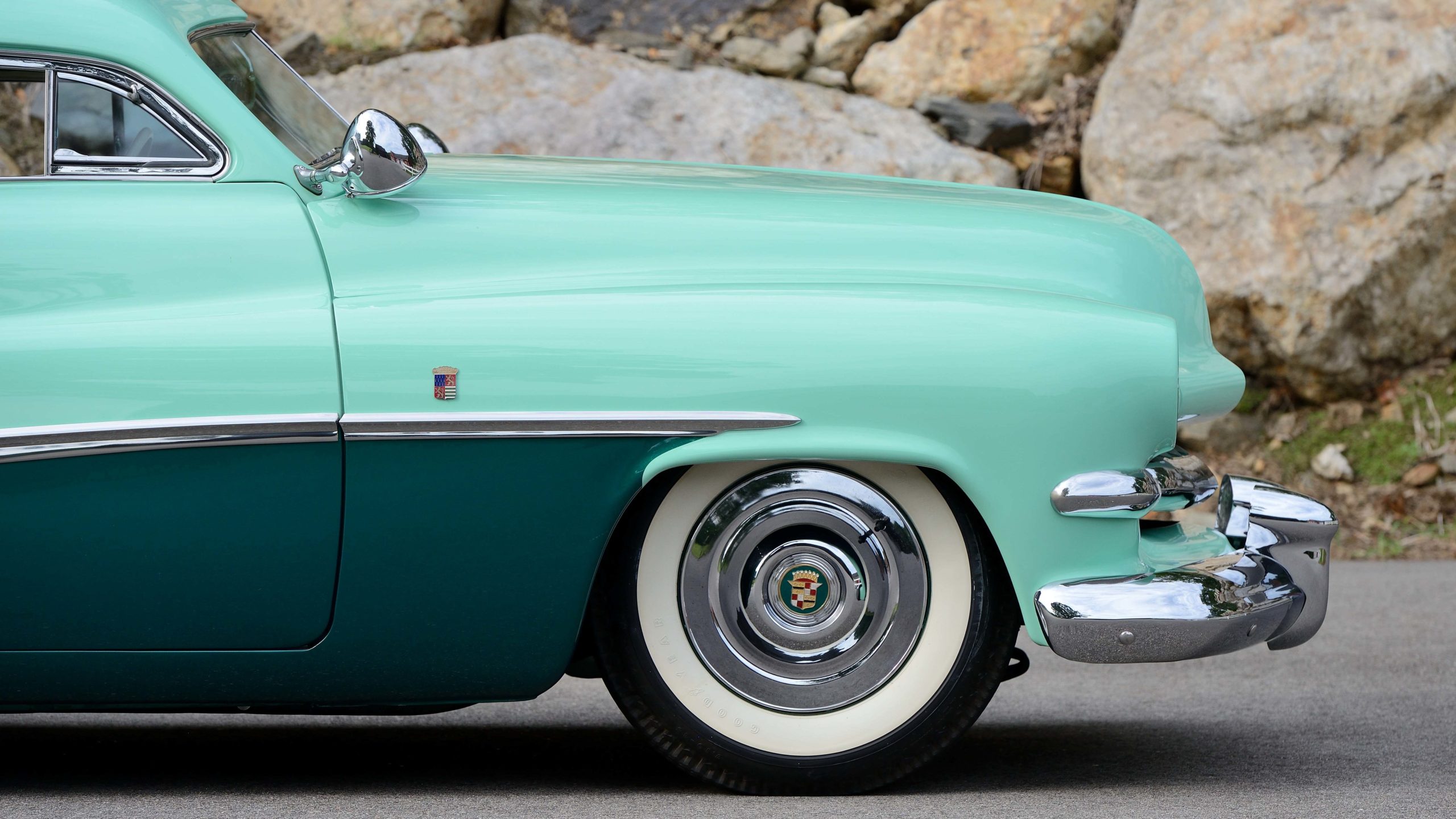 And now, a truly legendary car appears: the Hirohata Merc, built by the Barris brothers in the image and likeness of Sam Barris' personal Mercury... only better. And here it is necessary to understand what exactly is captured in the photographs. The fact is that at that time the Barris cars were among the first of their kind. It's now that we all know what a "lead sled" is, while the Barris brothers - and more specifically, it was Sam Barris who built, if not the first lead sled in the world, then certainly one of the first. And Mercury for Bob Hirohata became the best among those that existed at that time. An exceptional design, radical down to the color scheme: while everyone painted their custom designs in dark metallic, George preferred to paint the main part of the case in an unexpectedly light green for that time.
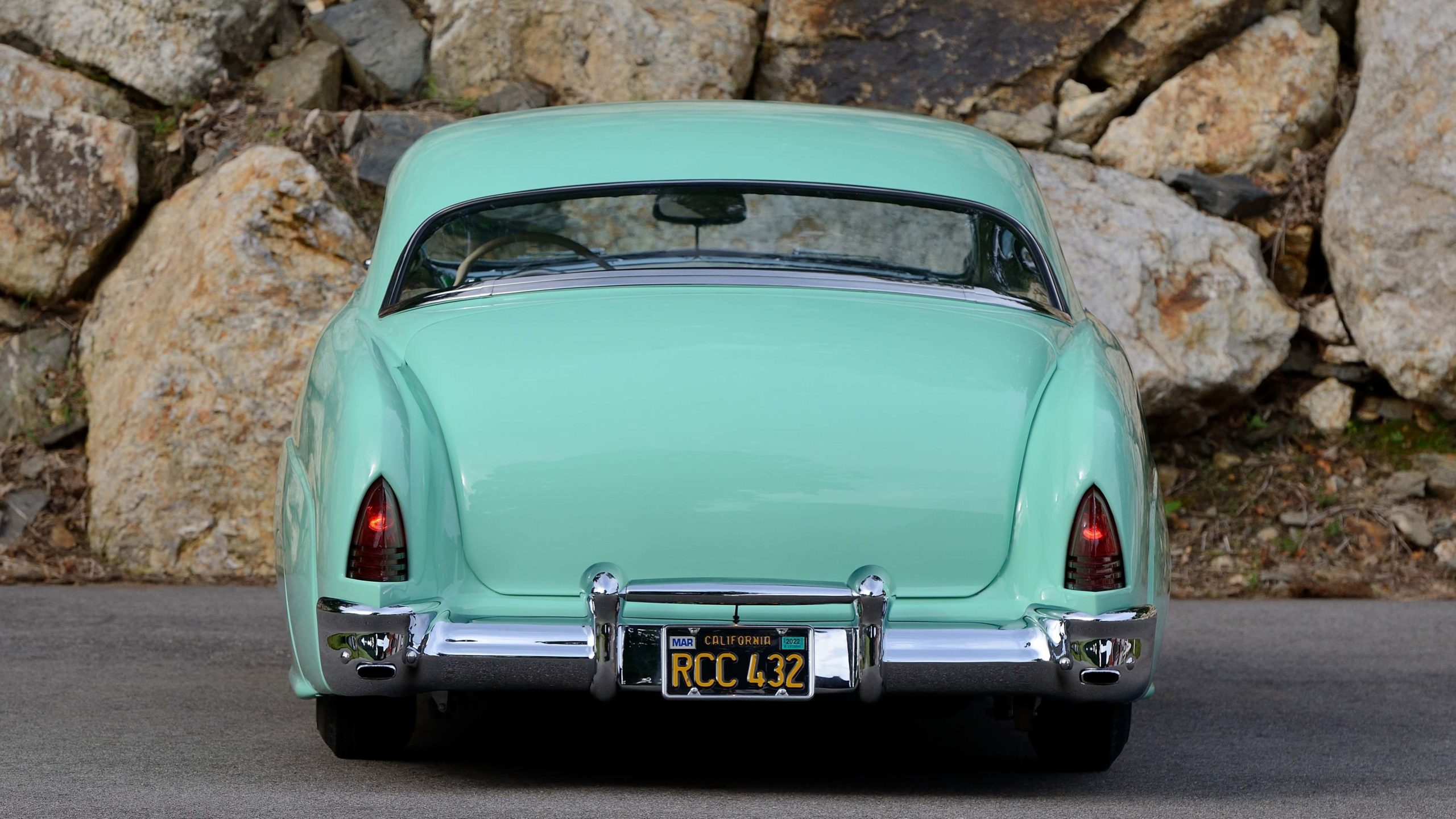 And now, a truly legendary car appears: the Hirohata Merc, built by the Barris brothers in the image and likeness of Sam Barris' personal Mercury... only better. And here it is necessary to understand what exactly is captured in the photographs. The fact is that at that time the Barris cars were among the first of their kind. It's now that we all know what a "lead sled" is, while the Barris brothers - and more specifically, it was Sam Barris who built, if not the first lead sled in the world, then certainly one of the first. And Mercury for Bob Hirohata became the best among those that existed at that time. An exceptional design, radical down to the color scheme: while everyone painted their custom designs in dark metallic, George preferred to paint the main part of the case in an unexpectedly light green for that time.
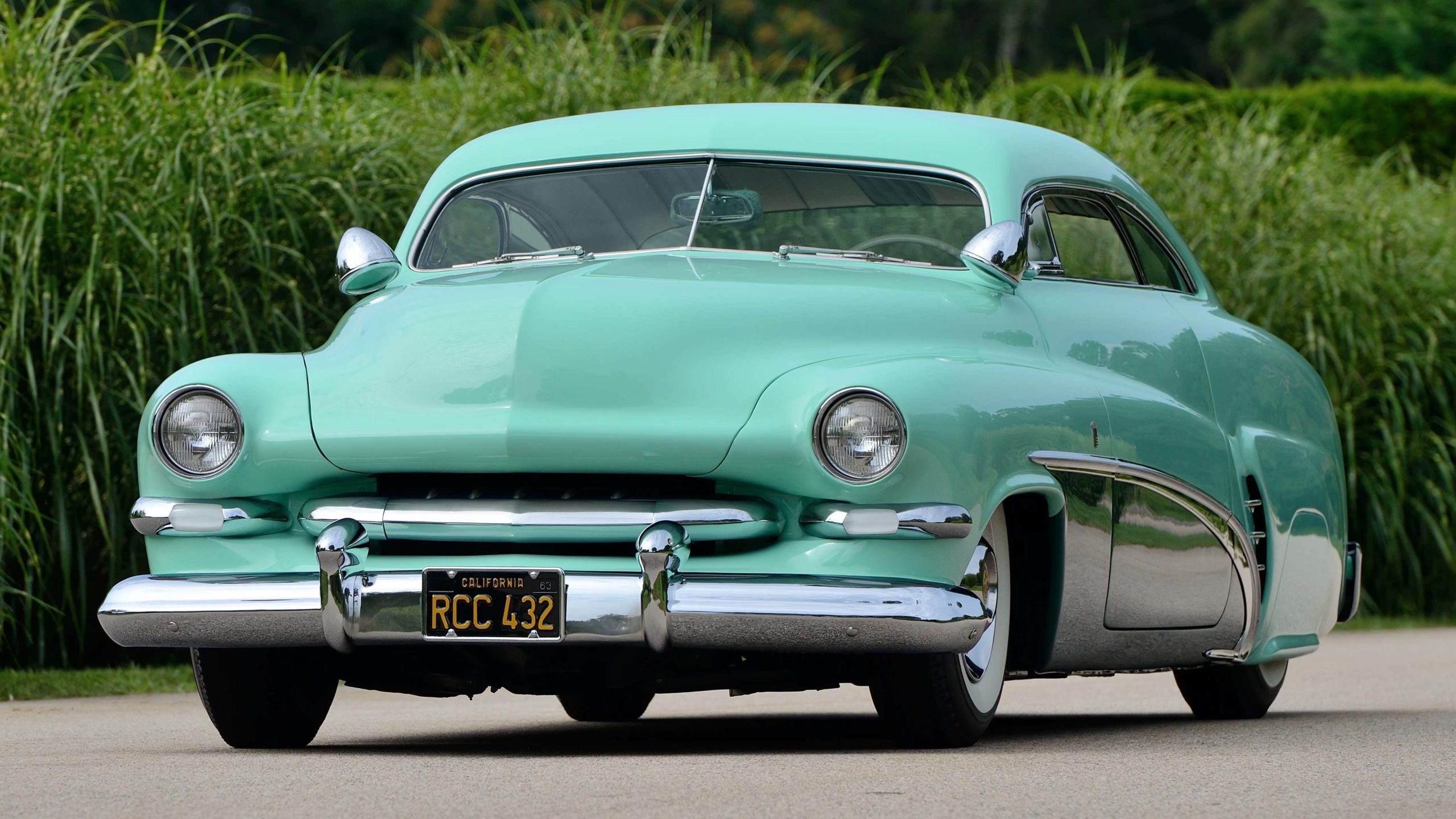 And now, a truly legendary car appears: the Hirohata Merc, built by the Barris brothers in the image and likeness of Sam Barris' personal Mercury... only better. And here it is necessary to understand what exactly is captured in the photographs. The fact is that at that time the Barris cars were among the first of their kind. It's now that we all know what a "lead sled" is, while the Barris brothers - and more specifically, it was Sam Barris who built, if not the first lead sled in the world, then certainly one of the first. And Mercury for Bob Hirohata became the best among those that existed at that time. An exceptional design, radical down to the color scheme: while everyone painted their custom designs in dark metallic, George preferred to paint the main part of the case in an unexpectedly light green for that time.
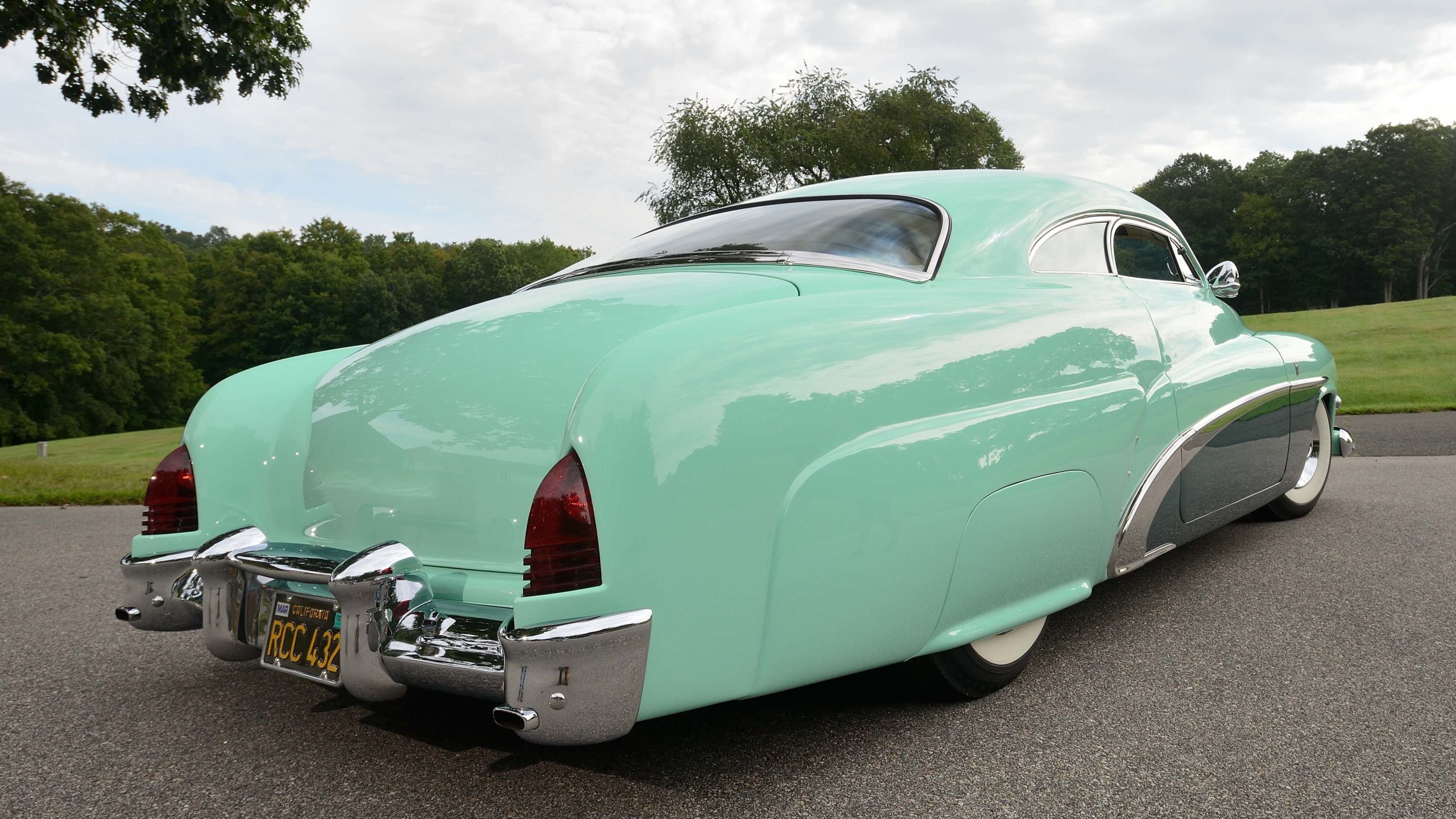 And now, a truly legendary car appears: the Hirohata Merc, built by the Barris brothers in the image and likeness of Sam Barris' personal Mercury... only better. And here it is necessary to understand what exactly is captured in the photographs. The fact is that at that time the Barris machines were among the first of their kind. It's now that we all know what a "lead sled" is, while the Barris brothers - and more specifically, it was Sam Barris who built, if not the first lead sled in the world, then certainly one of the first. And Mercury for Bob Hirohata became the best among those that existed at that time. An exceptional design, radical down to the color scheme: while everyone painted their custom designs in dark metallic, George preferred to paint the main part of the case in an unexpectedly light green for that time.
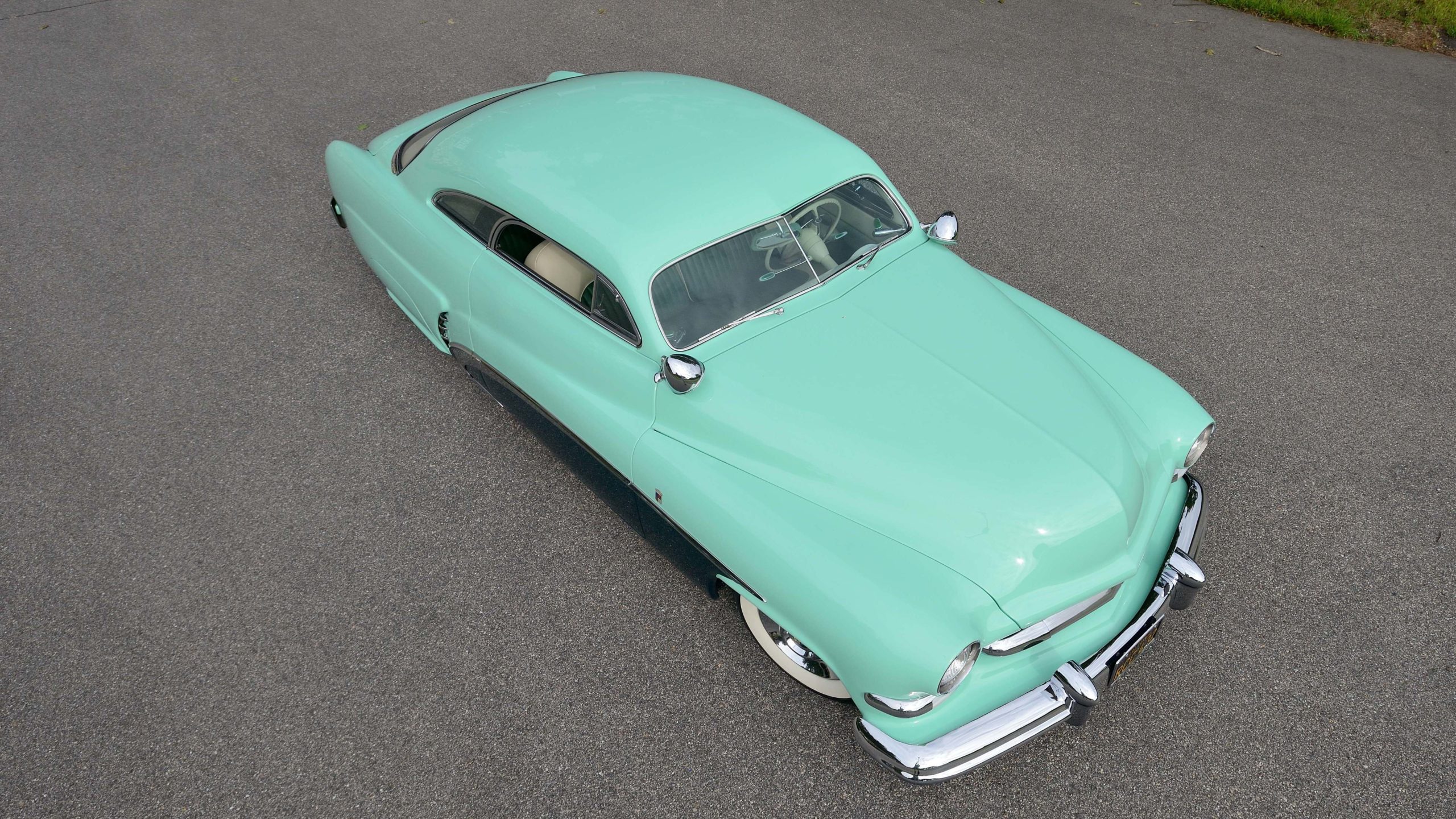 And now, a truly legendary car appears: the Hirohata Merc, built by the Barris brothers in the image and likeness of Sam Barris' personal Mercury... only better. And here it is necessary to understand what exactly is captured in the photographs. The fact is that at that time the Barris cars were among the first of their kind. It's now that we all know what a "lead sled" is, while the Barris brothers - and more specifically, it was Sam Barris who built, if not the first lead sled in the world, then certainly one of the first. And Mercury for Bob Hirohata became the best among those that existed at that time. An exceptional design, radical down to the color scheme: while everyone painted their custom designs in dark metallic, George preferred to paint the main part of the case in an unexpectedly light green for that time.
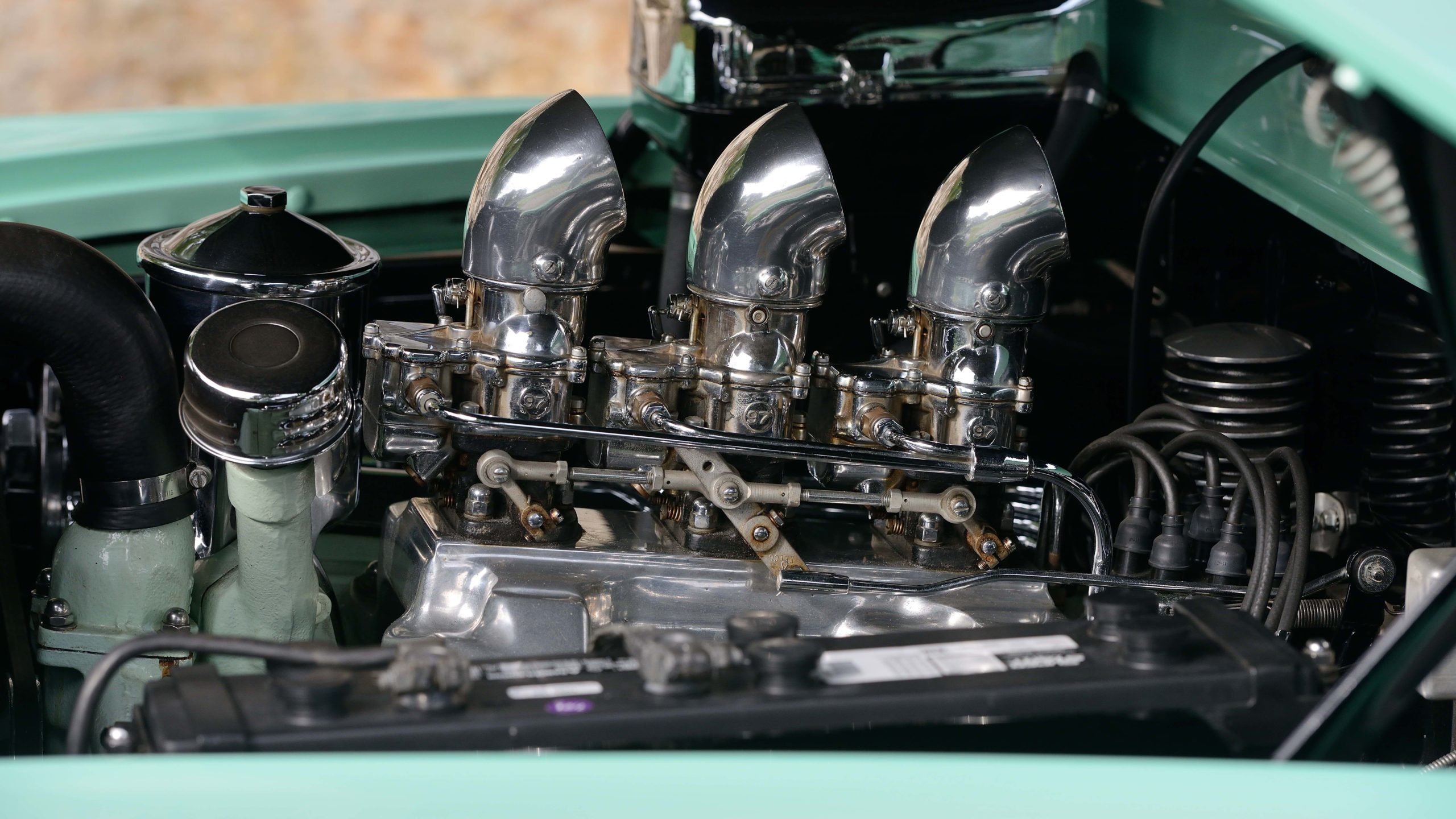 And now, a truly legendary car appears: the Hirohata Merc, built by the Barris brothers in the image and likeness of Sam Barris' personal Mercury... only better. And here it is necessary to understand what exactly is captured in the photographs. The fact is that at that time the Barris machines were among the first of their kind. It's now that we all know what a "lead sled" is, while the Barris brothers - and more specifically, it was Sam Barris who built, if not the first lead sled in the world, then certainly one of the first. And Mercury for Bob Hirohata became the best among those that existed at that time. An exceptional design, radical down to the color scheme: while everyone painted their custom designs in dark metallic, George preferred to paint the main part of the case in an unexpectedly light green for that time.
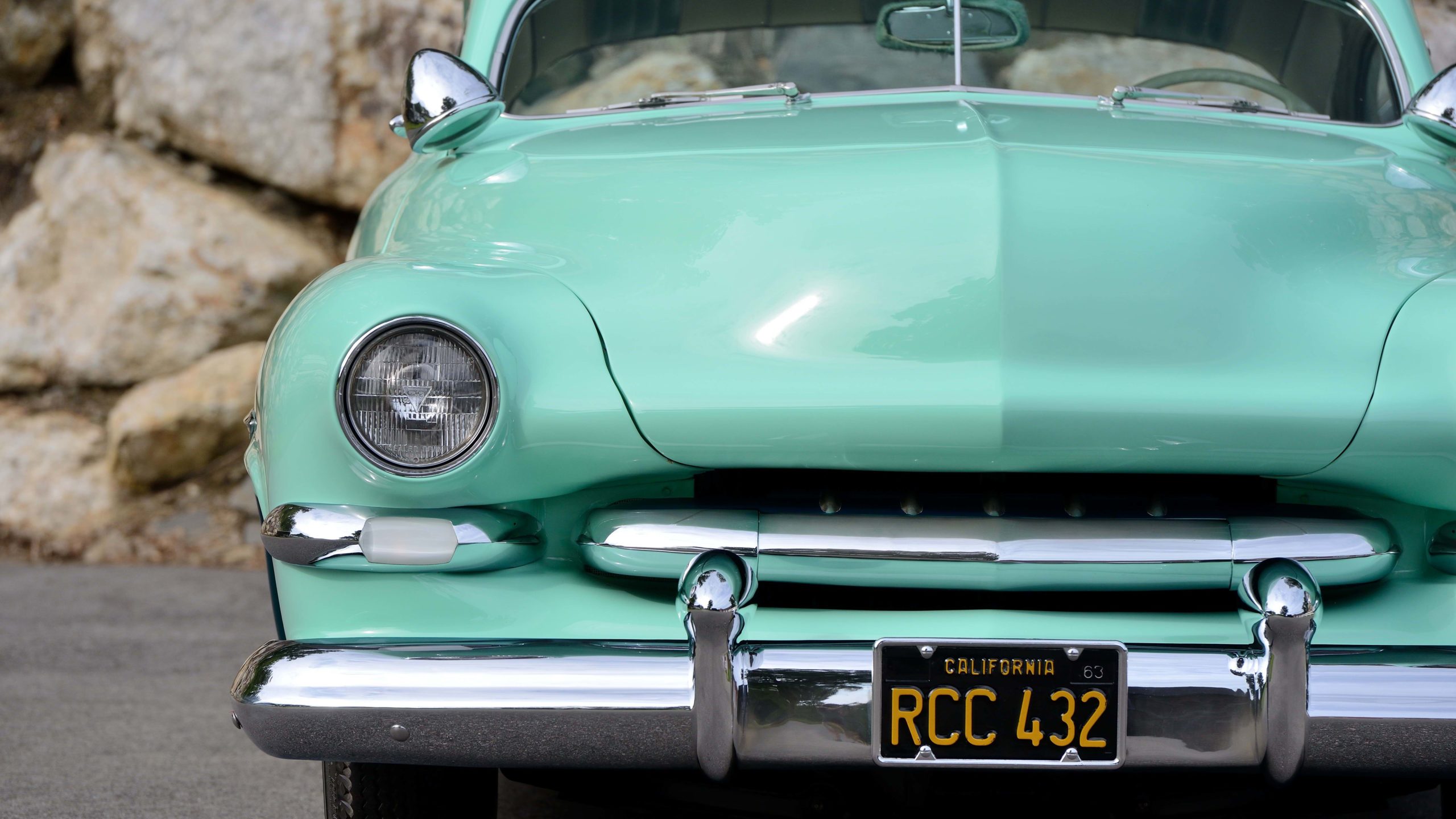 And now, a truly legendary car appears: the Hirohata Merc, built by the Barris brothers in the image and likeness of Sam Barris' personal Mercury... only better. And here it is necessary to understand what exactly is captured in the photographs. The fact is that at that time the Barris cars were among the first of their kind. It's now that we all know what a "lead sled" is, while the Barris brothers - and more specifically, it was Sam Barris who built, if not the first lead sled in the world, then certainly one of the first. And Mercury for Bob Hirohata became the best among those that existed at that time. An exceptional design, radical down to the color scheme: while everyone painted their custom designs in dark metallic, George preferred to paint the main part of the case in an unexpectedly light green for that time.
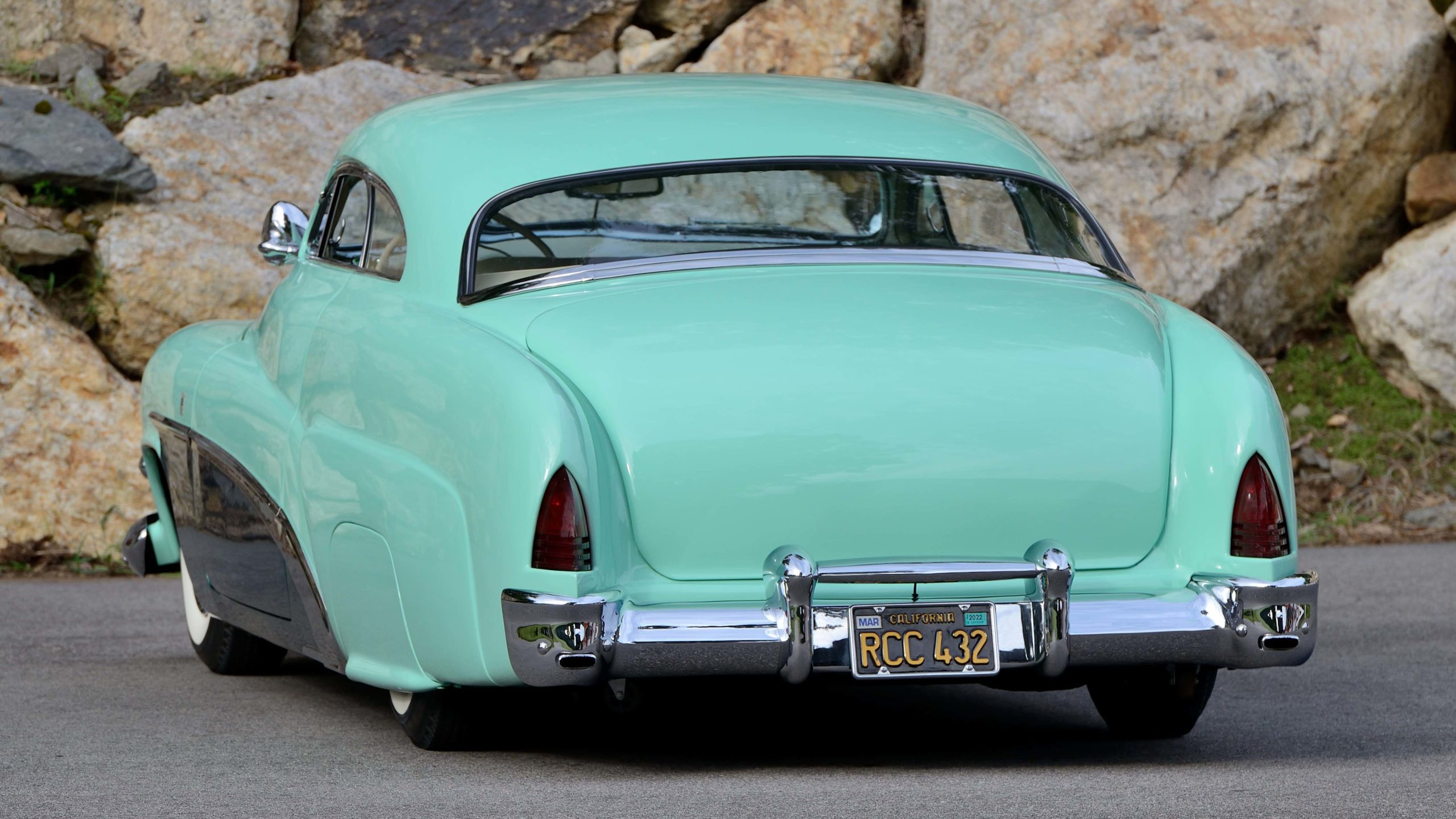 And now, a truly legendary car appears: the Hirohata Merc, built by the Barris brothers in the image and likeness of Sam Barris' personal Mercury... only better. And here it is necessary to understand what exactly is captured in the photographs. The fact is that at that time the Barris cars were among the first of their kind. It's now that we all know what a "lead sled" is, while the Barris brothers - and more specifically, it was Sam Barris who built, if not the first lead sled in the world, then certainly one of the first. And Mercury for Bob Hirohata became the best among those that existed at that time. An exceptional design, radical down to the color scheme: while everyone painted their custom designs in dark metallic, George preferred to paint the main part of the case in an unexpectedly light green for that time.
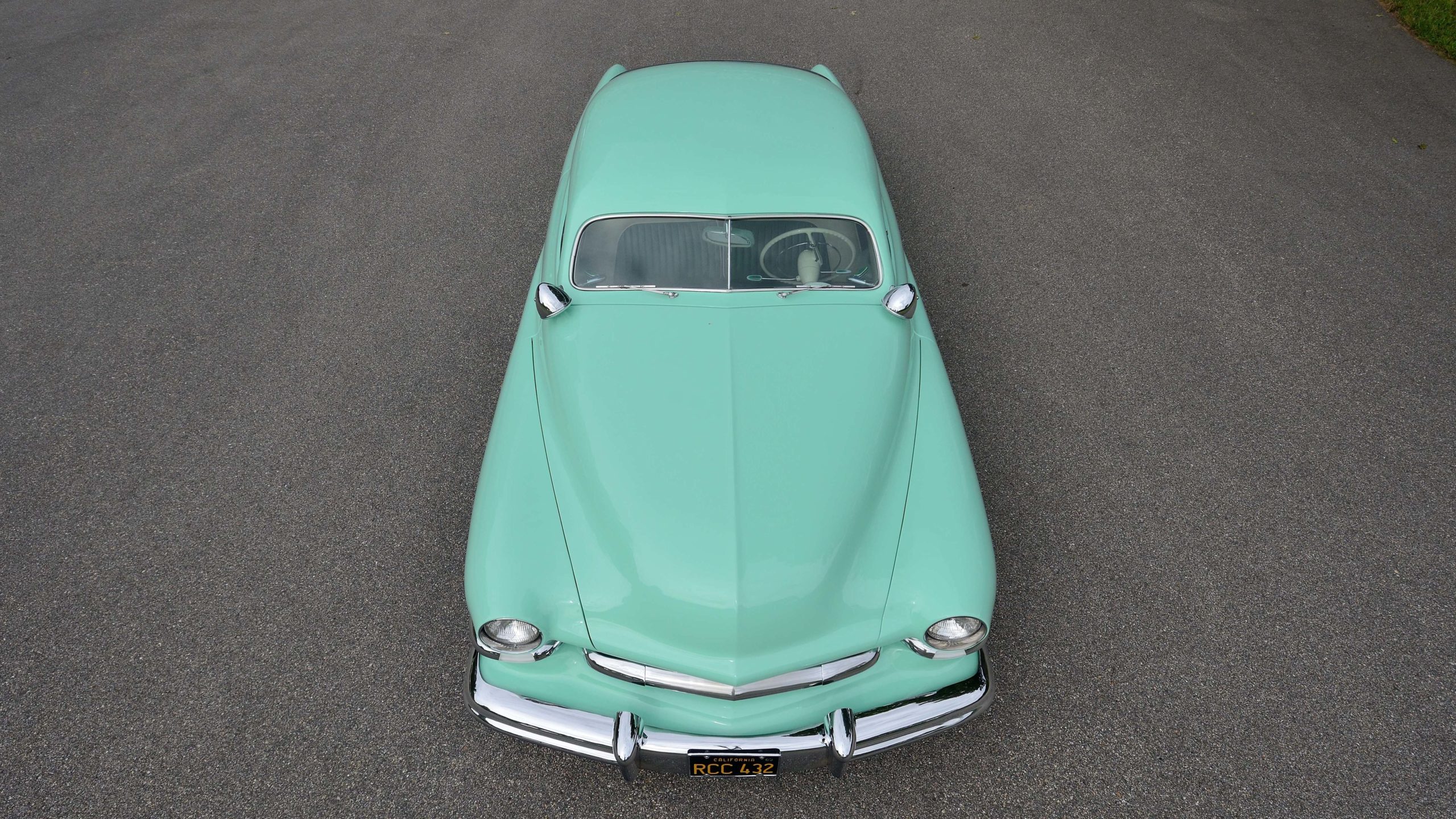 And now, a truly legendary car appears: the Hirohata Merc, built by the Barris brothers in the image and likeness of Sam Barris' personal Mercury... only better. And here it is necessary to understand what exactly is captured in the photographs. The fact is that at that time the Barris cars were among the first of their kind. It's now that we all know what a "lead sled" is, while the Barris brothers - and more specifically, it was Sam Barris who built, if not the first lead sled in the world, then certainly one of the first. And Mercury for Bob Hirohata became the best among those that existed at that time. An exceptional design, radical down to the color scheme: while everyone painted their custom designs in dark metallic, George preferred to paint the main part of the case in an unexpectedly light green for that time.
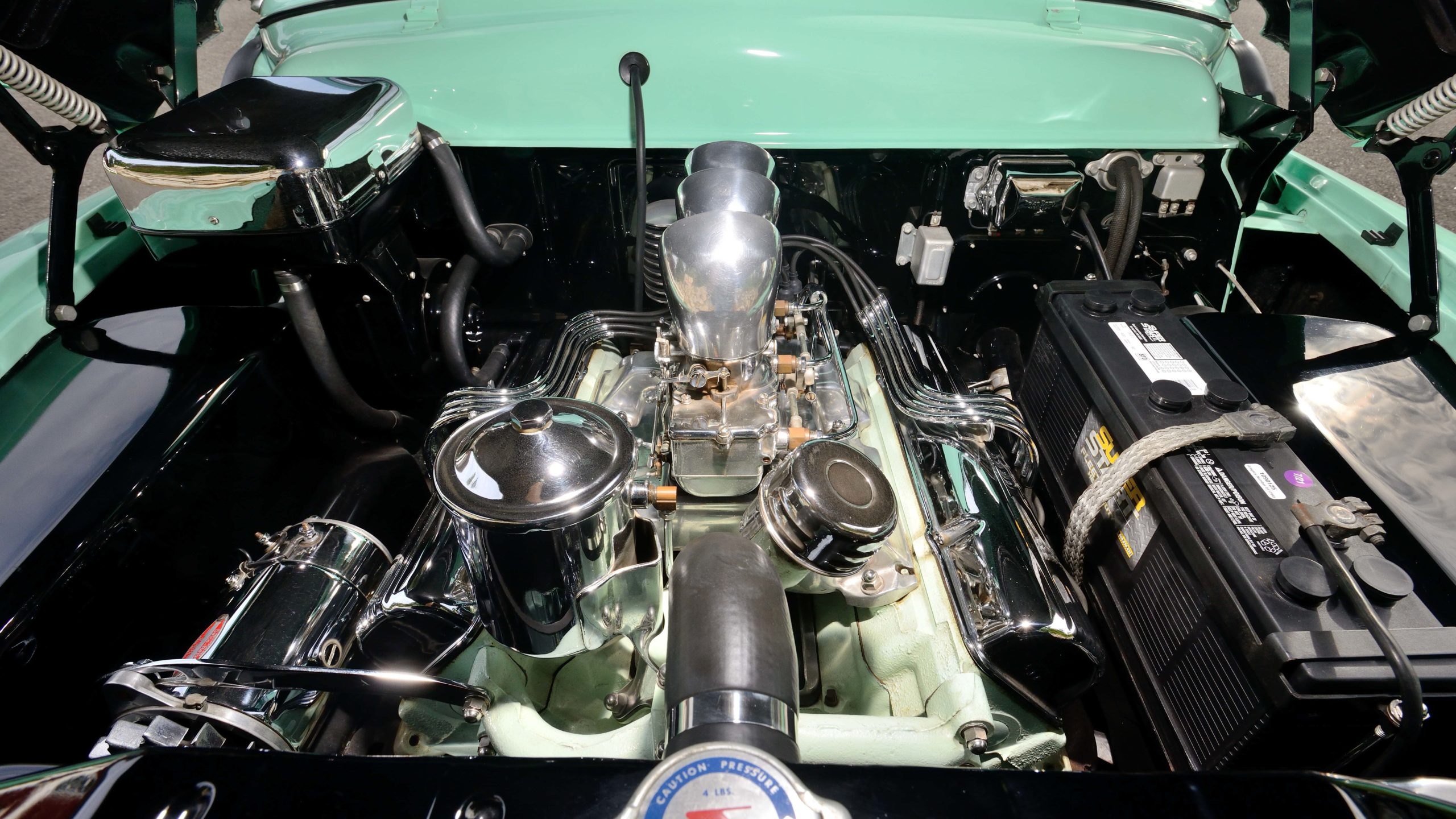 And now, a truly legendary car appears: the Hirohata Merc, built by the Barris brothers in the image and likeness of Sam Barris' personal Mercury... only better. And here it is necessary to understand what exactly is captured in the photographs. The fact is that at that time the Barris machines were among the first of their kind. It's now that we all know what a "lead sled" is, while the Barris brothers - and more specifically, it was Sam Barris who built, if not the first lead sled in the world, then certainly one of the first. And Mercury for Bob Hirohata became the best among those that existed at that time. An exceptional design, radical down to the color scheme: while everyone painted their custom designs in dark metallic, George preferred to paint the main part of the case in an unexpectedly light green for that time.
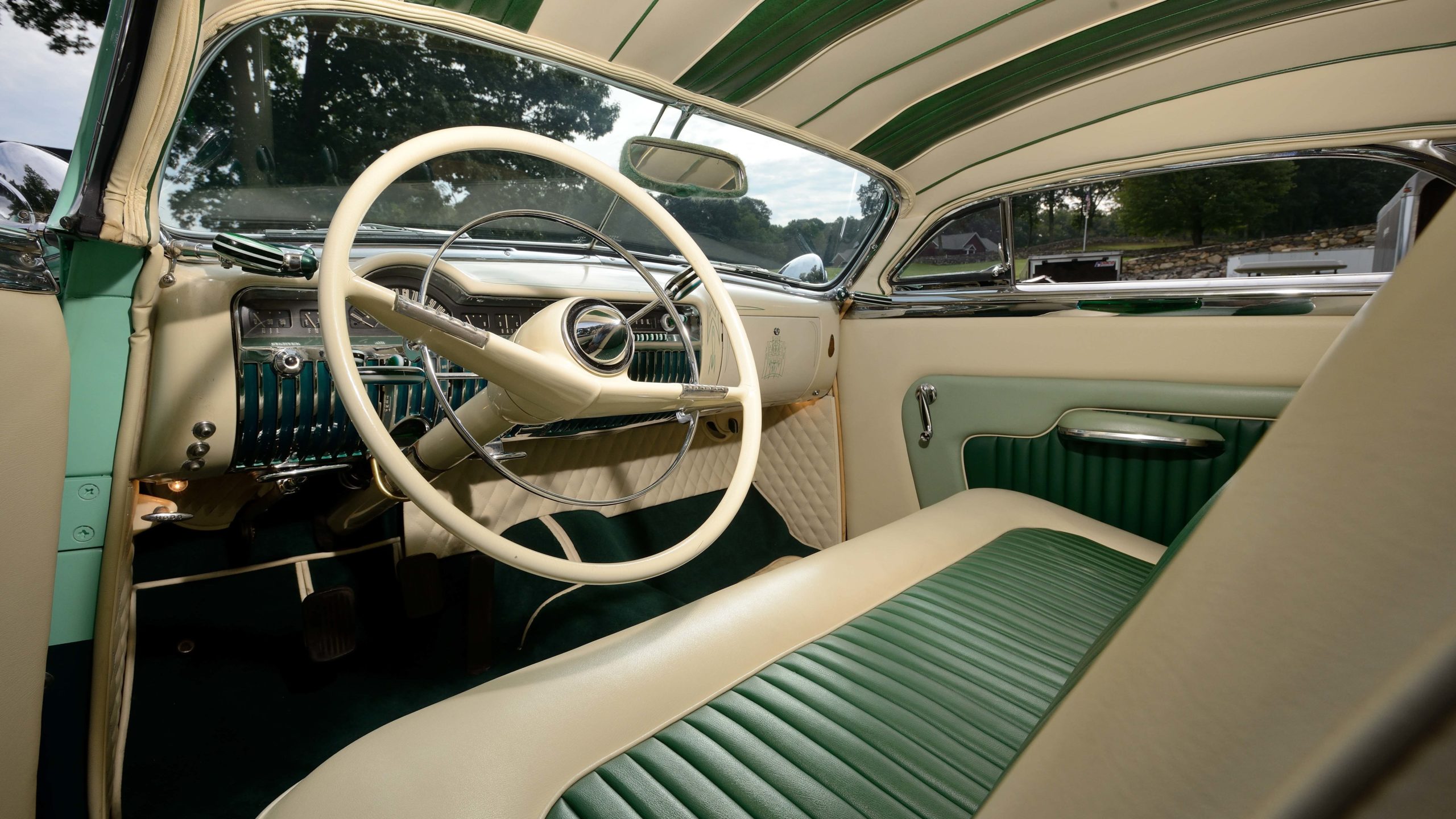 And now, a truly legendary car appears: the Hirohata Merc, built by the Barris brothers in the image and likeness of Sam Barris' personal Mercury... only better. And here it is necessary to understand what exactly is captured in the photographs. The fact is that at that time the Barris cars were among the first of their kind. It's now that we all know what a "lead sled" is, while the Barris brothers - and more specifically, it was Sam Barris who built, if not the first lead sled in the world, then certainly one of the first. And Mercury for Bob Hirohata became the best among those that existed at that time. An exceptional design, radical down to the color scheme: while everyone painted their custom designs in dark metallic, George preferred to paint the main part of the case in an unexpectedly light green for that time.
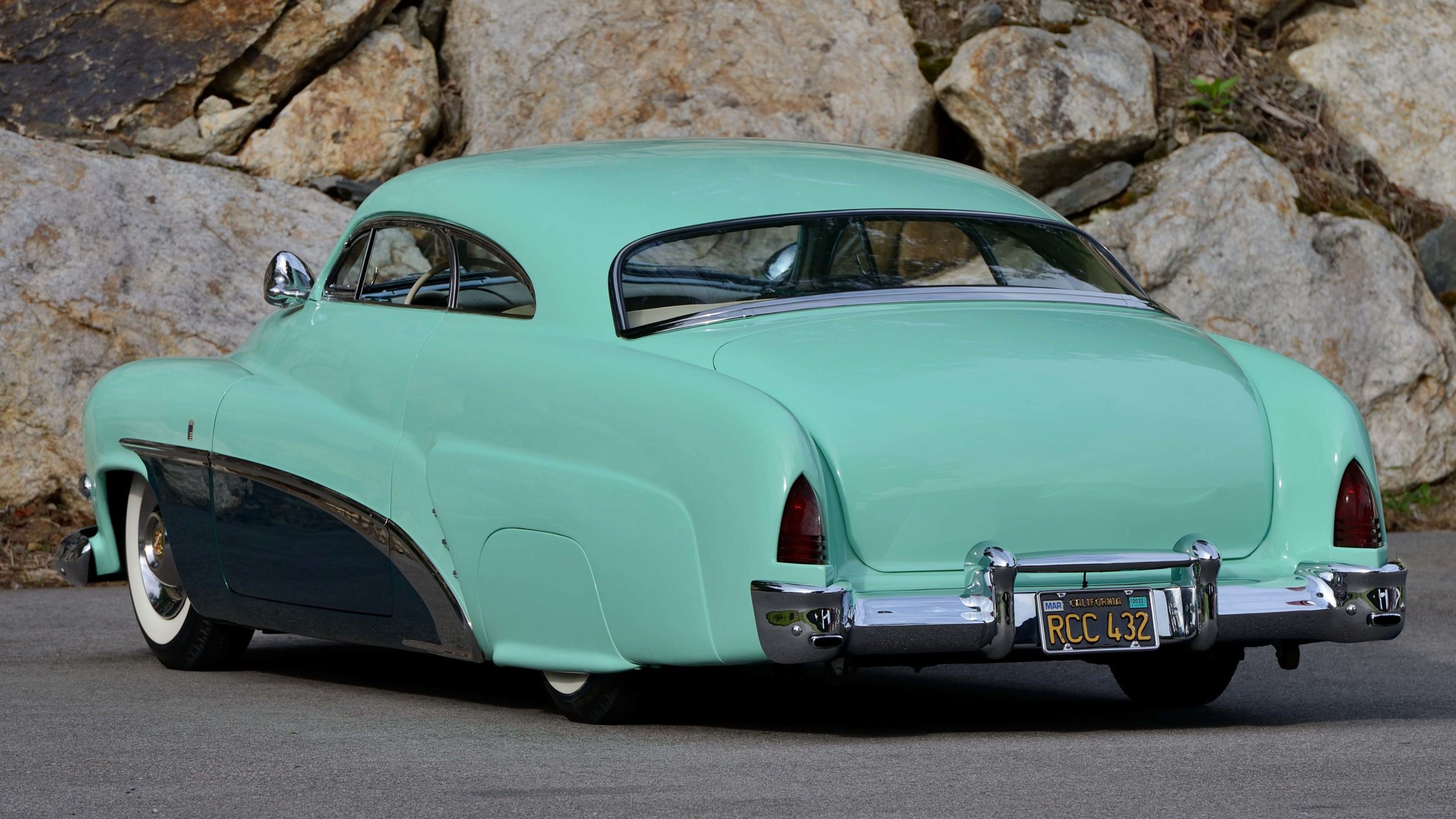 And now, a truly legendary car appears: the Hirohata Merc, built by the Barris brothers in the image and likeness of Sam Barris' personal Mercury... only better. And here it is necessary to understand what exactly is captured in the photographs. The fact is that at that time the Barris machines were among the first of their kind. It's now that we all know what a "lead sled" is, while the Barris brothers - and more specifically, it was Sam Barris who built, if not the first lead sled in the world, then certainly one of the first. And Mercury for Bob Hirohata became the best among those that existed at that time. An exceptional design, radical down to the color scheme: while everyone painted their custom designs in dark metallic, George preferred to paint the main part of the case in an unexpectedly light green for that time.
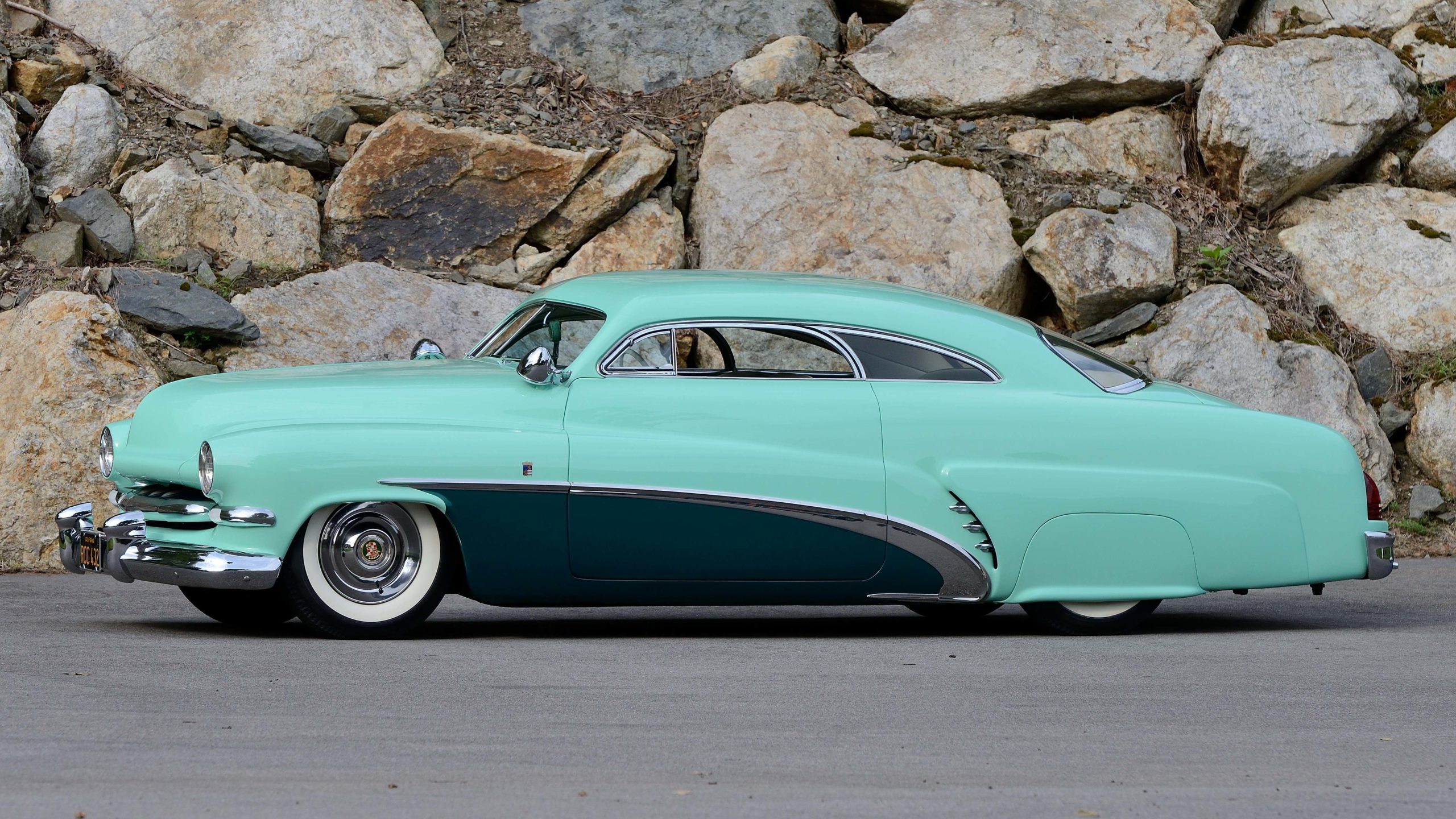 And now, a truly legendary car appears: the Hirohata Merc, built by the Barris brothers in the image and likeness of Sam Barris' personal Mercury... only better. And here it is necessary to understand what exactly is captured in the photographs. The fact is that at that time the Barris cars were among the first of their kind. It's now that we all know what a "lead sled" is, while the Barris brothers - and more specifically, it was Sam Barris who built, if not the first lead sled in the world, then certainly one of the first. And Mercury for Bob Hirohata became the best among those that existed at that time. An exceptional design, radical down to the color scheme: while everyone painted their custom designs in dark metallic, George preferred to paint the main part of the case in an unexpectedly light green for that time.
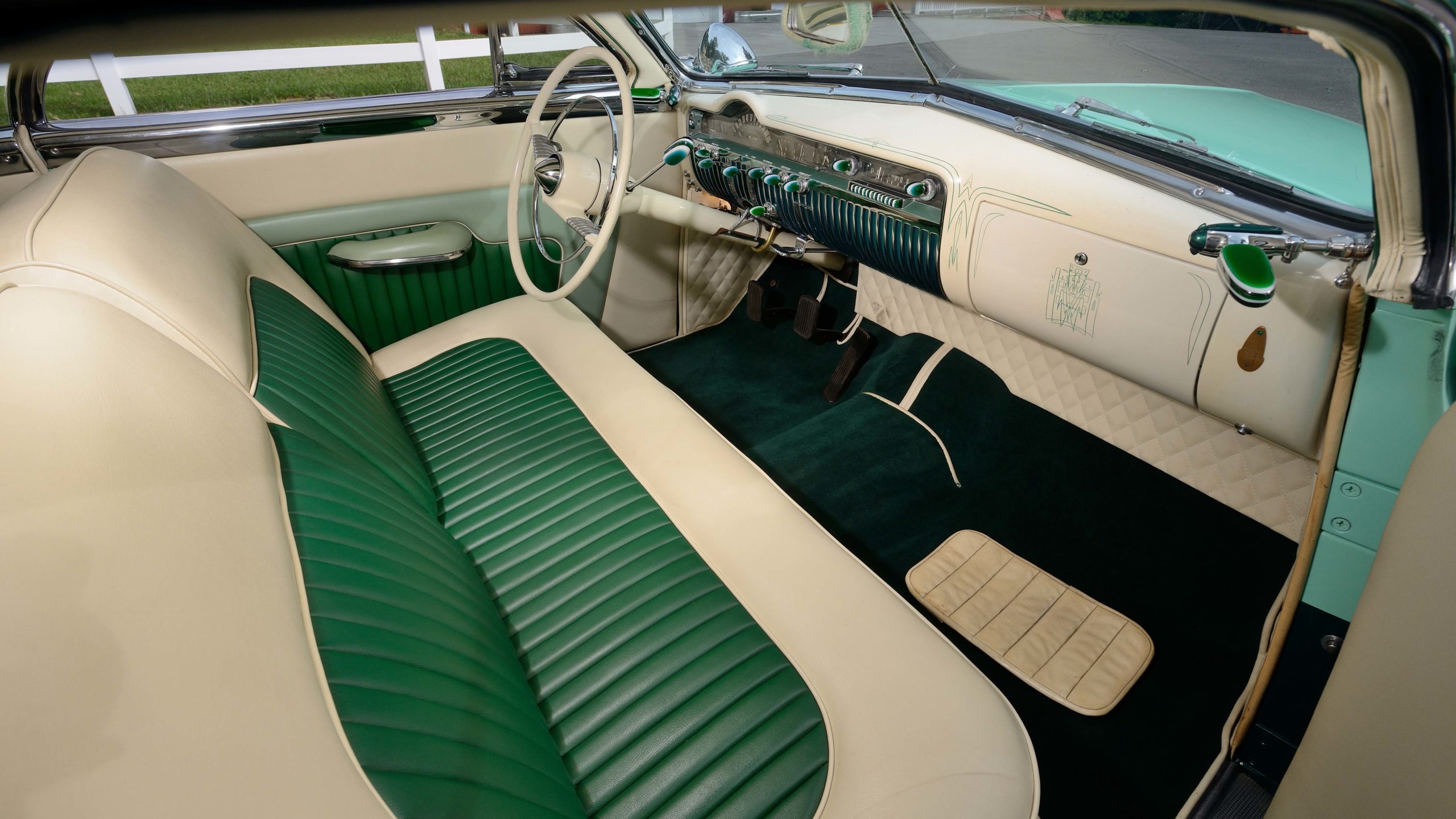 And now, a truly legendary car appears: the Hirohata Merc, built by the Barris brothers in the image and likeness of Sam Barris' personal Mercury... only better. And here it is necessary to understand what exactly is captured in the photographs. The fact is that at that time the Barris cars were among the first of their kind. It's now that we all know what a "lead sled" is, while the Barris brothers - and more specifically, it was Sam Barris who built, if not the first lead sled in the world, then certainly one of the first. And Mercury for Bob Hirohata became the best among those that existed at that time. An exceptional design, radical down to the color scheme: while everyone painted their custom designs in dark metallic, George preferred to paint the main part of the case in an unexpectedly light green for that time.
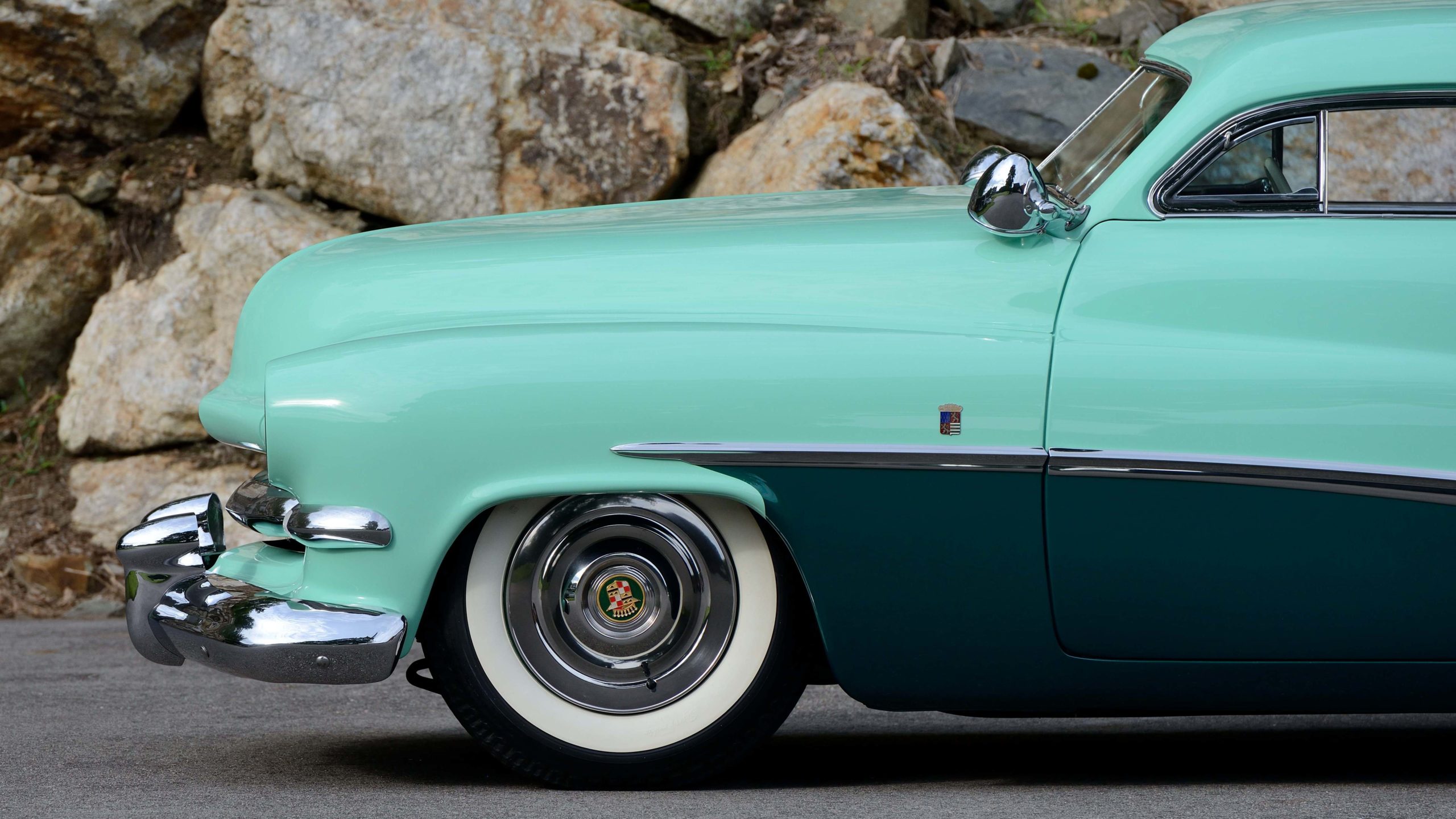 And now, a truly legendary car appears: the Hirohata Merc, built by the Barris brothers in the image and likeness of Sam Barris' personal Mercury... only better. And here it is necessary to understand what exactly is captured in the photographs. The fact is that at that time the Barris cars were among the first of their kind. It's now that we all know what a "lead sled" is, while the Barris brothers - and more specifically, it was Sam Barris who built, if not the first lead sled in the world, then certainly one of the first. And Mercury for Bob Hirohata became the best among those that existed at that time. An exceptional design, radical down to the color scheme: while everyone painted their custom designs in dark metallic, George preferred to paint the main part of the case in an unexpectedly light green for that time.
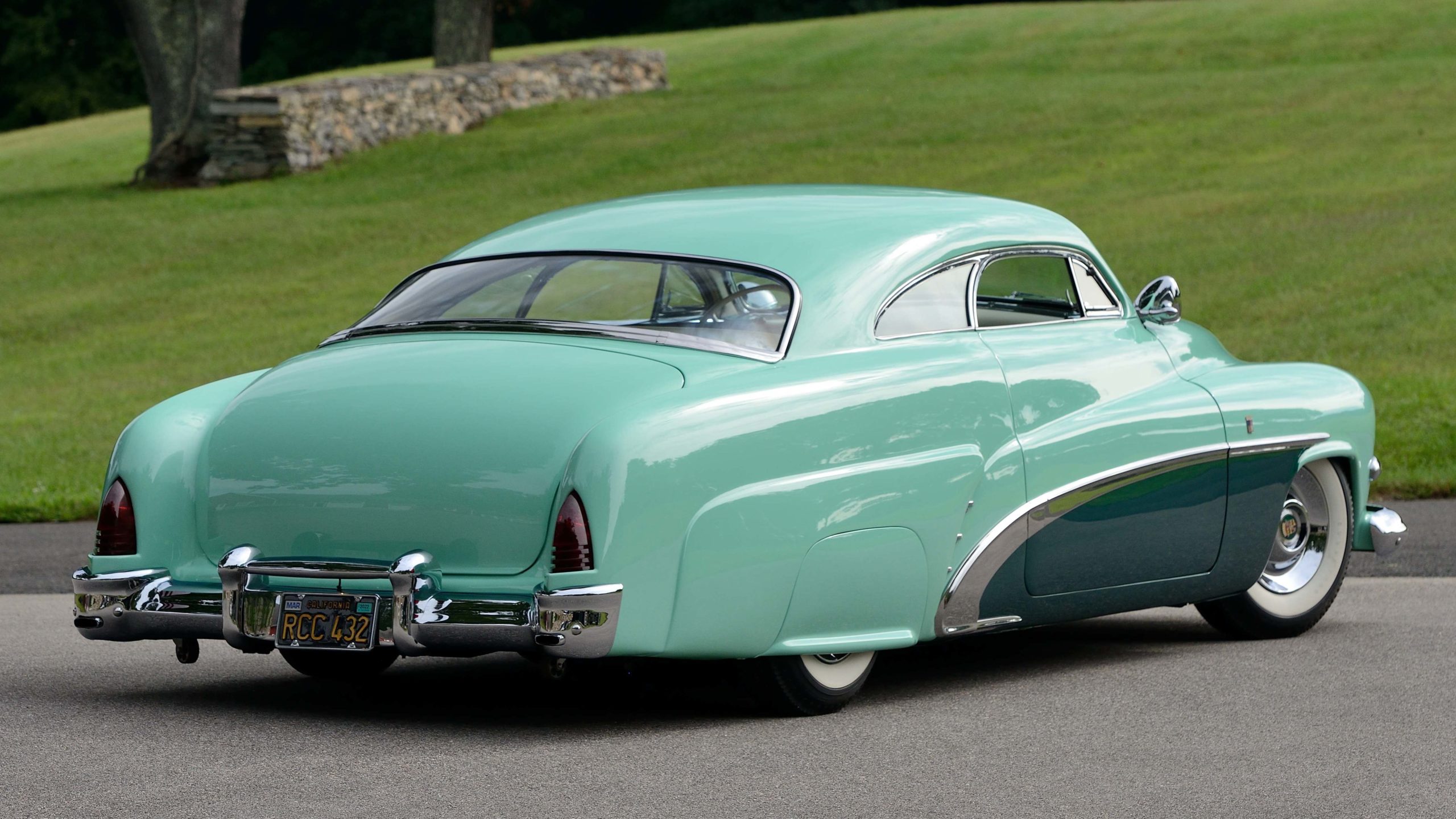 And now, a truly legendary car appears: the Hirohata Merc, built by the Barris brothers in the image and likeness of Sam Barris' personal Mercury... only better. And here it is necessary to understand what exactly is captured in the photographs. The fact is that at that time the Barris cars were among the first of their kind. Now we all know what a "lead sled" is, while the Barris brothers - and more specifically, it was Sam Barris who built, if not the first lead sled in the world, then certainly one of the first. And Mercury for Bob Hirohata became the best among those that existed at that time. An exceptional design, radical down to the color scheme: while everyone painted their custom designs in dark metallic, George preferred to paint the main part of the case in an unexpectedly light green for that time.
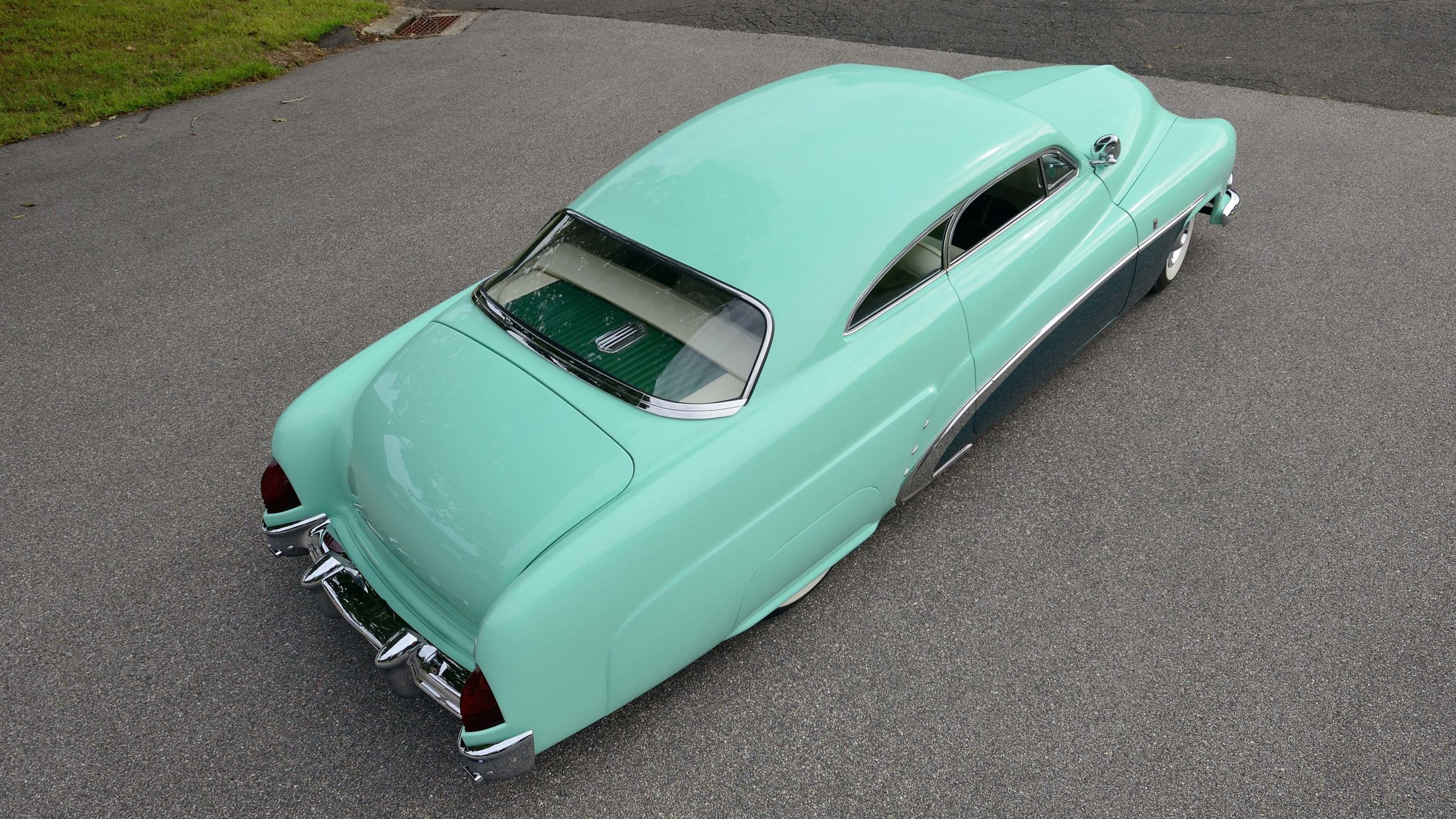 And now, a truly legendary car appears: the Hirohata Merc, built by the Barris brothers in the image and likeness of Sam Barris' personal Mercury... only better. And here it is necessary to understand what exactly is captured in the photographs. The fact is that at that time the Barris cars were among the first of their kind. It's now that we all know what a "lead sled" is, while the Barris brothers - and more specifically, it was Sam Barris who built, if not the first lead sled in the world, then certainly one of the first. And Mercury for Bob Hirohata became the best among those that existed at that time. An exceptional design, radical down to the color scheme: while everyone painted their custom designs in dark metallic, George preferred to paint the main part of the case in an unexpectedly light green for that time.
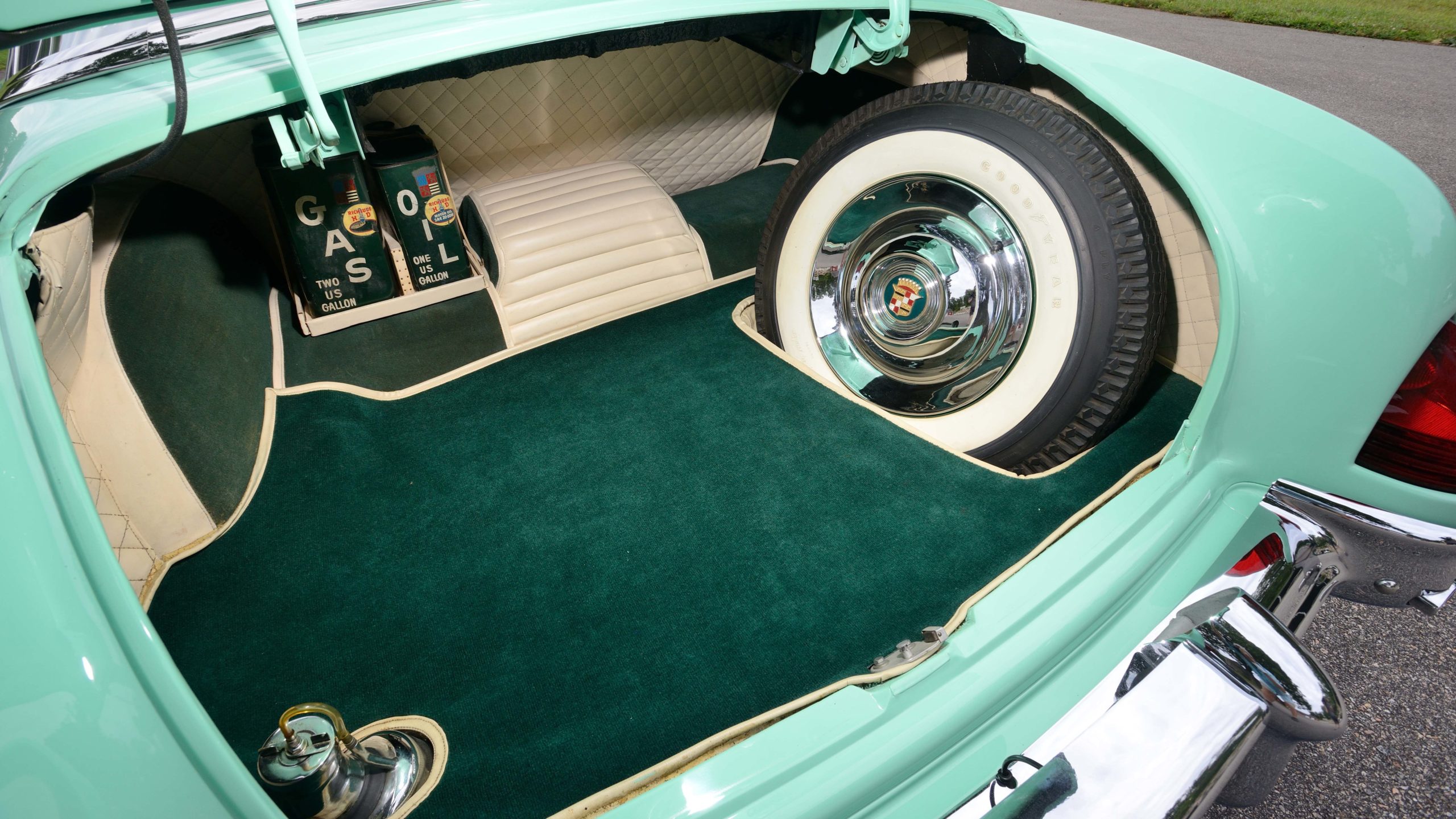 And now, a truly legendary car appears: the Hirohata Merc, built by the Barris brothers in the image and likeness of Sam Barris' personal Mercury... only better. And here it is necessary to understand what exactly is captured in the photographs. The fact is that at that time the Barris cars were among the first of their kind. It's now that we all know what a "lead sled" is, while the Barris brothers - and more specifically, it was Sam Barris who built, if not the first lead sled in the world, then certainly one of the first. And Mercury for Bob Hirohata became the best among those that existed at that time. An exceptional design, radical down to the color scheme: while everyone painted their custom designs in dark metallic, George preferred to paint the main part of the case in an unexpectedly light green for that time.
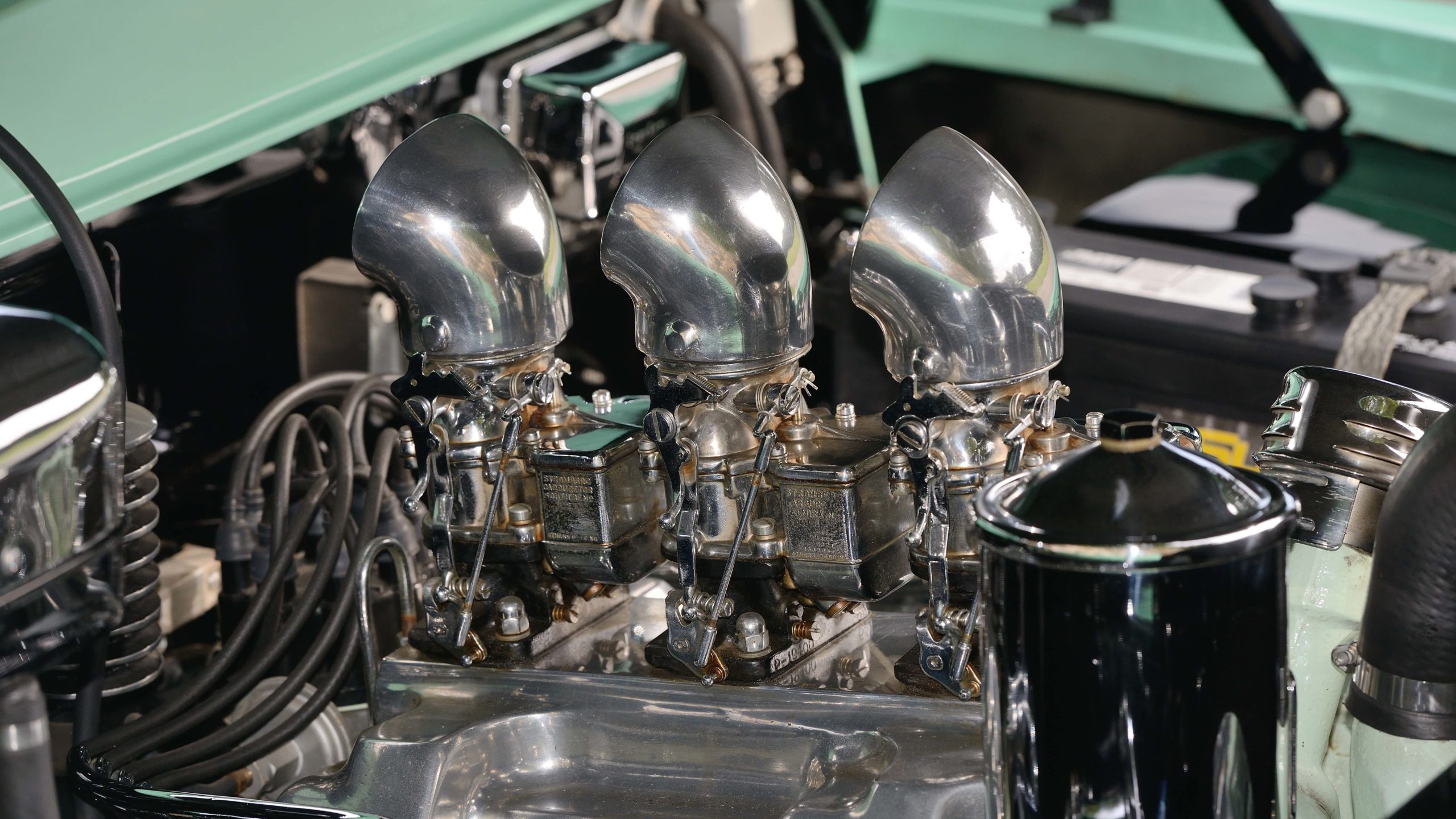 And now, a truly legendary car appears: the Hirohata Merc, built by the Barris brothers in the image and likeness of Sam Barris' personal Mercury... only better. And here it is necessary to understand what exactly is captured in the photographs. The fact is that at that time the Barris cars were among the first of their kind. It's now that we all know what a "lead sled" is, while the Barris brothers - and more specifically, it was Sam Barris who built, if not the first lead sled in the world, then certainly one of the first. And Mercury for Bob Hirohata became the best among those that existed at that time. An exceptional design, radical down to the color scheme: while everyone painted their custom designs in dark metallic, George preferred to paint the main part of the case in an unexpectedly light green for that time.
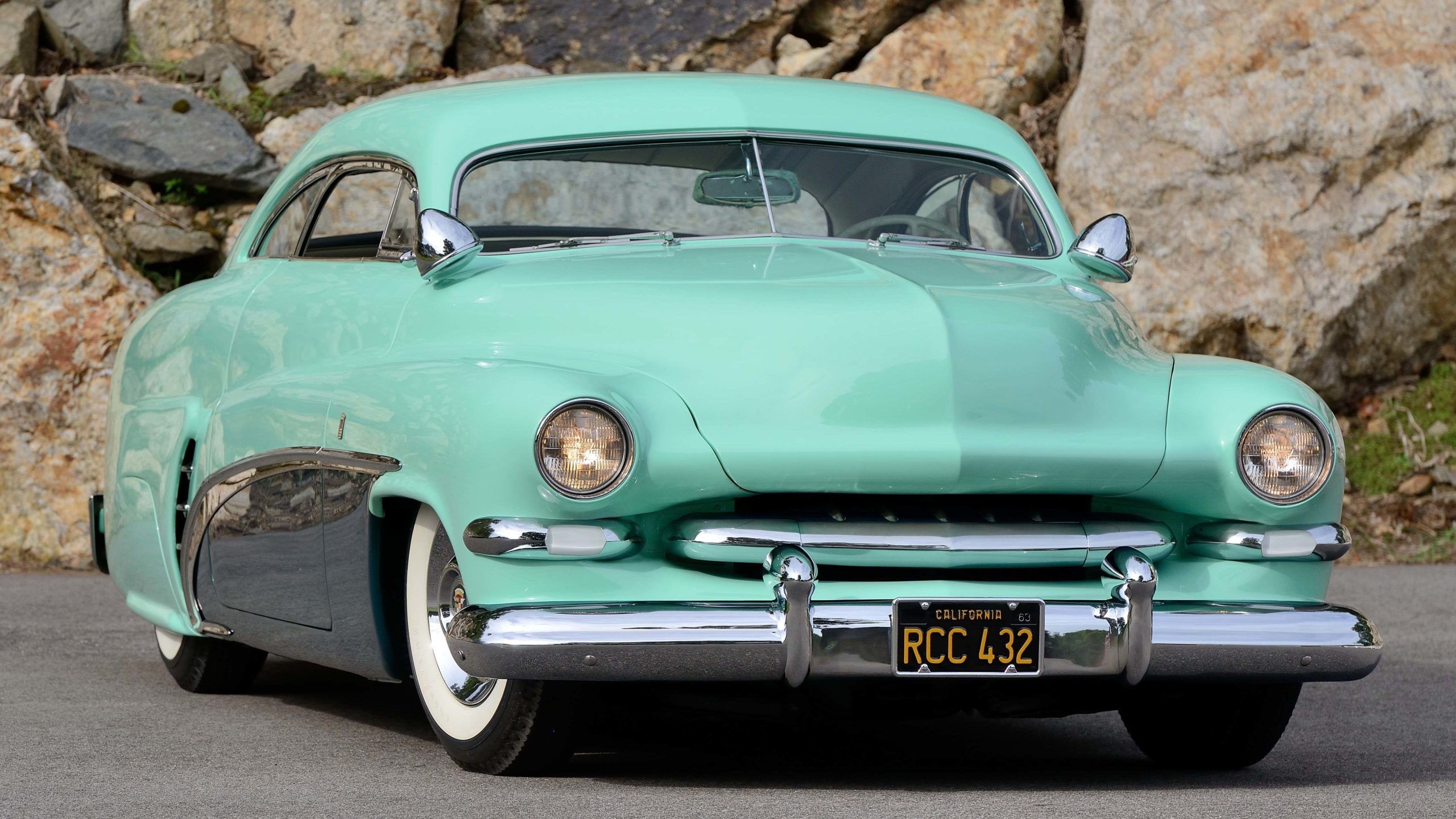 And now, a truly legendary car appears: the Hirohata Merc, built by the Barris brothers in the image and likeness of Sam Barris' personal Mercury... only better. And here it is necessary to understand what exactly is captured in the photographs. The fact is that at that time the Barris cars were among the first of their kind. It's now that we all know what a "lead sled" is, while the Barris brothers - and more specifically, it was Sam Barris who built, if not the first lead sled in the world, then certainly one of the first. And Mercury for Bob Hirohata became the best among those that existed at that time. An exceptional design, radical down to the color scheme: while everyone painted their custom designs in dark metallic, George preferred to paint the main part of the case in an unexpectedly light green for that time.
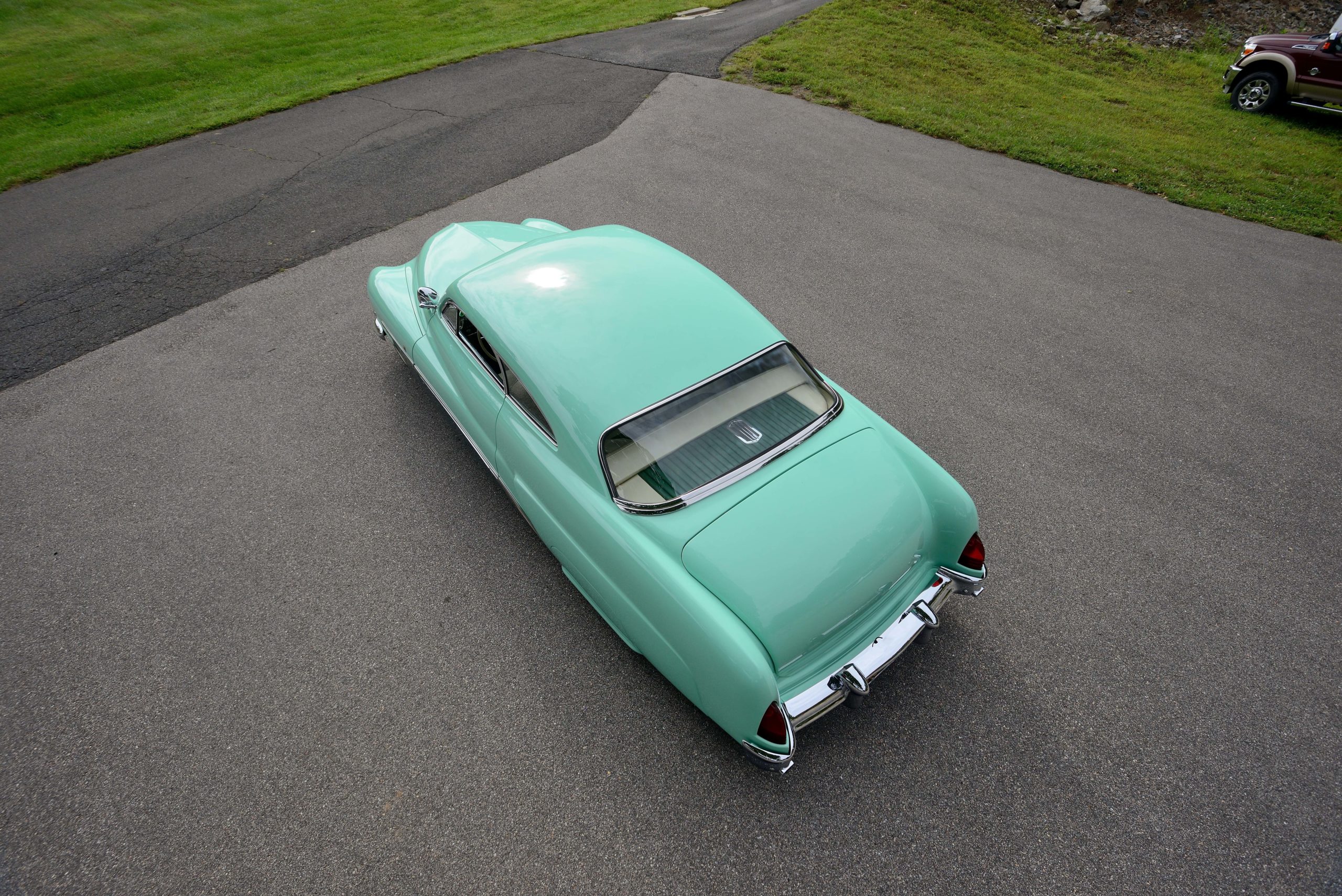 And now, a truly legendary car appears: the Hirohata Merc, built by the Barris brothers in the image and likeness of Sam Barris' personal Mercury... only better. And here it is necessary to understand what exactly is captured in the photographs. The fact is that at that time the Barris cars were among the first of their kind. It's now that we all know what a "lead sled" is, while the Barris brothers - and more specifically, it was Sam Barris who built, if not the first lead sled in the world, then certainly one of the first. And Mercury for Bob Hirohata became the best among those that existed at that time. An exceptional design, radical down to the color scheme: while everyone painted their custom designs in dark metallic, George preferred to paint the main part of the case in an unexpectedly light green for that time.
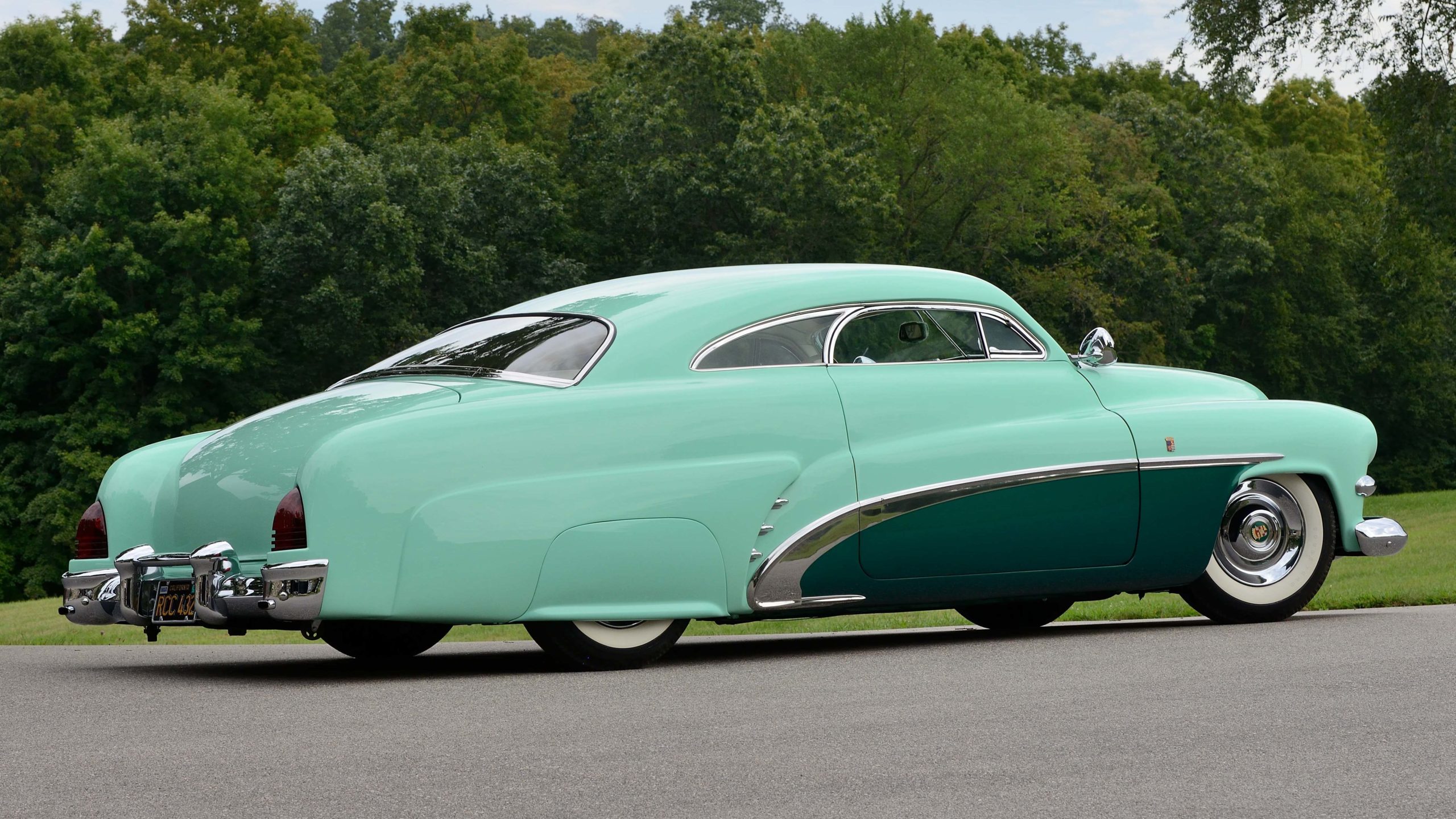 And now, a truly legendary car appears: the Hirohata Merc, built by the Barris brothers in the image and likeness of Sam Barris' personal Mercury... only better. And here it is necessary to understand what exactly is captured in the photographs. The fact is that at that time the Barris cars were among the first of their kind. It's now that we all know what a "lead sled" is, while the Barris brothers - and more specifically, it was Sam Barris who built, if not the first lead sled in the world, then certainly one of the first. And Mercury for Bob Hirohata became the best among those that existed at that time. An exceptional design, radical down to the color scheme: while everyone painted their custom designs in dark metallic, George preferred to paint the main part of the case in an unexpectedly light green for that time.
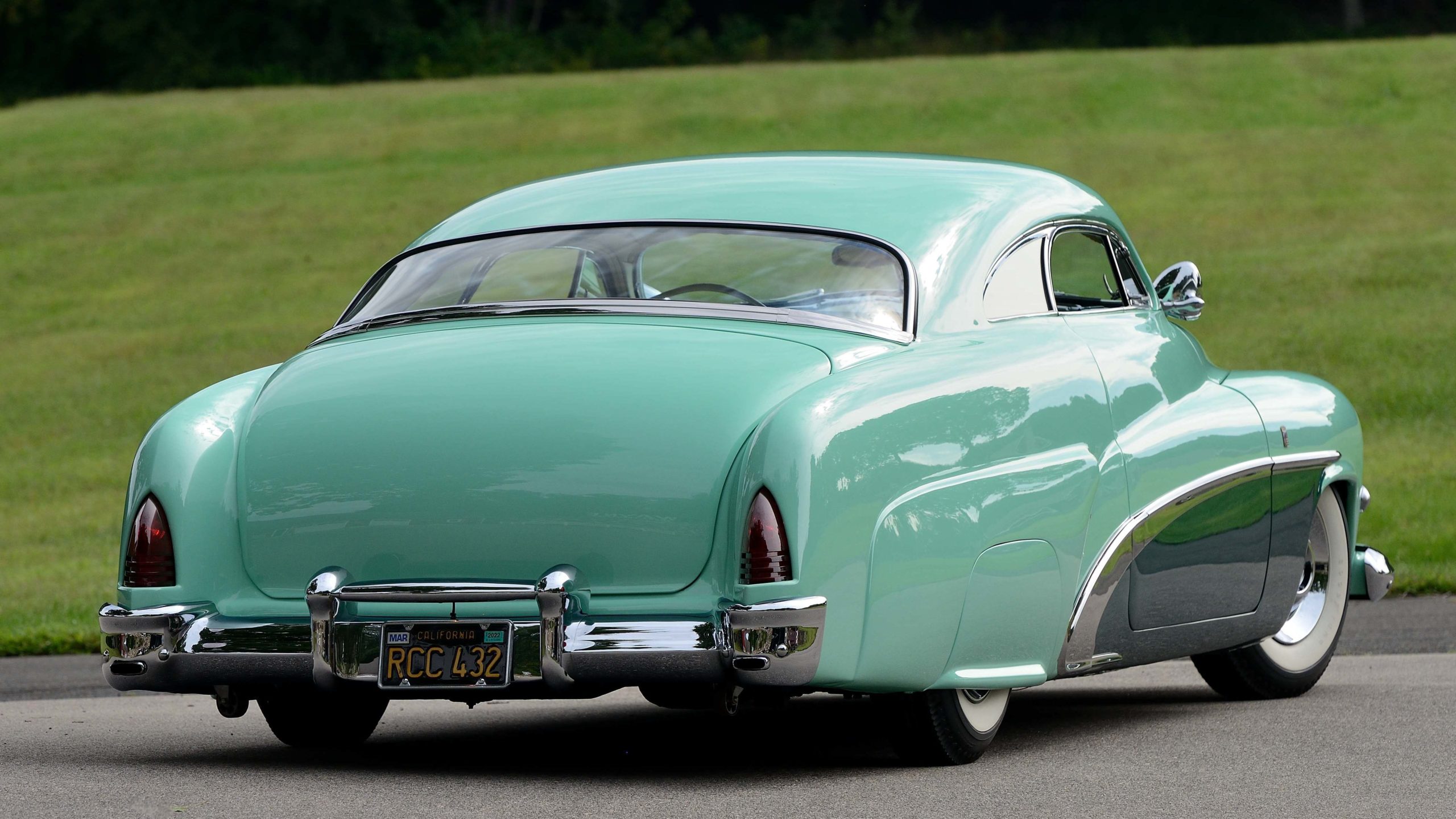 And now, a truly legendary car appears: the Hirohata Merc, built by the Barris brothers in the image and likeness of Sam Barris' personal Mercury... only better. And here it is necessary to understand what exactly is captured in the photographs. The fact is that at that time the Barris cars were among the first of their kind. It's now that we all know what a "lead sled" is, while the Barris brothers - and more specifically, it was Sam Barris who built, if not the first lead sled in the world, then certainly one of the first. And Mercury for Bob Hirohata became the best among those that existed at that time. An exceptional design, radical down to the color scheme: while everyone painted their custom designs in dark metallic, George preferred to paint the main part of the case in an unexpectedly light green for that time.
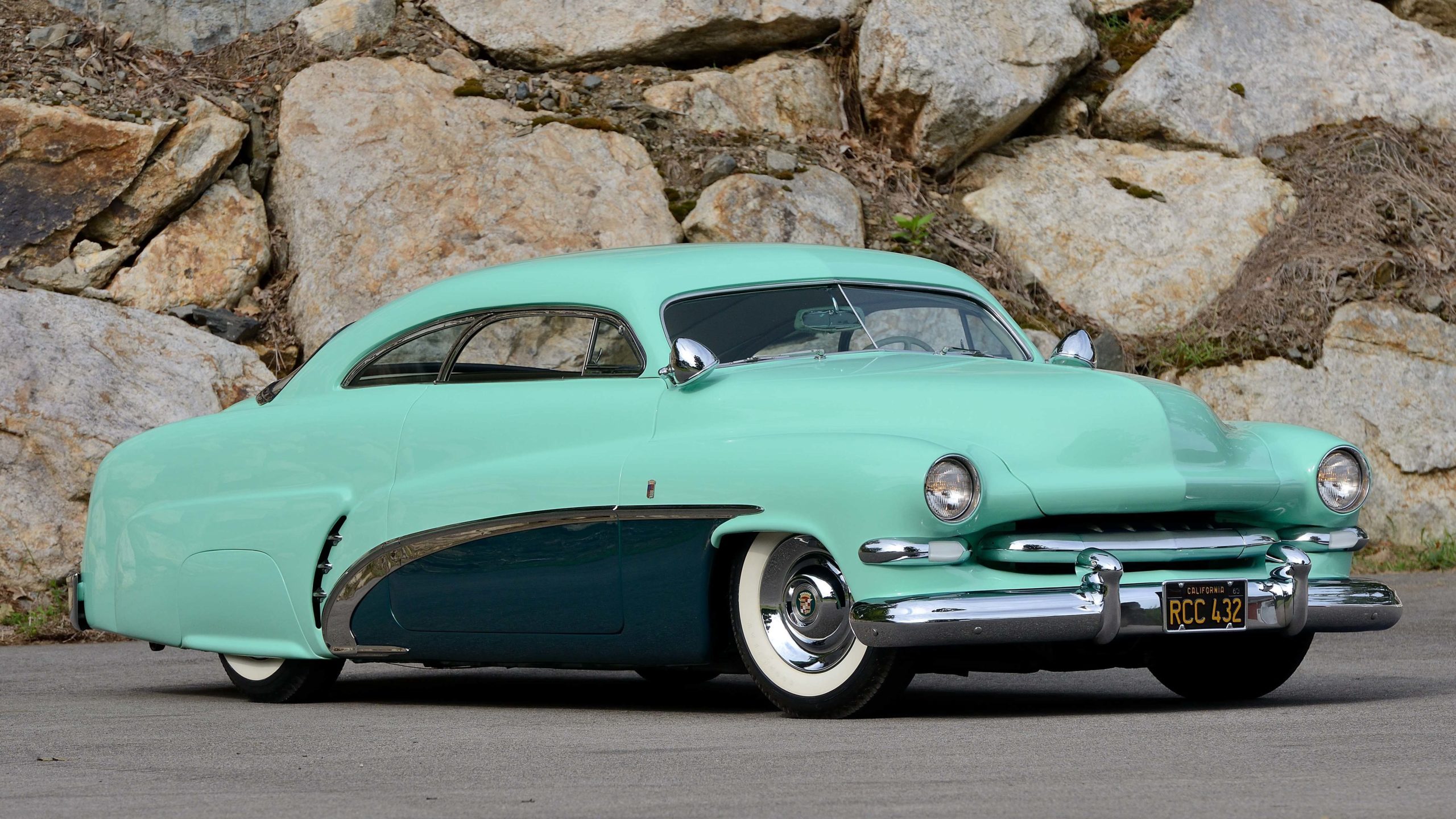 And now, a truly legendary car appears: the Hirohata Merc, built by the Barris brothers in the image and likeness of Sam Barris' personal Mercury... only better. And here it is necessary to understand what exactly is captured in the photographs. The fact is that at that time the Barris cars were among the first of their kind. It's now that we all know what a "lead sled" is, while the Barris brothers - and more specifically, it was Sam Barris who built, if not the first lead sled in the world, then certainly one of the first. And Mercury for Bob Hirohata became the best among those that existed at that time. An exceptional design, radical down to the color scheme: while everyone painted their custom designs in dark metallic, George preferred to paint the main part of the case in an unexpectedly light green for that time.
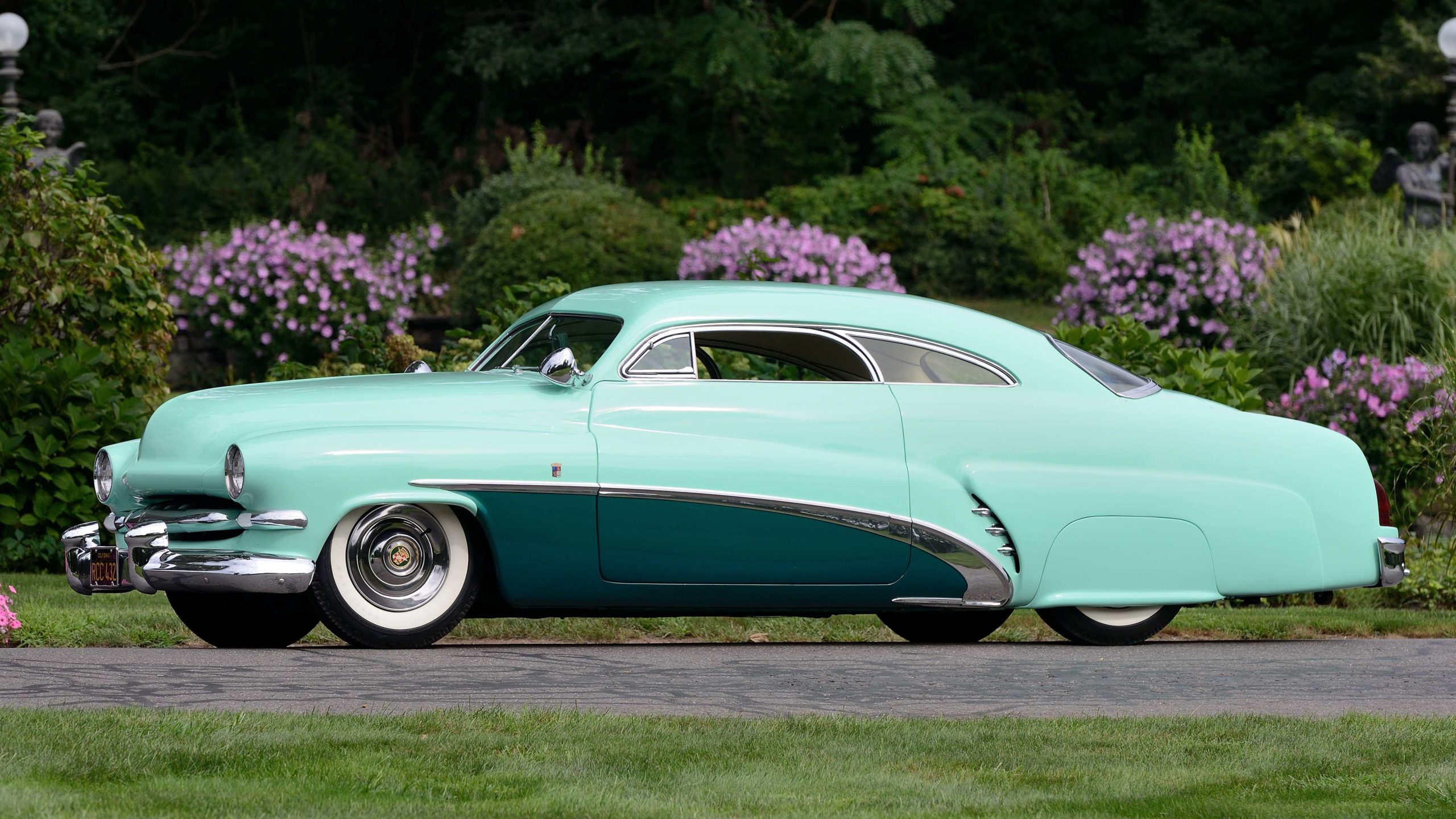 And now, a truly legendary car appears: the Hirohata Merc, built by the Barris brothers in the image and likeness of Sam Barris' personal Mercury... only better. And here it is necessary to understand what exactly is captured in the photographs. The fact is that at that time the Barris machines were among the first of their kind. It's now that we all know what a "lead sled" is, while the Barris brothers - and more specifically, it was Sam Barris who built, if not the first lead sled in the world, then certainly one of the first. And Mercury for Bob Hirohata became the best among those that existed at that time. An exceptional design, radical down to the color scheme: while everyone painted their custom designs in dark metallic, George preferred to paint the main part of the case in an unexpectedly light green for that time.
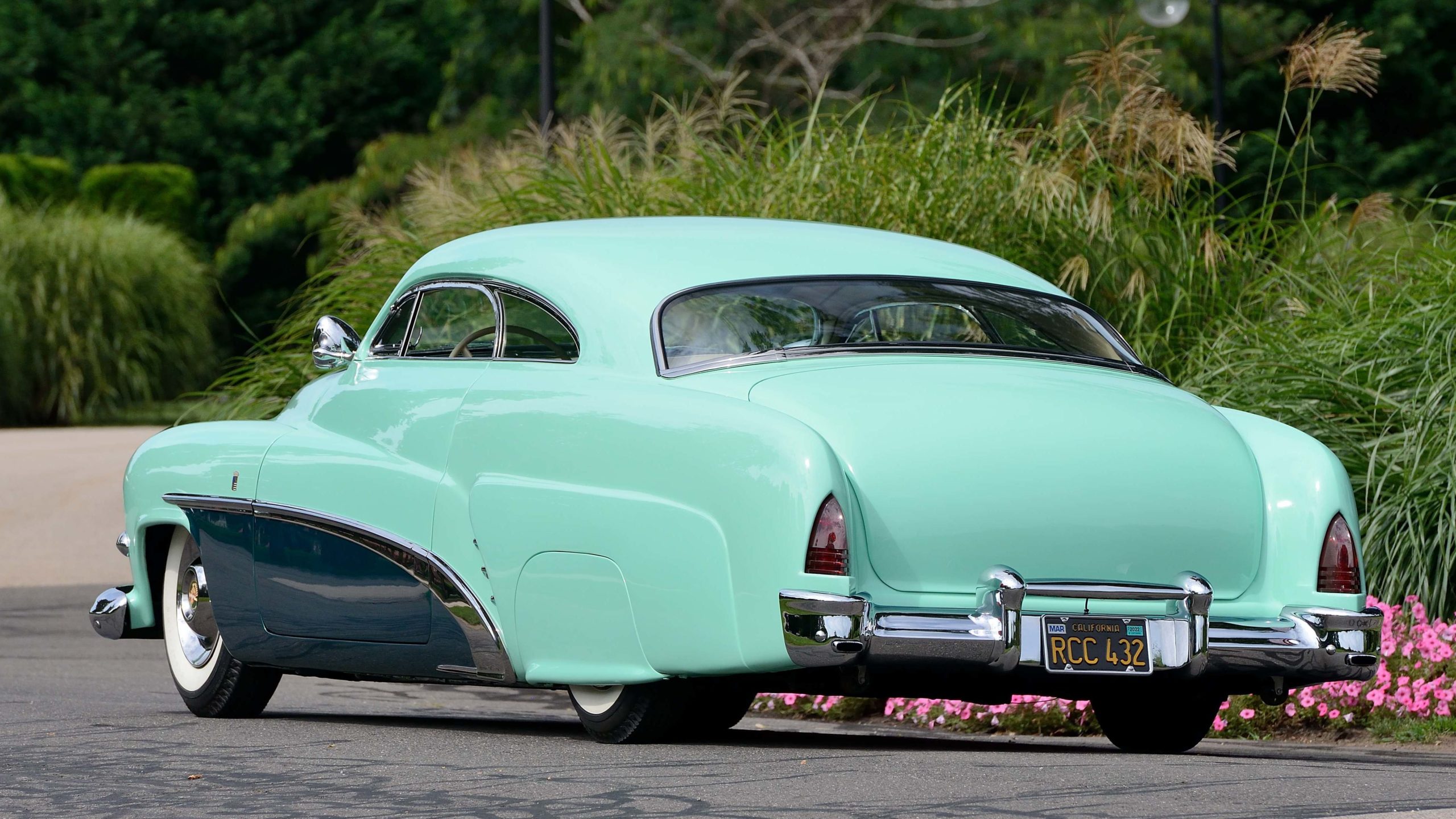 And now, a truly legendary car appears: the Hirohata Merc, built by the Barris brothers in the image and likeness of Sam Barris' personal Mercury... only better. And here it is necessary to understand what exactly is captured in the photographs. The fact is that at that time the Barris cars were among the first of their kind. It's now that we all know what a "lead sled" is, while the Barris brothers - and more specifically, it was Sam Barris who built, if not the first lead sled in the world, then certainly one of the first. And Mercury for Bob Hirohata became the best among those that existed at that time. An exceptional design, radical down to the color scheme: while everyone painted their custom designs in dark metallic, George preferred to paint the main part of the case in an unexpectedly light green for that time.
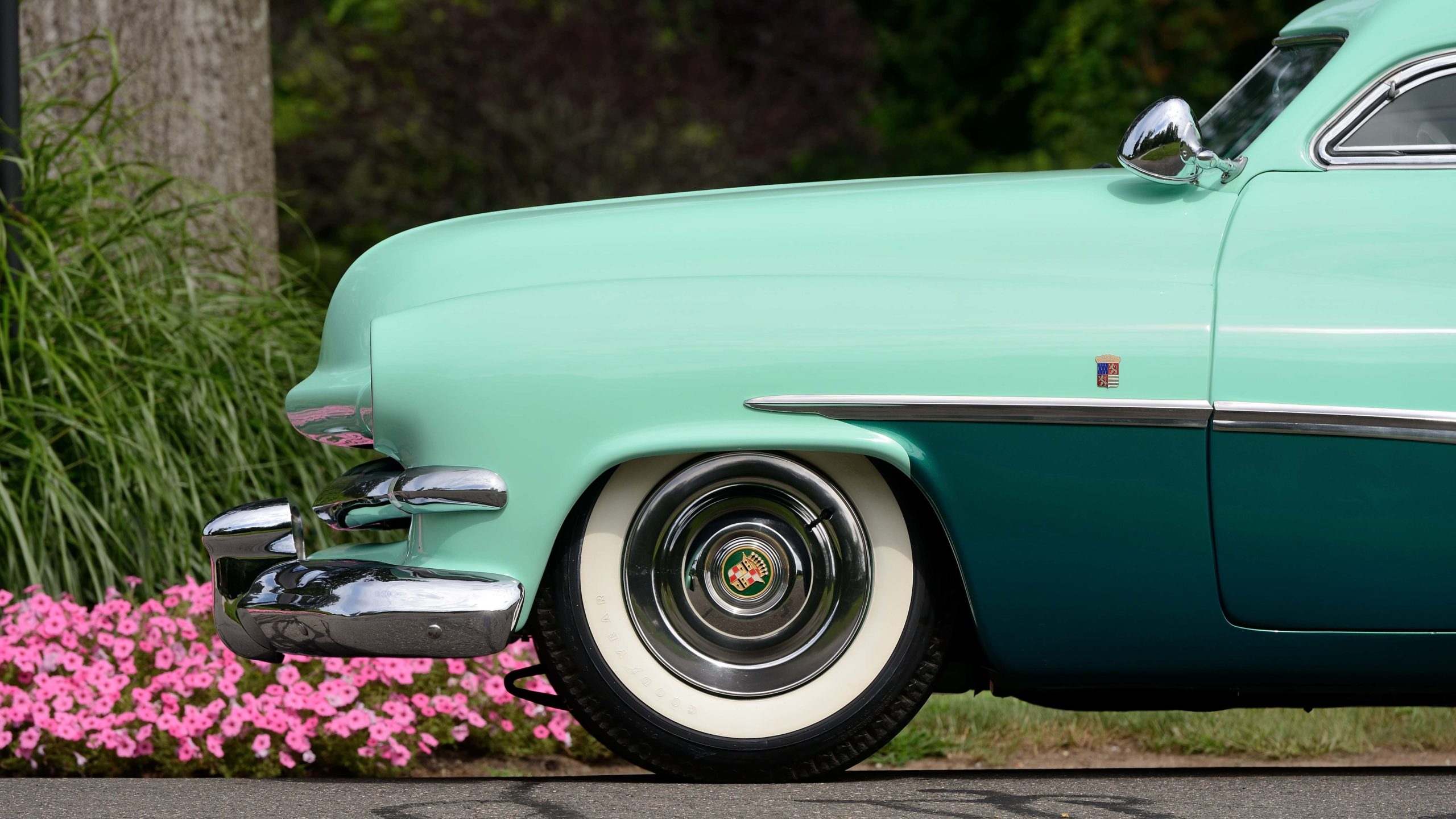 And now, a truly legendary car appears: the Hirohata Merc, built by the Barris brothers in the image and likeness of Sam Barris' personal Mercury... only better. And here it is necessary to understand what exactly is captured in the photographs. The fact is that at that time the Barris cars were among the first of their kind. It's now that we all know what a "lead sled" is, while the Barris brothers - and more specifically, it was Sam Barris who built, if not the first lead sled in the world, then certainly one of the first. And Mercury for Bob Hirohata became the best among those that existed at that time. An exceptional design, radical down to the color scheme: while everyone painted their custom designs in dark metallic, George preferred to paint the main part of the case in an unexpectedly light green for that time.
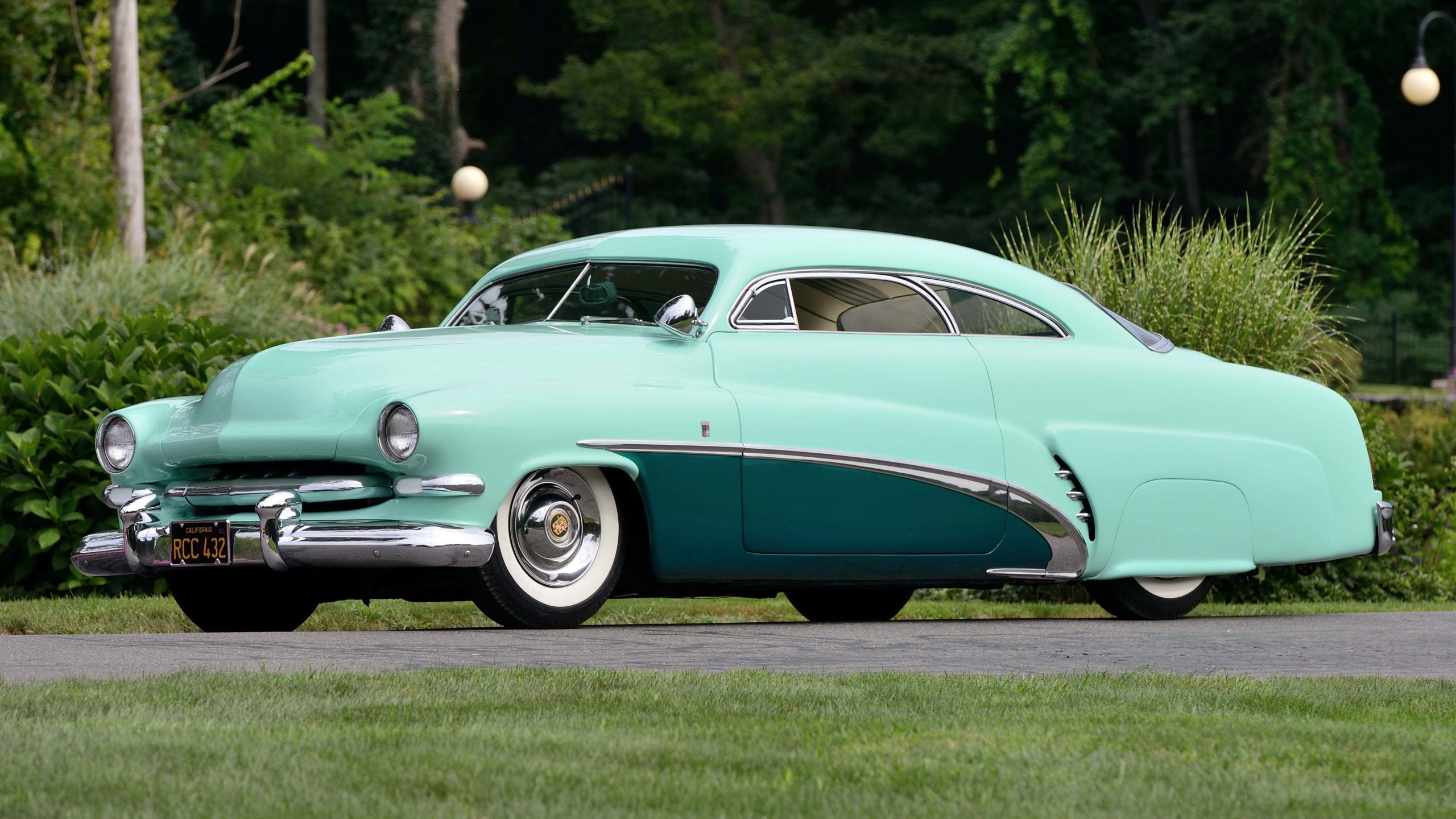 And now, a truly legendary car appears: the Hirohata Merc, built by the Barris brothers in the image and likeness of Sam Barris' personal Mercury... only better. And here it is necessary to understand what exactly is captured in the photographs. The fact is that at that time the Barris cars were among the first of their kind. It's now that we all know what a "lead sled" is, while the Barris brothers - and more specifically, it was Sam Barris who built, if not the first lead sled in the world, then certainly one of the first. And Mercury for Bob Hirohata became the best among those that existed at that time. An exceptional design, radical down to the color scheme: while everyone painted their custom designs in dark metallic, George preferred to paint the main part of the case in an unexpectedly light green for that time.
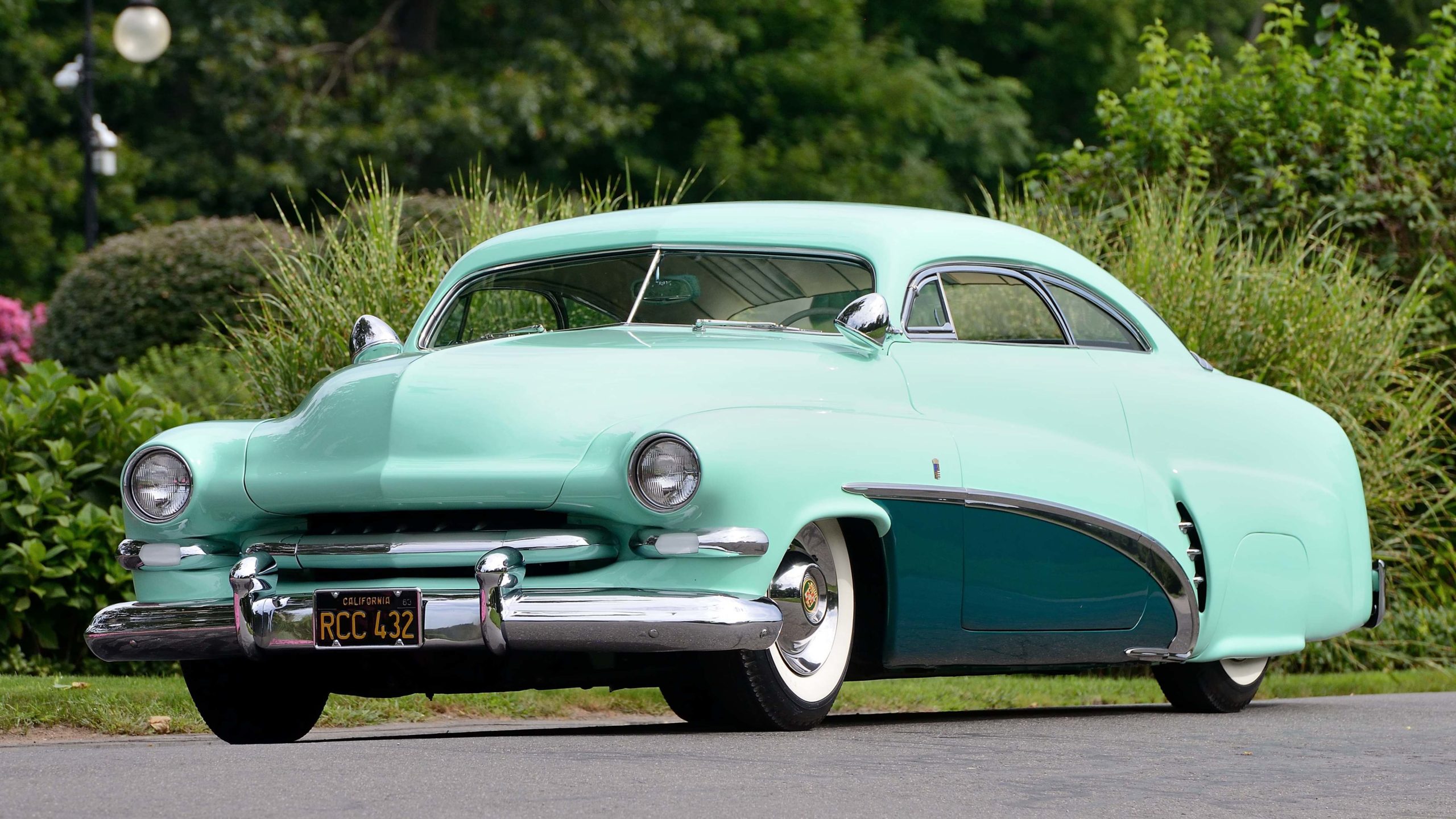 And now, a truly legendary car appears: the Hirohata Merc, built by the Barris brothers in the image and likeness of Sam Barris' personal Mercury... only better. And here it is necessary to understand what exactly is captured in the photographs. The fact is that at that time the Barris cars were among the first of their kind. It's now that we all know what a "lead sled" is, while the Barris brothers - and more specifically, it was Sam Barris who built, if not the first lead sled in the world, then certainly one of the first. And Mercury for Bob Hirohata became the best among those that existed at that time. An exceptional design, radical down to the color scheme: while everyone painted their custom designs in dark metallic, George preferred to paint the main part of the case in an unexpectedly light green for that time.
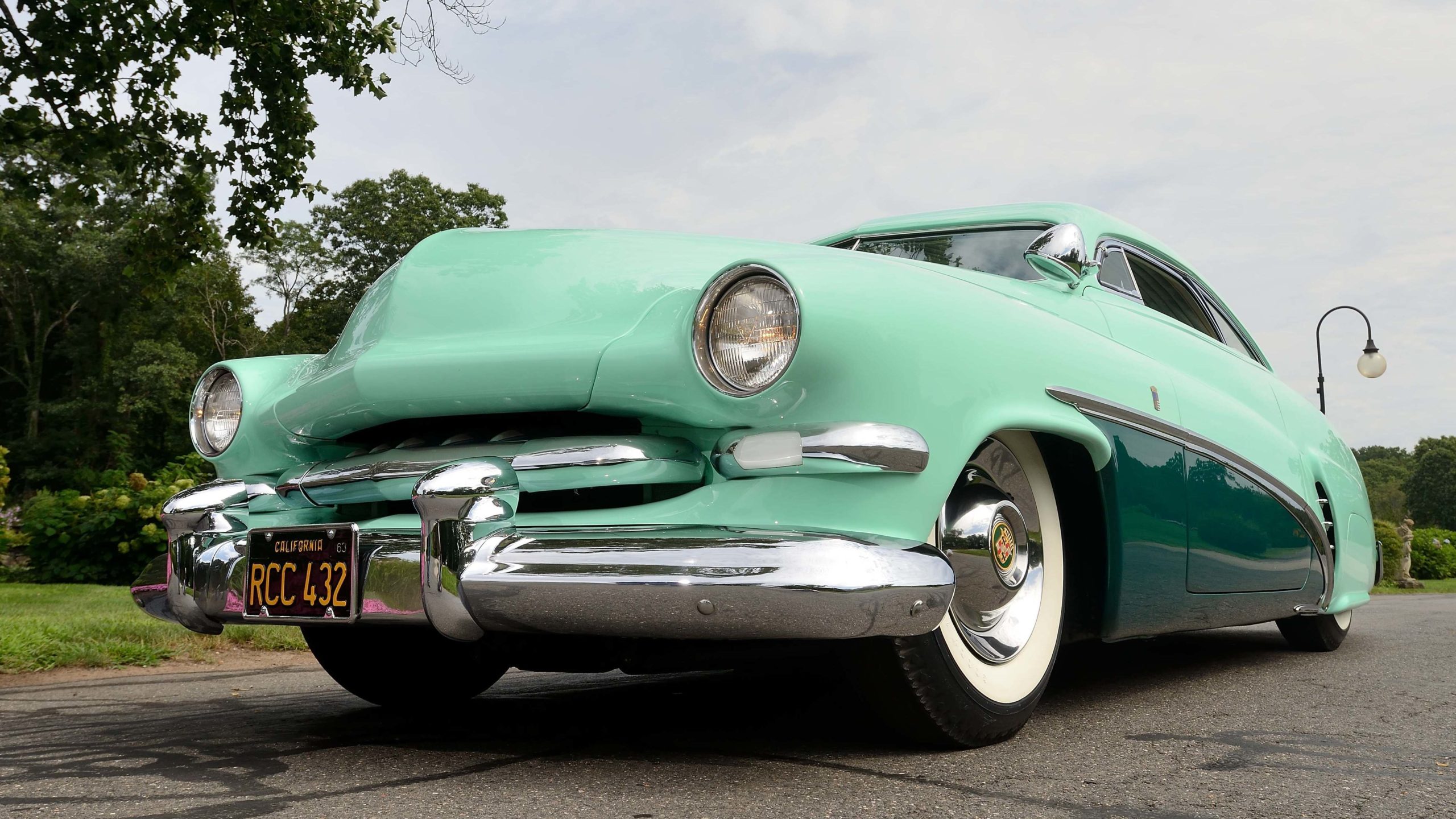 And now, a truly legendary car appears: the Hirohata Merc, built by the Barris brothers in the image and likeness of Sam Barris' personal Mercury... only better. And here it is necessary to understand what exactly is captured in the photographs. The fact is that at that time the Barris machines were among the first of their kind. It's now that we all know what a "lead sled" is, while the Barris brothers - and more specifically, it was Sam Barris who built, if not the first lead sled in the world, then certainly one of the first. And Mercury for Bob Hirohata became the best among those that existed at that time. An exceptional design, radical down to the color scheme: while everyone painted their custom designs in dark metallic, George preferred to paint the main part of the case in an unexpectedly light green for that time.
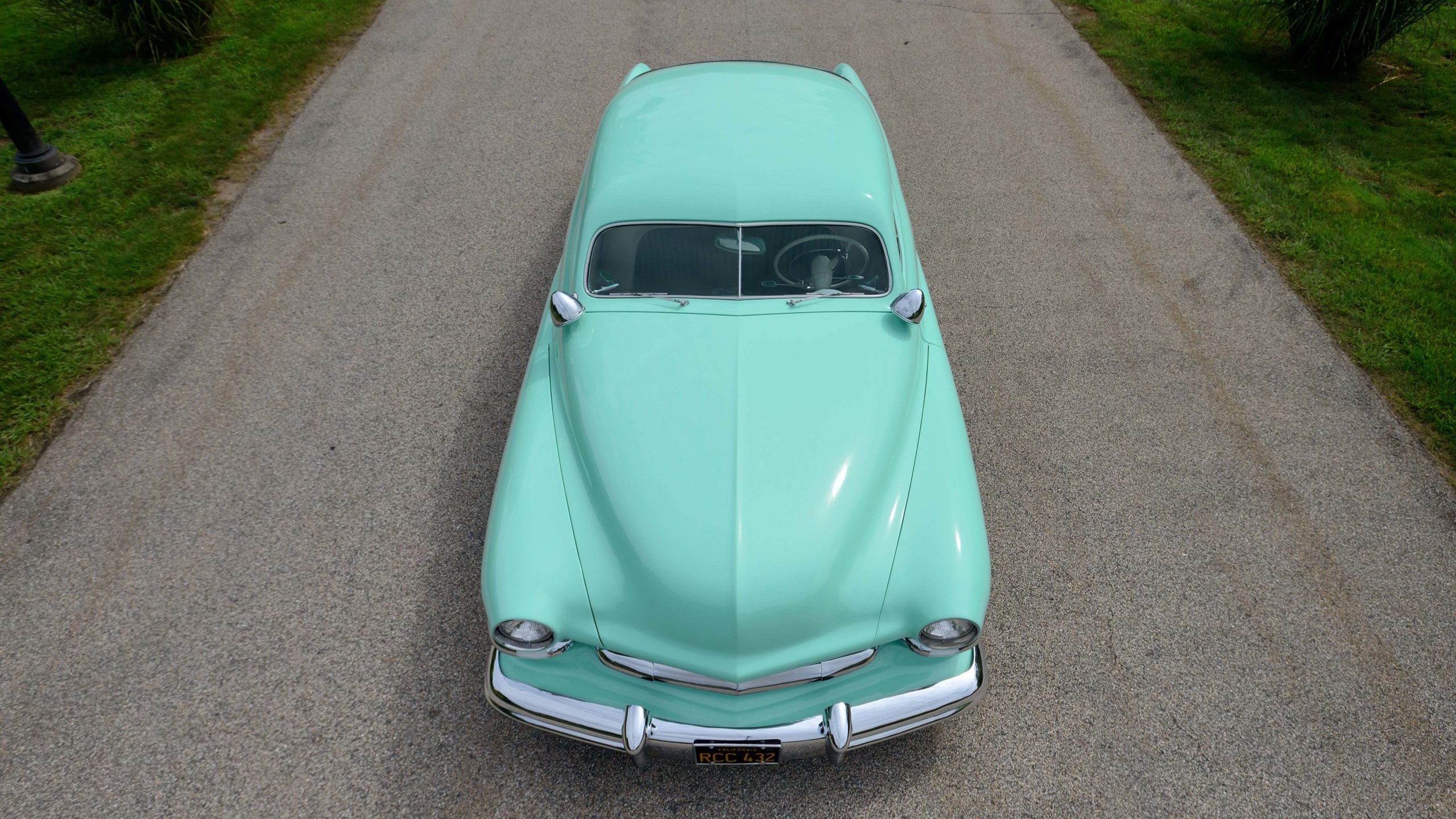 And now, a truly legendary car appears: the Hirohata Merc, built by the Barris brothers in the image and likeness of Sam Barris' personal Mercury... only better. And here it is necessary to understand what exactly is captured in the photographs. The fact is that at that time the Barris machines were among the first of their kind. It's now that we all know what a "lead sled" is, while the Barris brothers - and more specifically, it was Sam Barris who built, if not the first lead sled in the world, then certainly one of the first. And Mercury for Bob Hirohata became the best among those that existed at that time. An exceptional design, radical down to the color scheme: while everyone painted their custom designs in dark metallic, George preferred to paint the main part of the case in an unexpectedly light green for that time.
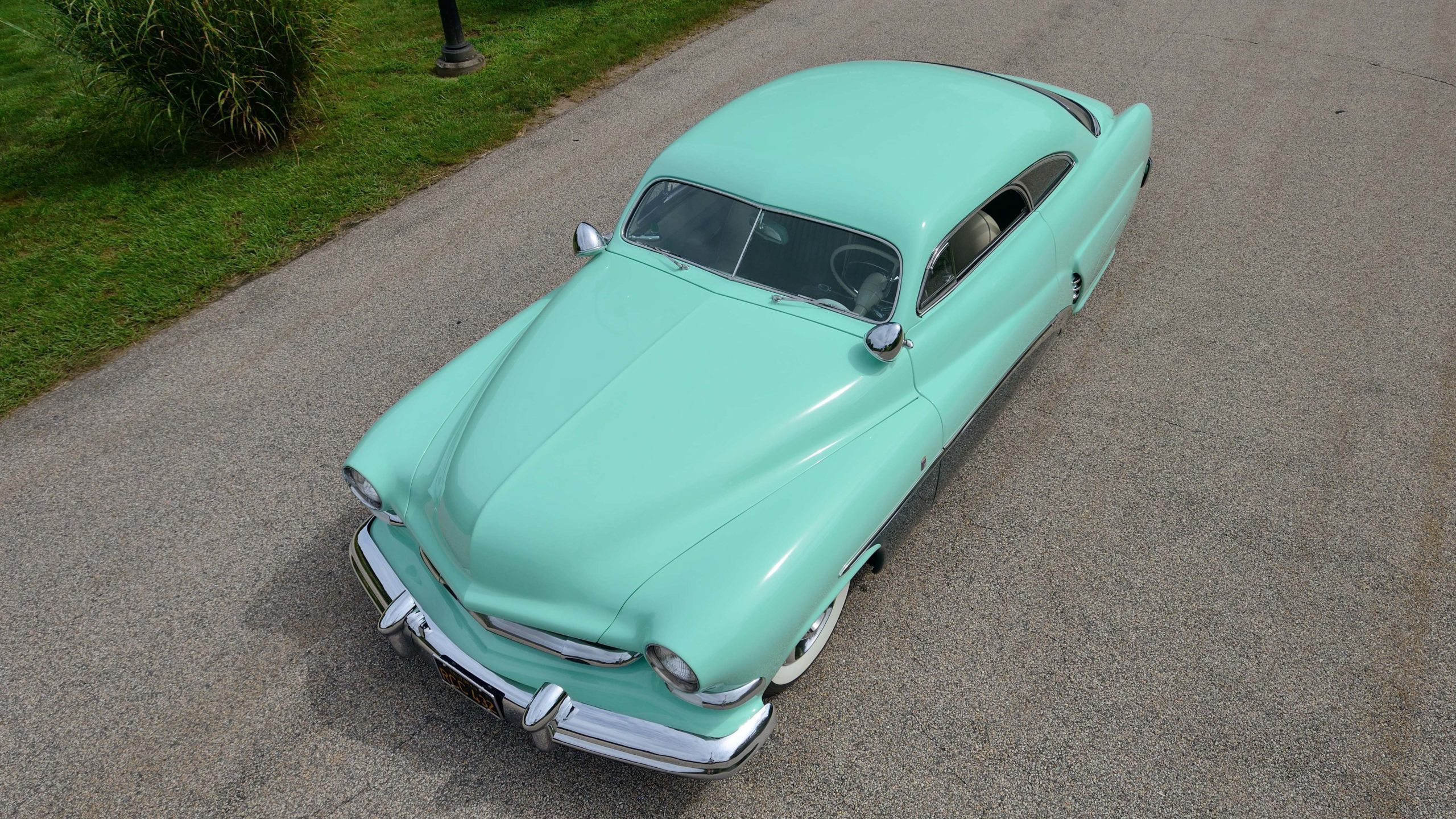 And now, a truly legendary car appears: the Hirohata Merc, built by the Barris brothers in the image and likeness of Sam Barris' personal Mercury... only better. And here it is necessary to understand what exactly is captured in the photographs. The fact is that at that time the Barris cars were among the first of their kind. It's now that we all know what a "lead sled" is, while the Barris brothers - and more specifically, it was Sam Barris who built, if not the first lead sled in the world, then certainly one of the first. And Mercury for Bob Hirohata became the best among those that existed at that time. An exceptional design, radical down to the color scheme: while everyone painted their custom designs in dark metallic, George preferred to paint the main part of the case in an unexpectedly light green for that time.
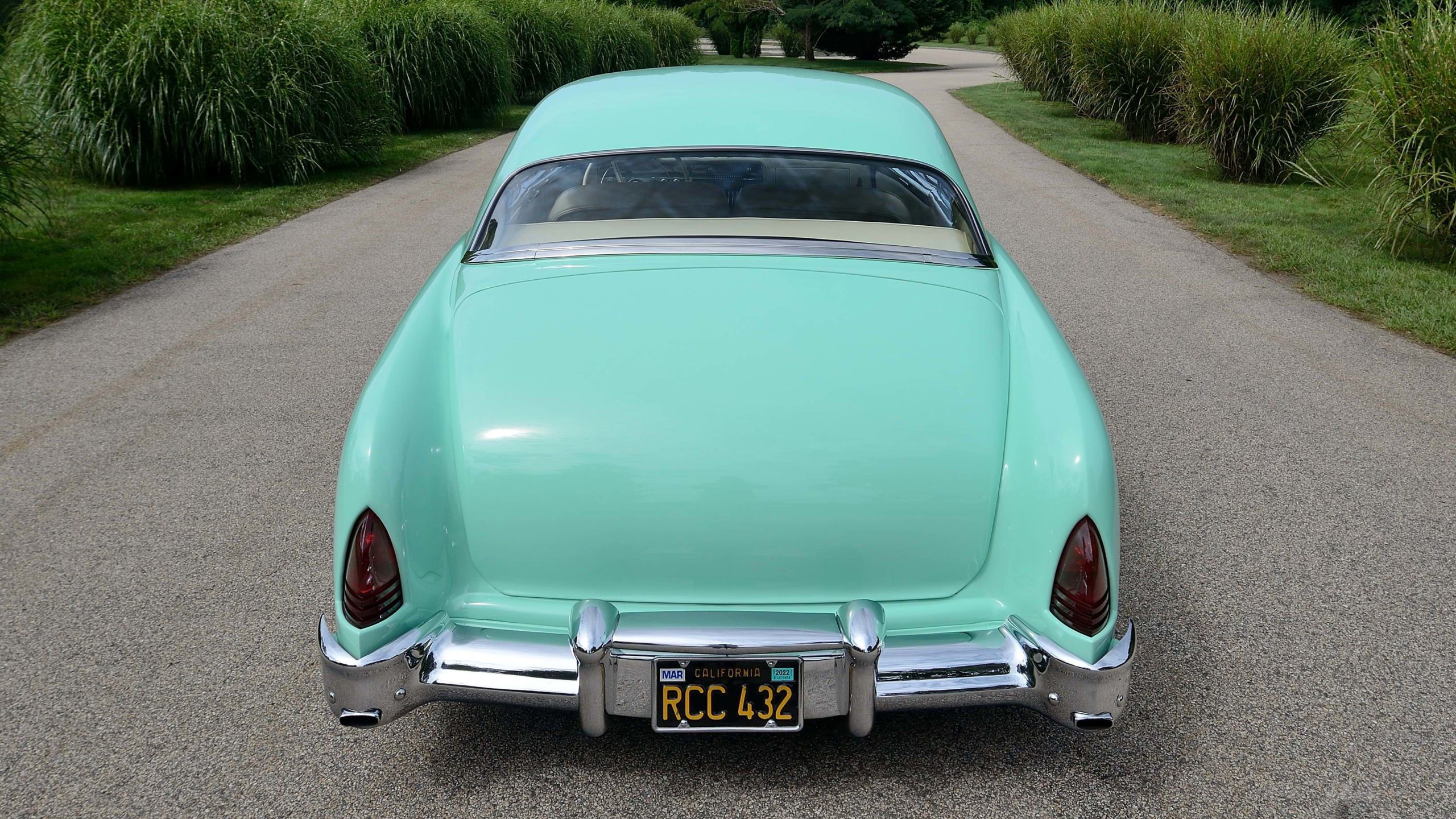 And now, a truly legendary car appears: the Hirohata Merc, built by the Barris brothers in the image and likeness of Sam Barris' personal Mercury... only better. And here it is necessary to understand what exactly is captured in the photographs. The fact is that at that time the Barris cars were among the first of their kind. Now we all know what a "lead sled" is, while the Barris brothers - and more specifically, it was Sam Barris who built, if not the first lead sled in the world, then certainly one of the first. And Mercury for Bob Hirohata became the best among those that existed at that time. An exceptional design, radical down to the color scheme: while everyone painted their custom designs in dark metallic, George preferred to paint the main part of the case in an unexpectedly light green for that time.
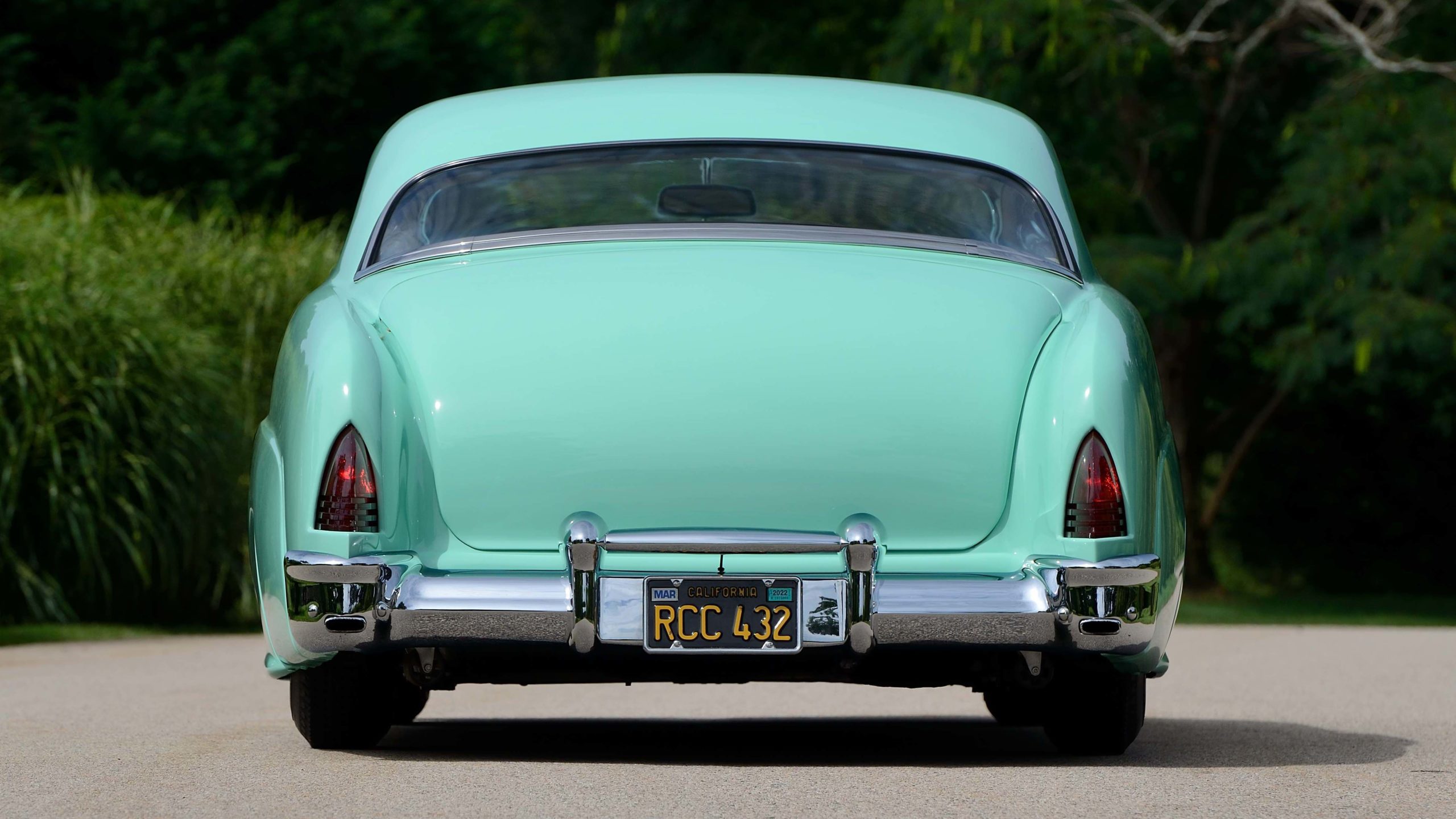 And now, a truly legendary car appears: the Hirohata Merc, built by the Barris brothers in the image and likeness of Sam Barris' personal Mercury... only better. And here it is necessary to understand what exactly is captured in the photographs. The fact is that at that time the Barris cars were among the first of their kind. It's now that we all know what a "lead sled" is, while the Barris brothers - and more specifically, it was Sam Barris who built, if not the first lead sled in the world, then certainly one of the first. And Mercury for Bob Hirohata became the best among those that existed at that time. An exceptional design, radical down to the color scheme: while everyone painted their custom designs in dark metallic, George preferred to paint the main part of the case in an unexpectedly light green for that time.
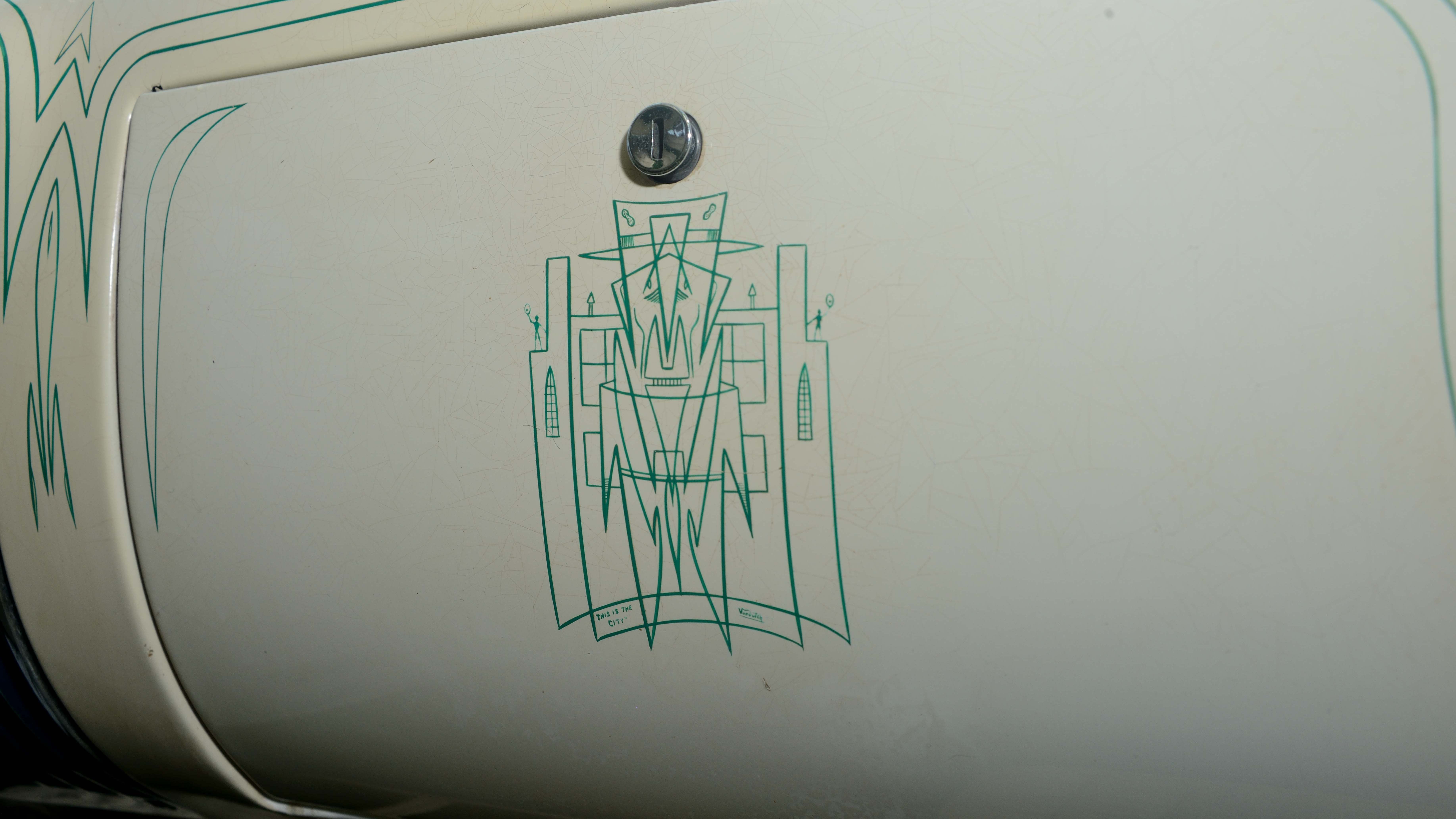
The fame of the Barris brothers grew steadily throughout the 1950s… And suddenly, in 1956, Sam Barris leaves the workshop. It is not known what caused this decision. Customrama claims that Sam Barris was, on the whole, unhappy. While the workshop was open from eight in the morning to six or seven in the evening, Sam went home at five, and generally wished for a more peaceful life. It is also worth considering that in 1955, George Barris’s car was first seen in the cinema: the aforementioned Hirohata Merc, whose popularity was also growing in the 50s, was cast in the film Running Wild (along with another Barris car, Fred Rowe’s Mercury). It was at this moment that George Barris, in fact, entered the film industry, not missing such a great opportunity – which, apparently, did not fit in at all with the desires of his older brother…
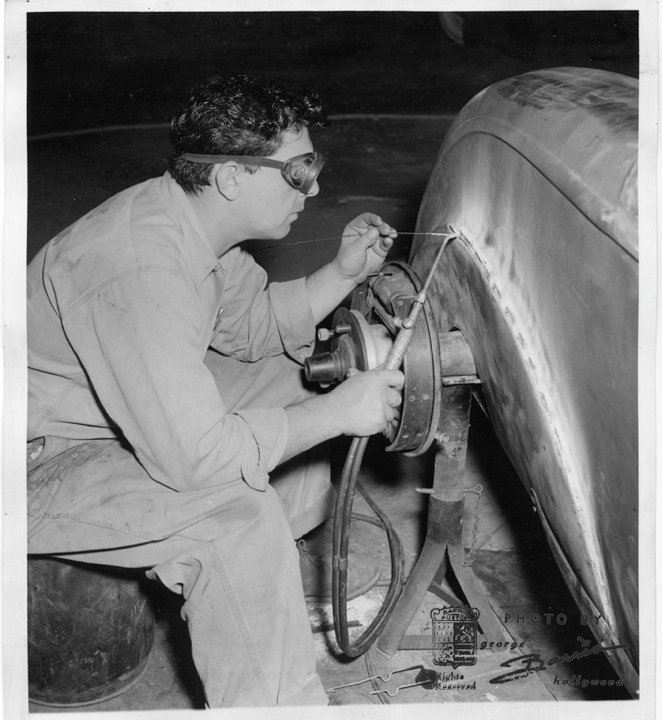 Most of Sam's life after 1956, for the most part, remained a mystery. It is known that he was still working on cars until 1960, after which he retired completely. It was never possible to find out for sure the reason for his departure: Sam Barris himself died of cancer back in 1967, while George Barris preferred not to spread about the incident.
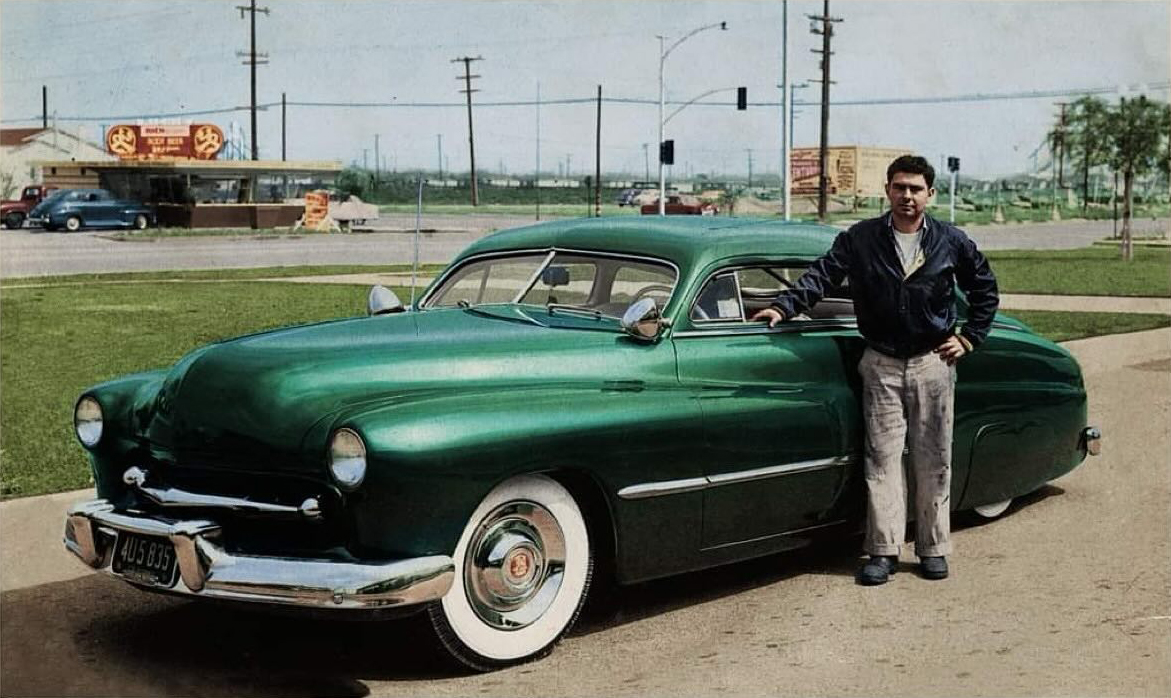 Most of Sam's life after 1956, for the most part, remained a mystery. It is known that he was still working on cars until 1960, after which he retired completely. It was never possible to find out for sure the reason for his departure: Sam Barris himself died of cancer back in 1967, while George Barris preferred not to spread the word about what happened.
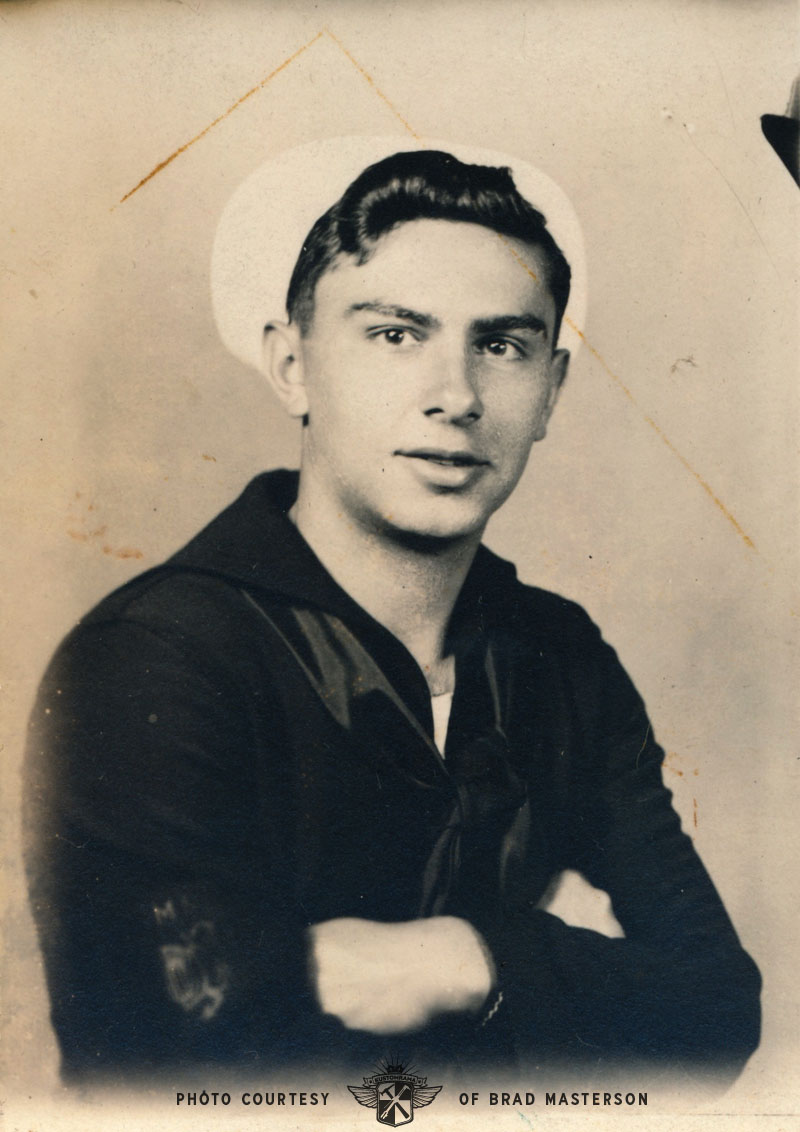 Most of Sam's life after 1956, for the most part, remained a mystery. It is known that he was still working on cars until 1960, after which he retired completely. It was not possible to find out for sure the reason for his departure: Sam Barris himself died of cancer back in 1967, while George Barris preferred not to spread the news about the incident.
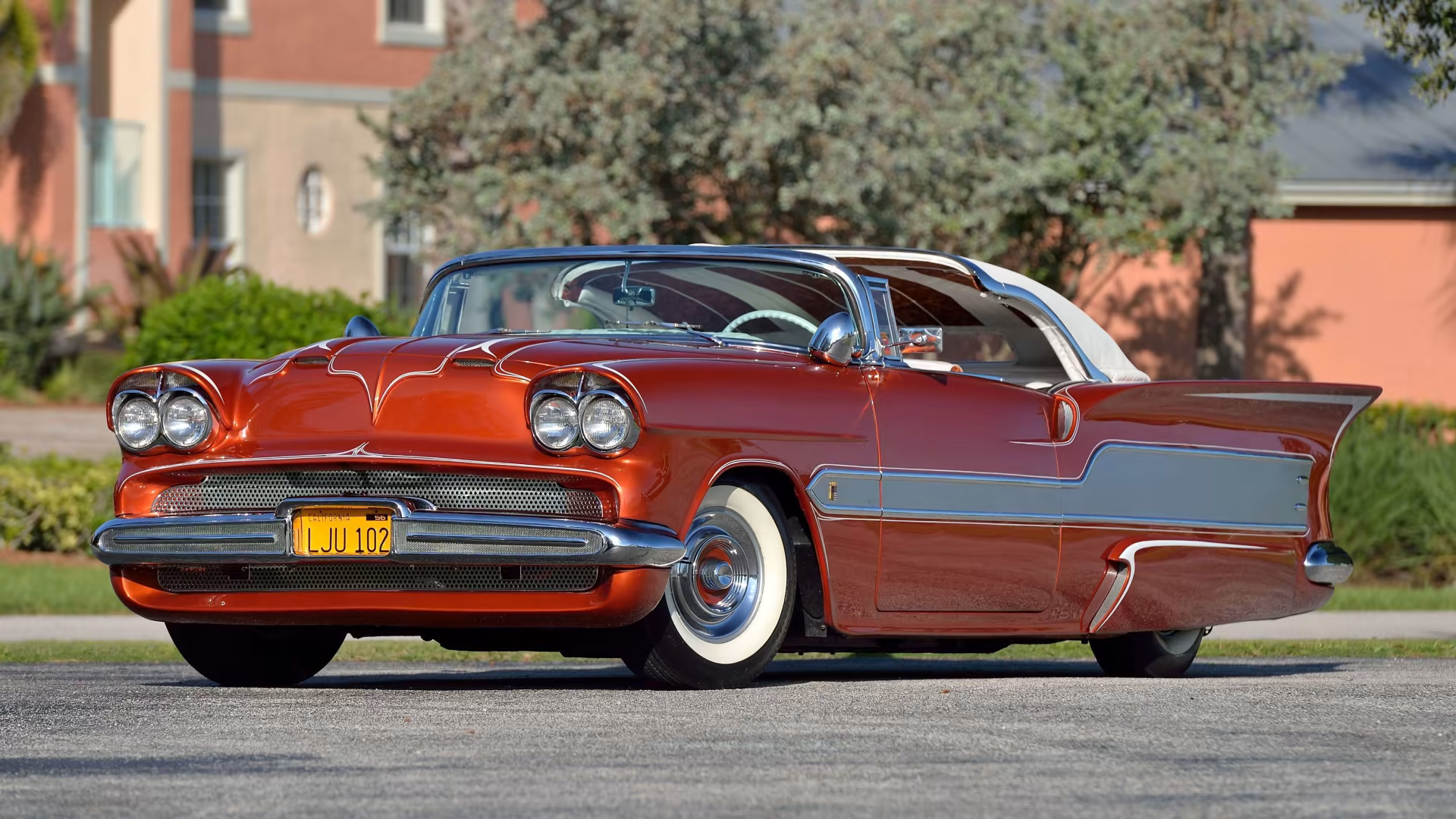 At the moment Sam left the workshop, one of the unfinished projects was the luxurious 1955 Chevrolet Bel Air Convertible itself, which was being rebuilt into an even more luxurious custom called Aztec. The car deserves to be mentioned at least because of its history, which makes it related to the early hot rods of bootleggers, moonshiners and other moonshiners. The fact is that the second owner of the car was a bank robber named Bob Wilcoxon, who was on the FBI's list of most wanted criminals in 1962, as a result of which the FBI confiscated the car and unceremoniously gutted it in search of weapons, looted and other evidence. However, the Aztec survived all the bullying and ended up on the roads, after which one of its subsequent owners was caught transporting illegal substances, and the FBI confiscated the car for the second time. And, despite everything, the Aztec has survived to this day.
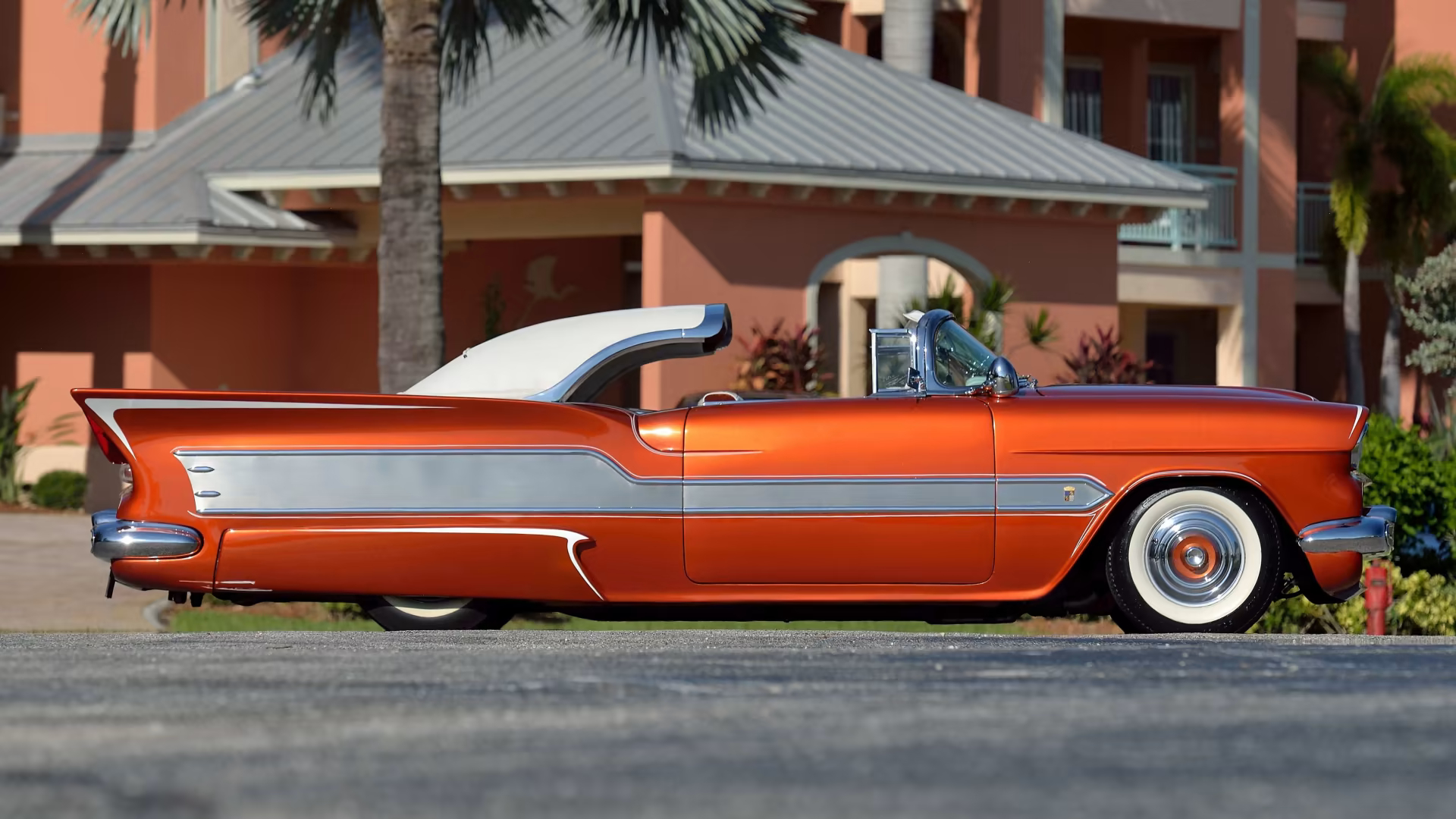 At the moment Sam left the workshop, one of the unfinished projects was the luxurious 1955 Chevrolet Bel Air Convertible itself, which was being rebuilt into an even more luxurious custom called Aztec. The car deserves to be mentioned at least because of its history, which makes it related to the early hot rods of bootleggers, moonshiners and other moonshiners. The fact is that the second owner of the car was a bank robber named Bob Wilcoxon, who was on the FBI's most wanted list in 1962, as a result of which the FBI confiscated the car and unceremoniously gutted it in search of weapons, looted and other evidence. However, the Aztec survived all the bullying and ended up on the roads, after which one of its subsequent owners was caught transporting illegal substances, and the FBI confiscated the car for the second time. And, despite everything, the Aztec has survived to this day.
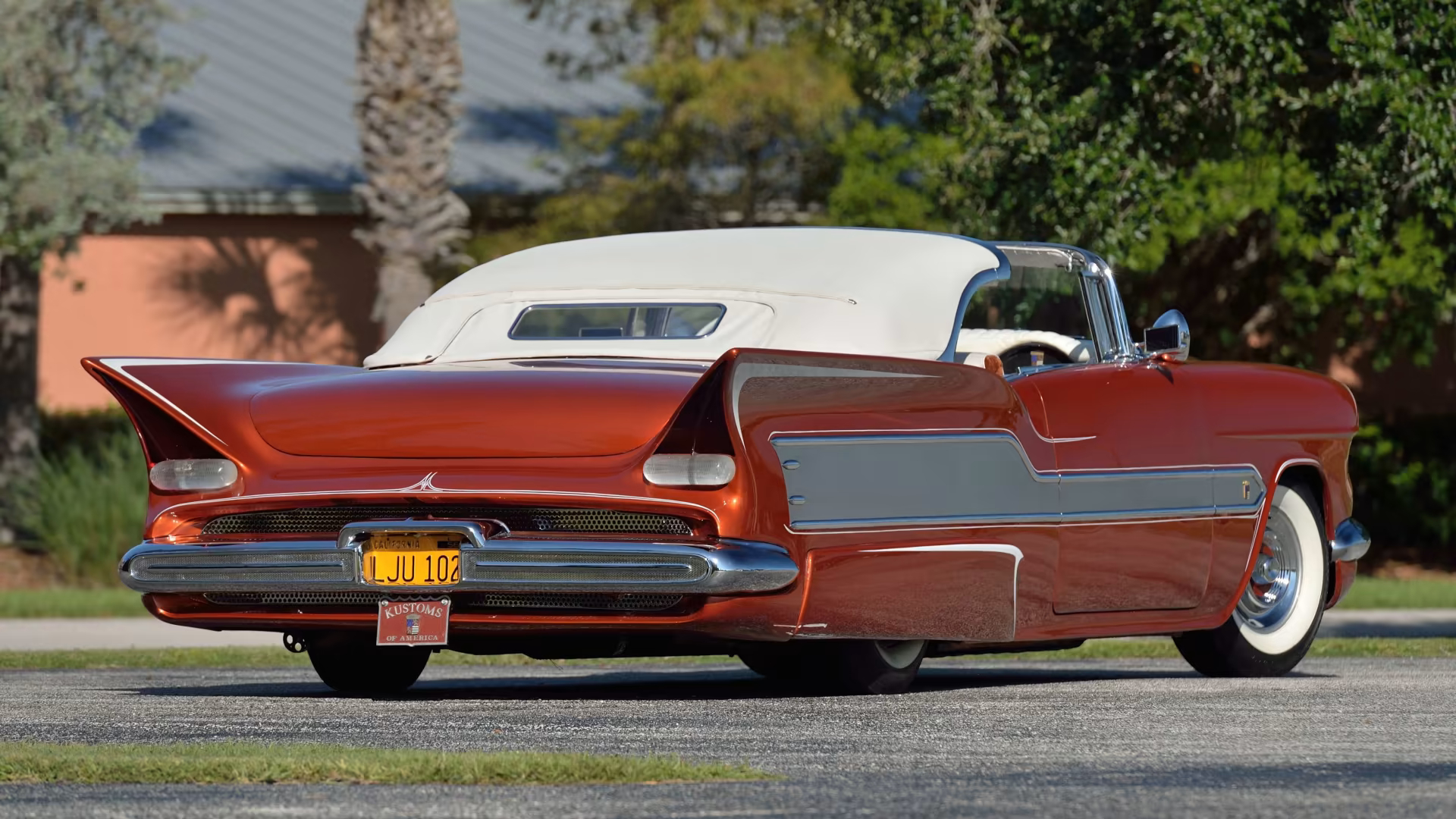 At the moment Sam left the workshop, one of the unfinished projects was the luxurious 1955 Chevrolet Bel Air Convertible itself, which was being rebuilt into an even more luxurious custom called Aztec. The car deserves to be mentioned at least because of its history, which makes it related to the early hot rods of bootleggers, moonshiners and other moonshiners. The fact is that the second owner of the car was a bank robber named Bob Wilcoxon, who was on the FBI's list of most wanted criminals in 1962, as a result of which the FBI confiscated the car and unceremoniously gutted it in search of weapons, looted and other evidence. However, the Aztec survived all the bullying and ended up on the roads, after which one of its subsequent owners was caught transporting illegal substances, and the FBI confiscated the car for the second time. And, despite everything, the Aztec has survived to this day.
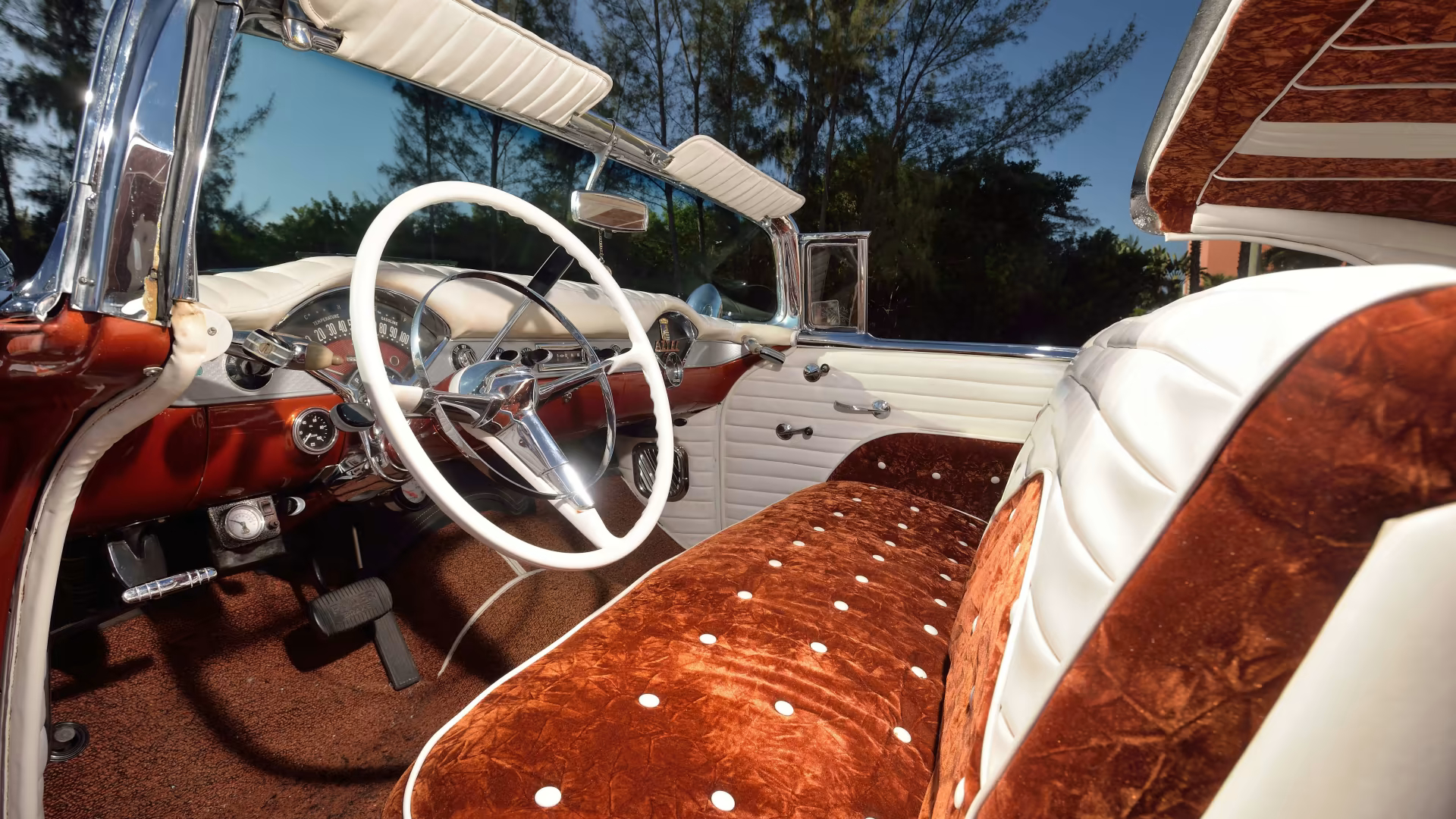 At the moment Sam left the workshop, one of the unfinished projects was the luxurious 1955 Chevrolet Bel Air Convertible itself, which was being rebuilt into an even more luxurious custom called Aztec. The car deserves to be mentioned at least because of its history, which makes it related to the early hot rods of bootleggers, moonshiners and other moonshiners. The fact is that the second owner of the car was a bank robber named Bob Wilcoxon, who was on the FBI's most wanted list in 1962, as a result of which the FBI confiscated the car and unceremoniously gutted it in search of weapons, looted and other evidence. However, the Aztec survived all the bullying and ended up on the roads, after which one of its subsequent owners was caught transporting illegal substances, and the FBI confiscated the car for the second time. And, despite everything, the Aztec has survived to this day.
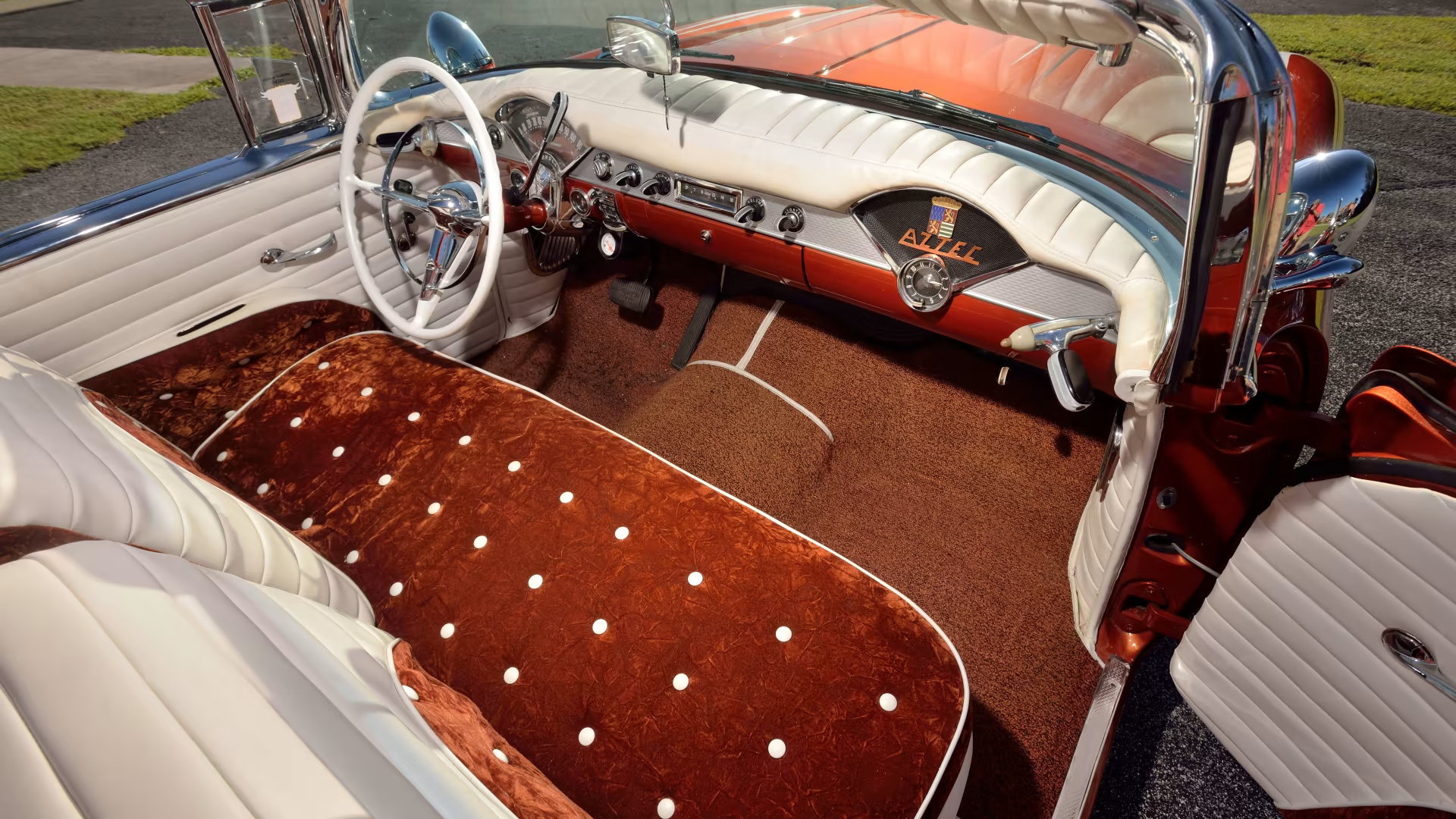 At the moment Sam left the workshop, one of the unfinished projects was the luxurious 1955 Chevrolet Bel Air Convertible itself, which was being rebuilt into an even more luxurious custom called Aztec. The car deserves to be mentioned at least because of its history, which makes it related to the early hot rods of bootleggers, moonshiners and other moonshiners. The fact is that the second owner of the car was a bank robber named Bob Wilcoxon, who was on the FBI's list of most wanted criminals in 1962, as a result of which the FBI confiscated the car and unceremoniously gutted it in search of weapons, looted and other evidence. However, the Aztec survived all the bullying and ended up on the roads, after which one of its subsequent owners was caught transporting illegal substances, and the FBI confiscated the car for the second time. And, despite everything, the Aztec has survived to this day.
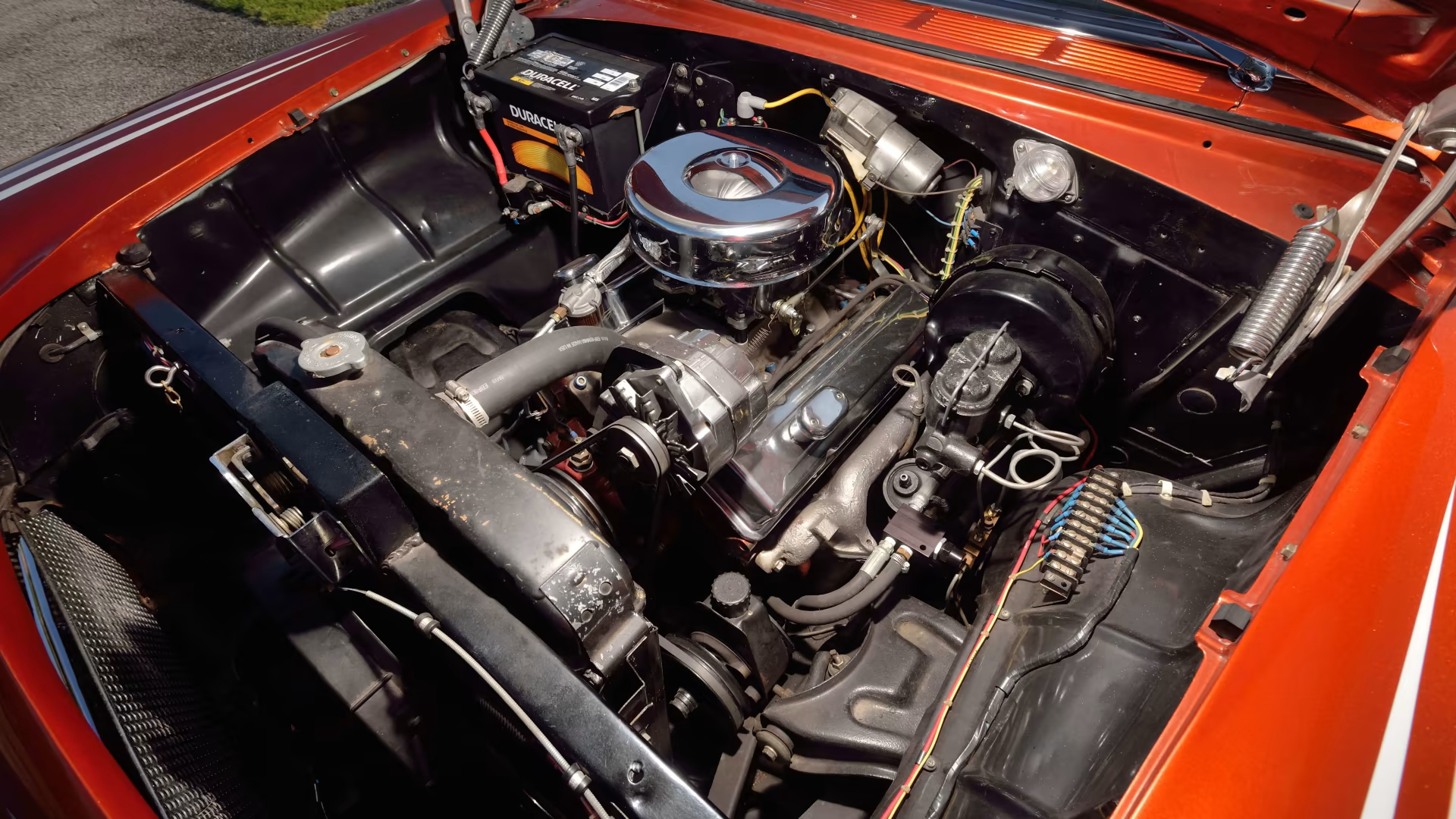 At the moment Sam left the workshop, one of the unfinished projects was the luxurious 1955 Chevrolet Bel Air Convertible itself, which was being rebuilt into an even more luxurious custom called Aztec. The car deserves to be mentioned at least because of its history, which makes it related to the early hot rods of bootleggers, moonshiners and other moonshiners. The fact is that the second owner of the car was a bank robber named Bob Wilcoxon, who was on the FBI's list of most wanted criminals in 1962, as a result of which the FBI confiscated the car and unceremoniously gutted it in search of weapons, looted and other evidence. However, the Aztec survived all the bullying and ended up on the roads, after which one of its subsequent owners was caught transporting illegal substances, and the FBI confiscated the car for the second time. And, despite everything, the Aztec has survived to this day.
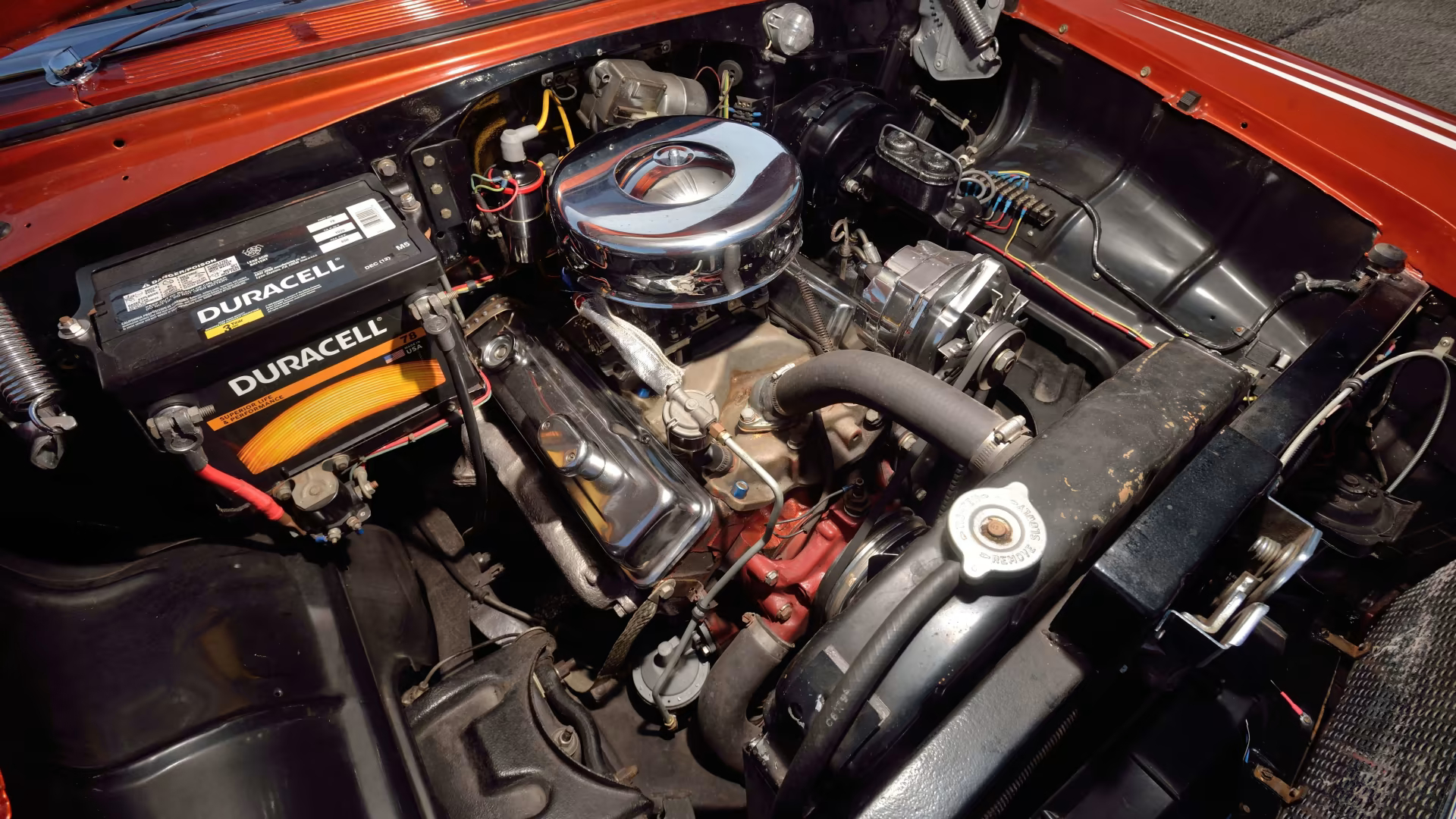 At the moment Sam left the workshop, one of the unfinished projects was the luxurious 1955 Chevrolet Bel Air Convertible itself, which was being rebuilt into an even more luxurious custom called Aztec. The car deserves to be mentioned at least because of its history, which makes it related to the early hot rods of bootleggers, moonshiners and other moonshiners. The fact is that the second owner of the car was a bank robber named Bob Wilcoxon, who was on the FBI's list of most wanted criminals in 1962, as a result of which the FBI confiscated the car and unceremoniously gutted it in search of weapons, looted and other evidence. However, the Aztec survived all the bullying and ended up on the roads, after which one of its subsequent owners was caught transporting illegal substances, and the FBI confiscated the car for the second time. And, despite everything, the Aztec has survived to this day.
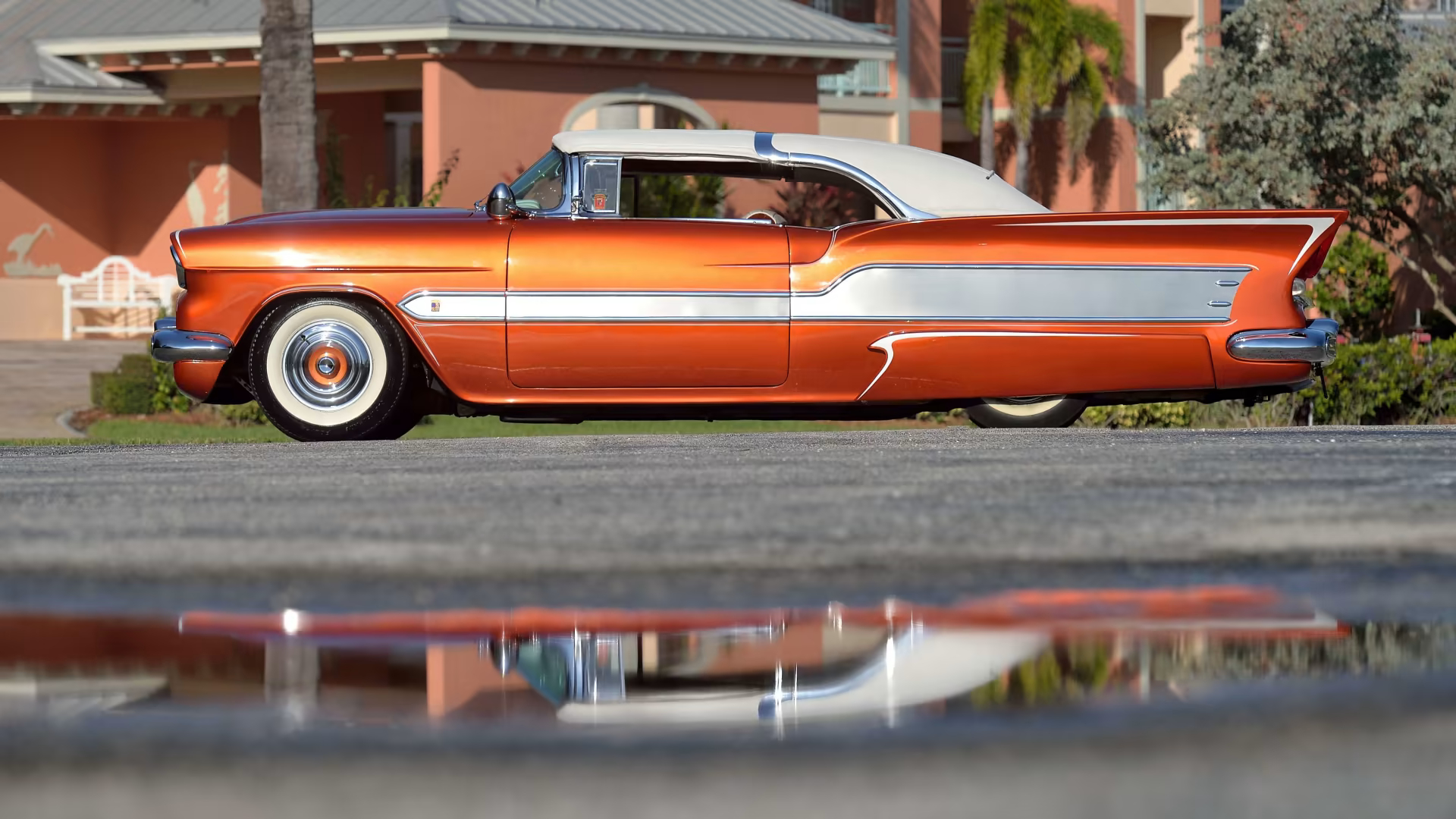 At the moment Sam left the workshop, one of the unfinished projects was the luxurious 1955 Chevrolet Bel Air Convertible itself, which was being rebuilt into an even more luxurious custom called Aztec. The car deserves to be mentioned at least because of its history, which makes it related to the early hot rods of bootleggers, moonshiners and other moonshiners. The fact is that the second owner of the car was a bank robber named Bob Wilcoxon, who was on the FBI's most wanted list in 1962, as a result of which the FBI confiscated the car and unceremoniously gutted it in search of weapons, looted and other evidence. However, the Aztec survived all the bullying and ended up on the roads, after which one of its subsequent owners was caught transporting illegal substances, and the FBI confiscated the car for the second time. And, despite everything, the Aztec has survived to this day.
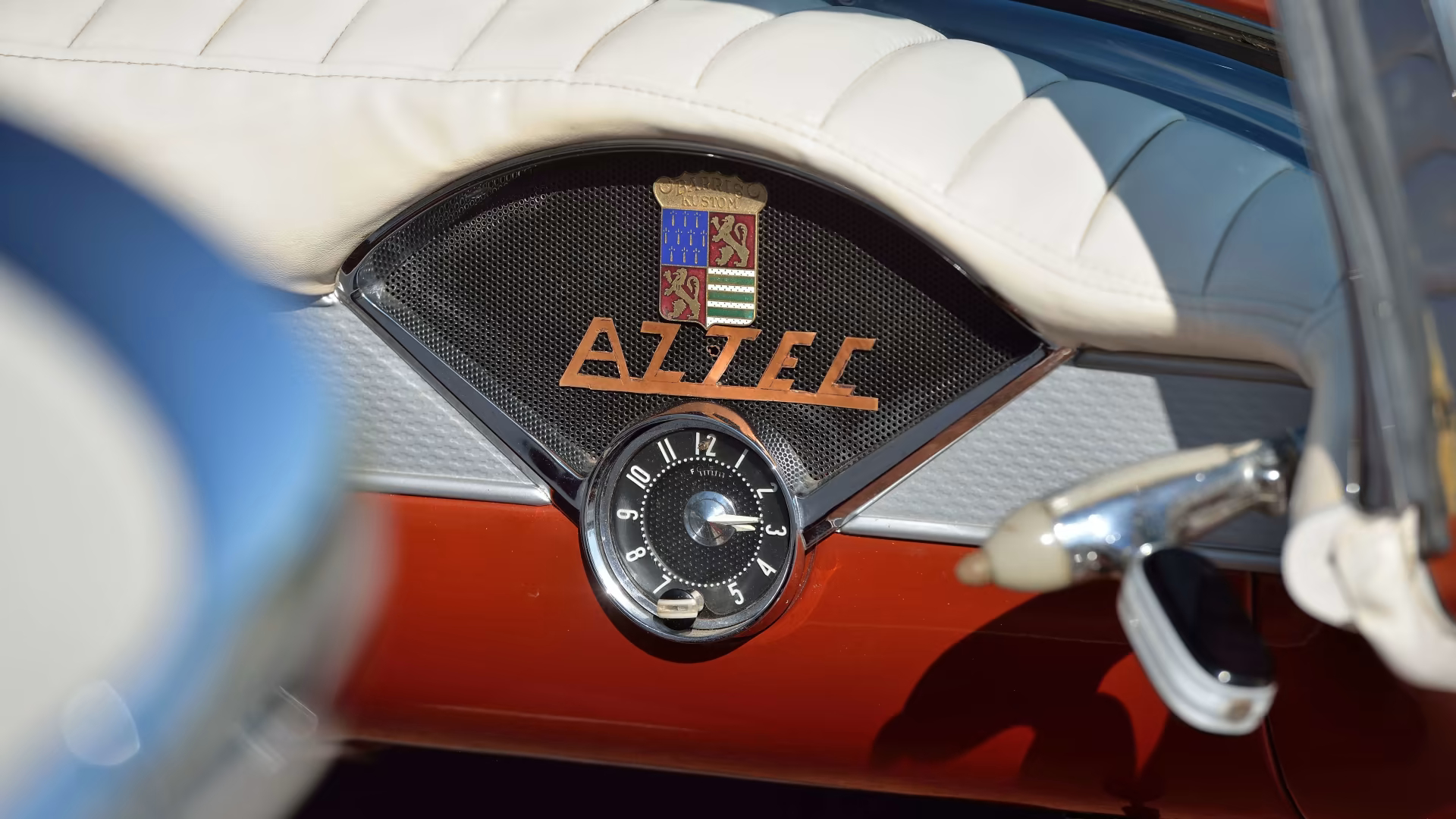 At the moment Sam left the workshop, one of the unfinished projects was the luxurious 1955 Chevrolet Bel Air Convertible itself, which was being rebuilt into an even more luxurious custom called Aztec. The car deserves to be mentioned at least because of its history, which makes it related to the early hot rods of bootleggers, moonshiners and other moonshiners. The fact is that the second owner of the car was a bank robber named Bob Wilcoxon, who was on the FBI's most wanted list in 1962, as a result of which the FBI confiscated the car and unceremoniously gutted it in search of weapons, looted and other evidence. However, the Aztec survived all the bullying and ended up on the roads, after which one of its subsequent owners was caught transporting illegal substances, and the FBI confiscated the car for the second time. And, despite everything, the Aztec has survived to this day.
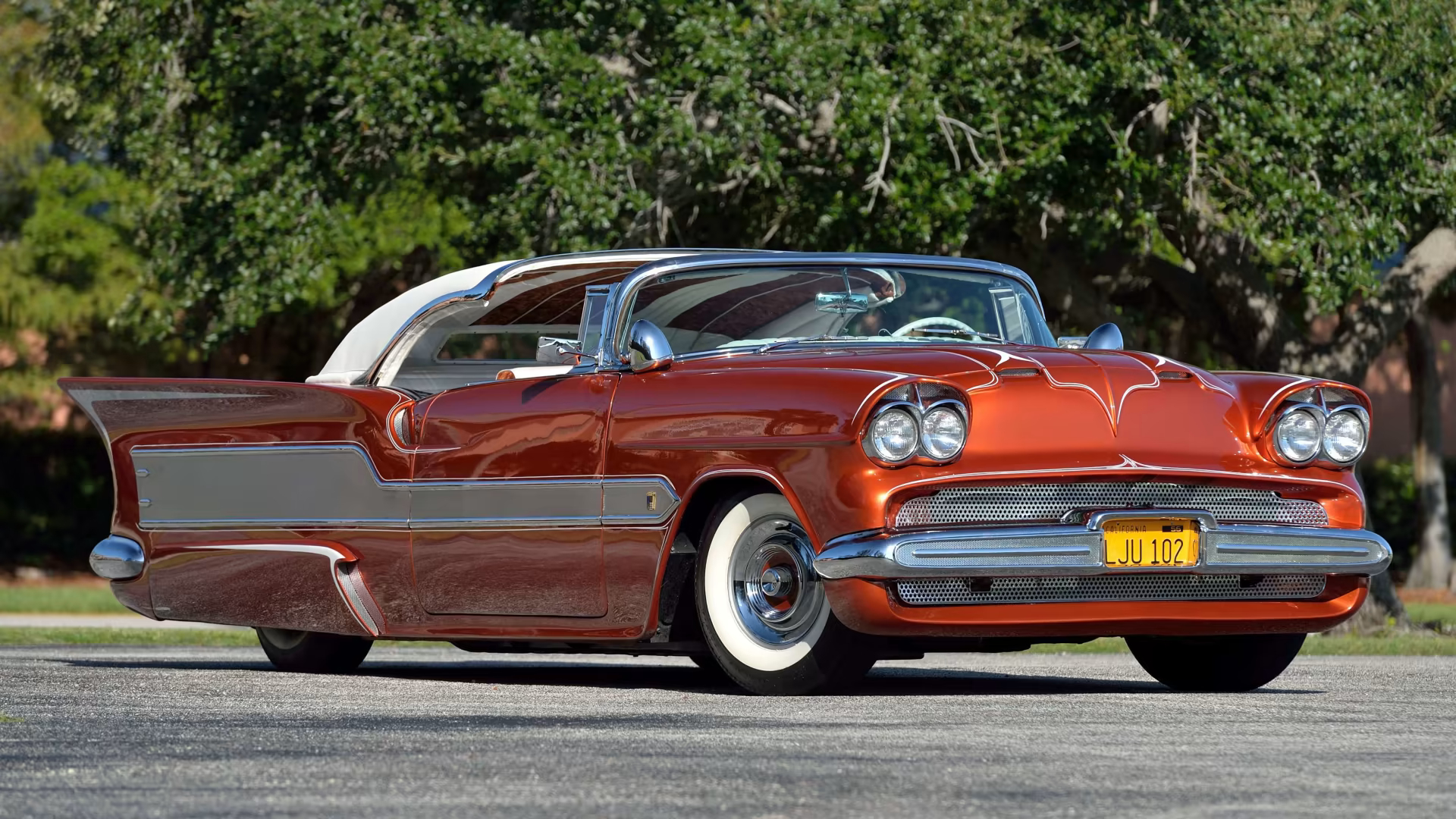 At the moment Sam left the workshop, one of the unfinished projects was the luxurious 1955 Chevrolet Bel Air Convertible itself, which was being rebuilt into an even more luxurious custom called Aztec. The car deserves to be mentioned at least because of its history, which makes it related to the early hot rods of bootleggers, moonshiners and other moonshiners. The fact is that the second owner of the car was a bank robber named Bob Wilcoxon, who was on the FBI's list of most wanted criminals in 1962, as a result of which the FBI confiscated the car and unceremoniously gutted it in search of weapons, looted and other evidence. However, the Aztec survived all the bullying and ended up on the roads, after which one of its subsequent owners was caught transporting illegal substances, and the FBI confiscated the car for the second time. And, despite everything, the Aztec has survived to this day.
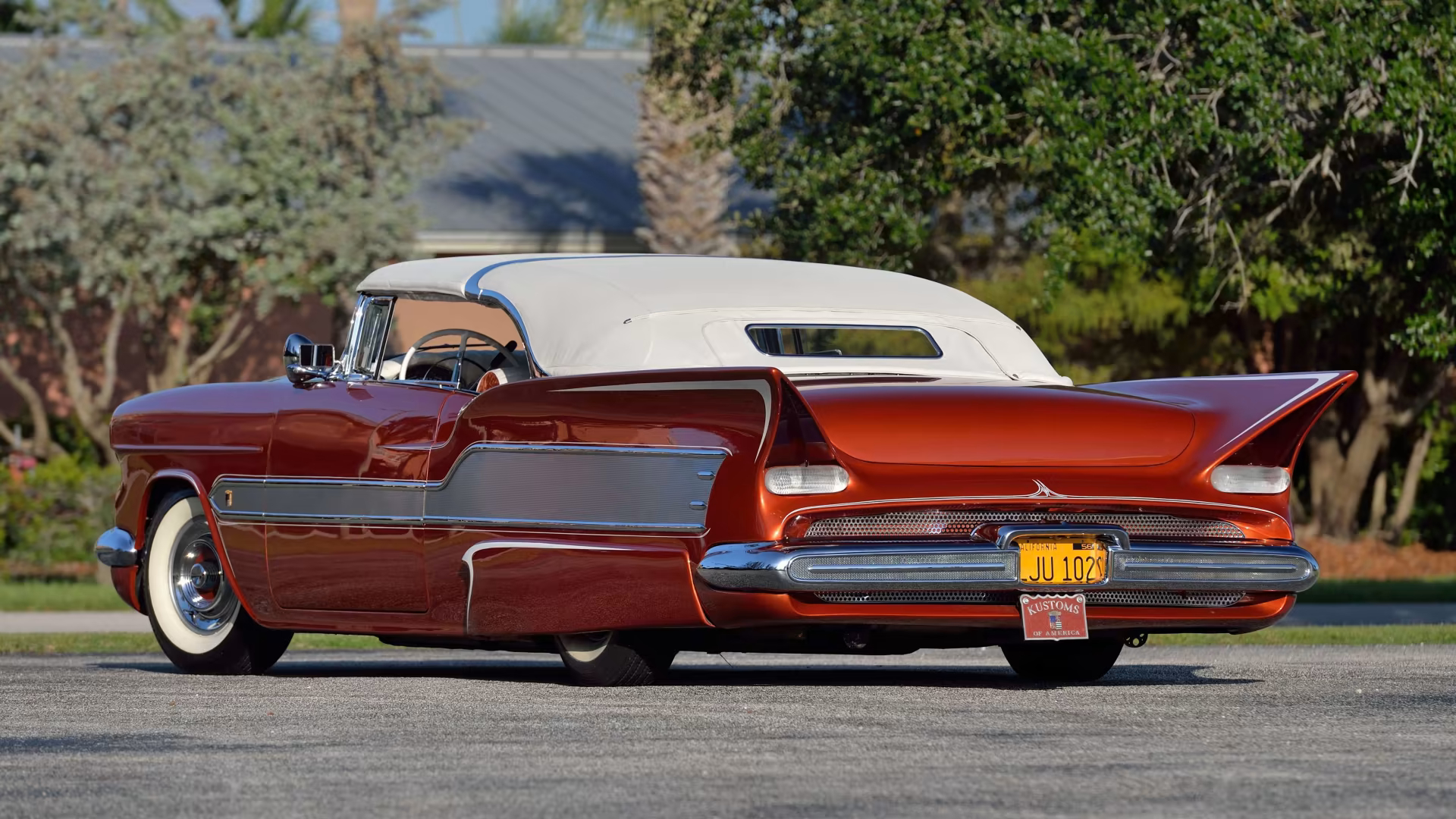 At the moment Sam left the workshop, one of the unfinished projects was the luxurious 1955 Chevrolet Bel Air Convertible itself, which was being rebuilt into an even more luxurious custom called Aztec. The car deserves to be mentioned at least because of its history, which makes it related to the early hot rods of bootleggers, moonshiners and other moonshiners. The fact is that the second owner of the car was a bank robber named Bob Wilcoxon, who was on the FBI's list of most wanted criminals in 1962, as a result of which the FBI confiscated the car and unceremoniously gutted it in search of weapons, looted and other evidence. However, the Aztec survived all the bullying and ended up on the roads, after which one of its subsequent owners was caught transporting illegal substances, and the FBI confiscated the car for the second time. And, despite everything, the Aztec has survived to this day.
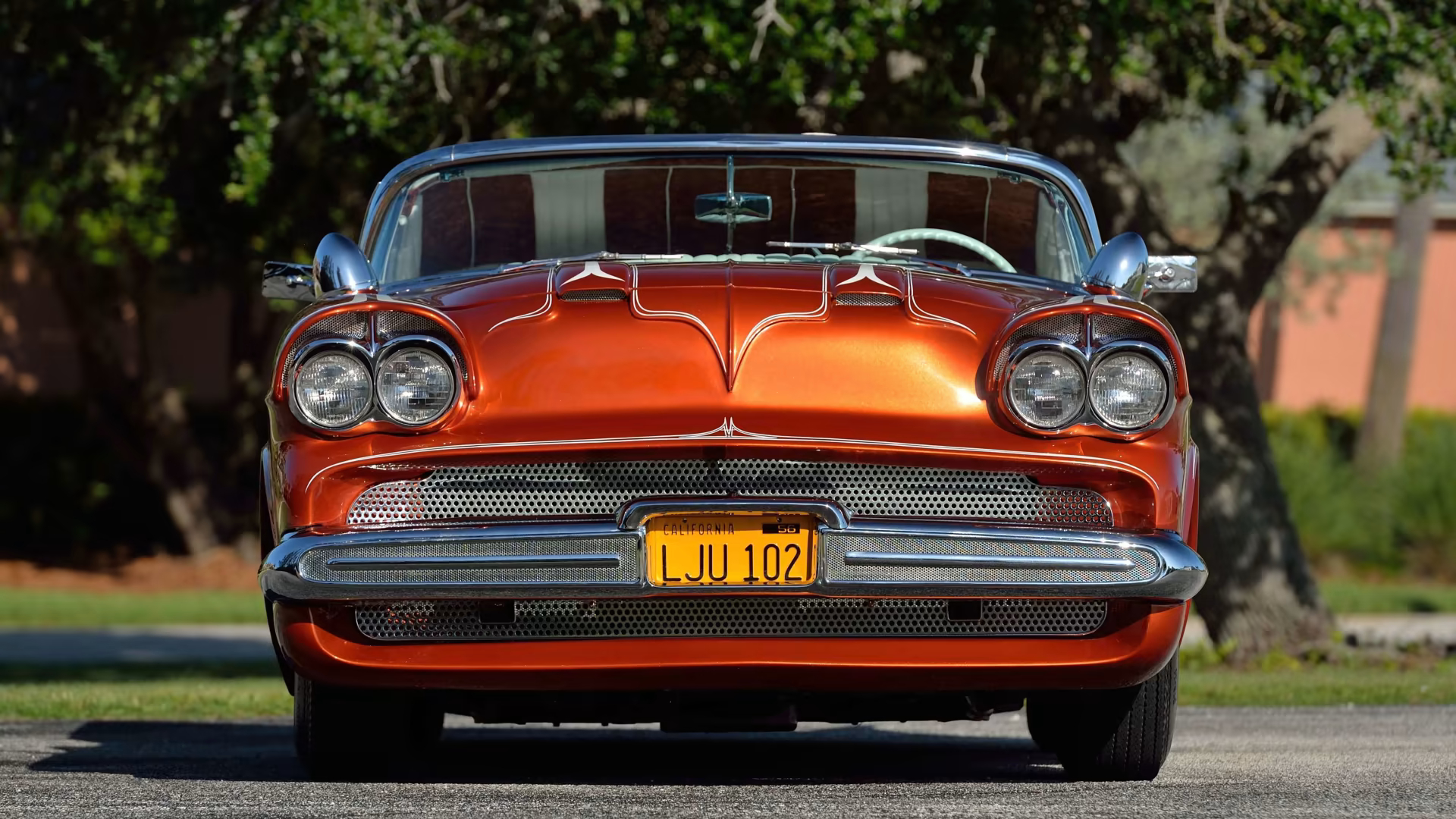 At the moment Sam left the workshop, one of the unfinished projects was the luxurious 1955 Chevrolet Bel Air Convertible itself, which was being rebuilt into an even more luxurious custom called Aztec. The car deserves to be mentioned at least because of its history, which makes it related to the early hot rods of bootleggers, moonshiners and other moonshiners. The fact is that the second owner of the car was a bank robber named Bob Wilcoxon, who was on the FBI's most wanted list in 1962, as a result of which the FBI confiscated the car and unceremoniously gutted it in search of weapons, looted and other evidence. However, the Aztec survived all the bullying and ended up on the roads, after which one of its subsequent owners was caught transporting illegal substances, and the FBI confiscated the car for the second time. And, despite everything, the Aztec has survived to this day.
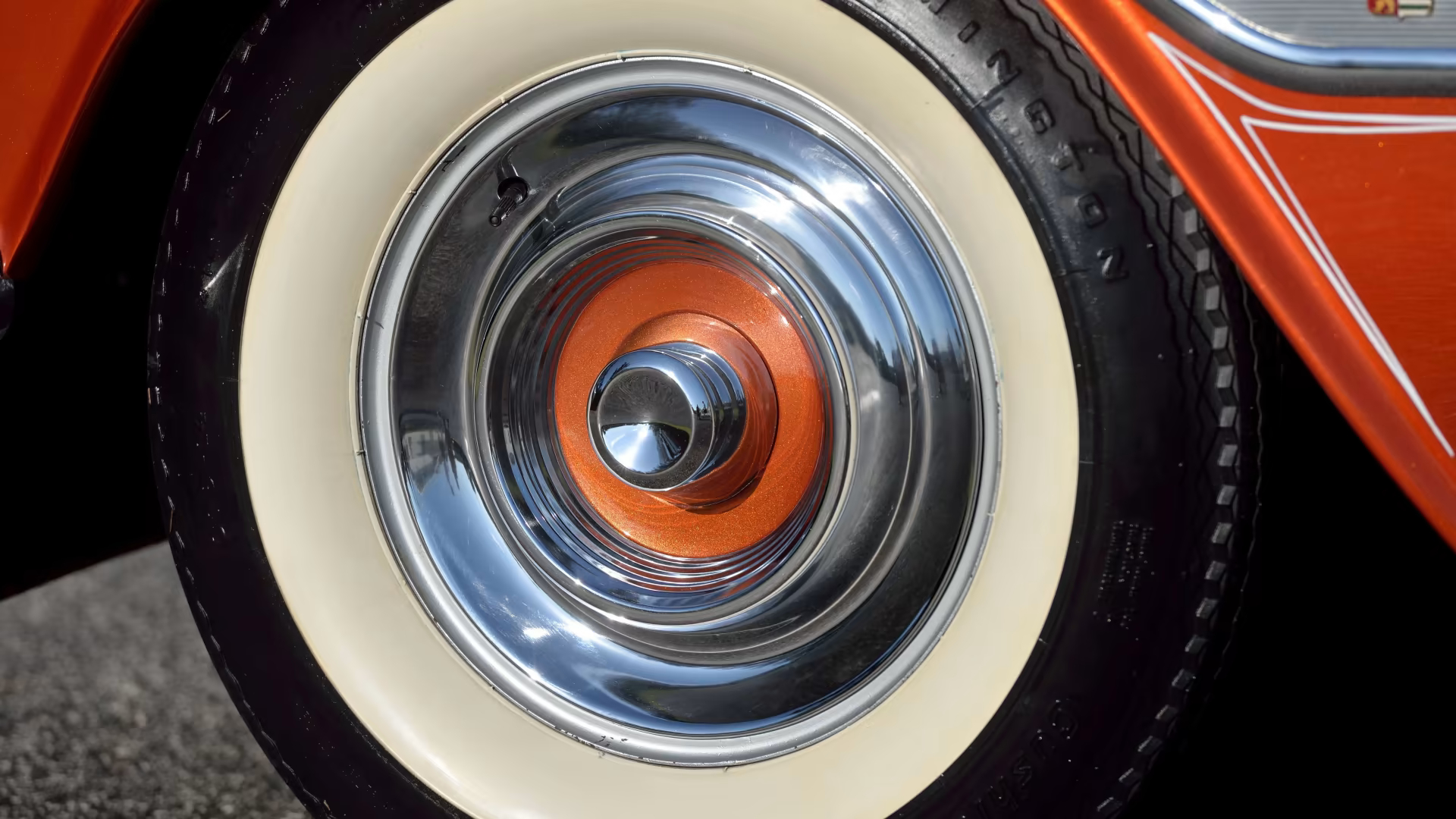 At the moment Sam left the workshop, one of the unfinished projects was the luxurious 1955 Chevrolet Bel Air Convertible itself, which was being rebuilt into an even more luxurious custom called Aztec. The car deserves to be mentioned at least because of its history, which makes it related to the early hot rods of bootleggers, moonshiners and other moonshiners. The fact is that the second owner of the car was a bank robber named Bob Wilcoxon, who was on the FBI's list of most wanted criminals in 1962, as a result of which the FBI confiscated the car and unceremoniously gutted it in search of weapons, looted and other evidence. However, the Aztec survived all the bullying and ended up on the roads, after which one of its subsequent owners was caught transporting illegal substances, and the FBI confiscated the car for the second time. And, despite everything, the Aztec has survived to this day.
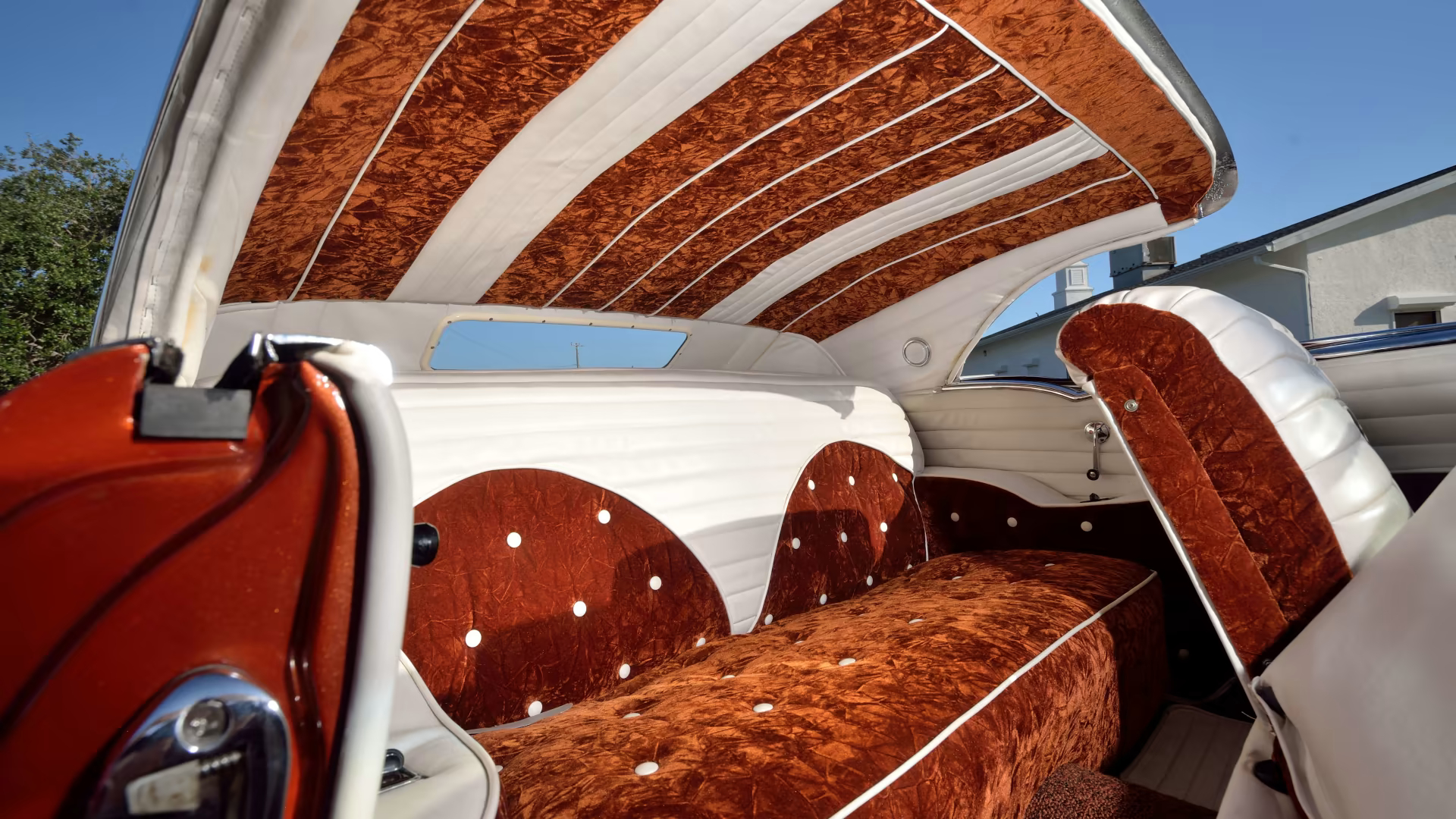 At the moment Sam left the workshop, one of the unfinished projects was the luxurious 1955 Chevrolet Bel Air Convertible itself, which was being rebuilt into an even more luxurious custom called Aztec. The car deserves to be mentioned at least because of its history, which makes it related to the early hot rods of bootleggers, moonshiners and other moonshiners. The fact is that the second owner of the car was a bank robber named Bob Wilcoxon, who was on the FBI's list of most wanted criminals in 1962, as a result of which the FBI confiscated the car and unceremoniously gutted it in search of weapons, looted and other evidence. However, the Aztec survived all the bullying and ended up on the roads, after which one of its subsequent owners was caught transporting illegal substances, and the FBI confiscated the car for the second time. And, despite everything, the Aztec has survived to this day.
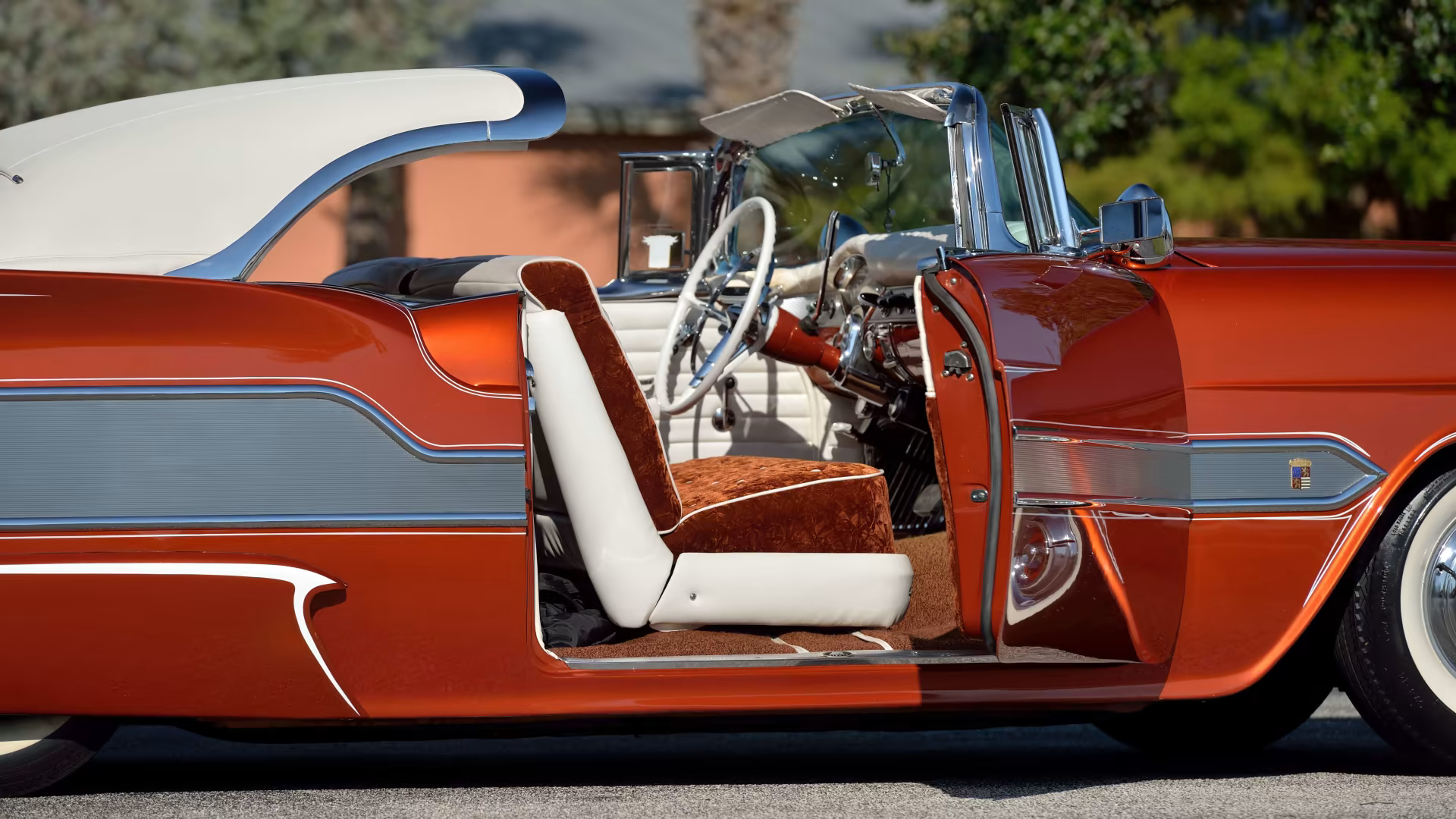 At the moment Sam left the workshop, one of the unfinished projects was the luxurious 1955 Chevrolet Bel Air Convertible itself, which was being rebuilt into an even more luxurious custom called Aztec. The car deserves to be mentioned at least because of its history, which makes it related to the early hot rods of bootleggers, moonshiners and other moonshiners. The fact is that the second owner of the car was a bank robber named Bob Wilcoxon, who was on the FBI's list of most wanted criminals in 1962, as a result of which the FBI confiscated the car and unceremoniously gutted it in search of weapons, looted and other evidence. However, the Aztec survived all the bullying and ended up on the roads, after which one of its subsequent owners was caught transporting illegal substances, and the FBI confiscated the car for the second time. And, despite everything, the Aztec has survived to this day.
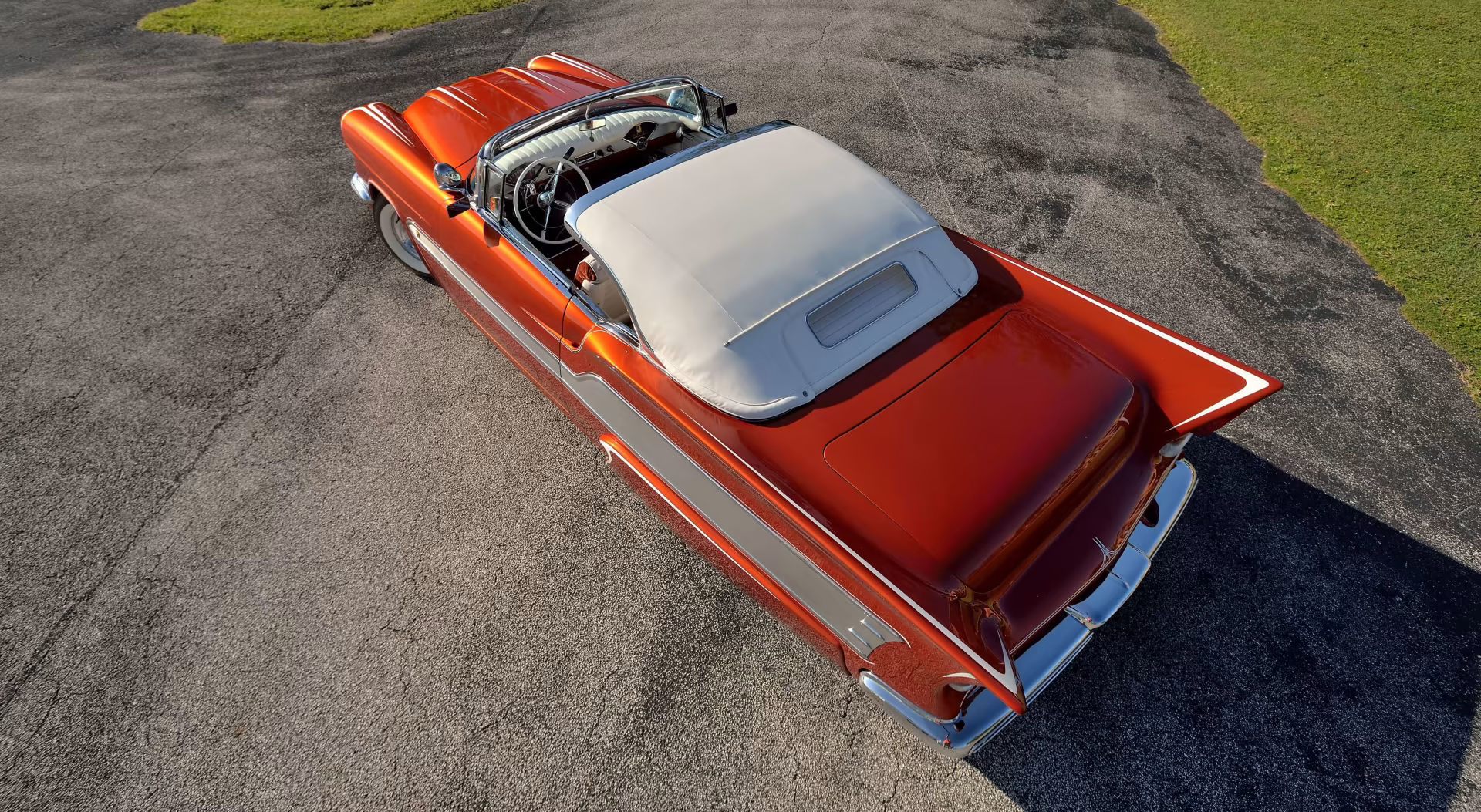 At the moment Sam left the workshop, one of the unfinished projects was the luxurious 1955 Chevrolet Bel Air Convertible itself, which was being rebuilt into an even more luxurious custom called Aztec. The car deserves to be mentioned at least because of its history, which makes it related to the early hot rods of bootleggers, moonshiners and other moonshiners. The fact is that the second owner of the car was a bank robber named Bob Wilcoxon, who was on the FBI's list of most wanted criminals in 1962, as a result of which the FBI confiscated the car and unceremoniously gutted it in search of weapons, looted and other evidence. However, the Aztec survived all the bullying and ended up on the roads, after which one of its subsequent owners was caught transporting illegal substances, and the FBI confiscated the car for the second time. And, despite everything, the Aztec has survived to this day.
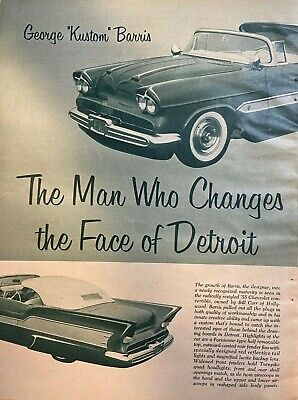
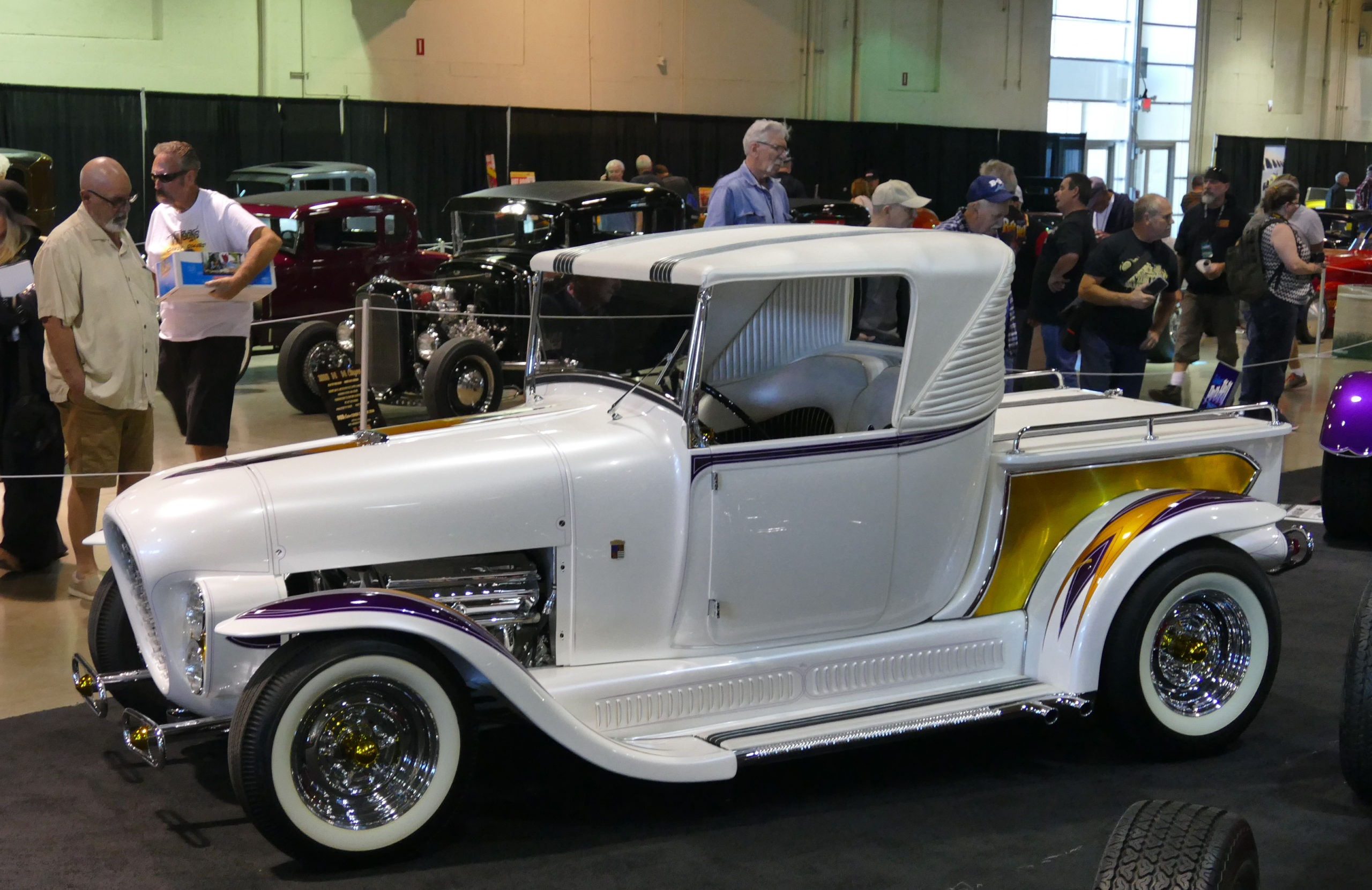 After Sam left the workshop, the style of the cars she built changed a lot very quickly. A great example of this is the 1929 Ford Model A Pickup called the Ala Kart. The history of the car began with the fact that in the process of its construction, Barris's workshop was engulfed by the famous fire on the customization scene on December 7, 1957, which consumed fourteen cars. Ala Kart was one of the few survivors, and in the end it appeared to the public in exactly this form: extremely, I would say, extensively customized, including a lot of white, gold, purple - in general, the first step towards the decadence of George Barris. The owner of the car, Richard Peters, once stated the following: "I was afraid to ride it. The wings were painted even from the bottom. One stone could ruin everything." Unlike Bob Hirohata's Mercury, the Ala Kart spent a minimal amount of time on the road. However, as a show rod, Ala Kart has gained a lot of fame. In particular, this particular car is one of only three that have been awarded the prestigious America's Most Beautiful Roadster award twice... and it was this machine that George Barris was able to sell to AMT in order to make copies on a 1/25 scale, which allowed George to get into the business of producing scale models at the same time.
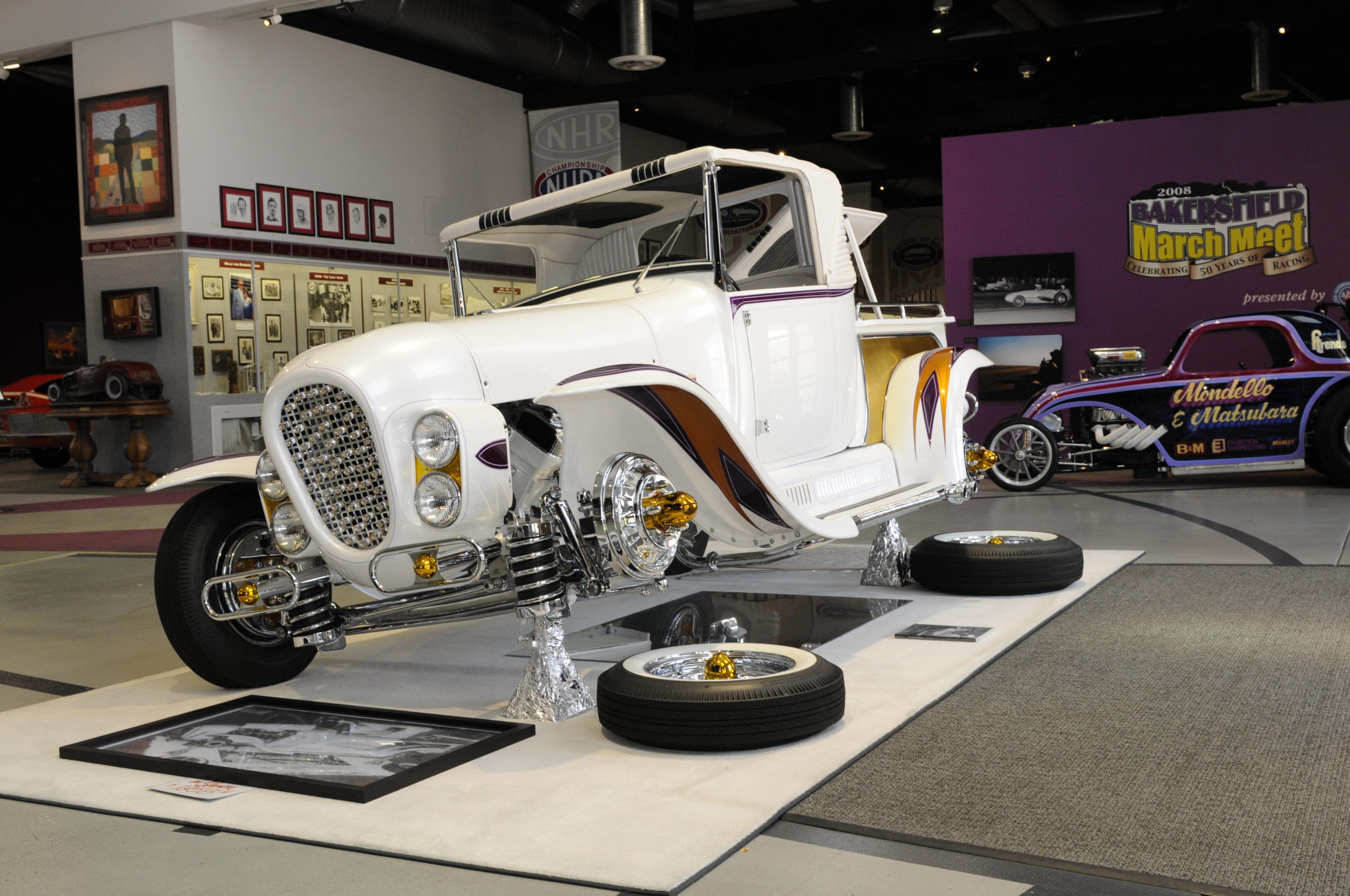 After Sam left the workshop, the style of the cars she built changed a lot very quickly. A great example of this is the 1929 Ford Model A Pickup called the Ala Kart. The history of the car began with the fact that in the process of its construction, Barris's workshop was engulfed by the famous fire on the customization scene on December 7, 1957, which consumed fourteen cars. Ala Kart was one of the few survivors, and in the end it appeared to the public in exactly this form: extremely, I would say, extensively customized, including a lot of white, gold, purple - in general, the first step towards the decadence of George Barris. The owner of the car, Richard Peters, once stated the following: "I was afraid to ride it. The wings were painted even from the bottom. One stone could ruin everything." Unlike Bob Hirohata's Mercury, the Ala Kart spent a minimal amount of time on the road. However, as a show rod, Ala Kart has gained a lot of fame. In particular, this particular car is one of only three that have been awarded the prestigious America's Most Beautiful Roadster award twice... and it was this machine that George Barris was able to sell to AMT in order to make copies on a 1/25 scale, which allowed George to get into the business of producing scale models at the same time.
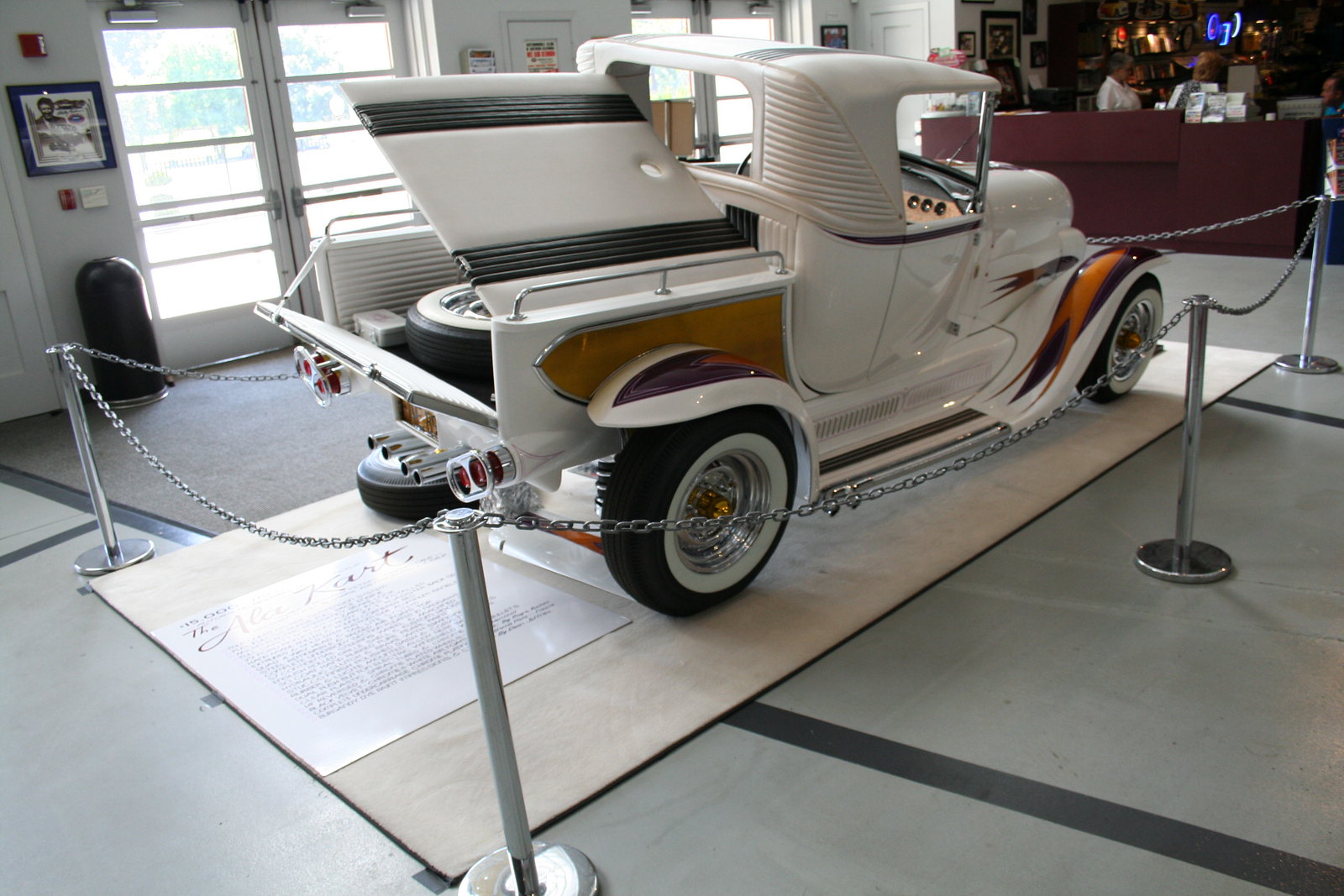 After Sam left the workshop, the style of the cars she built changed a lot very quickly. A great example of this is the 1929 Ford Model A Pickup called the Ala Kart. The history of the car began with the fact that in the process of its construction, Barris's workshop was engulfed by the famous fire on the customization scene on December 7, 1957, which consumed fourteen cars. Ala Kart was one of the few survivors, and in the end it appeared to the public in exactly this form: extremely, I would say, extensively customized, including a lot of white, gold, purple - in general, the first step towards the decadence of George Barris. The owner of the car, Richard Peters, once stated the following: "I was afraid to ride it. The wings were painted even from the bottom. One stone could ruin everything." Unlike Bob Hirohata's Mercury, the Ala Kart spent a minimal amount of time on the road. However, as a show rod, Ala Kart has gained a lot of fame. In particular, this particular car is one of only three that have been awarded the prestigious America's Most Beautiful Roadster award twice... and it was this machine that George Barris was able to sell to AMT in order to make copies on a 1/25 scale, which allowed George to get into the business of producing scale models at the same time.
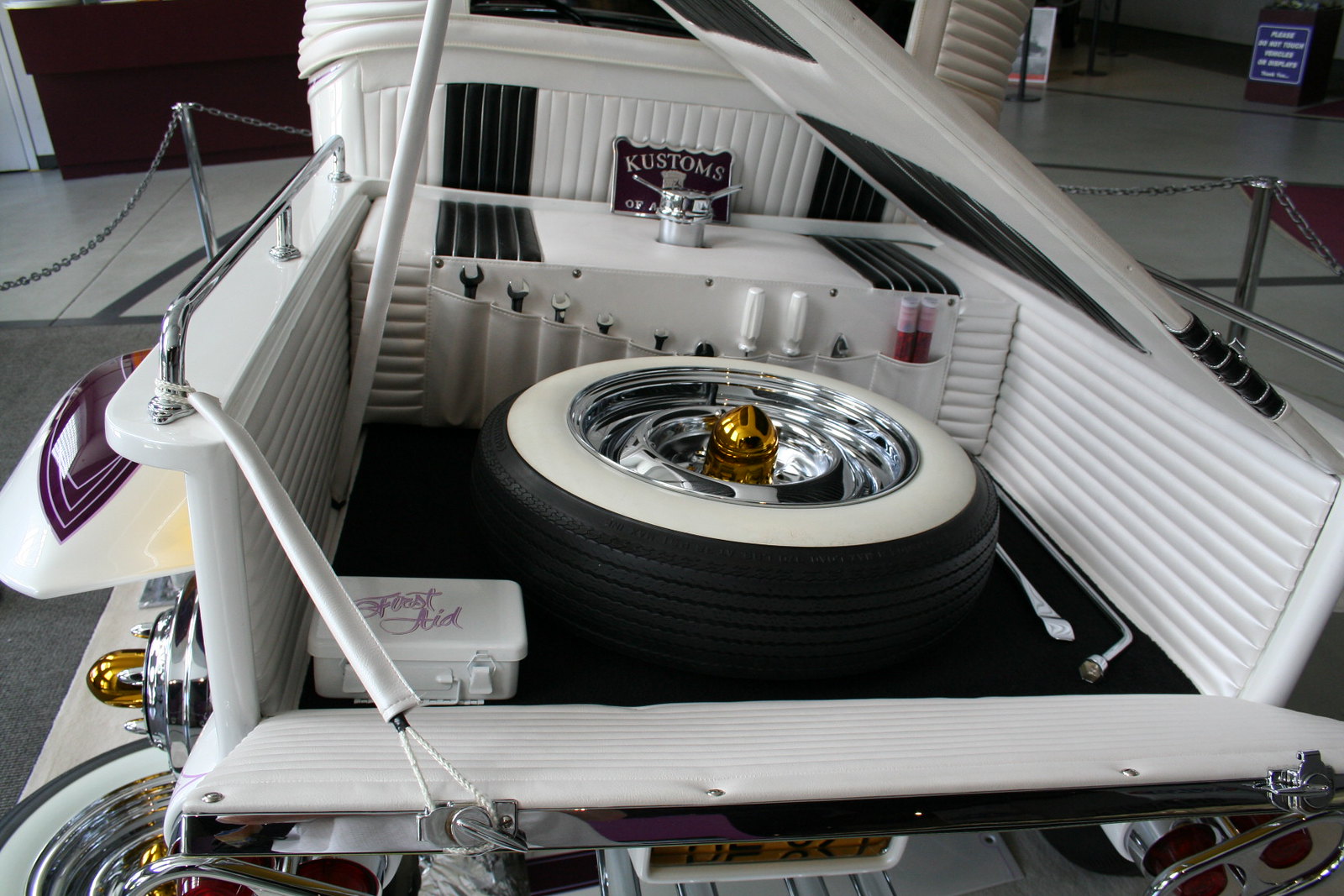 After Sam left the workshop, the style of the cars she built changed a lot very quickly. A great example of this is the 1929 Ford Model A Pickup called the Ala Kart. The history of the car began with the fact that in the process of its construction, Barris's workshop was engulfed by the famous fire on the customization scene on December 7, 1957, which consumed fourteen cars. Ala Kart was one of the few survivors, and in the end it appeared to the public in exactly this form: extremely, I would say, extensively customized, including a lot of white, gold, purple - in general, the first step towards the decadence of George Barris. The owner of the car, Richard Peters, once stated the following: "I was afraid to ride it. The wings were painted even from the bottom. One stone could ruin everything." Unlike Bob Hirohata's Mercury, the Ala Kart spent a minimal amount of time on the road. However, as a show rod, Ala Kart has gained a lot of fame. In particular, this particular car is one of only three that have been awarded the prestigious America's Most Beautiful Roadster award twice... and it was this machine that George Barris was able to sell to AMT in order to make copies on a 1/25 scale, which allowed George to get into the business of producing scale models at the same time.
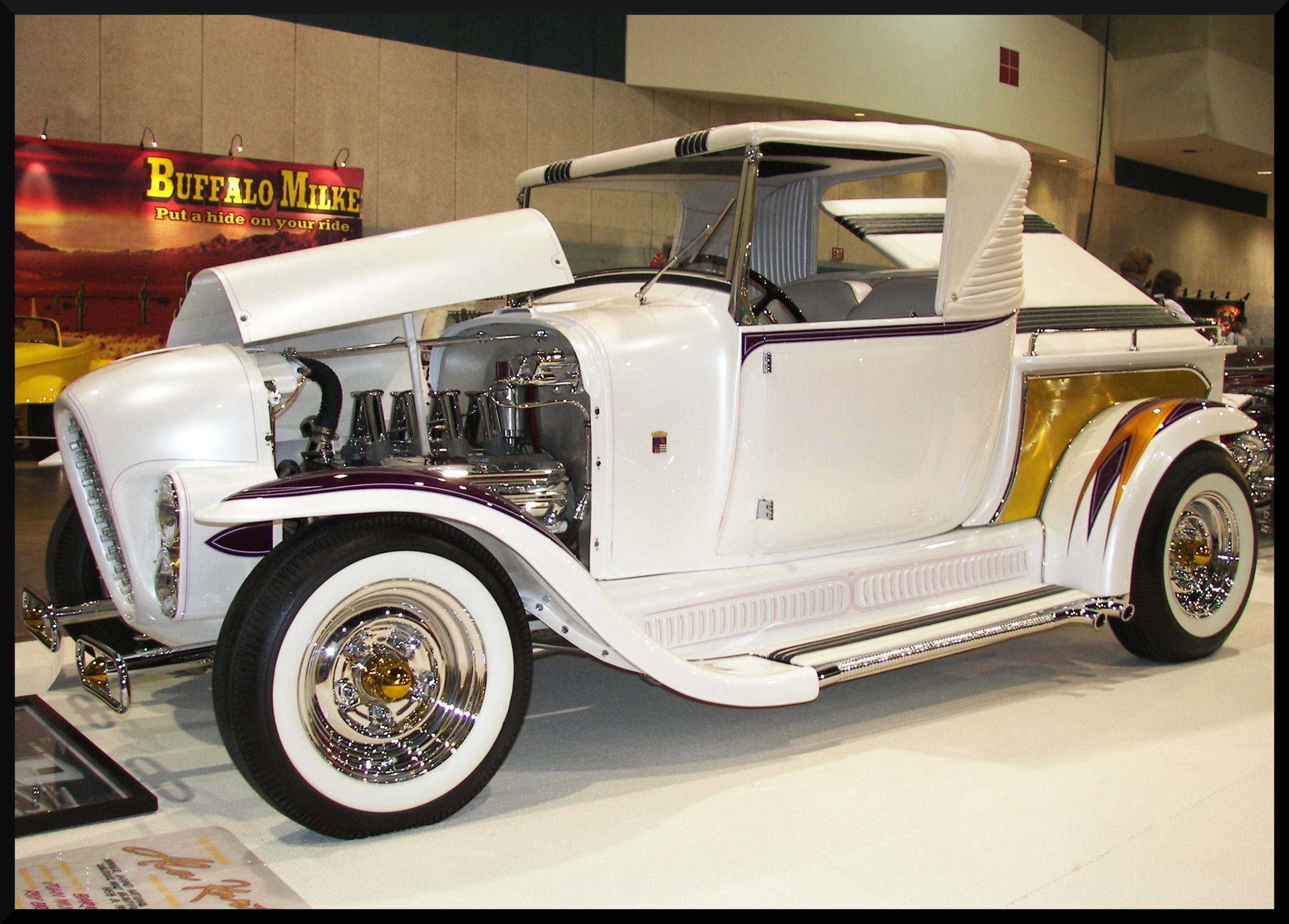 After Sam left the workshop, the style of the cars she built changed a lot very quickly. A great example of this is the 1929 Ford Model A Pickup called the Ala Kart. The history of the car began with the fact that in the process of its construction, Barris's workshop was engulfed by the famous fire on the customization scene on December 7, 1957, which consumed fourteen cars. Ala Kart was one of the few survivors, and in the end it appeared to the public in exactly this form: extremely, I would say, extensively customized, including a lot of white, gold, purple - in general, the first step towards the decadence of George Barris. The owner of the car, Richard Peters, once stated the following: "I was afraid to ride it. The wings were painted even from the bottom. One stone could ruin everything." Unlike Bob Hirohata's Mercury, the Ala Kart spent a minimal amount of time on the road. However, as a show rod, Ala Kart has gained a lot of fame. In particular, this particular car is one of only three that have been awarded the prestigious America's Most Beautiful Roadster award twice... and it was this machine that George Barris was able to sell to AMT in order to make copies on a 1/25 scale, which allowed George to get into the business of producing scale models at the same time.
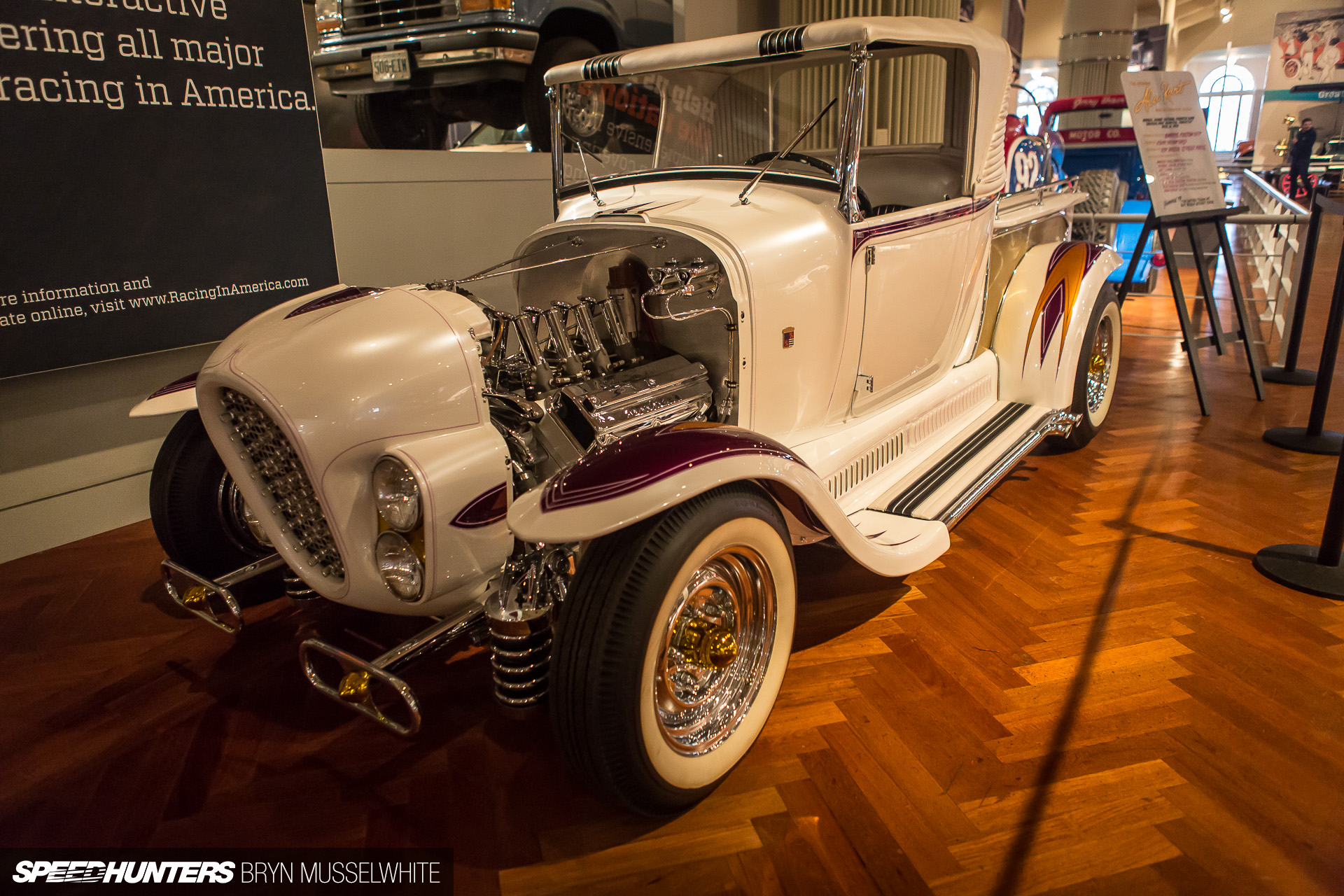 After Sam left the workshop, the style of the cars she built changed a lot very quickly. A great example of this is the 1929 Ford Model A Pickup called the Ala Kart. The history of the car began with the fact that in the process of its construction, Barris's workshop was engulfed by the famous fire on the customization scene on December 7, 1957, which consumed fourteen cars. Ala Kart was one of the few survivors, and in the end it appeared to the public in exactly this form: extremely, I would say, extensively customized, including a lot of white, gold, purple - in general, the first step towards the decadence of George Barris. The owner of the car, Richard Peters, once stated the following: "I was afraid to ride it. The wings were painted even from the bottom. One stone could ruin everything." Unlike Bob Hirohata's Mercury, the Ala Kart spent a minimal amount of time on the road. However, as a show rod, Ala Kart has gained a lot of fame. In particular, this particular car is one of only three that have been awarded the prestigious America's Most Beautiful Roadster award twice... and it was this machine that George Barris was able to sell to AMT in order to make copies on a 1/25 scale, which allowed George to get into the business of producing scale models at the same time.
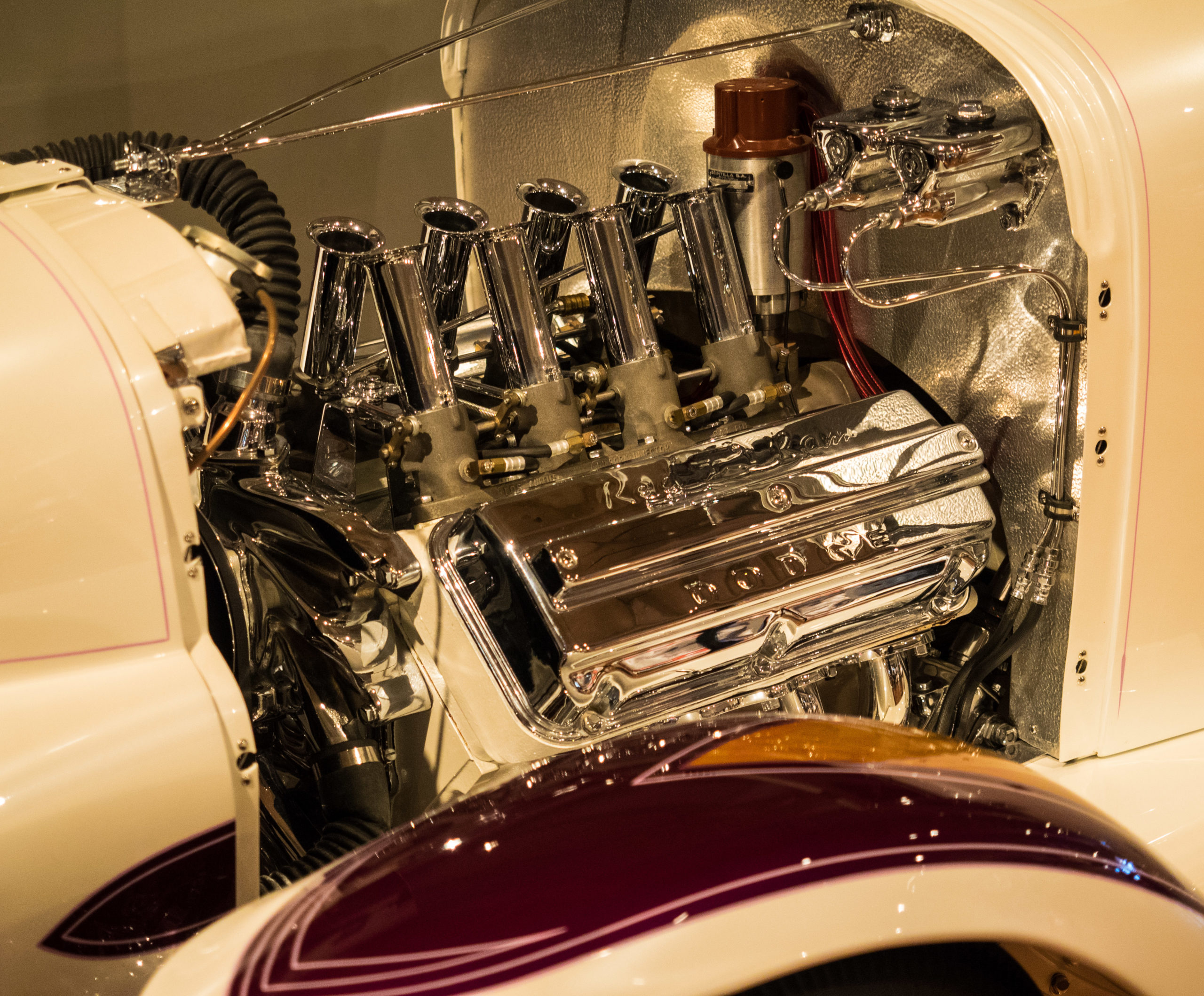 After Sam left the workshop, the style of the cars she built changed a lot very quickly. A great example of this is the 1929 Ford Model A Pickup called the Ala Kart. The history of the car began with the fact that in the process of its construction, Barris's workshop was engulfed by the famous fire on the customization scene on December 7, 1957, which consumed fourteen cars. Ala Kart was one of the few survivors, and in the end it appeared to the public in exactly this form: extremely, I would say, extensively customized, including a lot of white, gold, purple - in general, the first step towards the decadence of George Barris. The owner of the car, Richard Peters, once stated the following: "I was afraid to ride it. The wings were painted even from the bottom. One stone could ruin everything." Unlike Bob Hirohata's Mercury, the Ala Kart spent a minimal amount of time on the road. However, as a show rod, Ala Kart has gained a lot of fame. In particular, this particular car is one of only three that have been awarded the prestigious America's Most Beautiful Roadster award twice... and it was this machine that George Barris was able to sell to AMT in order to make copies on a 1/25 scale, which allowed George to get into the business of producing scale models at the same time.
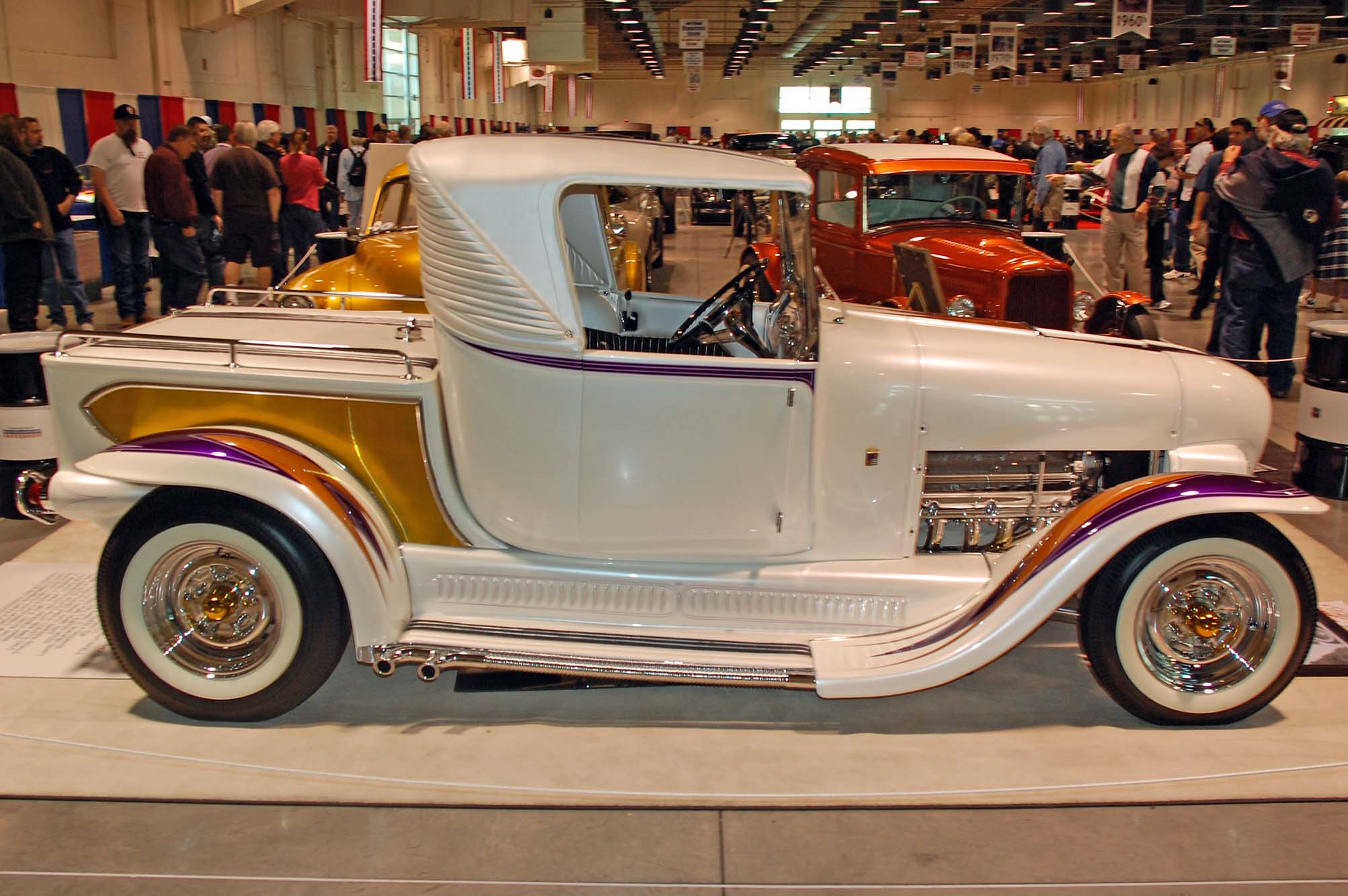 After Sam left the workshop, the style of the cars she built changed a lot very quickly. A great example of this is the 1929 Ford Model A Pickup called the Ala Kart. The history of the car began with the fact that in the process of its construction, Barris's workshop was engulfed by the famous fire on the customization scene on December 7, 1957, which consumed fourteen cars. Ala Kart was one of the few survivors, and in the end it appeared to the public in exactly this form: extremely, I would say, extensively customized, including a lot of white, gold, purple - in general, the first step towards the decadence of George Barris. The owner of the car, Richard Peters, once stated the following: "I was afraid to ride it. The wings were painted even from the bottom. One stone could ruin everything." Unlike Bob Hirohata's Mercury, the Ala Kart spent a minimal amount of time on the road. However, as a show rod, Ala Kart has gained a lot of fame. In particular, this particular car is one of only three that have been awarded the prestigious America's Most Beautiful Roadster award twice... and it was this machine that George Barris was able to sell to AMT in order to make copies on a 1/25 scale, which allowed George to get into the business of producing scale models at the same time.
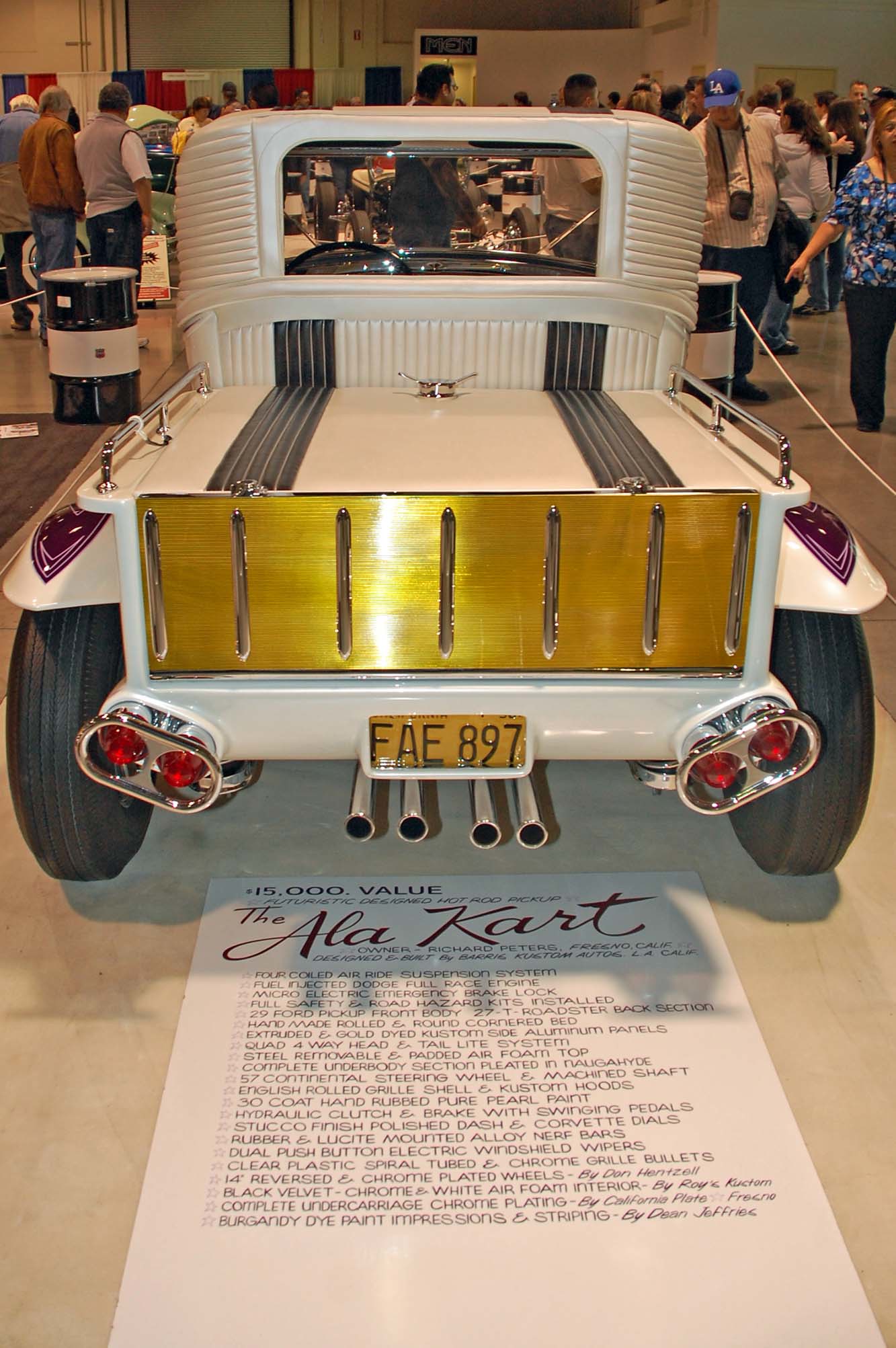 After Sam left the workshop, the style of the cars she built changed a lot very quickly. A great example of this is the 1929 Ford Model A Pickup called the Ala Kart. The history of the car began with the fact that in the process of its construction, Barris's workshop was engulfed by the famous fire on the customization scene on December 7, 1957, which consumed fourteen cars. Ala Kart was one of the few survivors, and in the end it appeared to the public in exactly this form: extremely, I would say, extensively customized, including a lot of white, gold, purple - in general, the first step towards the decadence of George Barris. The owner of the car, Richard Peters, once stated the following: "I was afraid to ride it. The wings were painted even from the bottom. One stone could ruin everything." Unlike Bob Hirohata's Mercury, the Ala Kart spent a minimal amount of time on the road. However, as a show rod, Ala Kart has gained a lot of fame. In particular, this particular car is one of only three that have been awarded the prestigious America's Most Beautiful Roadster award twice... and it was this machine that George Barris was able to sell to AMT in order to make copies on a 1/25 scale, which allowed George to get into the business of producing scale models at the same time.
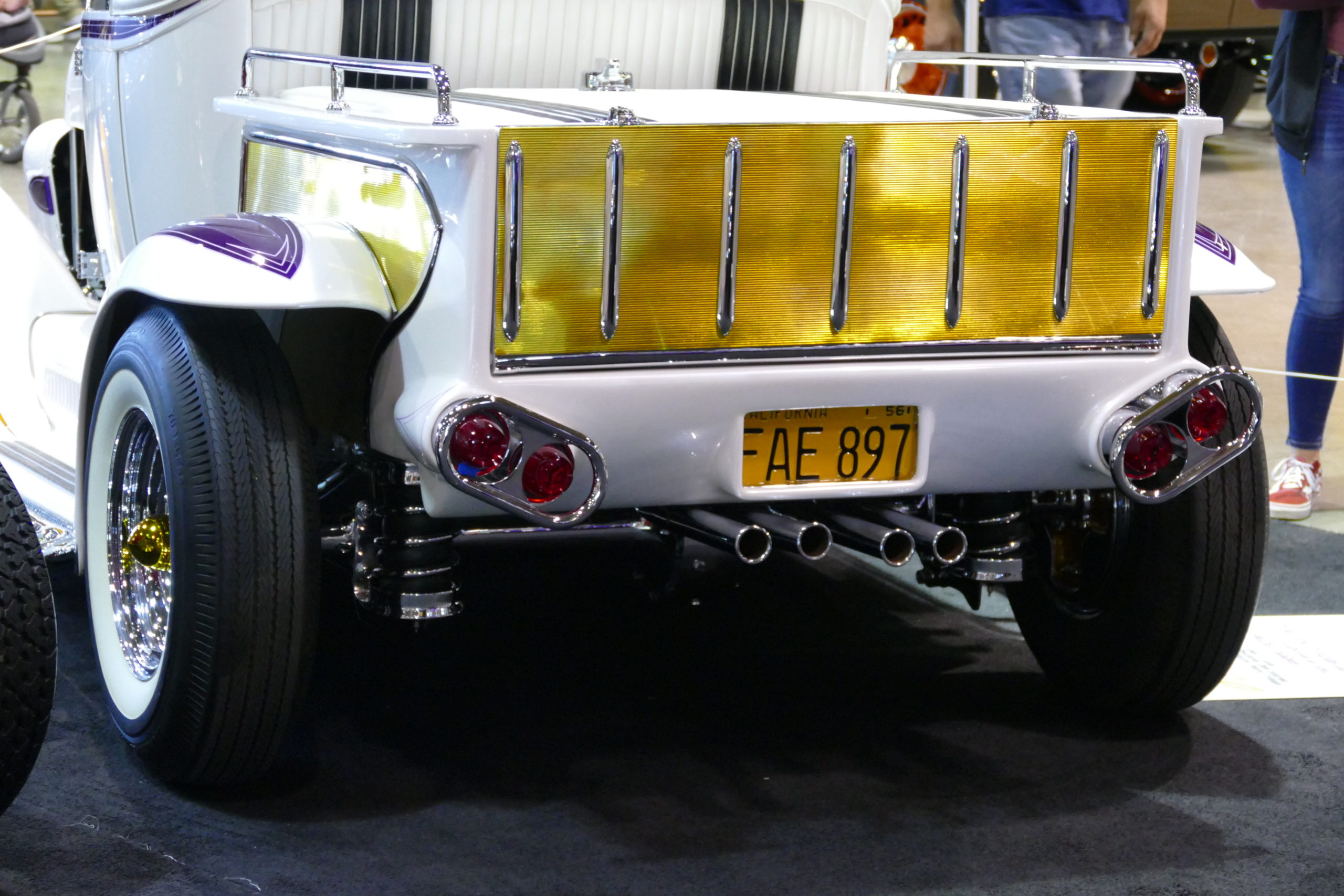 After Sam left the workshop, the style of the cars she built changed a lot very quickly. A great example of this is the 1929 Ford Model A Pickup called the Ala Kart. The history of the car began with the fact that in the process of its construction, Barris's workshop was engulfed by the famous fire on the customization scene on December 7, 1957, which consumed fourteen cars. Ala Kart was one of the few survivors, and in the end it appeared to the public in exactly this form: extremely, I would say, extensively customized, including a lot of white, gold, purple - in general, the first step towards the decadence of George Barris. The owner of the car, Richard Peters, once stated the following: "I was afraid to ride it. The wings were painted even from the bottom. One stone could ruin everything." Unlike Bob Hirohata's Mercury, the Ala Kart spent a minimal amount of time on the road. However, as a show rod, Ala Kart has gained a lot of fame. In particular, this particular car is one of only three that have been awarded the prestigious America's Most Beautiful Roadster award twice... and it was this machine that George Barris was able to sell to AMT in order to make copies on a 1/25 scale, which allowed George to get into the business of producing scale models at the same time.
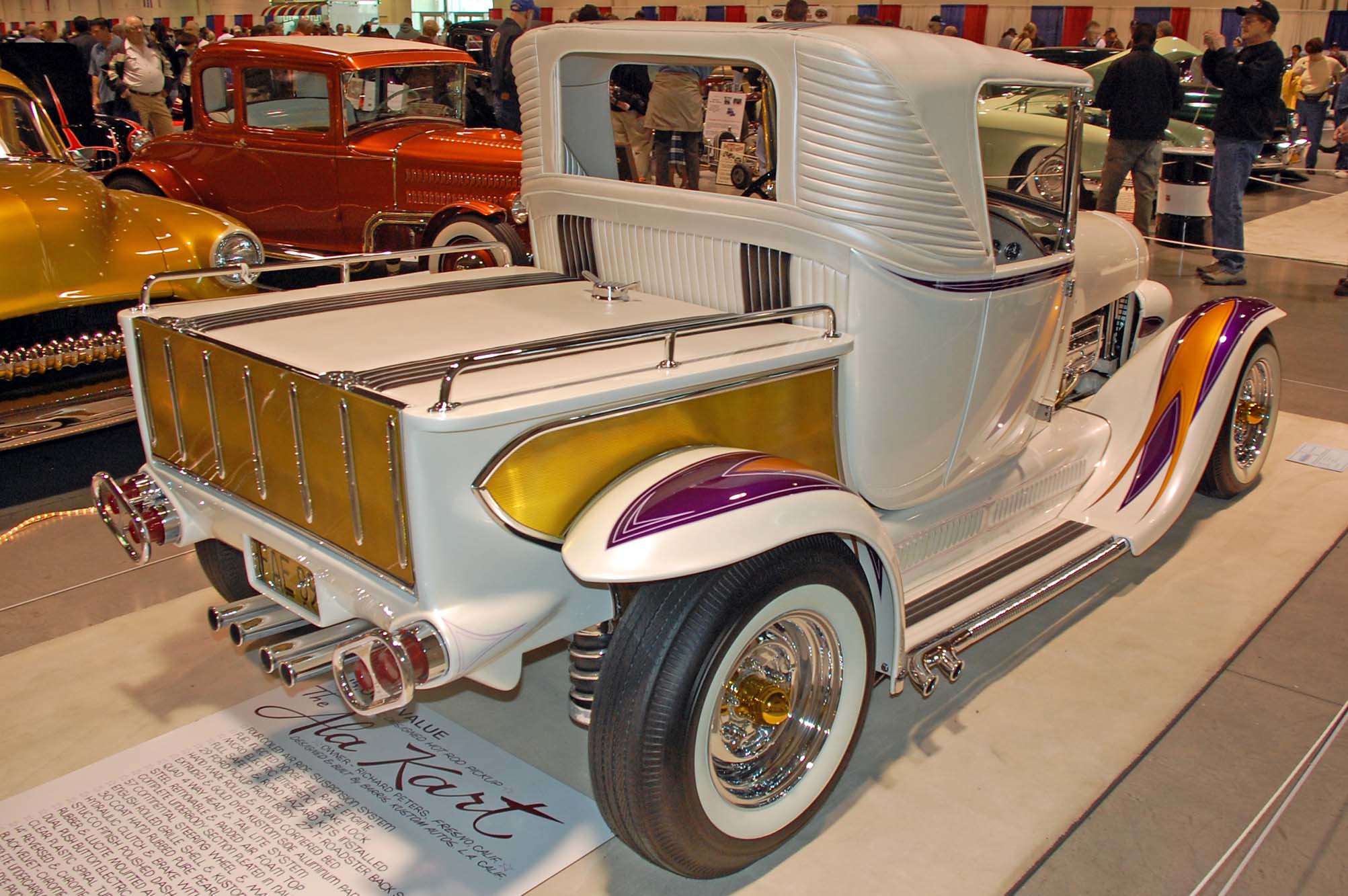 After Sam left the workshop, the style of the cars she built changed a lot very quickly. A great example of this is the 1929 Ford Model A Pickup called the Ala Kart. The history of the car began with the fact that in the process of its construction, Barris's workshop was engulfed by the famous fire on the customization scene on December 7, 1957, which consumed fourteen cars. Ala Kart was one of the few survivors, and in the end it appeared to the public in exactly this form: extremely, I would say, extensively customized, including a lot of white, gold, purple - in general, the first step towards the decadence of George Barris. The owner of the car, Richard Peters, once stated the following: "I was afraid to ride it. The wings were painted even from the bottom. One stone could ruin everything." Unlike Bob Hirohata's Mercury, the Ala Kart spent a minimal amount of time on the road. However, as a show rod, Ala Kart has gained a lot of fame. In particular, this particular car is one of only three that have been awarded the prestigious America's Most Beautiful Roadster award twice... and it was this machine that George Barris was able to sell to AMT in order to make copies on a 1/25 scale, which allowed George to get into the business of producing scale models at the same time.
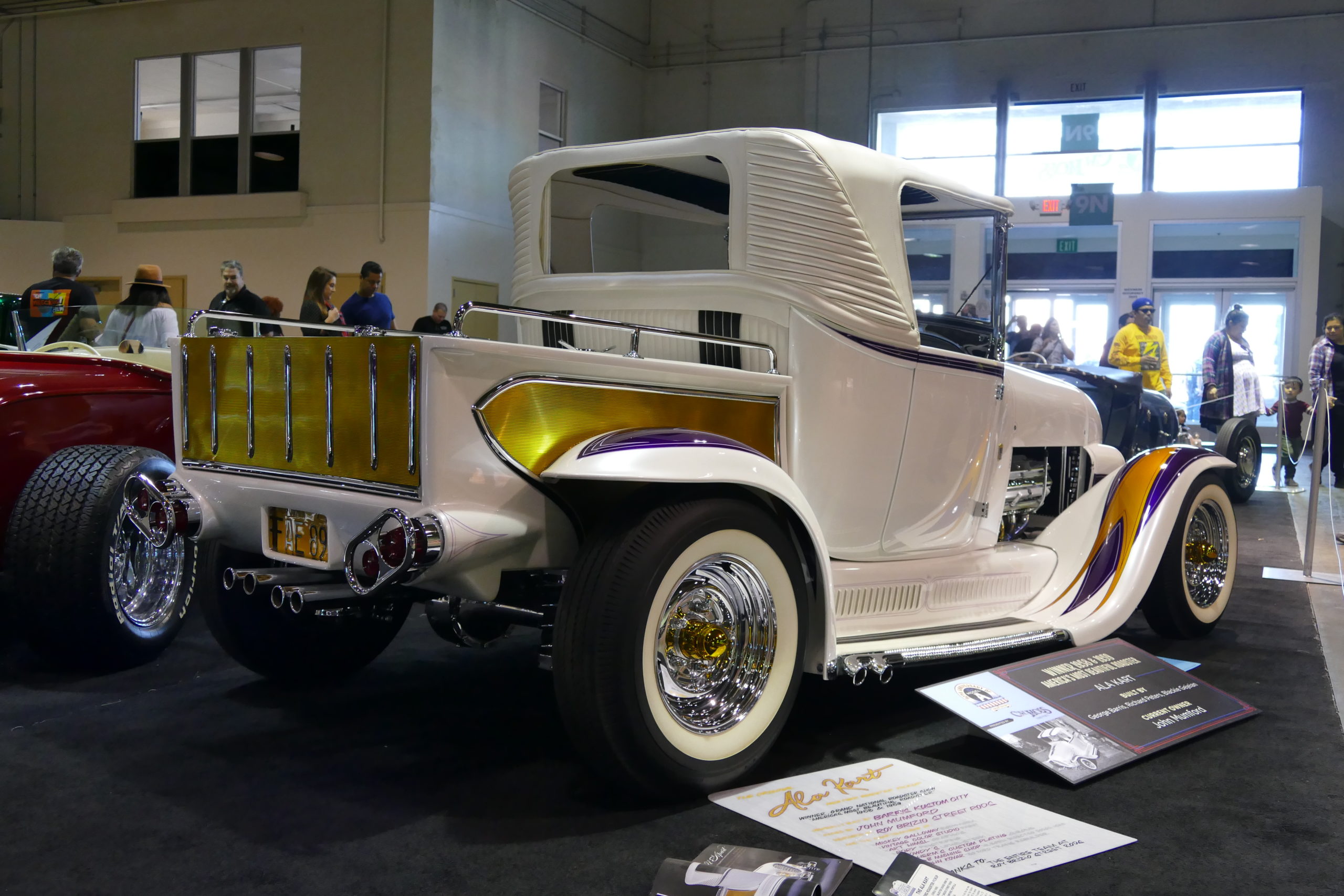 After Sam left the workshop, the style of the cars she built changed a lot very quickly. A great example of this is the 1929 Ford Model A Pickup called the Ala Kart. The history of the car began with the fact that in the process of its construction, Barris's workshop was engulfed by the famous fire on the customization scene on December 7, 1957, which consumed fourteen cars. Ala Kart was one of the few survivors, and in the end it appeared to the public in exactly this form: extremely, I would say, extensively customized, including a lot of white, gold, purple - in general, the first step towards the decadence of George Barris. The owner of the car, Richard Peters, once stated the following: "I was afraid to ride it. The wings were painted even from the bottom. One stone could ruin everything." Unlike Bob Hirohata's Mercury, the Ala Kart spent a minimal amount of time on the road. However, as a show rod, Ala Kart has gained a lot of fame. In particular, this particular car is one of only three that have been awarded the prestigious America's Most Beautiful Roadster award twice... and it was this machine that George Barris was able to sell to AMT in order to make copies on a 1/25 scale, which allowed George to get into the business of producing scale models at the same time.
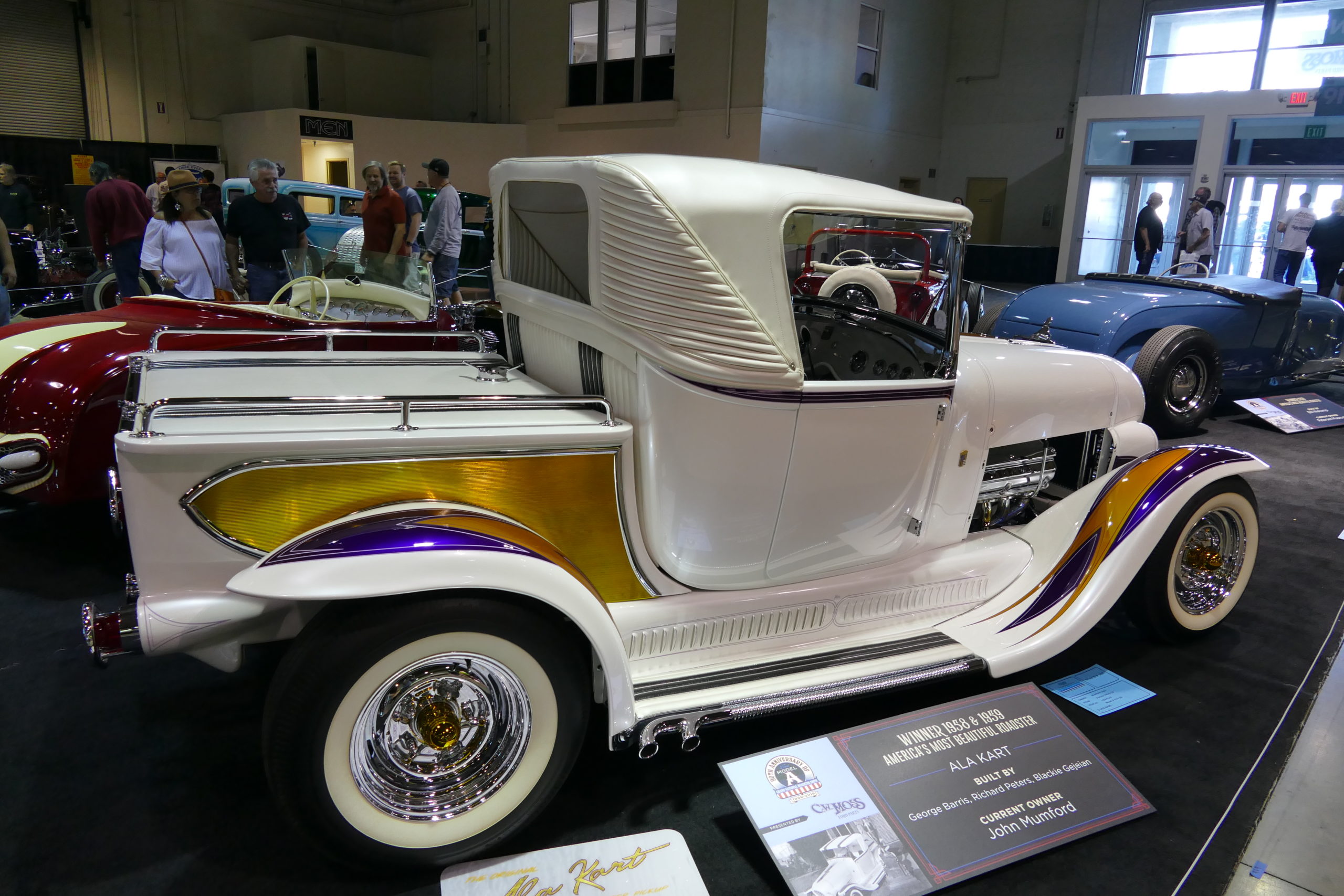 After Sam left the workshop, the style of the cars she built changed a lot very quickly. A great example of this is the 1929 Ford Model A Pickup called the Ala Kart. The history of the car began with the fact that in the process of its construction, Barris's workshop was engulfed by the famous fire on the customization scene on December 7, 1957, which consumed fourteen cars. Ala Kart was one of the few survivors, and in the end it appeared to the public in exactly this form: extremely, I would say, extensively customized, including a lot of white, gold, purple - in general, the first step towards the decadence of George Barris. The owner of the car, Richard Peters, once stated the following: "I was afraid to ride it. The wings were painted even from the bottom. One stone could ruin everything." Unlike Bob Hirohata's Mercury, the Ala Kart spent a minimal amount of time on the road. However, as a show rod, Ala Kart has gained a lot of fame. In particular, this particular car is one of only three that have been awarded the prestigious America's Most Beautiful Roadster award twice... and it was this machine that George Barris was able to sell to AMT in order to make copies on a 1/25 scale, which allowed George to get into the business of producing scale models at the same time.
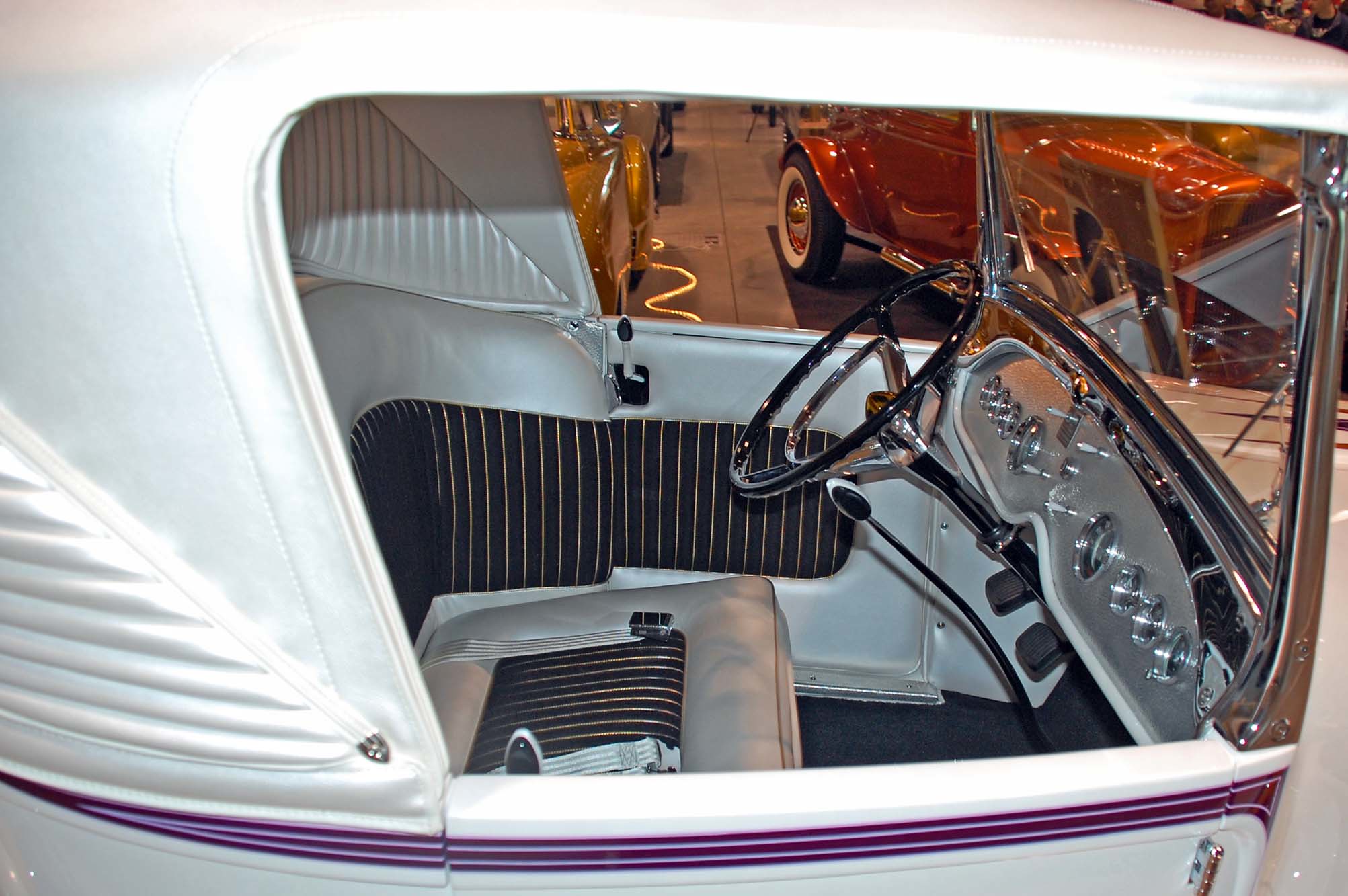 After Sam left the workshop, the style of the cars she built changed a lot very quickly. A great example of this is the 1929 Ford Model A Pickup called the Ala Kart. The history of the car began with the fact that in the process of its construction, Barris's workshop was engulfed by the famous fire on the customization scene on December 7, 1957, which consumed fourteen cars. Ala Kart was one of the few survivors, and in the end it appeared to the public in exactly this form: extremely, I would say, extensively customized, including a lot of white, gold, purple - in general, the first step towards the decadence of George Barris. The owner of the car, Richard Peters, once stated the following: "I was afraid to ride it. The wings were painted even from the bottom. One stone could ruin everything." Unlike Bob Hirohata's Mercury, the Ala Kart spent a minimal amount of time on the road. However, as a show rod, Ala Kart has gained a lot of fame. In particular, this particular car is one of only three that have been awarded the prestigious America's Most Beautiful Roadster award twice... and it was this machine that George Barris was able to sell to AMT in order to make copies on a 1/25 scale, which allowed George to get into the business of producing scale models at the same time.
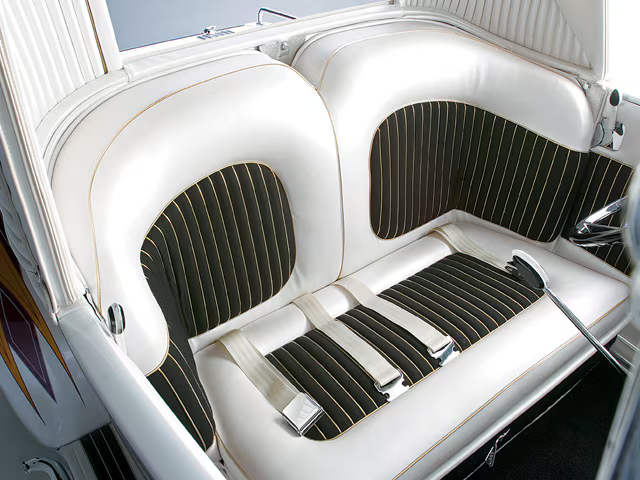 After Sam left the workshop, the style of the cars she built changed a lot very quickly. A great example of this is the 1929 Ford Model A Pickup called the Ala Kart. The history of the car began with the fact that in the process of its construction, Barris's workshop was engulfed by the famous fire on the customization scene on December 7, 1957, which consumed fourteen cars. Ala Kart was one of the few survivors, and in the end it appeared to the public in exactly this form: extremely, I would say, extensively customized, including a lot of white, gold, purple - in general, the first step towards the decadence of George Barris. The owner of the car, Richard Peters, once stated the following: "I was afraid to ride it. The wings were painted even from the bottom. One stone could ruin everything." Unlike Bob Hirohata's Mercury, the Ala Kart spent a minimal amount of time on the road. However, as a show rod, Ala Kart has gained a lot of fame. In particular, this particular car is one of only three that have been awarded the prestigious America's Most Beautiful Roadster award twice... and it was this machine that George Barris was able to sell to AMT in order to make copies on a 1/25 scale, which allowed George to get into the business of producing scale models at the same time.
 After Sam left the workshop, the style of the cars she built changed a lot very quickly. A great example of this is the 1929 Ford Model A Pickup called the Ala Kart. The history of the car began with the fact that in the process of its construction, Barris's workshop was engulfed by the famous fire on the customization scene on December 7, 1957, which consumed fourteen cars. Ala Kart was one of the few survivors, and in the end it appeared to the public in exactly this form: extremely, I would say, extensively customized, including a lot of white, gold, purple - in general, the first step towards the decadence of George Barris. The owner of the car, Richard Peters, once stated the following: "I was afraid to ride it. The wings were painted even from the bottom. One stone could ruin everything." Unlike Bob Hirohata's Mercury, the Ala Kart spent a minimal amount of time on the road. However, as a show rod, Ala Kart has gained a lot of fame. In particular, this particular car is one of only three that have been awarded the prestigious America's Most Beautiful Roadster award twice... and it was this machine that George Barris was able to sell to AMT in order to make copies on a 1/25 scale, which allowed George to get into the business of producing scale models at the same time.
 After Sam left the workshop, the style of the cars she built changed a lot very quickly. A great example of this is the 1929 Ford Model A Pickup called the Ala Kart. The history of the car began with the fact that in the process of its construction, Barris's workshop was engulfed by the famous fire on the customization scene on December 7, 1957, which consumed fourteen cars. Ala Kart was one of the few survivors, and in the end it appeared to the public in exactly this form: extremely, I would say, extensively customized, including a lot of white, gold, purple - in general, the first step towards the decadence of George Barris. The owner of the car, Richard Peters, once stated the following: "I was afraid to ride it. The wings were painted even from the bottom. One stone could ruin everything." Unlike Bob Hirohata's Mercury, the Ala Kart spent a minimal amount of time on the road. However, as a show rod, Ala Kart has gained a lot of fame. In particular, this particular car is one of only three that have been awarded the prestigious America's Most Beautiful Roadster award twice... and it was this machine that George Barris was able to sell to AMT in order to make copies on a 1/25 scale, which allowed George to get into the business of producing scale models at the same time.
 After Sam left the workshop, the style of the cars she built changed a lot very quickly. A great example of this is the 1929 Ford Model A Pickup called the Ala Kart. The history of the car began with the fact that in the process of its construction, Barris's workshop was engulfed by the famous fire on the customization scene on December 7, 1957, which consumed fourteen cars. Ala Kart was one of the few survivors, and in the end it appeared to the public in exactly this form: extremely, I would say, extensively customized, including a lot of white, gold, purple - in general, the first step towards the decadence of George Barris. The owner of the car, Richard Peters, once stated the following: "I was afraid to ride it. The wings were painted even from the bottom. One stone could ruin everything." Unlike Bob Hirohata's Mercury, the Ala Kart spent a minimal amount of time on the road. However, as a show rod, Ala Kart has gained a lot of fame. In particular, this particular car is one of only three that have been awarded the prestigious America's Most Beautiful Roadster award twice... and it was this machine that George Barris was able to sell to AMT in order to make copies on a 1/25 scale, which allowed George to get into the business of producing scale models at the same time.
 After Sam left the workshop, the style of the cars she built changed a lot very quickly. A great example of this is the 1929 Ford Model A Pickup called the Ala Kart. The history of the car began with the fact that in the process of its construction, Barris's workshop was engulfed by the famous fire on the customization scene on December 7, 1957, which consumed fourteen cars. Ala Kart was one of the few survivors, and in the end it appeared to the public in exactly this form: extremely, I would say, extensively customized, including a lot of white, gold, purple - in general, the first step towards the decadence of George Barris. The owner of the car, Richard Peters, once stated the following: "I was afraid to ride it. The wings were painted even from the bottom. One stone could ruin everything." Unlike Bob Hirohata's Mercury, the Ala Kart spent a minimal amount of time on the road. However, as a show rod, Ala Kart has gained a lot of fame. In particular, this particular car is one of only three that have been awarded the prestigious America's Most Beautiful Roadster award twice... and it was this machine that George Barris was able to sell to AMT in order to make copies on a 1/25 scale, which allowed George to get into the business of producing scale models at the same time.
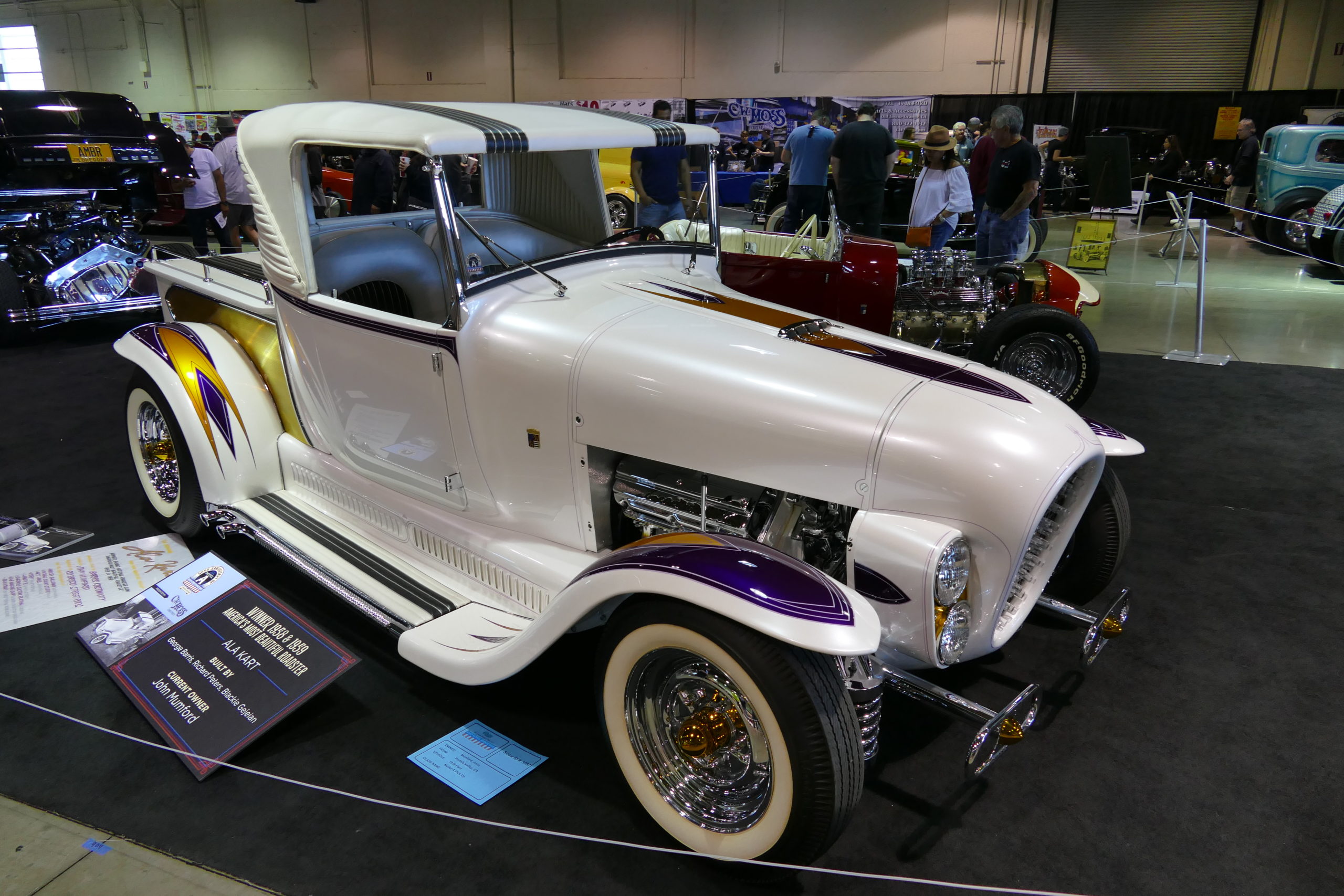 After Sam left the workshop, the style of the cars she built changed a lot very quickly. A great example of this is the 1929 Ford Model A Pickup called the Ala Kart. The history of the car began with the fact that in the process of its construction, Barris's workshop was engulfed by the famous fire on the customization scene on December 7, 1957, which consumed fourteen cars. Ala Kart was one of the few survivors, and in the end it appeared to the public in exactly this form: extremely, I would say, extensively customized, including a lot of white, gold, purple - in general, the first step towards the decadence of George Barris. The owner of the car, Richard Peters, once stated the following: "I was afraid to ride it. The wings were painted even from the bottom. One stone could ruin everything." Unlike Bob Hirohata's Mercury, the Ala Kart spent a minimal amount of time on the road. However, as a show rod, Ala Kart has gained a lot of fame. In particular, this particular car is one of only three that have been awarded the prestigious America's Most Beautiful Roadster award twice... and it was this machine that George Barris was able to sell to AMT in order to make copies on a 1/25 scale, which allowed George to get into the business of producing scale models at the same time.
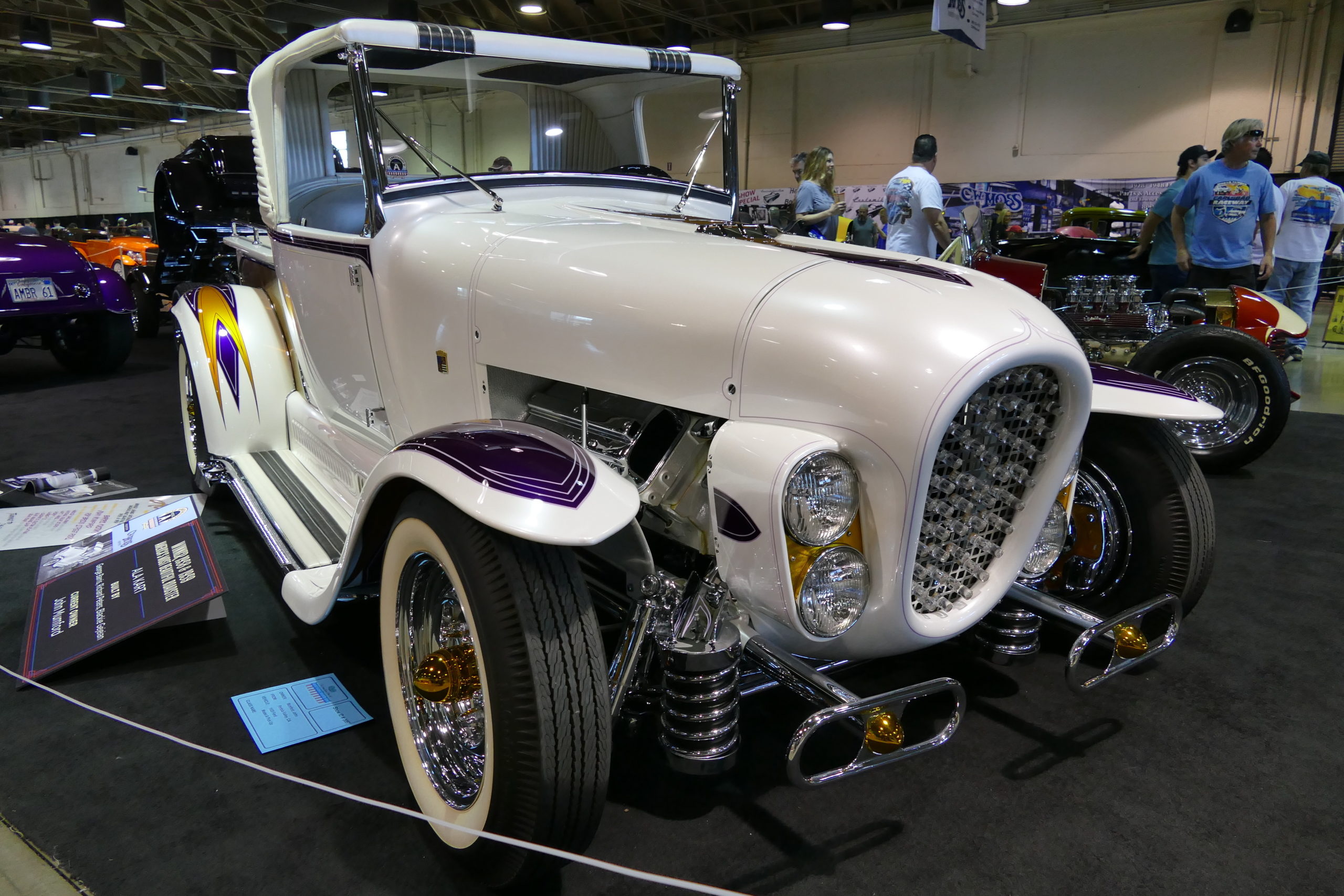 After Sam left the workshop, the style of the cars she built changed a lot very quickly. A great example of this is the 1929 Ford Model A Pickup called the Ala Kart. The history of the car began with the fact that in the process of its construction, Barris's workshop was engulfed by the famous fire on the customization scene on December 7, 1957, which consumed fourteen cars. Ala Kart was one of the few survivors, and in the end it appeared to the public in exactly this form: extremely, I would say, extensively customized, including a lot of white, gold, purple - in general, the first step towards the decadence of George Barris. The owner of the car, Richard Peters, once stated the following: "I was afraid to ride it. The wings were painted even from the bottom. One stone could ruin everything." Unlike Bob Hirohata's Mercury, the Ala Kart spent a minimal amount of time on the road. However, as a show rod, Ala Kart has gained a lot of fame. In particular, this particular car is one of only three that have been awarded the prestigious America's Most Beautiful Roadster award twice... and it was this machine that George Barris was able to sell to AMT in order to make copies on a 1/25 scale, which allowed George to get into the business of producing scale models at the same time.
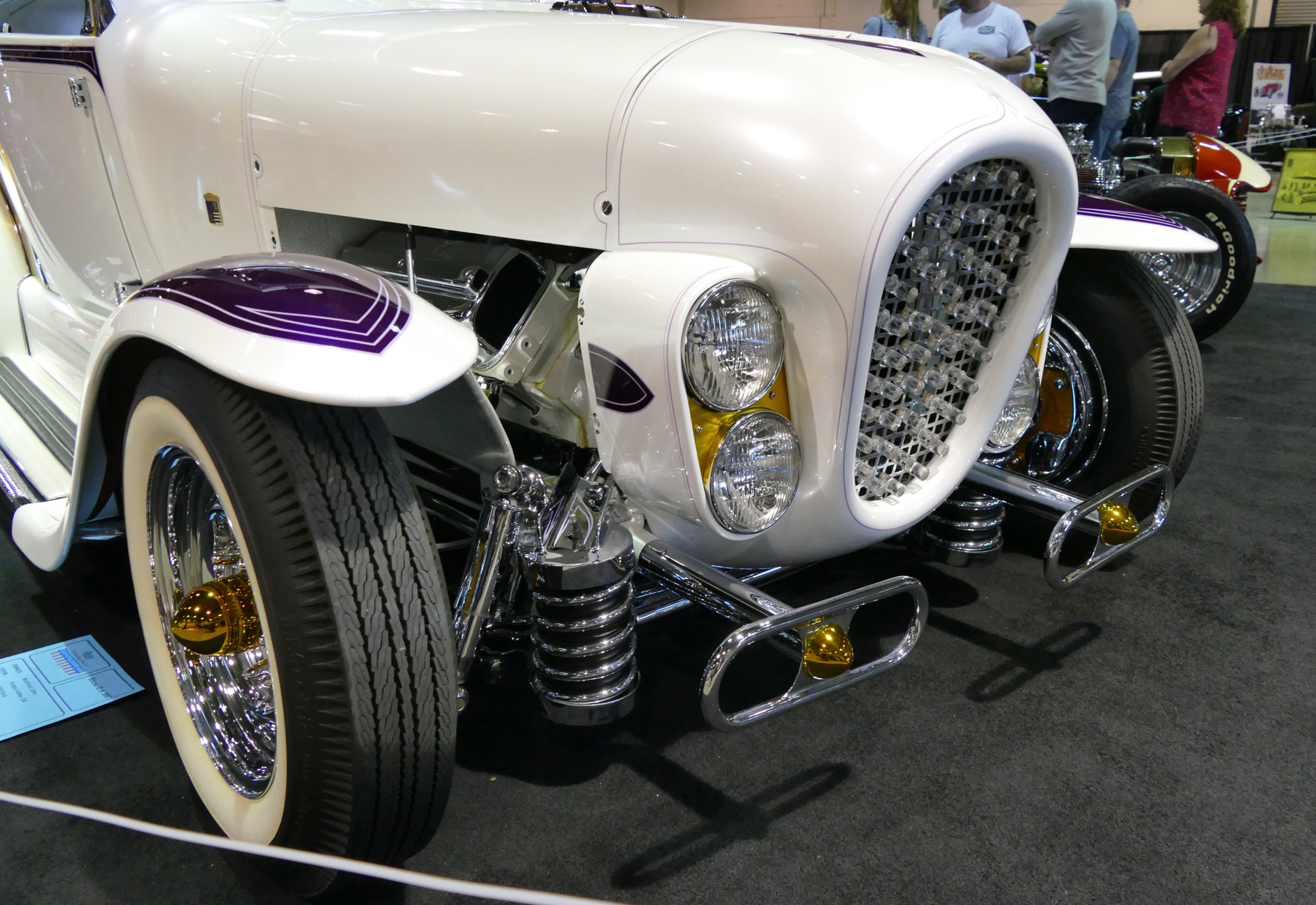 After Sam left the workshop, the style of the cars she built changed a lot very quickly. A great example of this is the 1929 Ford Model A Pickup called the Ala Kart. The history of the car began with the fact that in the process of its construction, Barris's workshop was engulfed by the famous fire on the customization scene on December 7, 1957, which consumed fourteen cars. Ala Kart was one of the few survivors, and in the end it appeared to the public in exactly this form: extremely, I would say, extensively customized, including a lot of white, gold, purple - in general, the first step towards the decadence of George Barris. The owner of the car, Richard Peters, once stated the following: "I was afraid to ride it. The wings were painted even from the bottom. One stone could ruin everything." Unlike Bob Hirohata's Mercury, the Ala Kart spent a minimal amount of time on the road. However, as a show rod, Ala Kart has gained a lot of fame. In particular, this particular car is one of only three that have been awarded the prestigious America's Most Beautiful Roadster award twice... and it was this machine that George Barris was able to sell to AMT in order to make copies on a 1/25 scale, which allowed George to get into the business of producing scale models at the same time.
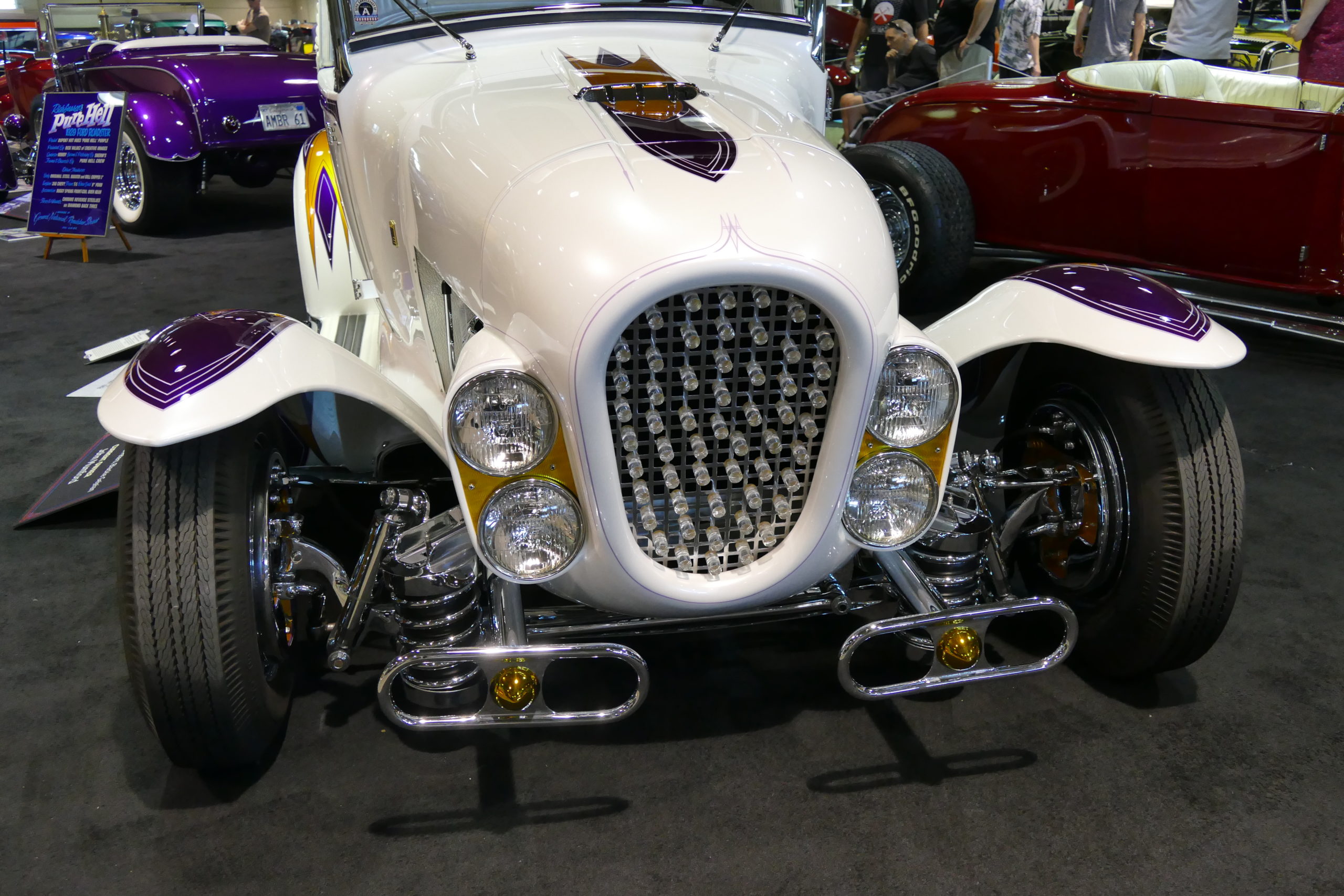 After Sam left the workshop, the style of the cars she built changed a lot very quickly. A great example of this is the 1929 Ford Model A Pickup called the Ala Kart. The history of the car began with the fact that in the process of its construction, Barris's workshop was engulfed by the famous fire on the customization scene on December 7, 1957, which consumed fourteen cars. Ala Kart was one of the few survivors, and in the end it appeared to the public in exactly this form: extremely, I would say, extensively customized, including a lot of white, gold, purple - in general, the first step towards the decadence of George Barris. The owner of the car, Richard Peters, once stated the following: "I was afraid to ride it. The wings were painted even from the bottom. One stone could ruin everything." Unlike Bob Hirohata's Mercury, the Ala Kart spent a minimal amount of time on the road. However, as a show rod, Ala Kart has gained a lot of fame. In particular, this particular car is one of only three that have been awarded the prestigious America's Most Beautiful Roadster award twice... and it was this machine that George Barris was able to sell to AMT in order to make copies on a 1/25 scale, which allowed George to get into the business of producing scale models at the same time.
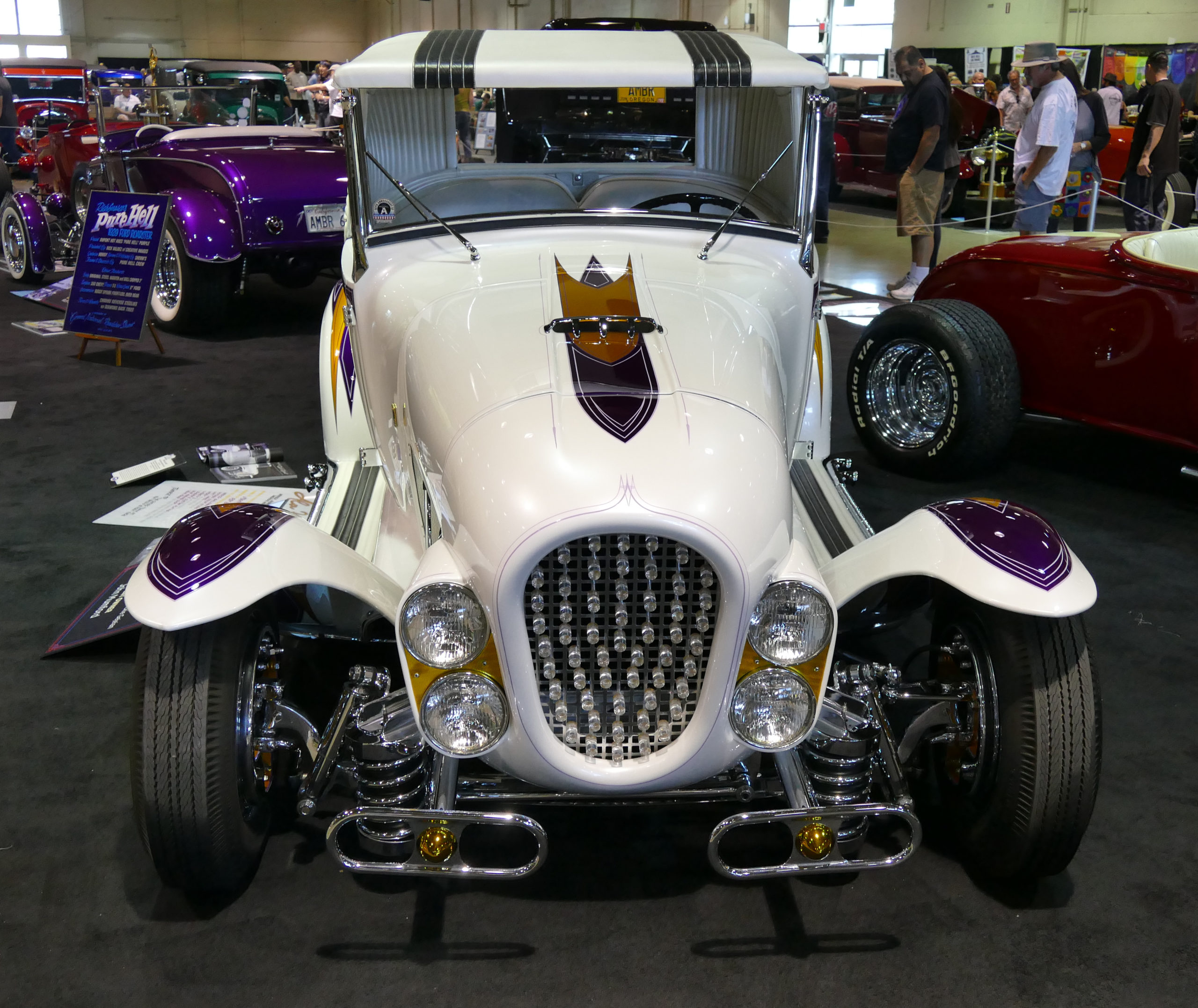 After Sam left the workshop, the style of the cars she built changed a lot very quickly. A great example of this is the 1929 Ford Model A Pickup called the Ala Kart. The history of the car began with the fact that in the process of its construction, Barris's workshop was engulfed by the famous fire on the customization scene on December 7, 1957, which consumed fourteen cars. Ala Kart was one of the few survivors, and in the end it appeared to the public in exactly this form: extremely, I would say, extensively customized, including a lot of white, gold, purple - in general, the first step towards the decadence of George Barris. The owner of the car, Richard Peters, once stated the following: "I was afraid to ride it. The wings were painted even from the bottom. One stone could ruin everything." Unlike Bob Hirohata's Mercury, the Ala Kart spent a minimal amount of time on the road. However, as a show rod, Ala Kart has gained a lot of fame. In particular, this particular car is one of only three that have been awarded the prestigious America's Most Beautiful Roadster award twice... and it was this machine that George Barris was able to sell to AMT in order to make copies on a 1/25 scale, which allowed George to get into the business of producing scale models at the same time.
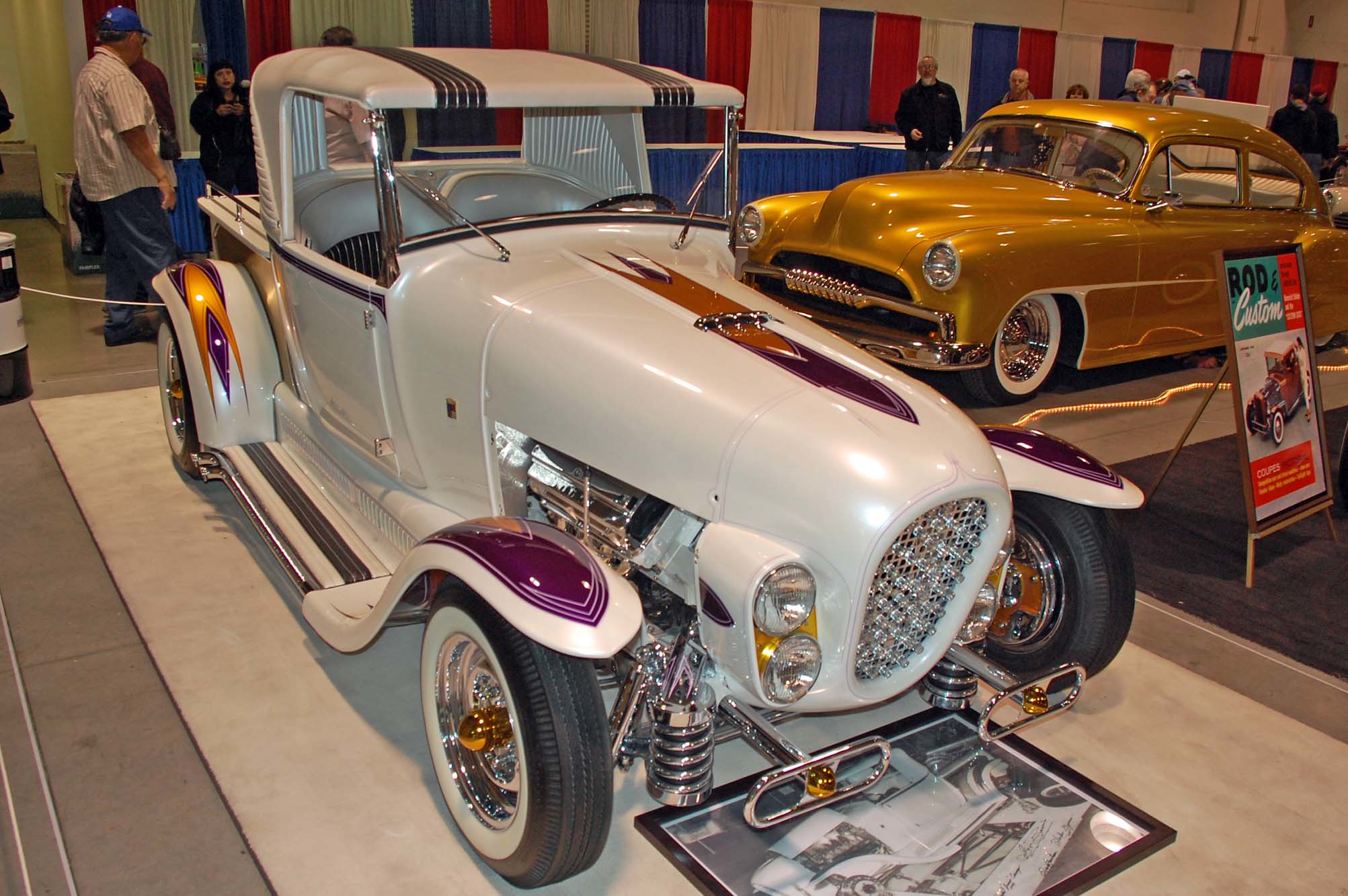 After Sam left the workshop, the style of the cars she built changed a lot very quickly. A great example of this is the 1929 Ford Model A Pickup called the Ala Kart. The history of the car began with the fact that in the process of its construction, Barris's workshop was engulfed by the famous fire on the customization scene on December 7, 1957, which consumed fourteen cars. Ala Kart was one of the few survivors, and in the end it appeared to the public in exactly this form: extremely, I would say, extensively customized, including a lot of white, gold, purple - in general, the first step towards the decadence of George Barris. The owner of the car, Richard Peters, once stated the following: "I was afraid to ride it. The wings were painted even from the bottom. One stone could ruin everything." Unlike Bob Hirohata's Mercury, the Ala Kart spent a minimal amount of time on the road. However, as a show rod, Ala Kart has gained a lot of fame. In particular, this particular car is one of only three that have been awarded the prestigious America's Most Beautiful Roadster award twice... and it was this machine that George Barris was able to sell to AMT in order to make copies on a 1/25 scale, which allowed George to get into the business of producing scale models at the same time.
By and large, after Sam Barris retired, George rolled down the Hollywood path. In addition to building cars for movies, TV series, and life-size stars, Barris took on literally everything that made money-from film production to the production of radio-controlled toy cars. In a sense, the story of Barris after 1960 is a story of slow but sure decline, culminating in an order from the New York Times in the mid-2000s to modify the Toyota Prius, one of the conditions of which was not to chop the body of the car and not to make any changes to the hybrid mechanism of the car…and George Barris accepted all these conditions for some reason, which, of course, caused nervous laughter from the entire custom scene.
George Barris makes a cameo appearance in Henry Blythe Halicki’s Junk Dealer in 1982.
What is the main merit of George Barris?
Nevertheless, even for the Hollywood projects of George Barris, they still respect him on the custom stage, even though they make a face at the sight of many of his “star” cars. And the fact is that no matter how ambiguous Comrade Barris’s late cars are, on the English Wikipedia, only Hirohata Merc is mentioned in the first three paragraphs of non-movie cars, and the other three are Munster Koach and DRAG-U-LA from The Munsters TV series, as well as the Batmobile. And what does this fact tell us? Yes, the fact that with his irrepressible activity and his attempt to push his cars literally everywhere, George Barris did not push the custom culture so much to the masses. It was thanks to George and his crazy cars in TV series, as well as large-scale models, radio-controlled cars, articles in magazines and everything else, that the custom scene attracted a considerable number of people. And a considerable number of future car builders started with the same Ala Kart models in 1/25 scale. And Rob Zombie called his 1998 song Dragula, and it was George Barris’ Munster Koach in the video.
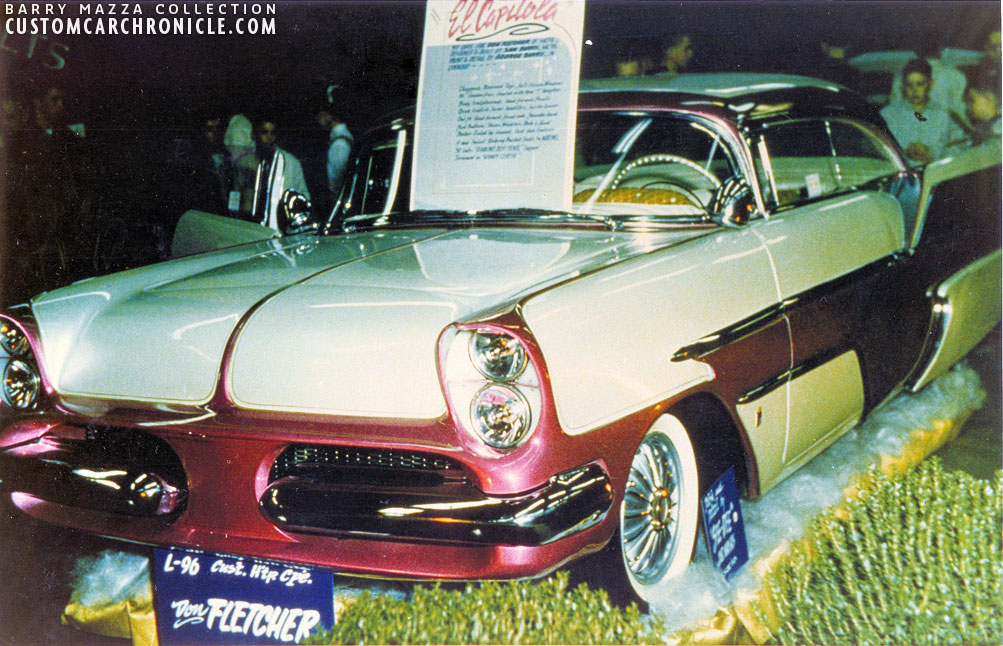 In conclusion, instead of the latest projects of George Barris, it is better to recall the last project of his older brother Sam, on which the latter worked for almost two years: the 1957 Chevrolet 210, completed in 1960 and named El Capitola. Already around 1963, the car was repainted by the Taggart brothers in gold, and the standard steering wheel was replaced with a stylish, cropped steering wheel from a 1960 Dodge Polara. The Taggarts also added a lot of electronic devices to the car, which were very advanced at that time. Surprisingly, when the car was rediscovered in the mid-90s, it was - unlike many other custom cars - in very good condition, representing a real time capsule.
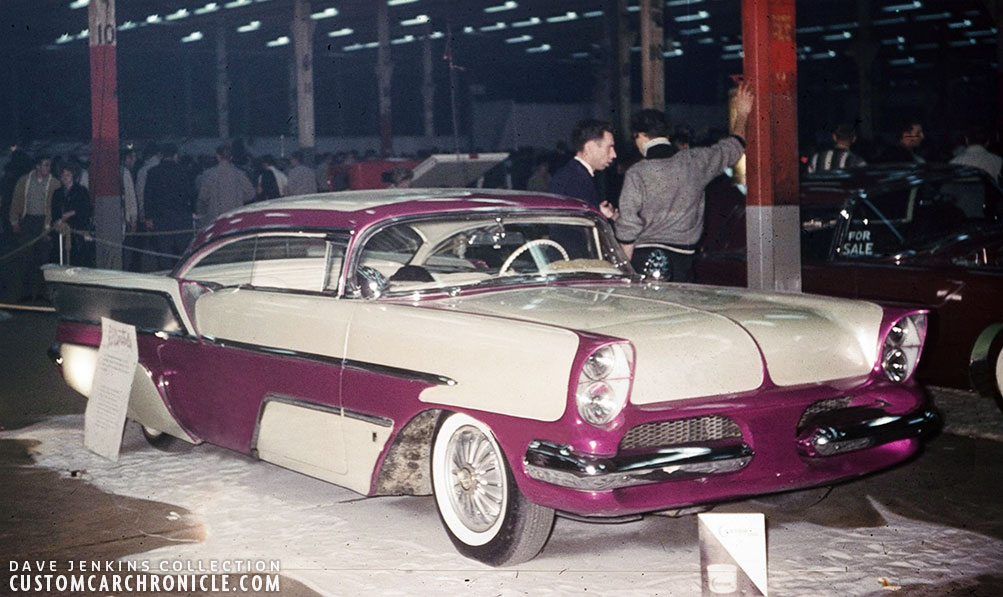 In conclusion, instead of the latest projects of George Barris, it is better to recall the last project of his older brother Sam, on which the latter worked for almost two years: the 1957 Chevrolet 210, completed in 1960 and named El Capitola. Already around 1963, the car was repainted by the Taggart brothers in gold, and the standard steering wheel was replaced with a stylish, cropped steering wheel from a 1960 Dodge Polara. The Taggarts also added a lot of electronic devices to the car, which were very advanced at that time. Surprisingly, when the car was rediscovered in the mid-90s, it was - unlike many other custom cars - in very good condition, representing a real time capsule.
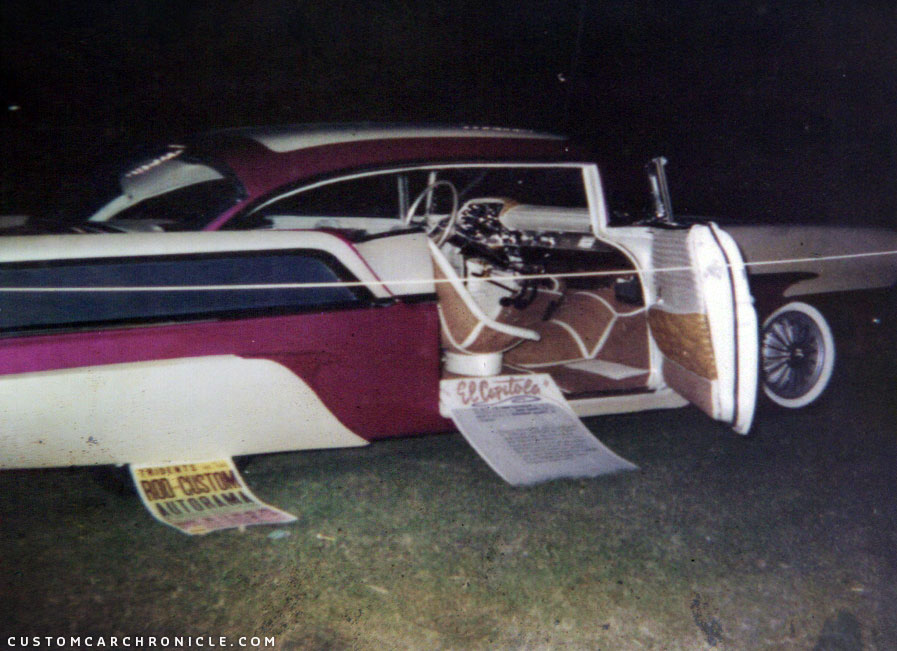 In conclusion, instead of the latest projects of George Barris, it is better to recall the last project of his older brother Sam, on which the latter worked for almost two years: the 1957 Chevrolet 210, completed in 1960 and named El Capitola. Already around 1963, the car was repainted by the Taggart brothers in gold, and the standard steering wheel was replaced with a stylish, cropped steering wheel from a 1960 Dodge Polara. The Taggarts also added a lot of electronic devices to the car, which were very advanced at that time. Surprisingly, when the car was rediscovered in the mid-90s, it was - unlike many other custom cars - in very good condition, representing a real time capsule.
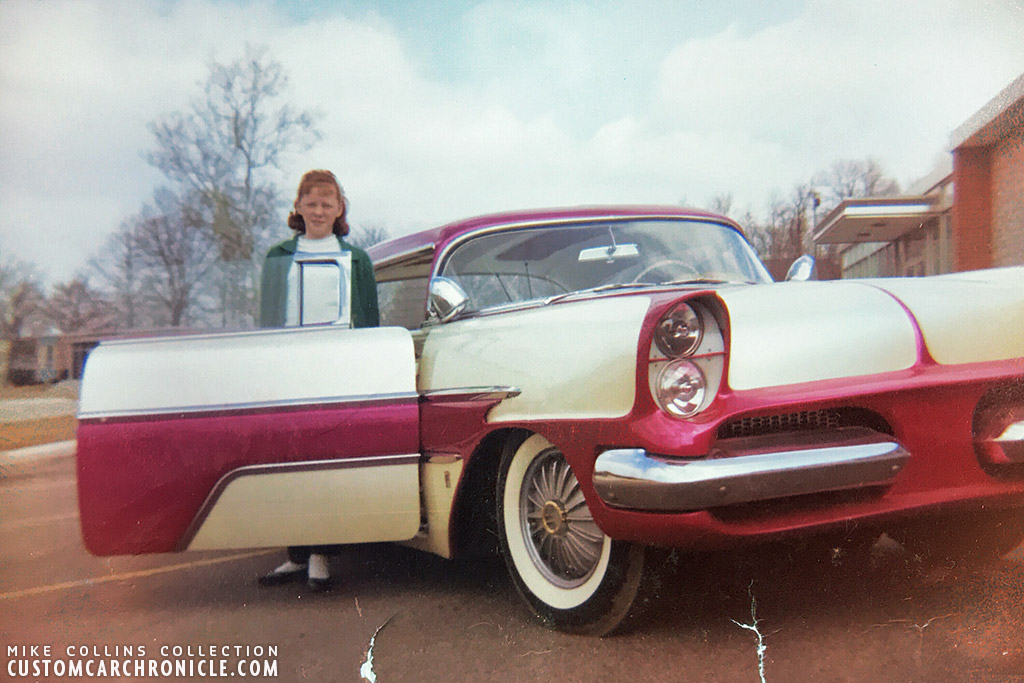 In conclusion, instead of the latest projects of George Barris, it is better to recall the last project of his older brother Sam, on which the latter worked for almost two years: the 1957 Chevrolet 210, completed in 1960 and named El Capitola. Already around 1963, the car was repainted by the Taggart brothers in gold, and the standard steering wheel was replaced with a stylish, cropped steering wheel from a 1960 Dodge Polara. The Taggarts also added a lot of electronic devices to the car, which were very advanced at that time. Surprisingly, when the car was rediscovered in the mid-90s, it was - unlike many other custom cars - in very good condition, representing a real time capsule.
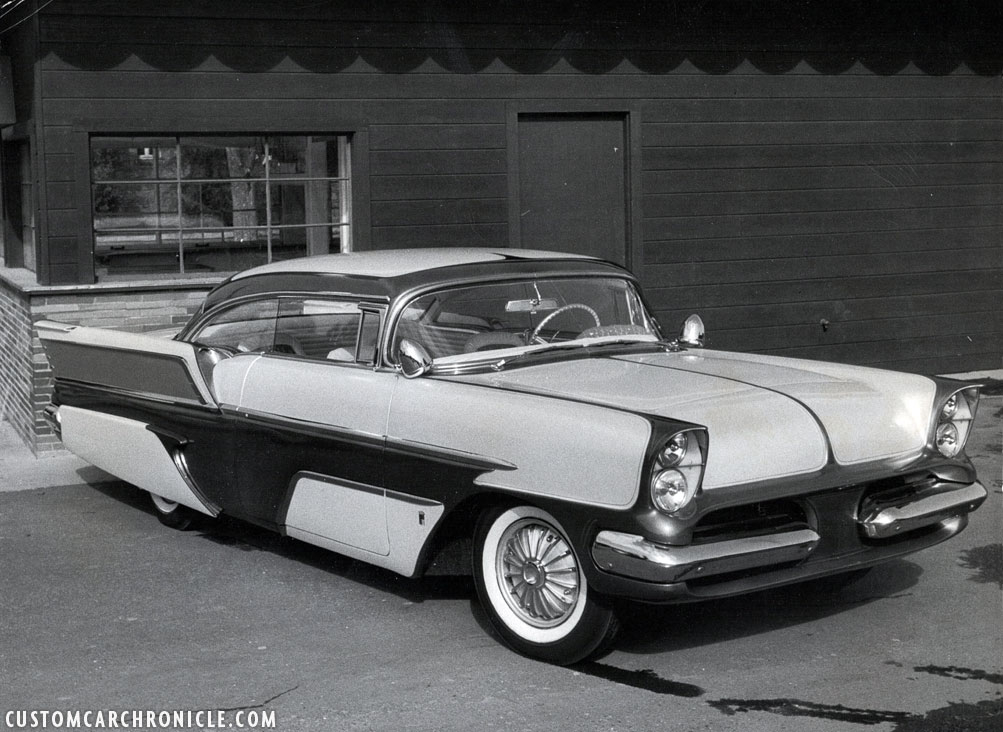 In conclusion, instead of the latest projects of George Barris, it is better to recall the last project of his older brother Sam, on which the latter worked for almost two years: the 1957 Chevrolet 210, completed in 1960 and named El Capitola. Already around 1963, the car was repainted by the Taggart brothers in gold, and the standard steering wheel was replaced with a stylish, cropped steering wheel from a 1960 Dodge Polara. The Taggarts also added a lot of electronic devices to the car, which were very advanced at that time. Surprisingly, when the car was rediscovered in the mid-90s, it was - unlike many other custom cars - in very good condition, representing a real time capsule.
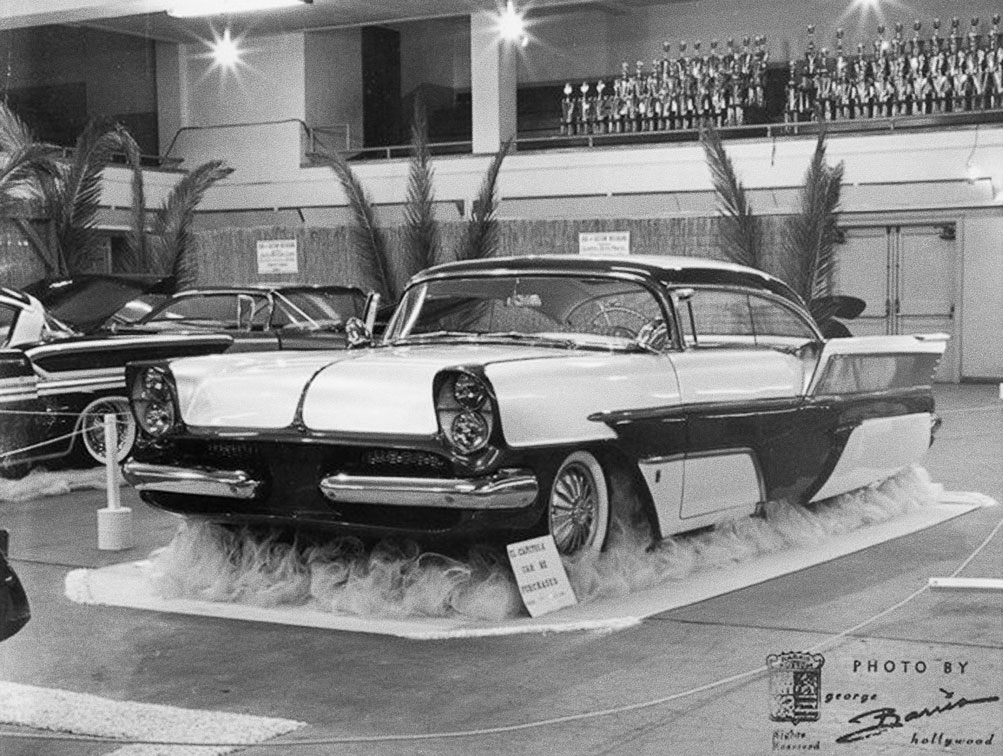 In conclusion, instead of the latest projects of George Barris, it is better to recall the last project of his older brother Sam, on which the latter worked for almost two years: the 1957 Chevrolet 210, completed in 1960 and named El Capitola. Already around 1963, the car was repainted by the Taggart brothers in gold, and the standard steering wheel was replaced with a stylish, cropped steering wheel from a 1960 Dodge Polara. The Taggarts also added a lot of electronic devices to the car, which were very advanced at that time. Surprisingly, when the car was rediscovered in the mid-90s, it was - unlike many other custom cars - in very good condition, representing a real time capsule.
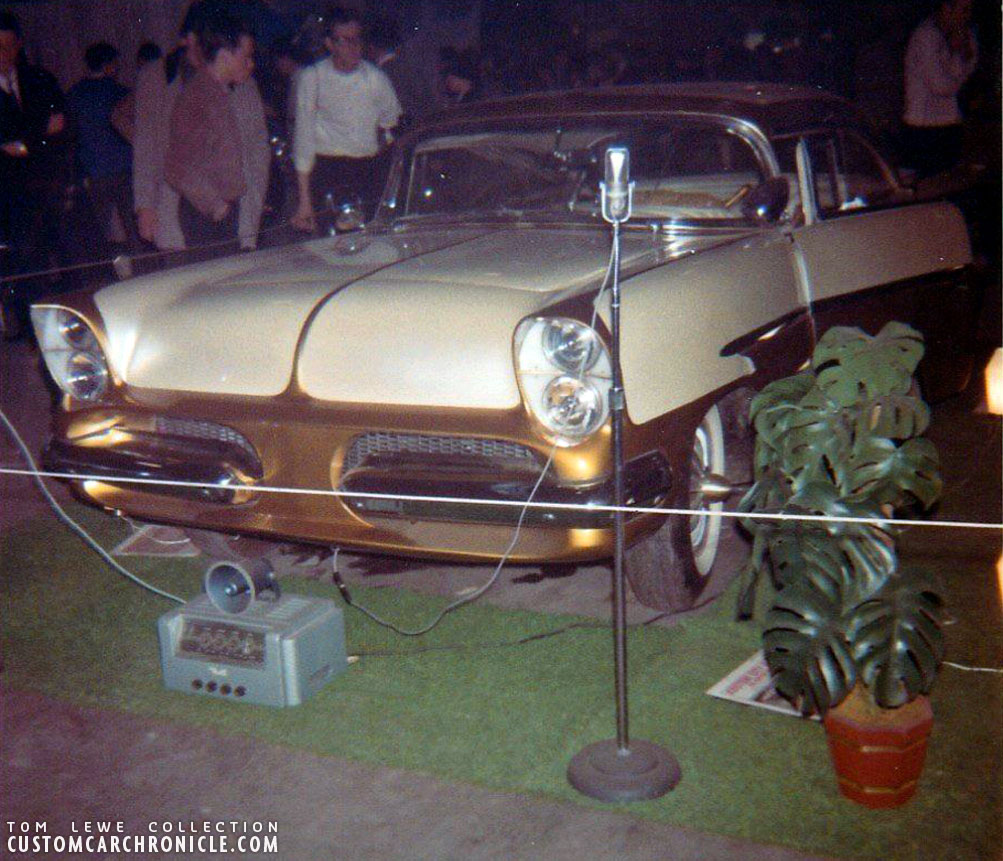 In conclusion, instead of the latest projects of George Barris, it is better to recall the last project of his older brother Sam, on which the latter worked for almost two years: the 1957 Chevrolet 210, completed in 1960 and named El Capitola. Already around 1963, the car was repainted by the Taggart brothers in gold, and the standard steering wheel was replaced with a stylish, cropped steering wheel from a 1960 Dodge Polara. The Taggarts also added a lot of electronic devices to the car, which were very advanced at that time. Surprisingly, when the car was rediscovered in the mid-90s, it was - unlike many other custom cars - in very good condition, representing a real time capsule.
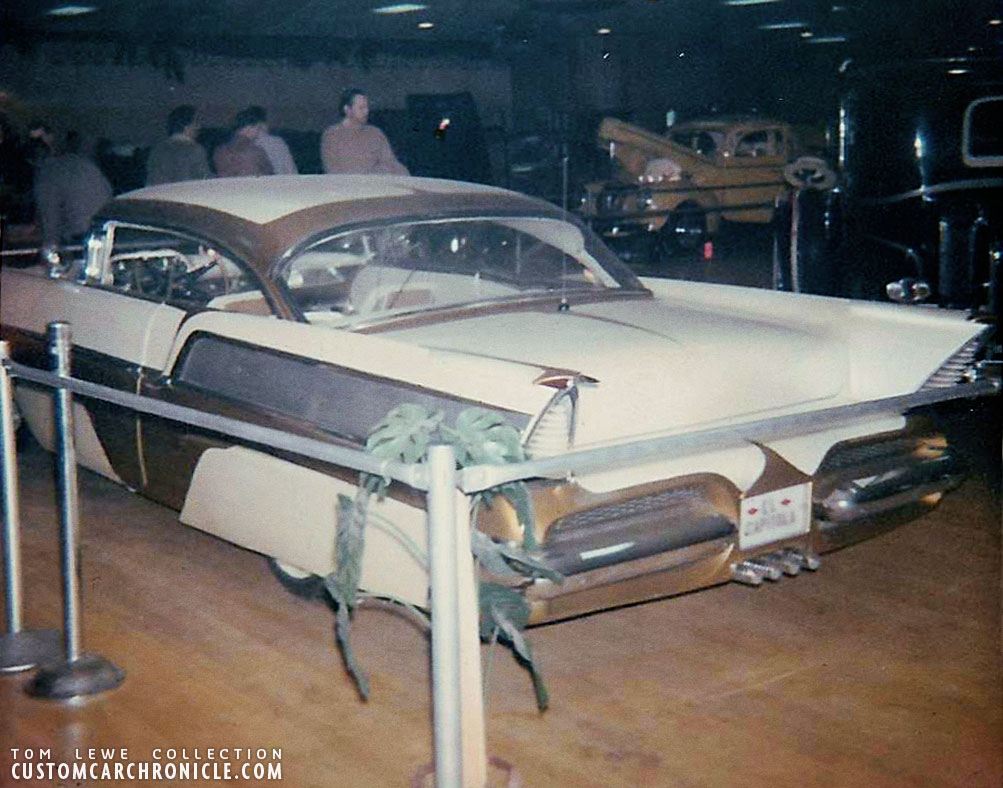 In conclusion, instead of the latest projects of George Barris, it is better to recall the last project of his older brother Sam, on which the latter worked for almost two years: the 1957 Chevrolet 210, completed in 1960 and named El Capitola. Already around 1963, the car was repainted by the Taggart brothers in gold, and the standard steering wheel was replaced with a stylish, cropped steering wheel from a 1960 Dodge Polara. The Taggarts also added a lot of electronic devices to the car, which were very advanced at that time. Surprisingly, when the car was rediscovered in the mid-90s, it was - unlike many other custom cars - in very good condition, representing a real time capsule.
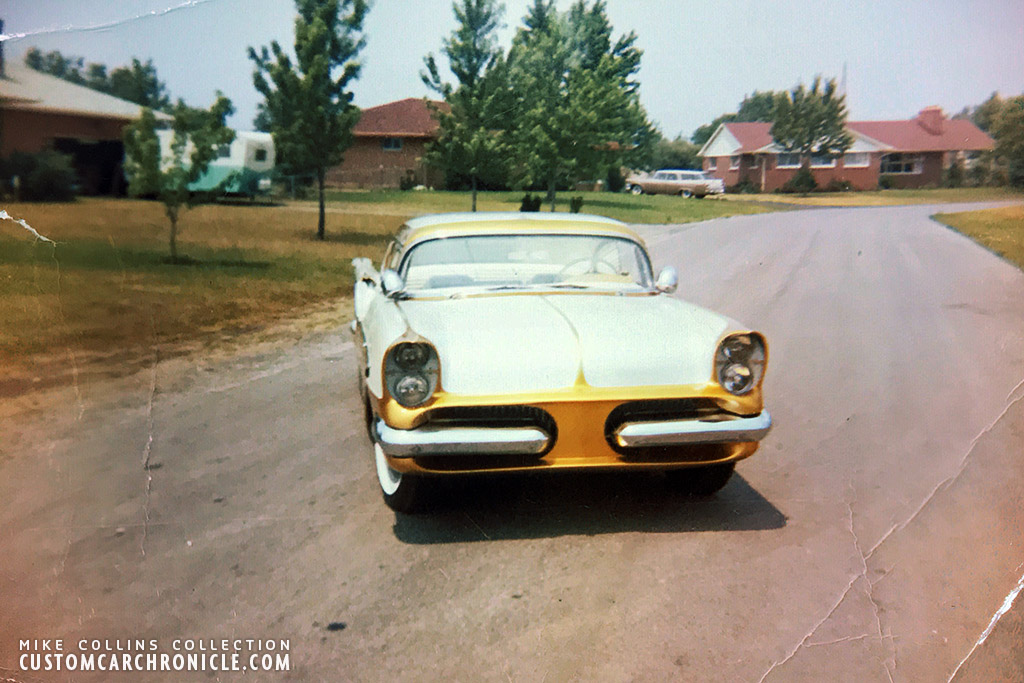 In conclusion, instead of the latest projects of George Barris, it is better to recall the last project of his older brother Sam, on which the latter worked for almost two years: the 1957 Chevrolet 210, completed in 1960 and named El Capitola. Already around 1963, the car was repainted by the Taggart brothers in gold, and the standard steering wheel was replaced with a stylish, cropped steering wheel from a 1960 Dodge Polara. The Taggarts also added a lot of electronic devices to the car, which were very advanced at that time. Surprisingly, when the car was rediscovered in the mid-90s, it was - unlike many other custom cars - in very good condition, representing a real time capsule.
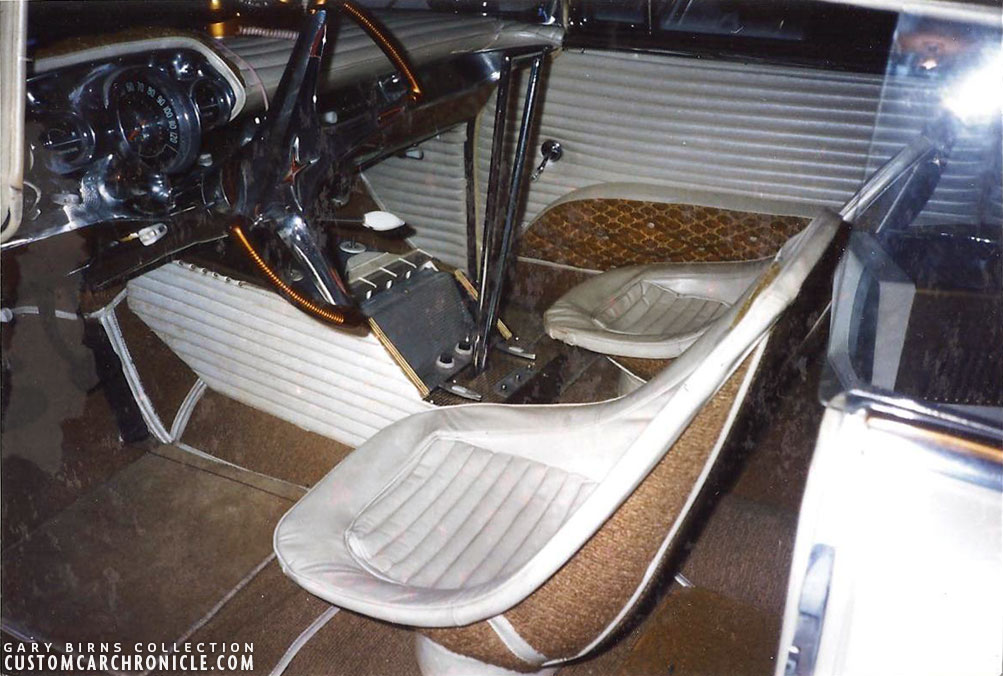 In conclusion, instead of the latest projects of George Barris, it is better to recall the last project of his older brother Sam, on which the latter worked for almost two years: the 1957 Chevrolet 210, completed in 1960 and named El Capitola. Already around 1963, the car was repainted by the Taggart brothers in gold, and the standard steering wheel was replaced with a stylish, cropped steering wheel from a 1960 Dodge Polara. The Taggarts also added a lot of electronic devices to the car, which were very advanced at that time. Surprisingly, when the car was rediscovered in the mid-90s, it was - unlike many other custom cars - in very good condition, representing a real time capsule.
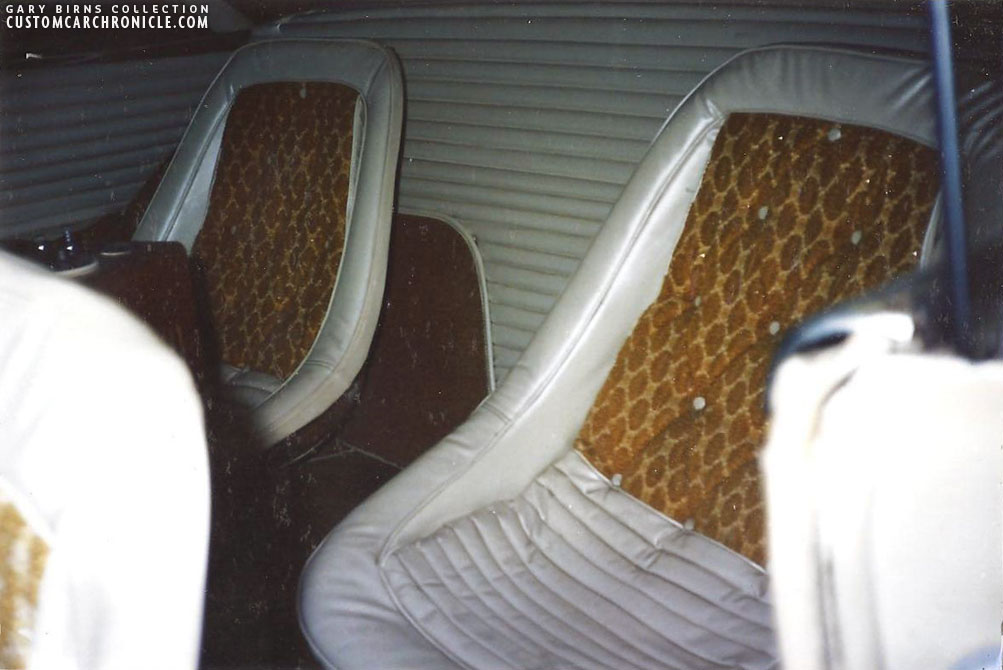 In conclusion, instead of the latest projects of George Barris, it is better to recall the last project of his older brother Sam, on which the latter worked for almost two years: the 1957 Chevrolet 210, completed in 1960 and named El Capitola. Already around 1963, the car was repainted by the Taggart brothers in gold, and the standard steering wheel was replaced with a stylish, cropped steering wheel from a 1960 Dodge Polara. The Taggarts also added a lot of electronic devices to the car, which were very advanced at that time. Surprisingly, when the car was rediscovered in the mid-90s, it was - unlike many other custom cars - in very good condition, representing a real time capsule.
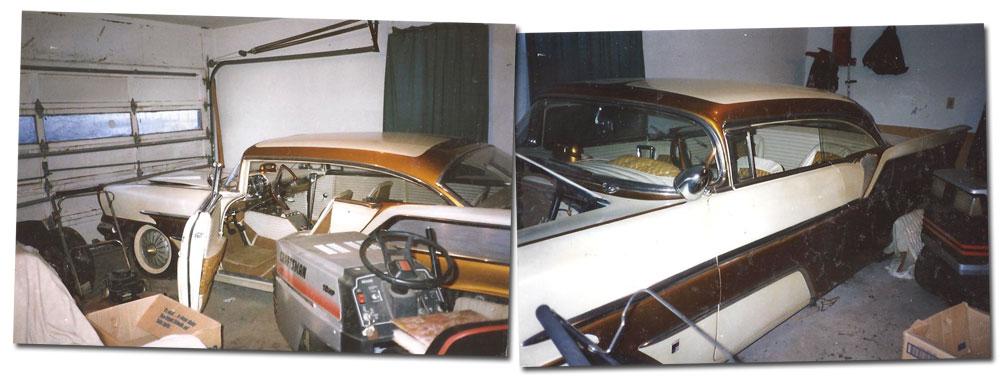 In conclusion, instead of the latest projects of George Barris, it is better to recall the last project of his older brother Sam, on which the latter worked for almost two years: Chevrolet 210 1957, completed in 1960 and named El Capitola. Already around 1963, the car was repainted by the Taggart brothers in gold, and the standard steering wheel was replaced with a stylish, cropped steering wheel from a 1960 Dodge Polara. The Taggarts also added a lot of electronic devices to the car, which were very advanced at that time. Surprisingly, when the car was rediscovered in the mid-90s, it was - unlike many other custom cars - in very good condition, representing a real time capsule.
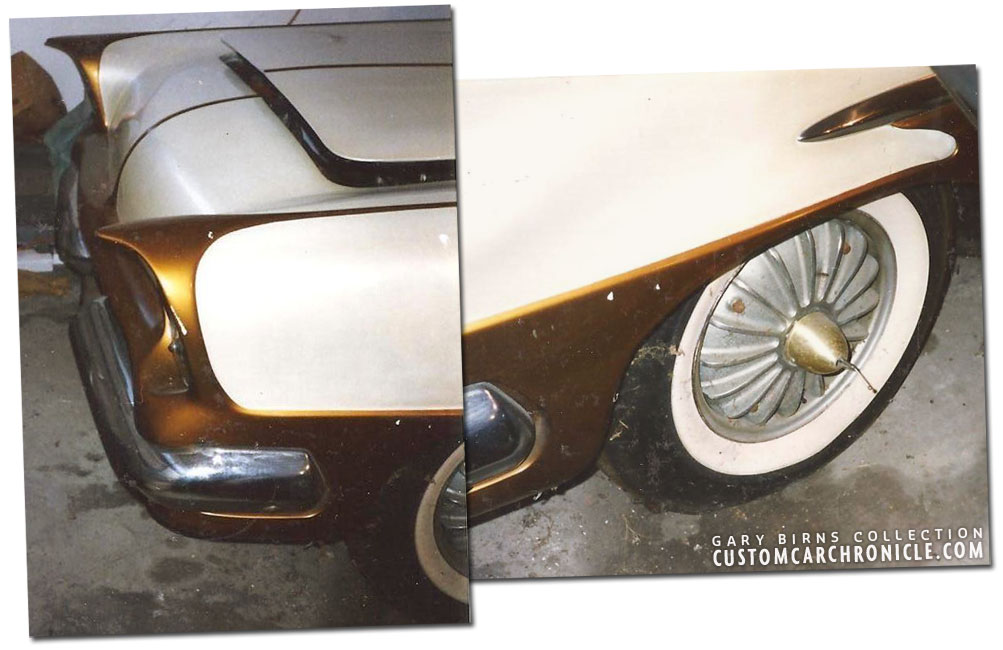 In conclusion, instead of the latest projects of George Barris, it is better to recall the last project of his older brother Sam, on which the latter worked for almost two years: the 1957 Chevrolet 210, completed in 1960 and named El Capitola. Already around 1963, the car was repainted by the Taggart brothers in gold, and the standard steering wheel was replaced with a stylish, cropped steering wheel from a 1960 Dodge Polara. The Taggarts also added a lot of electronic devices to the car, which were very advanced at that time. Surprisingly, when the car was rediscovered in the mid-90s, it was - unlike many other custom cars - in very good condition, representing a real time capsule.
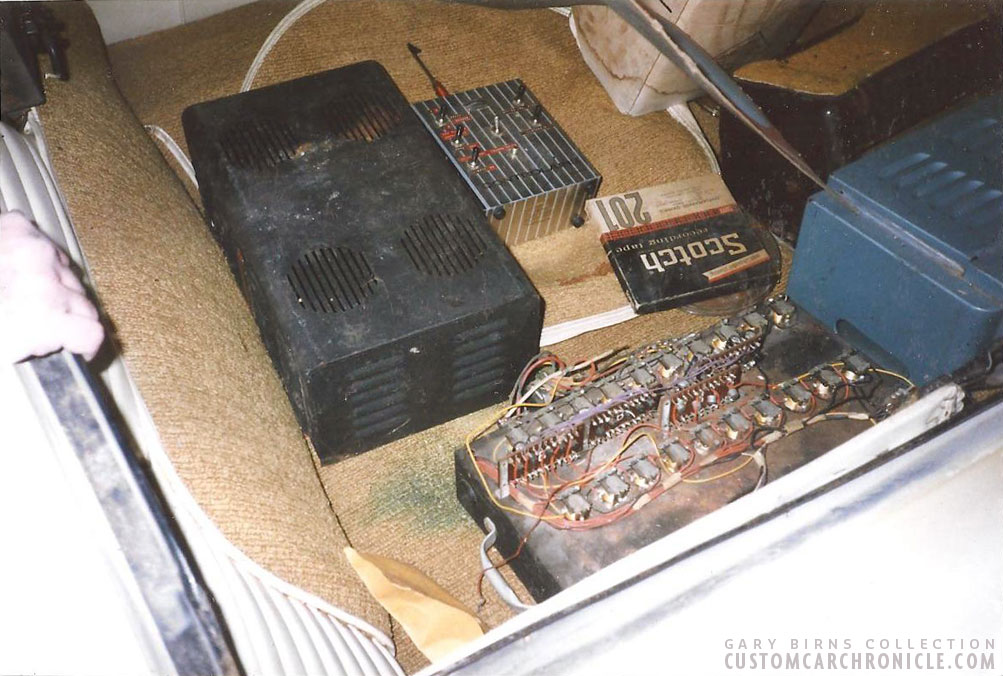 In conclusion, instead of the latest projects of George Barris, it is better to recall the last project of his older brother Sam, on which the latter worked for almost two years: the 1957 Chevrolet 210, completed in 1960 and named El Capitola. Already around 1963, the car was repainted by the Taggart brothers in gold, and the standard steering wheel was replaced with a stylish, cropped steering wheel from a 1960 Dodge Polara. The Taggarts also added a lot of electronic devices to the car, which were very advanced at that time. Surprisingly, when the car was rediscovered in the mid-90s, it was - unlike many other custom cars - in very good condition, representing a real time capsule.
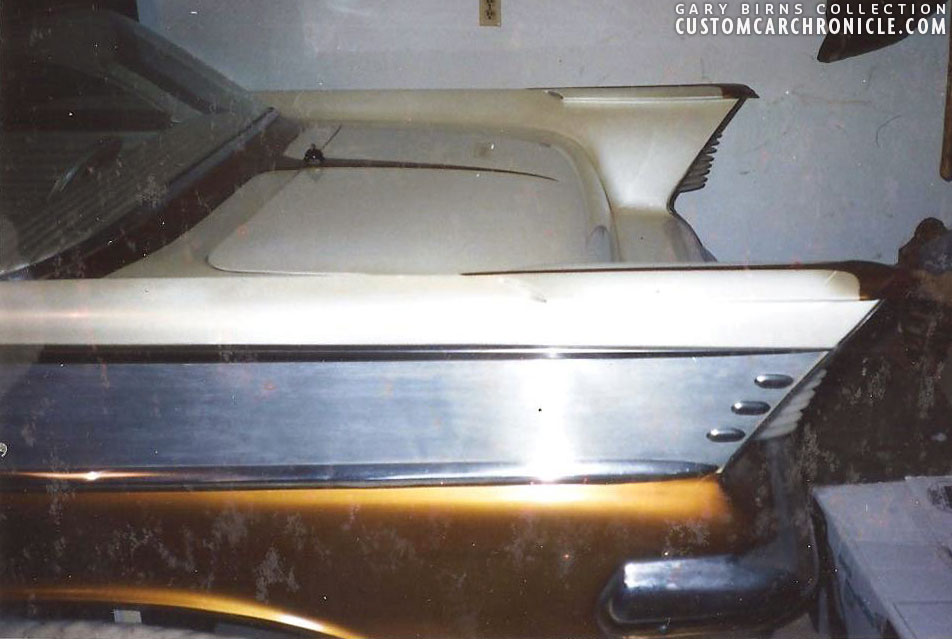 In conclusion, instead of the latest projects of George Barris, it is better to recall the last project of his older brother Sam, on which the latter worked for almost two years: the 1957 Chevrolet 210, completed in 1960 and named El Capitola. Already around 1963, the car was repainted by the Taggart brothers in gold, and the standard steering wheel was replaced with a stylish, cropped steering wheel from a 1960 Dodge Polara. The Taggarts also added a lot of electronic devices to the car, which were very advanced at that time. Surprisingly, when the car was rediscovered in the mid-90s, it was - unlike many other custom cars - in very good condition, representing a real time capsule.
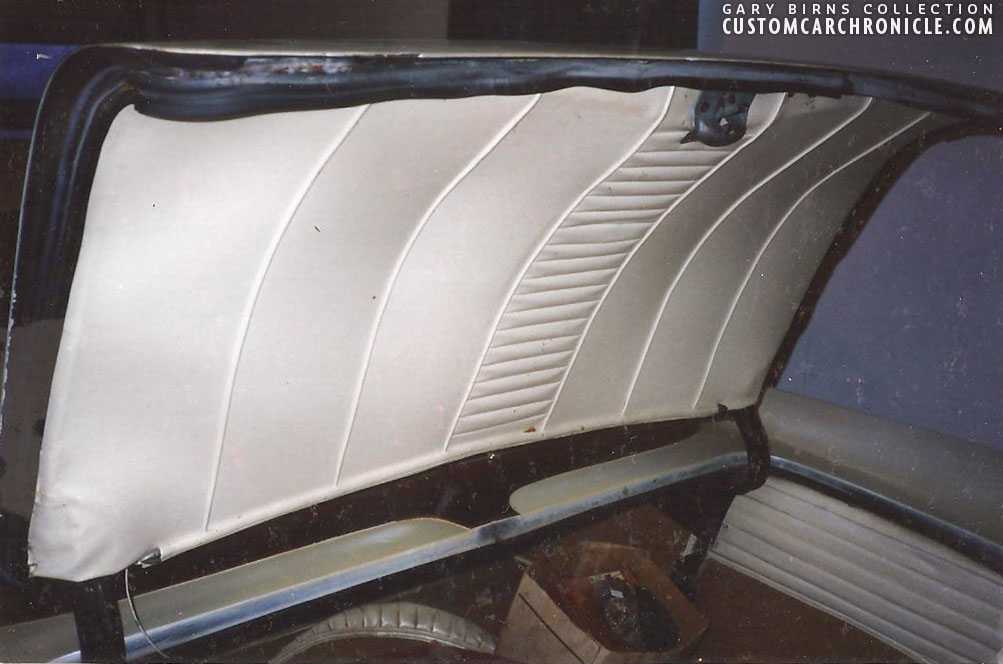 In conclusion, instead of the latest projects of George Barris, it is better to recall the last project of his older brother Sam, on which the latter worked for almost two years: the 1957 Chevrolet 210, completed in 1960 and named El Capitola. Already around 1963, the car was repainted by the Taggart brothers in gold, and the standard steering wheel was replaced with a stylish, cropped steering wheel from a 1960 Dodge Polara. The Taggarts also added a lot of electronic devices to the car, which were very advanced at that time. Surprisingly, when the car was rediscovered in the mid-90s, it was - unlike many other custom cars - in very good condition, representing a real time capsule.
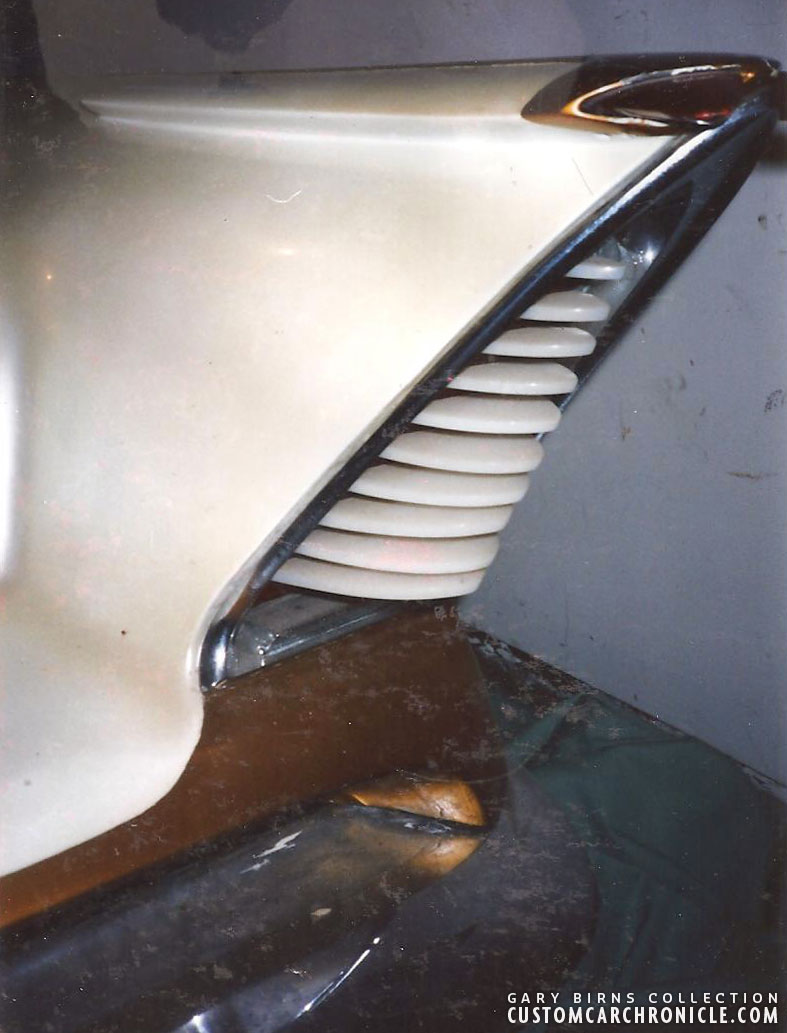 In conclusion, instead of the latest projects of George Barris, it is better to recall the last project of his older brother Sam, on which the latter worked for almost two years: the 1957 Chevrolet 210, completed in 1960 and named El Capitola. Already around 1963, the car was repainted by the Taggart brothers in gold, and the standard steering wheel was replaced with a stylish, cropped steering wheel from a 1960 Dodge Polara. The Taggarts also added a lot of electronic devices to the car, which were very advanced at that time. Surprisingly, when the car was rediscovered in the mid-90s, it was - unlike many other custom cars - in very good condition, representing a real time capsule.
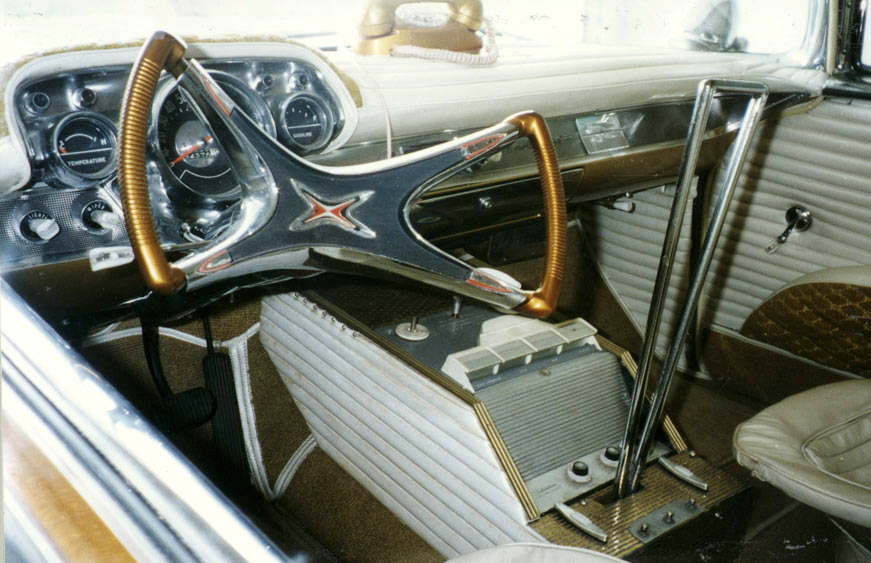 In conclusion, instead of the latest projects of George Barris, it is better to recall the last project of his older brother Sam, on which the latter worked for almost two years: the 1957 Chevrolet 210, completed in 1960 and named El Capitola. Already around 1963, the car was repainted by the Taggart brothers in gold, and the standard steering wheel was replaced with a stylish, cropped steering wheel from a 1960 Dodge Polara. The Taggarts also added a lot of electronic devices to the car, which were very advanced at that time. Surprisingly, when the car was rediscovered in the mid-90s, it was - unlike many other custom cars - in very good condition, representing a real time capsule.
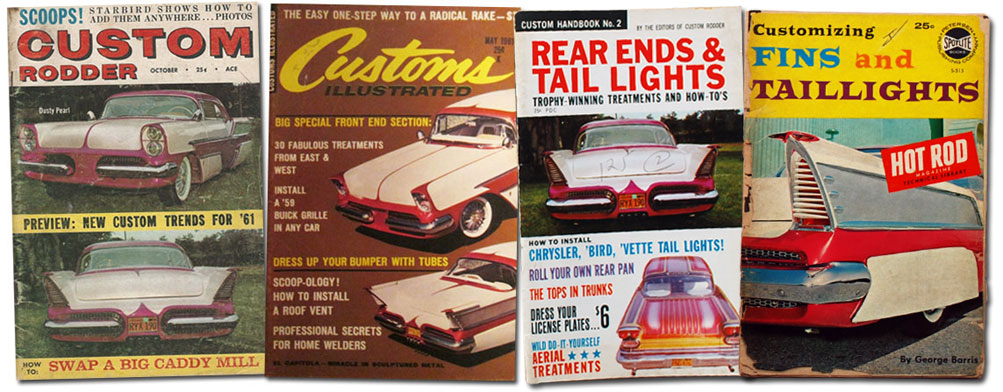 In conclusion, instead of the latest projects of George Barris, it is better to recall the last project of his older brother Sam, on which the latter worked for almost two years: the 1957 Chevrolet 210, completed in 1960 and named El Capitola. Already around 1963, the car was repainted by the Taggart brothers in gold, and the standard steering wheel was replaced with a stylish, cropped steering wheel from a 1960 Dodge Polara. The Taggarts also added a lot of electronic devices to the car, which were very advanced at that time. Surprisingly, when the car was rediscovered in the mid-90s, it was - unlike many other custom cars - in very good condition, representing a real time capsule.
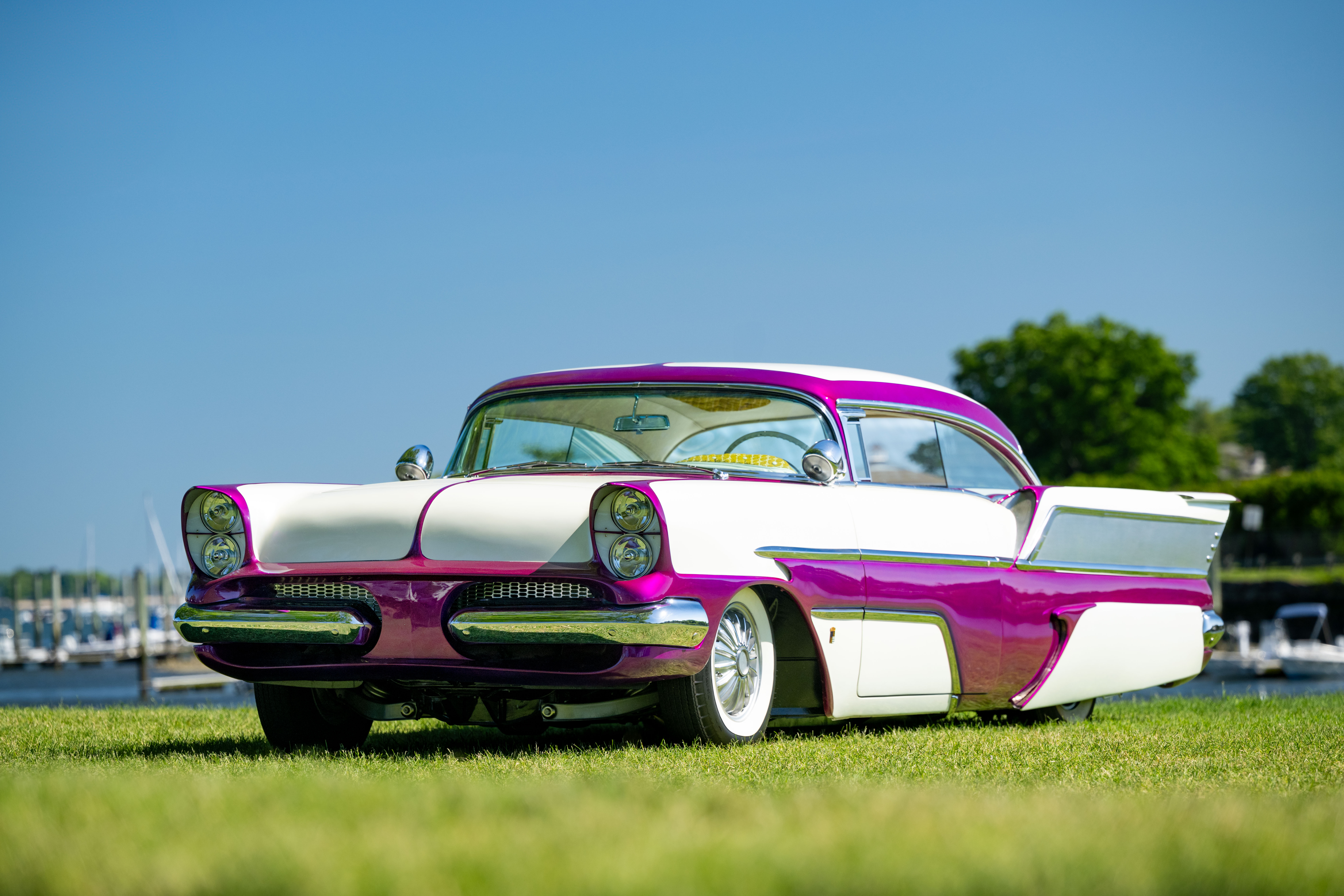 Nevertheless, after the restoration, El Capitola began to look even better. And despite the garish colors characteristic of George Barris' style of the 60s, Sam Barris' hand is undoubtedly traced in the lines and features of the body: the elder Barris, on the one hand, does not do anything radical and follows the laws of the custom scene of the coming reactive era - and at the same time inexorably brings his own features, defining new elements of the upcoming style. George Barris, again, did not miss the moment and sent several practical manuals to the press, which described in detail several techniques used in the construction of El Capitola. But, by the way, numerous articles demonstrating how to pull off one or another technique when building a car with your own hands is one of those things for which many on the custom stage are unconditionally grateful to Comrade George.
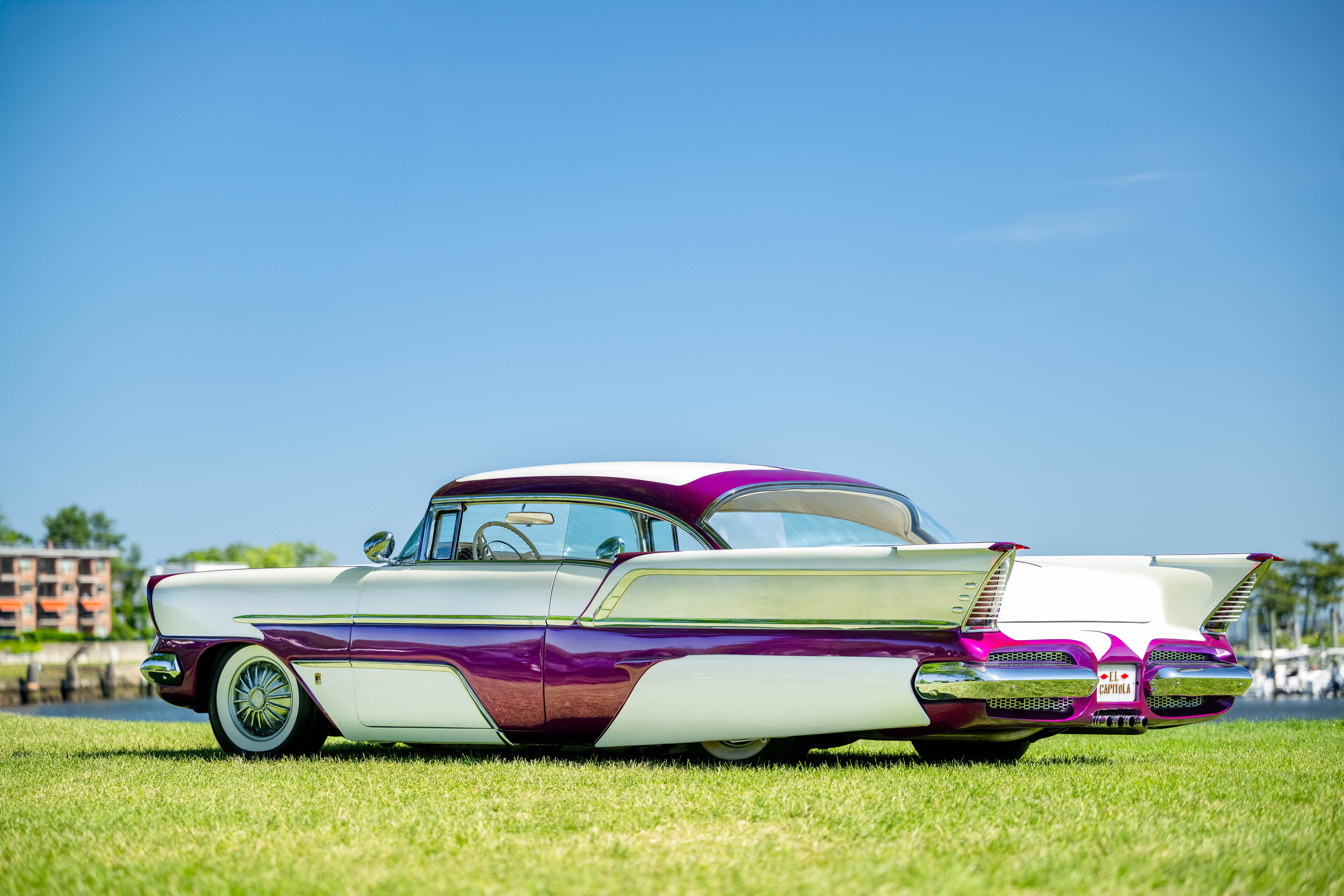 Nevertheless, after the restoration, El Capitola began to look even better. And despite the garish colors characteristic of George Barris' style of the 60s, Sam Barris' hand is undoubtedly traced in the lines and features of the body: the elder Barris, on the one hand, does not do anything radical and follows the laws of the custom scene of the coming reactive era - and at the same time inexorably brings his own features, defining new elements of the upcoming style. George Barris, again, did not miss the moment and sent several practical manuals to the press, which described in detail several techniques used in the construction of El Capitola. But, by the way, numerous articles demonstrating how to pull off one or another technique when building a car with your own hands is one of those things for which many on the custom stage are unconditionally grateful to Comrade George.
 Nevertheless, after the restoration, El Capitola began to look even better. And despite the garish colors characteristic of George Barris' style of the 60s, Sam Barris' hand is undoubtedly traced in the lines and features of the body: the elder Barris, on the one hand, does not do anything radical and follows the laws of the custom scene of the coming reactive era - and at the same time inexorably brings his own features, defining new elements of the upcoming style. George Barris, again, did not miss the moment and sent several practical manuals to the press, which described in detail several techniques used in the construction of El Capitola. But, by the way, numerous articles demonstrating how to pull off one or another technique when building a car with your own hands is one of those things for which many on the custom stage are unconditionally grateful to Comrade George.
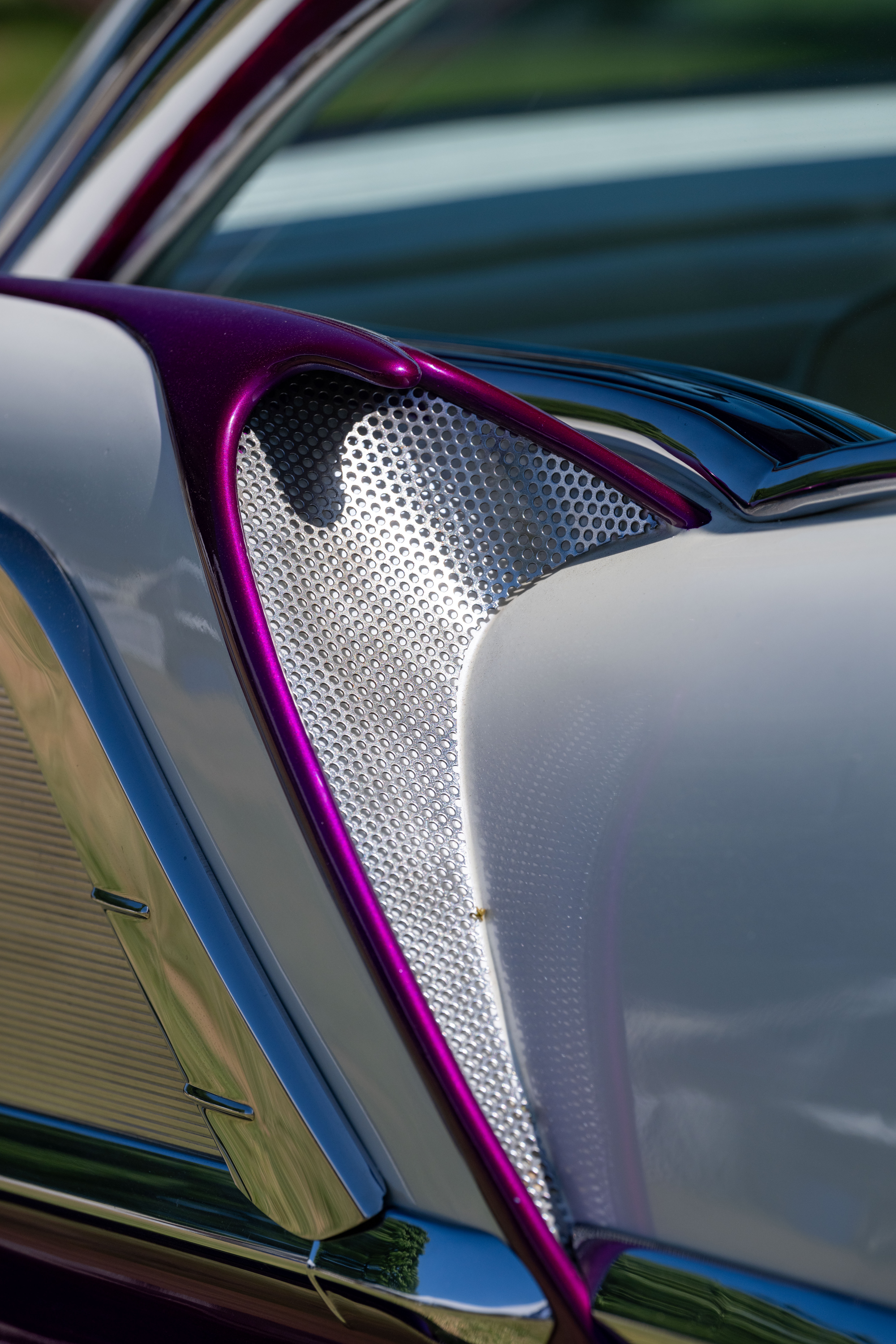 Nevertheless, after the restoration, El Capitola began to look even better. And despite the garish colors characteristic of George Barris' style of the 60s, Sam Barris' hand is undoubtedly traced in the lines and features of the body: the elder Barris, on the one hand, does not do anything radical and follows the laws of the custom scene of the coming reactive era - and at the same time inexorably brings his own features, defining new elements of the upcoming style. George Barris, again, did not miss the moment and sent several practical manuals to the press, which described in detail several techniques used in the construction of El Capitola. But, by the way, numerous articles demonstrating how to pull off one or another technique when building a car with your own hands is one of those things for which many on the custom stage are unconditionally grateful to Comrade George.
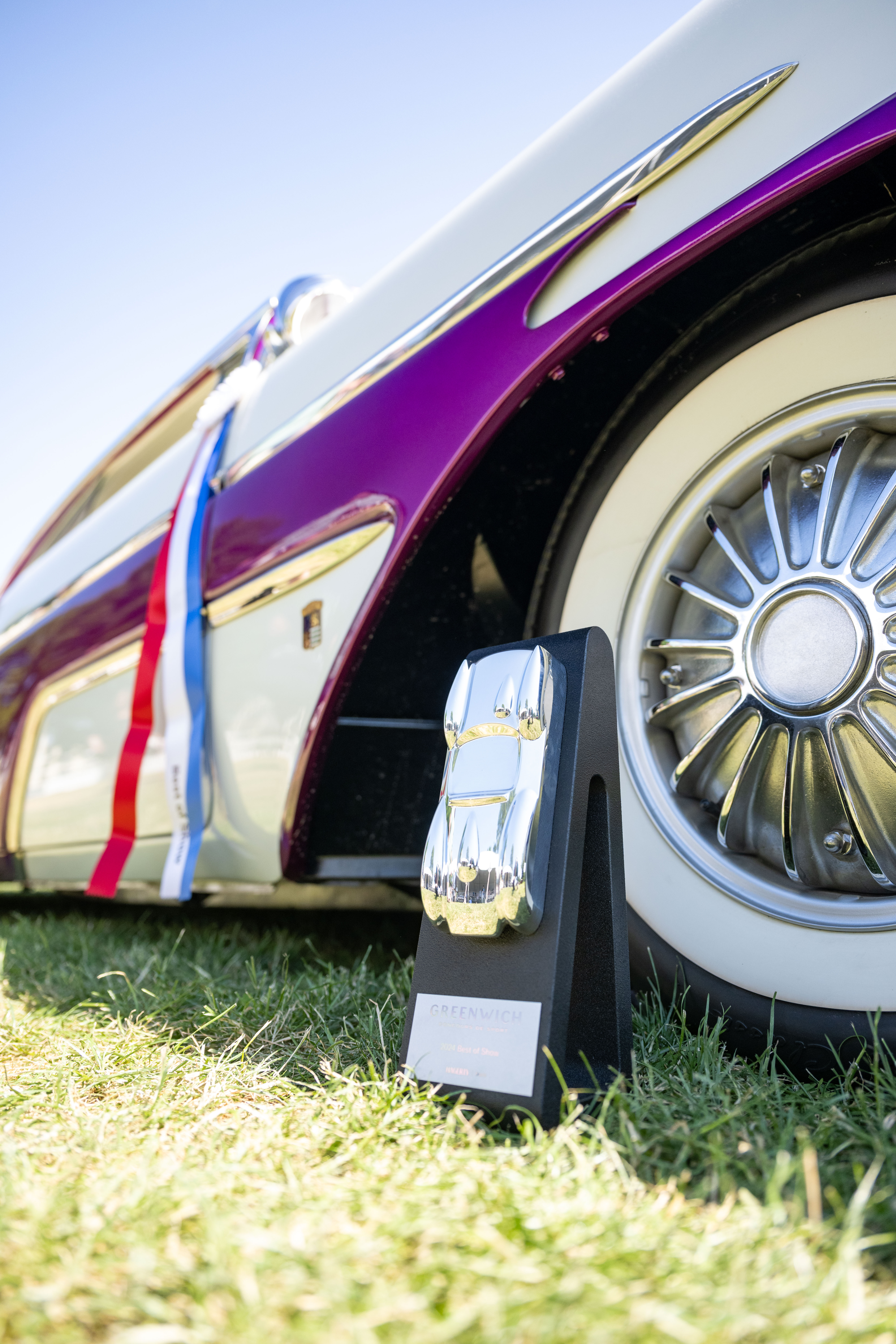 Nevertheless, after the restoration, El Capitola began to look even better. And despite the garish colors characteristic of George Barris' style of the 60s, Sam Barris' hand is undoubtedly traced in the lines and features of the body: the elder Barris, on the one hand, does not do anything radical and follows the laws of the custom scene of the coming reactive era - and at the same time inexorably brings his own features, defining new elements of the upcoming style. George Barris, again, did not miss the moment and sent several practical manuals to the press, which described in detail several techniques used in the construction of El Capitola. But, by the way, numerous articles demonstrating how to pull off one or another technique when building a car with your own hands is one of those things for which many on the custom stage are unconditionally grateful to Comrade George.
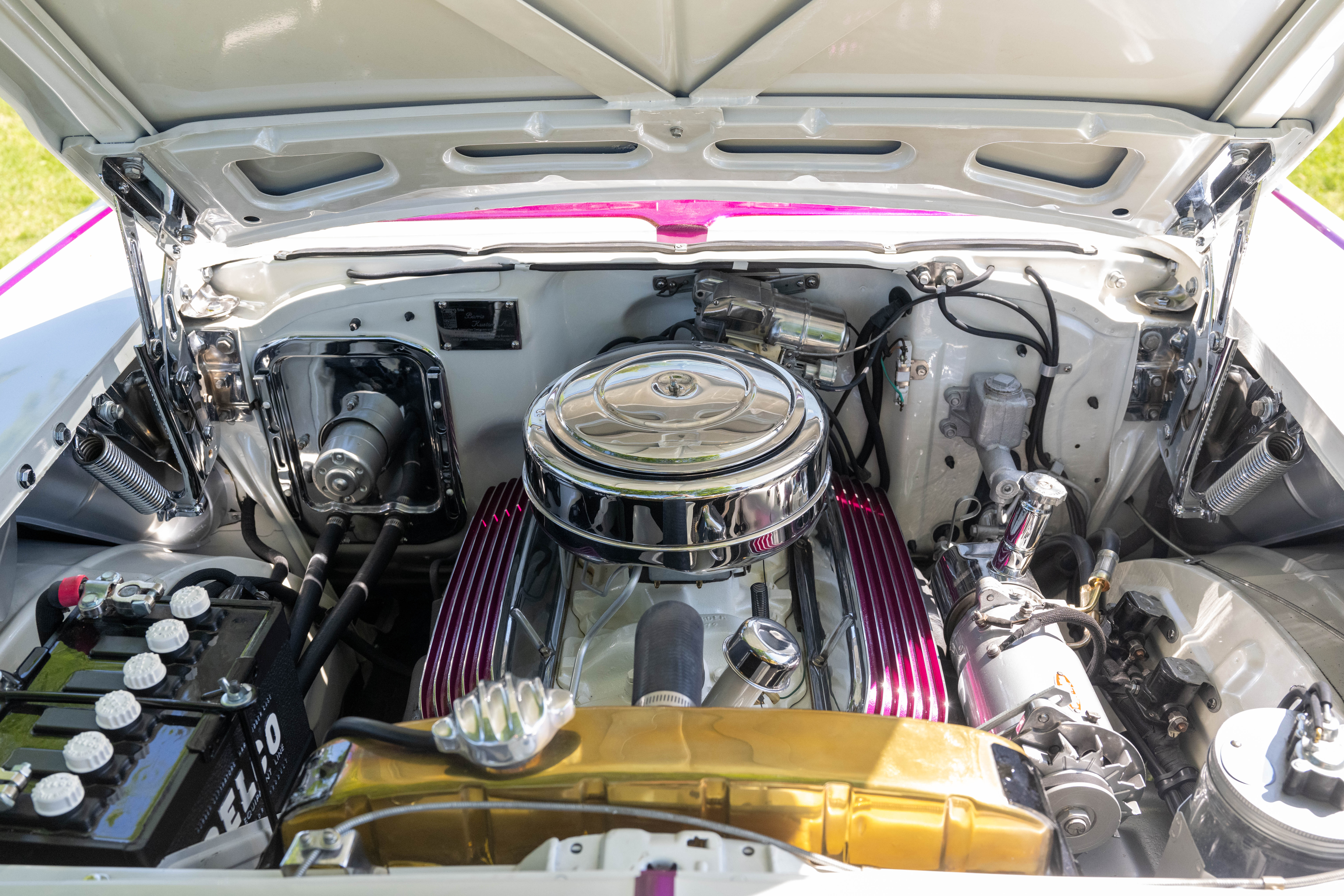 Nevertheless, after the restoration, El Capitola began to look even better. And despite the garish colors characteristic of George Barris' style of the 60s, Sam Barris' hand is undoubtedly traced in the lines and features of the body: the elder Barris, on the one hand, does not do anything radical and follows the laws of the custom scene of the coming reactive era - and at the same time inexorably brings his own features, defining new elements of the upcoming style. George Barris, again, did not miss the moment and sent several practical manuals to the press, which described in detail several techniques used in the construction of El Capitola. But, by the way, numerous articles demonstrating how to pull off one or another technique when building a car with your own hands is one of those things for which many on the custom stage are unconditionally grateful to Comrade George.
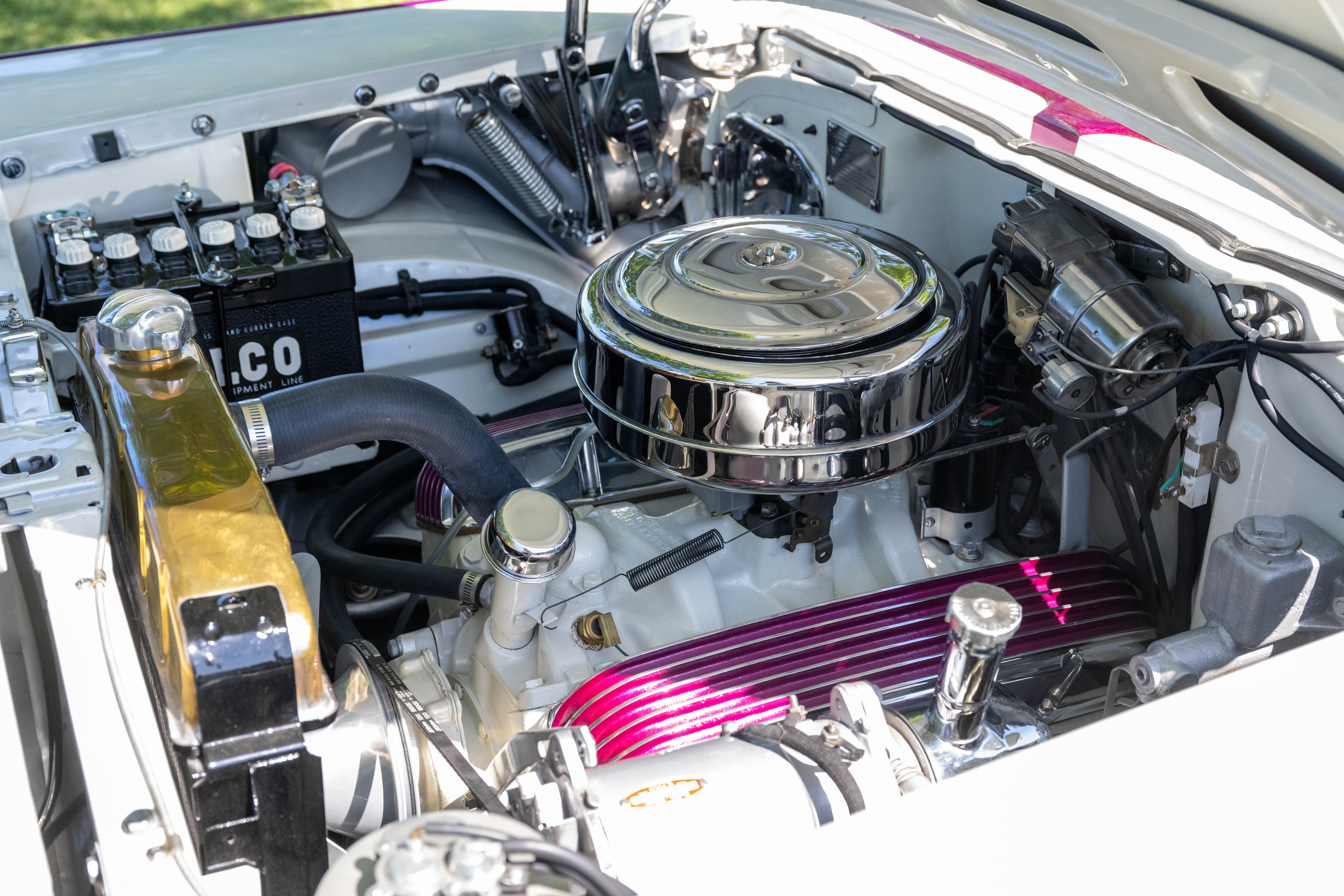 Nevertheless, after the restoration, El Capitola began to look even better. And despite the garish colors characteristic of George Barris' style of the 60s, Sam Barris' hand is undoubtedly traced in the lines and features of the body: the elder Barris, on the one hand, does not do anything radical and follows the laws of the custom scene of the coming reactive era - and at the same time inexorably brings his own features, defining new elements of the upcoming style. George Barris, again, did not miss the moment and sent several practical manuals to the press, which described in detail several techniques used in the construction of El Capitola. But, by the way, numerous articles demonstrating how to pull off one or another technique when building a car with your own hands is one of those things for which many on the custom stage are unconditionally grateful to Comrade George.
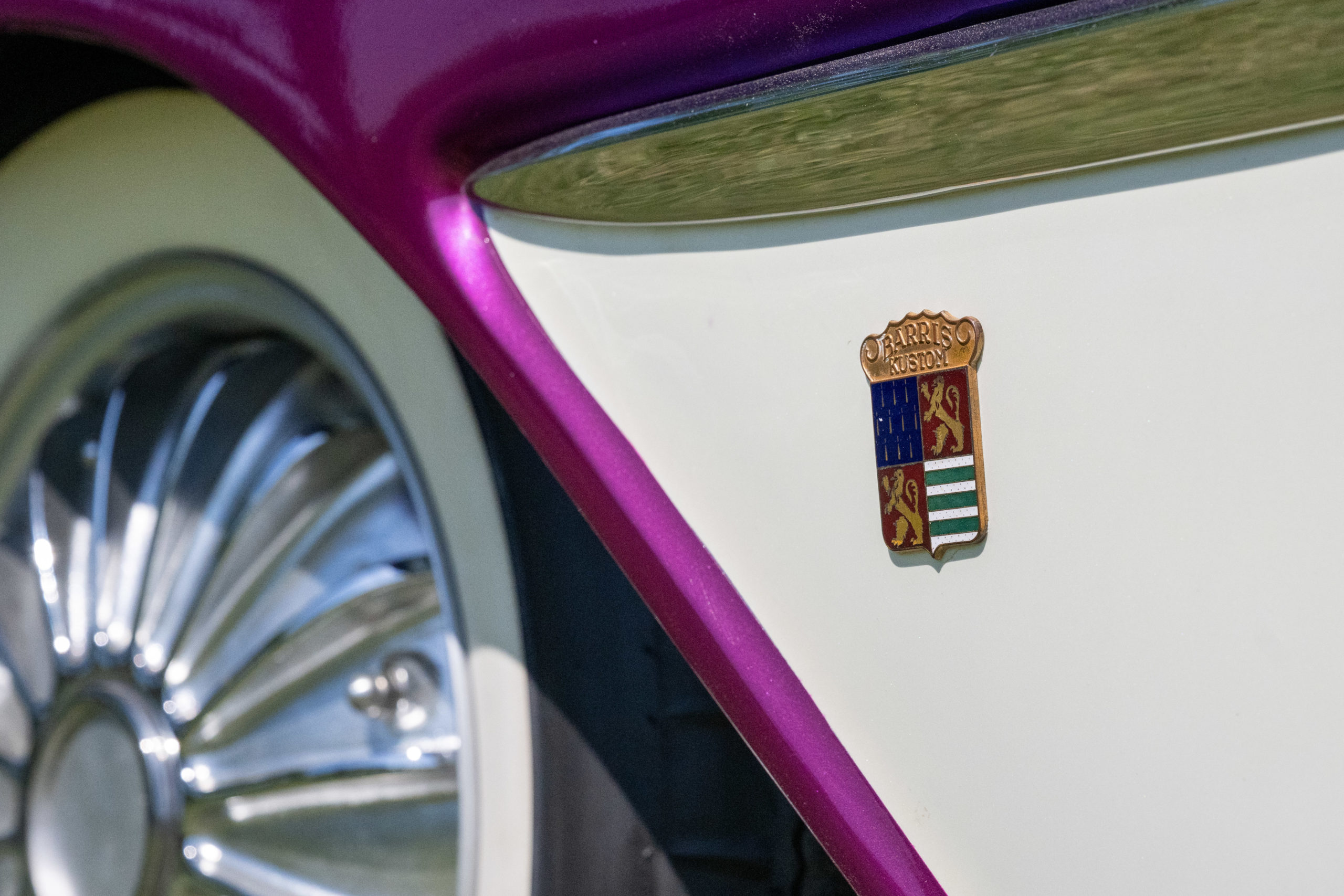 Nevertheless, after the restoration, El Capitola began to look even better. And despite the garish colors characteristic of George Barris' style of the 60s, Sam Barris' hand is undoubtedly traced in the lines and features of the body: the elder Barris, on the one hand, does not do anything radical and follows the laws of the custom scene of the coming reactive era - and at the same time inexorably brings his own features, defining new elements of the upcoming style. George Barris, again, did not miss the moment and sent several practical manuals to the press, which described in detail several techniques used in the construction of El Capitola. But, by the way, numerous articles demonstrating how to pull off one or another technique when building a car with your own hands is one of those things for which many on the custom stage are unconditionally grateful to Comrade George.
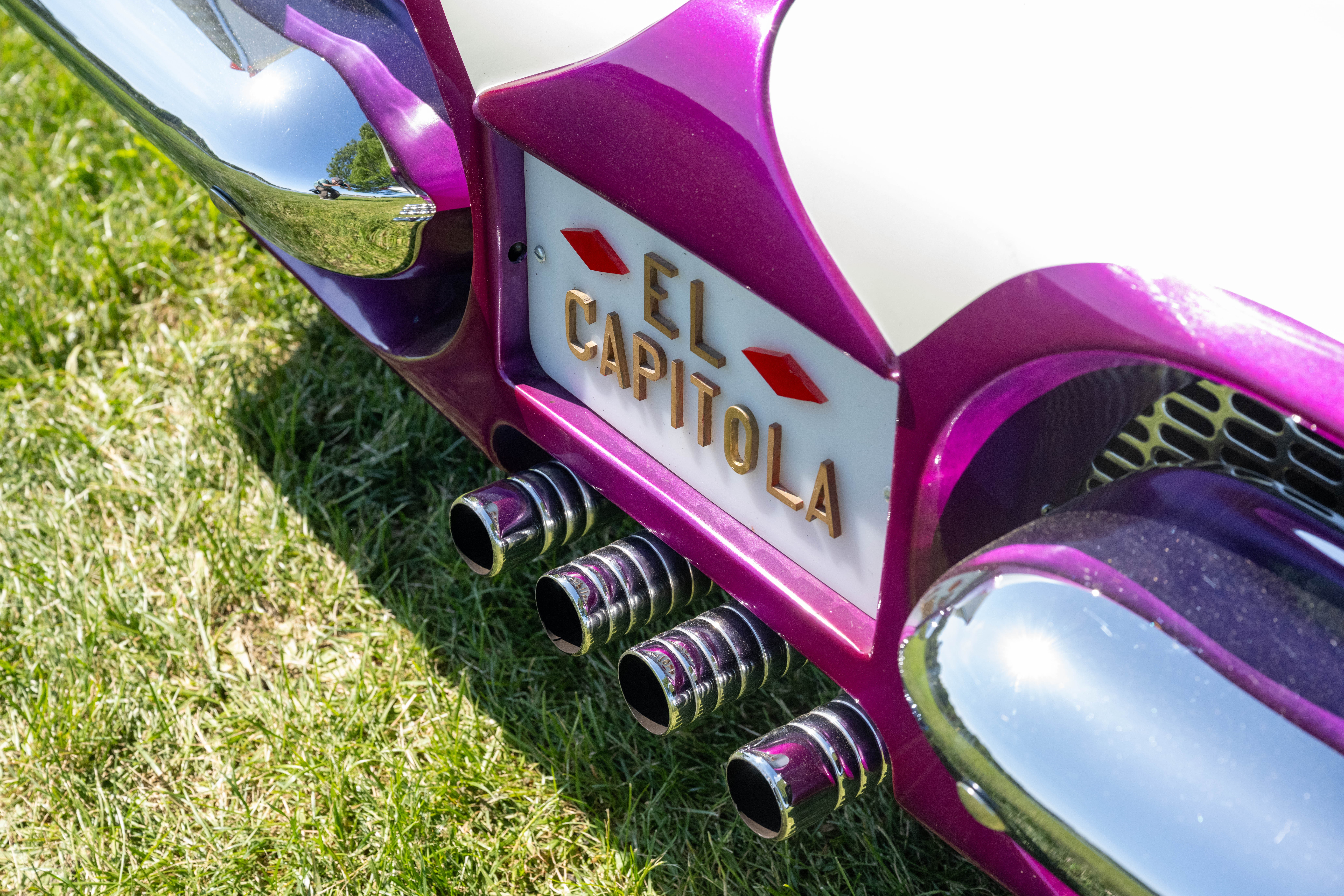 Nevertheless, after the restoration, El Capitola began to look even better. And despite the garish colors characteristic of George Barris' style of the 60s, Sam Barris' hand is undoubtedly traced in the lines and features of the body: the elder Barris, on the one hand, does not do anything radical and follows the laws of the custom scene of the coming reactive era - and at the same time inexorably brings his own features, defining new elements of the upcoming style. George Barris, again, did not miss the moment and sent several practical manuals to the press, which described in detail several techniques used in the construction of El Capitola. But, by the way, numerous articles demonstrating how to pull off one or another technique when building a car with your own hands is one of those things for which many on the custom stage are unconditionally grateful to Comrade George.
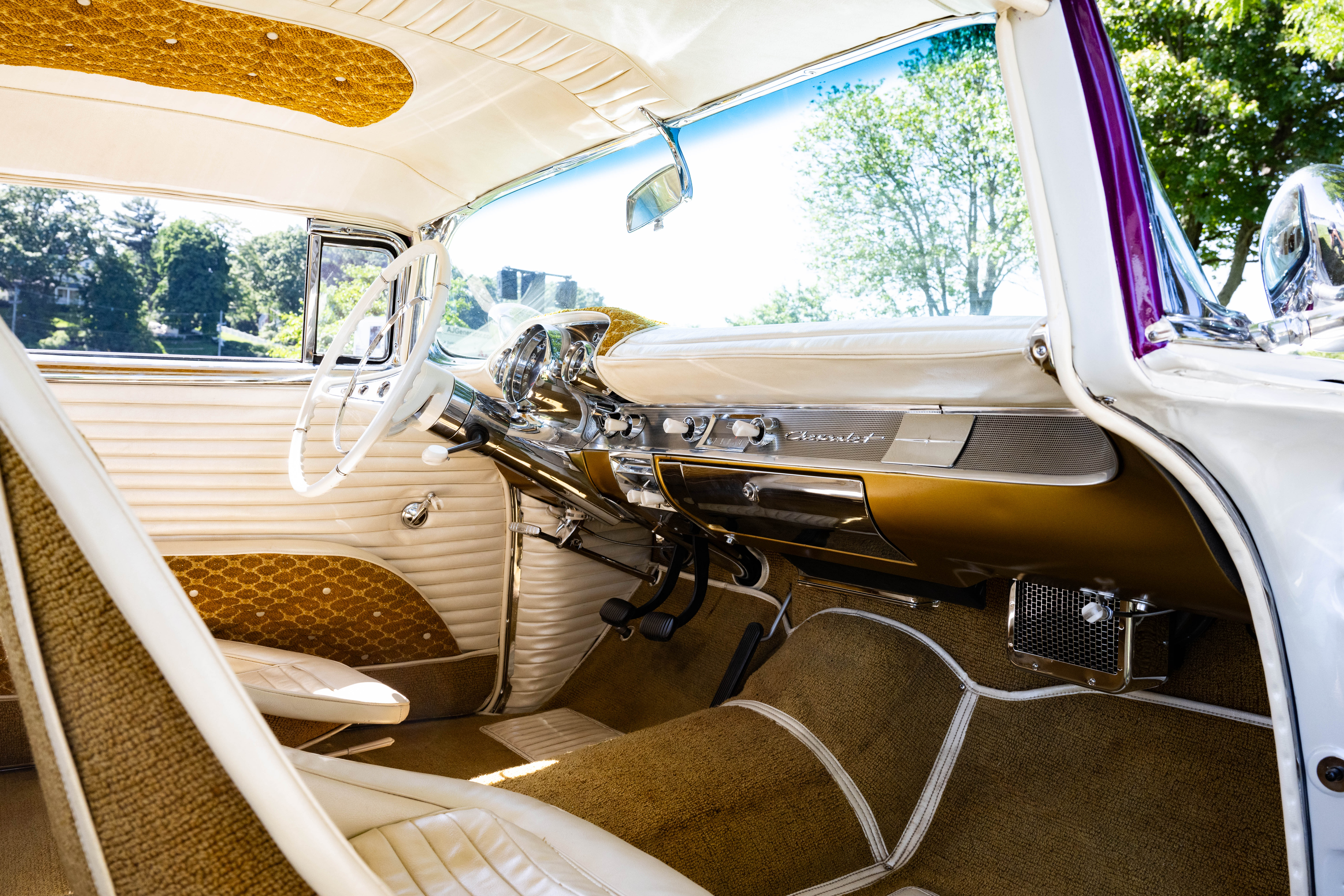 Nevertheless, after the restoration, El Capitola began to look even better. And despite the garish colors characteristic of George Barris' style of the 60s, Sam Barris' hand is undoubtedly traced in the lines and features of the body: the elder Barris, on the one hand, does not do anything radical and follows the laws of the custom scene of the coming reactive era - and at the same time inexorably brings his own features, defining new elements of the upcoming style. George Barris, again, did not miss the moment and sent several practical manuals to the press, which described in detail several techniques used in the construction of El Capitola. But, by the way, numerous articles demonstrating how to pull off one or another technique when building a car with your own hands is one of those things for which many on the custom stage are unconditionally grateful to Comrade George.
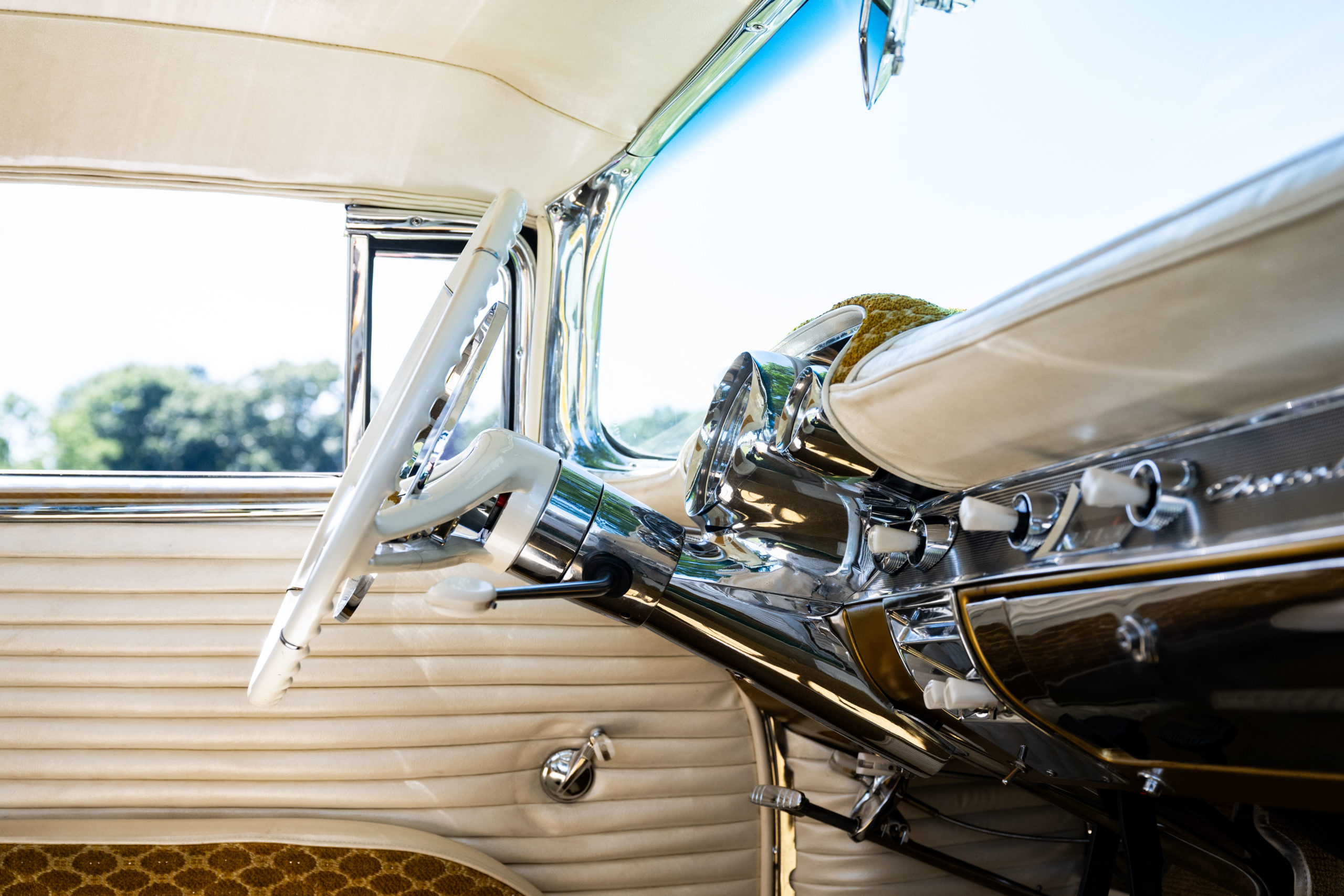 Nevertheless, after the restoration, El Capitola began to look even better. And despite the garish colors characteristic of George Barris' style of the 60s, Sam Barris' hand is undoubtedly traced in the lines and features of the body: the elder Barris, on the one hand, does not do anything radical and follows the laws of the custom scene of the coming reactive era - and at the same time inexorably brings his own features, defining new elements of the upcoming style. George Barris, again, did not miss the moment and sent several practical manuals to the press, which described in detail several techniques used in the construction of El Capitola. But, by the way, numerous articles demonstrating how to pull off one or another technique when building a car with your own hands is one of those things for which many on the custom stage are unconditionally grateful to Comrade George.
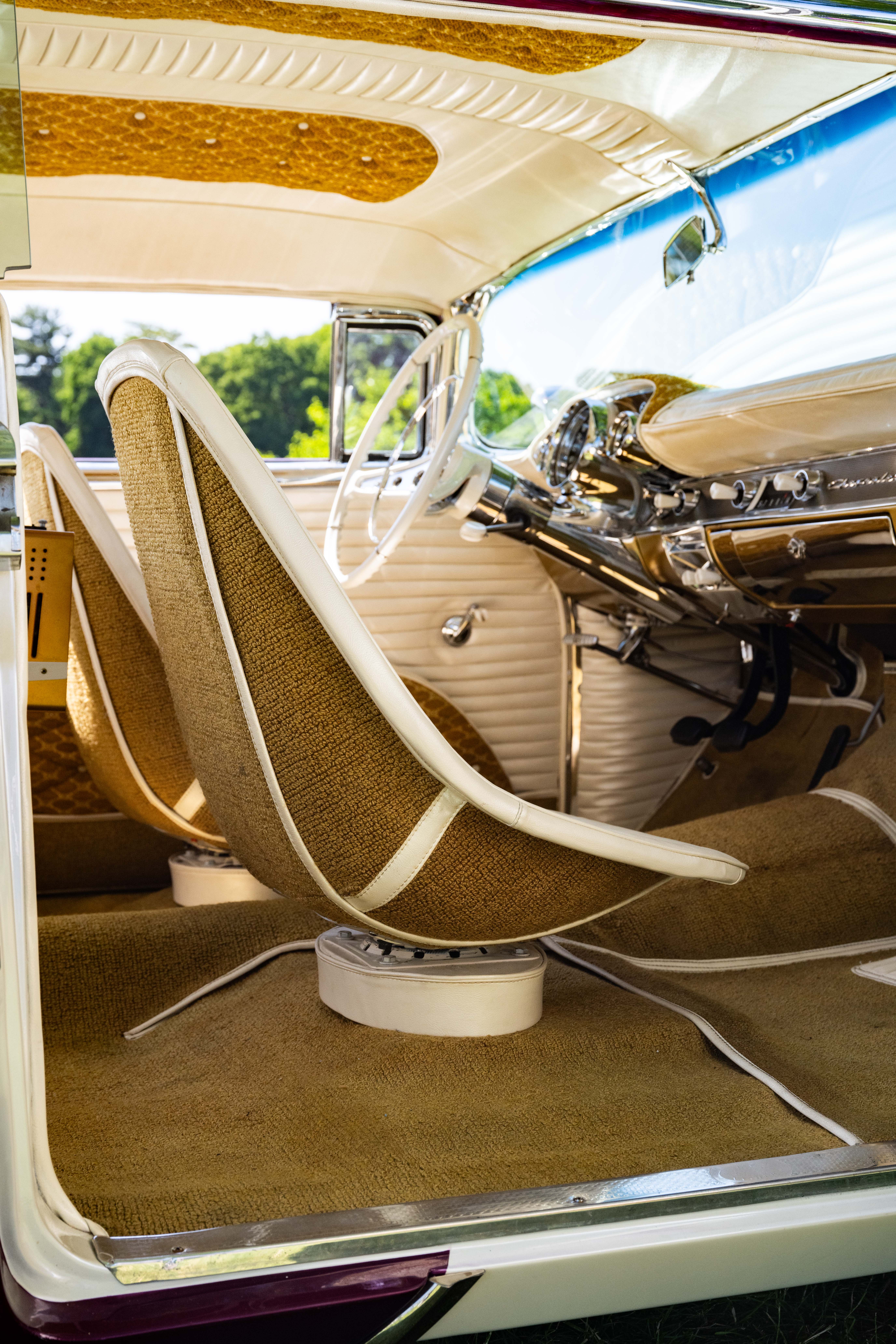 Nevertheless, after the restoration, El Capitola began to look even better. And despite the garish colors characteristic of George Barris' style of the 60s, Sam Barris' hand is undoubtedly traced in the lines and features of the body: the elder Barris, on the one hand, does not do anything radical and follows the laws of the custom scene of the coming reactive era - and at the same time inexorably brings his own features, defining new elements of the upcoming style. George Barris, again, did not miss the moment and sent several practical manuals to the press, in which several techniques used in the construction of El Capitola were described in detail. But, by the way, numerous articles demonstrating how to pull off one or another technique when building a car with your own hands is one of those things for which many on the custom stage are unconditionally grateful to Comrade George.
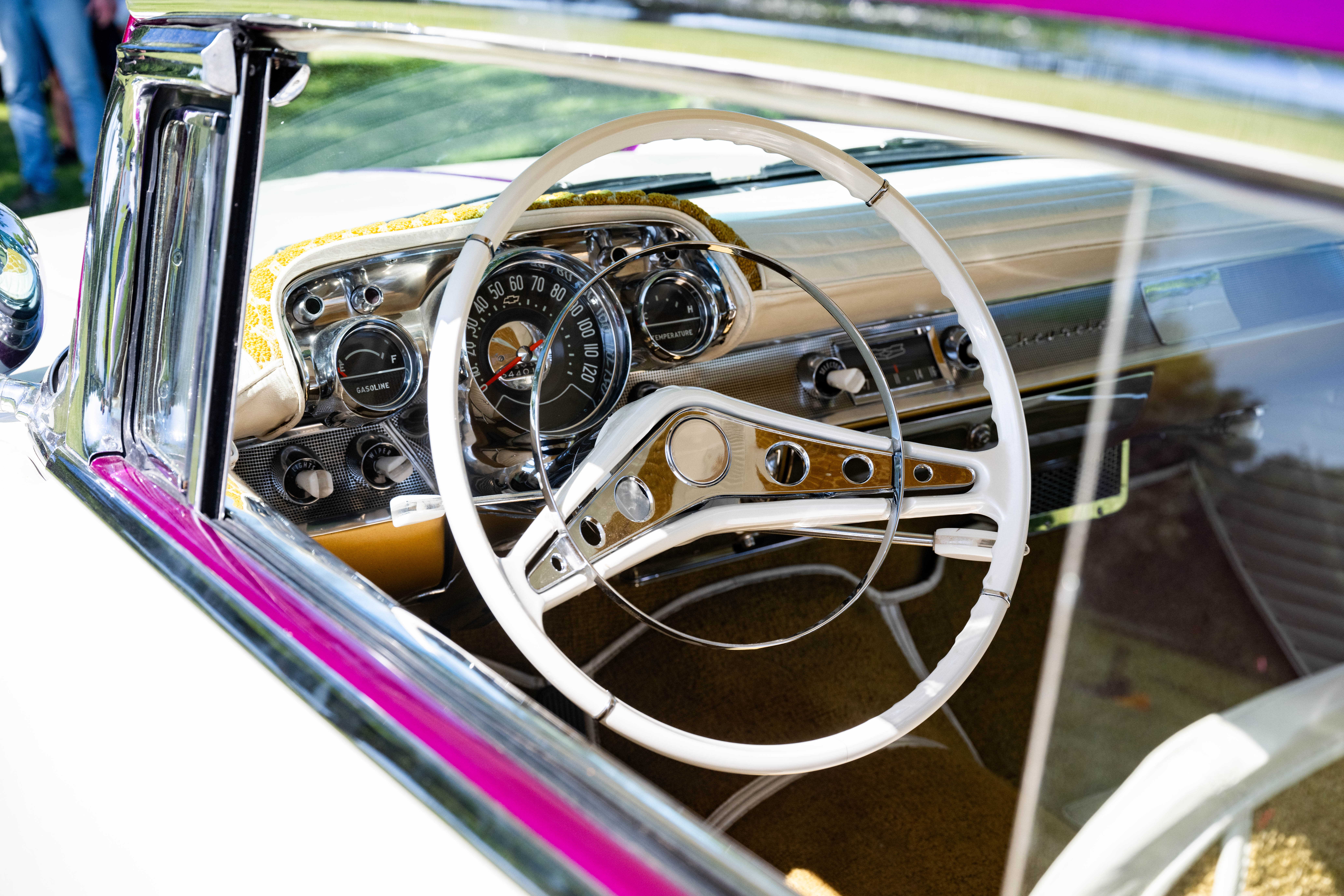 Nevertheless, after the restoration, El Capitola began to look even better. And despite the garish colors characteristic of George Barris' style of the 60s, Sam Barris' hand is undoubtedly traced in the lines and features of the body: the elder Barris, on the one hand, does not do anything radical and follows the laws of the custom scene of the coming reactive era - and at the same time inexorably brings his own features, defining new elements of the upcoming style. George Barris, again, did not miss the moment and sent several practical manuals to the press, which described in detail several techniques used in the construction of El Capitola. But, by the way, numerous articles demonstrating how to pull off one or another technique when building a car with your own hands is one of those things for which many on the custom stage are unconditionally grateful to Comrade George.
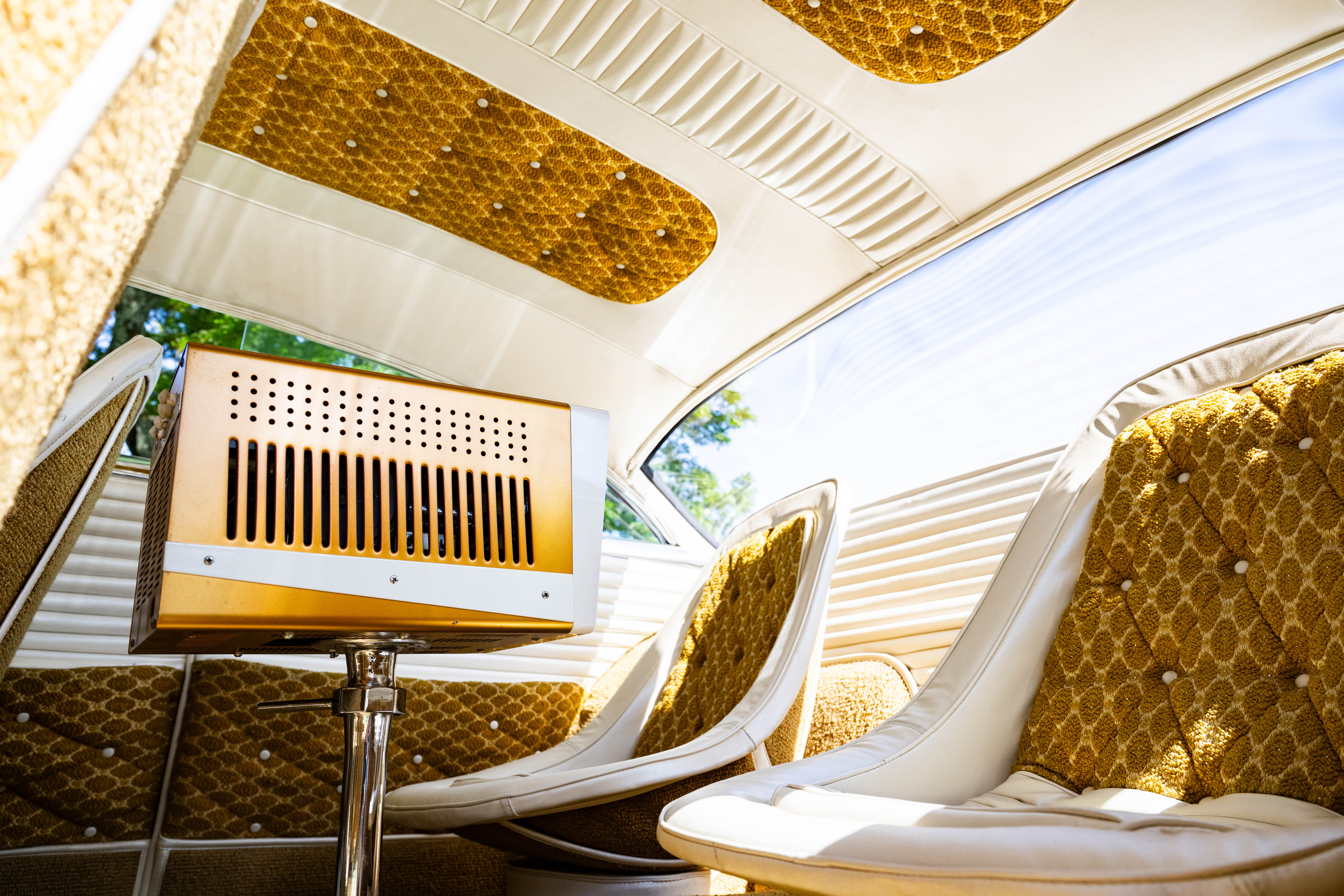 Nevertheless, after the restoration, El Capitola began to look even better. And despite the garish colors characteristic of George Barris' style of the 60s, Sam Barris' hand is undoubtedly traced in the lines and features of the body: the elder Barris, on the one hand, does not do anything radical and follows the laws of the custom scene of the coming reactive era - and at the same time inexorably brings his own features, defining new elements of the upcoming style. George Barris, again, did not miss the moment and sent several practical manuals to the press, which described in detail several techniques used in the construction of El Capitola. But, by the way, numerous articles demonstrating how to pull off one or another technique when building a car with your own hands is one of those things for which many on the custom stage are unconditionally grateful to Comrade George.
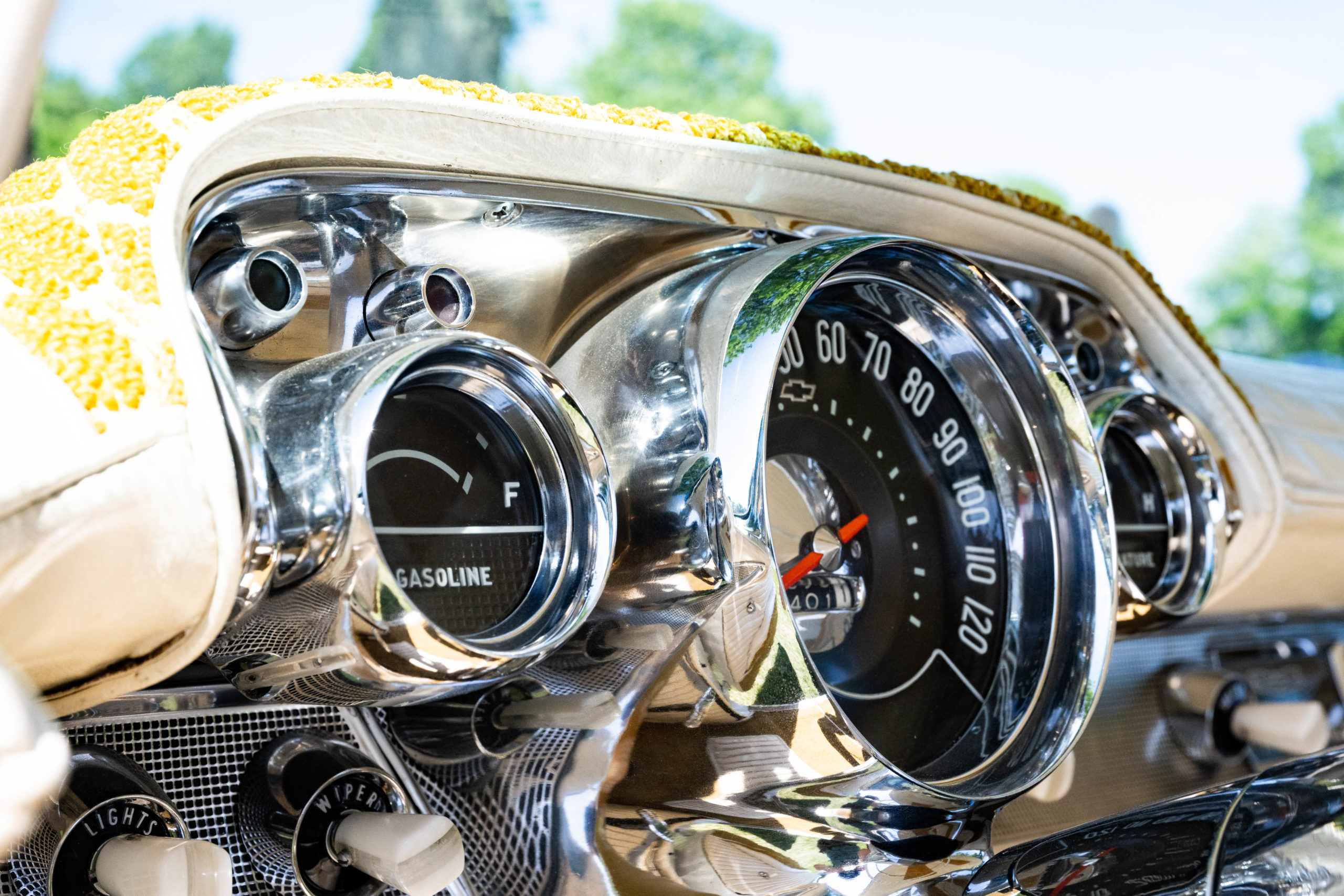 Nevertheless, after the restoration, El Capitola began to look even better. And despite the garish colors characteristic of George Barris' style of the 60s, Sam Barris' hand is undoubtedly traced in the lines and features of the body: the elder Barris, on the one hand, does not do anything radical and follows the laws of the custom scene of the coming reactive era - and at the same time inexorably brings his own features, defining new elements of the upcoming style. George Barris, again, did not miss the moment and sent several practical manuals to the press, which described in detail several techniques used in the construction of El Capitola. But, by the way, numerous articles demonstrating how to pull off one or another technique when building a car with your own hands is one of those things for which many on the custom stage are unconditionally grateful to Comrade George.
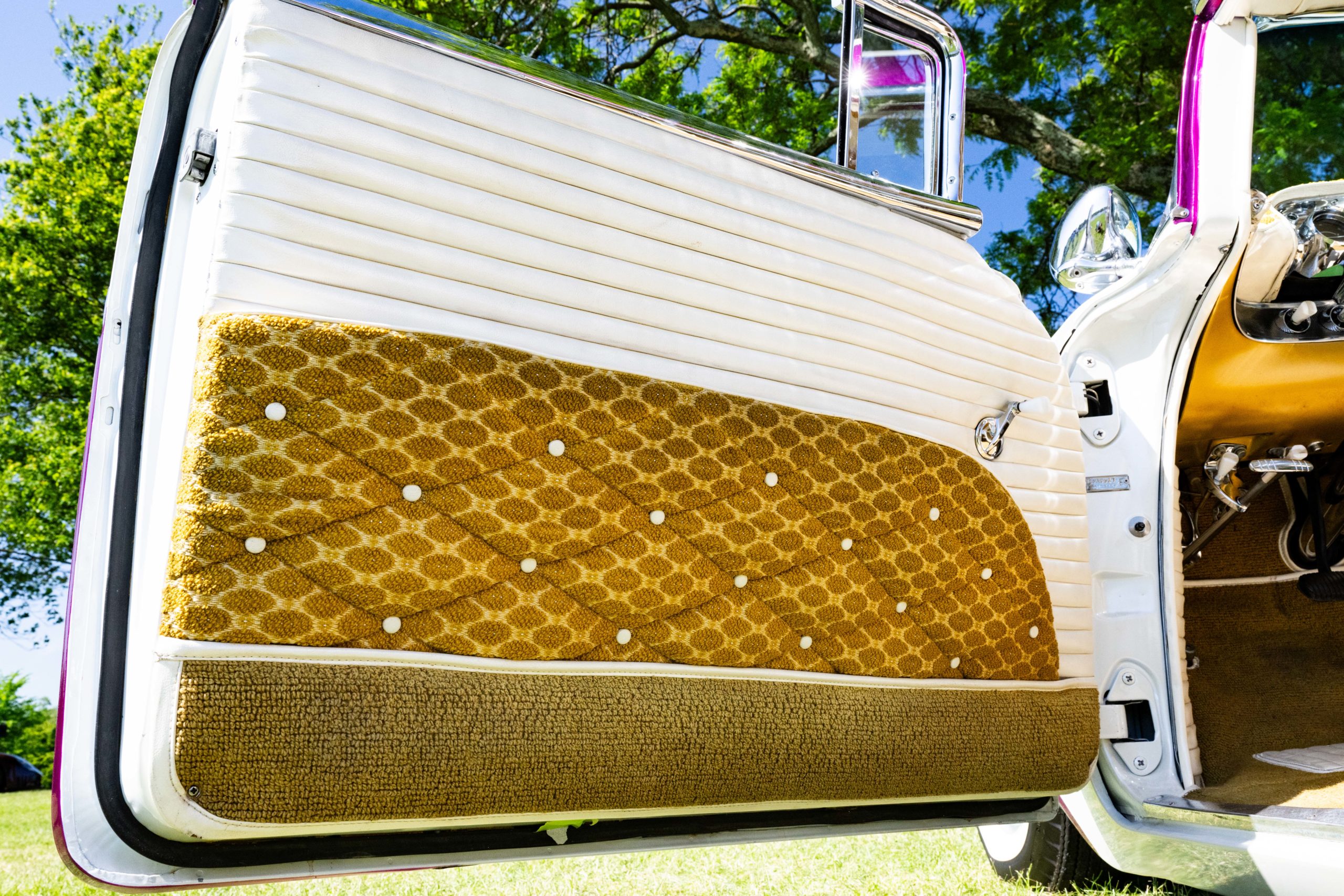 Nevertheless, after the restoration, El Capitola began to look even better. And despite the garish colors characteristic of George Barris' style of the 60s, Sam Barris' hand is undoubtedly traced in the lines and features of the body: the elder Barris, on the one hand, does not do anything radical and follows the laws of the custom scene of the coming reactive era - and at the same time inexorably brings his own features, defining new elements of the upcoming style. George Barris, again, did not miss the moment and sent several practical manuals to the press, which described in detail several techniques used in the construction of El Capitola. But, by the way, numerous articles demonstrating how to pull off one or another technique when building a car with your own hands is one of those things for which many on the custom stage are unconditionally grateful to Comrade George.
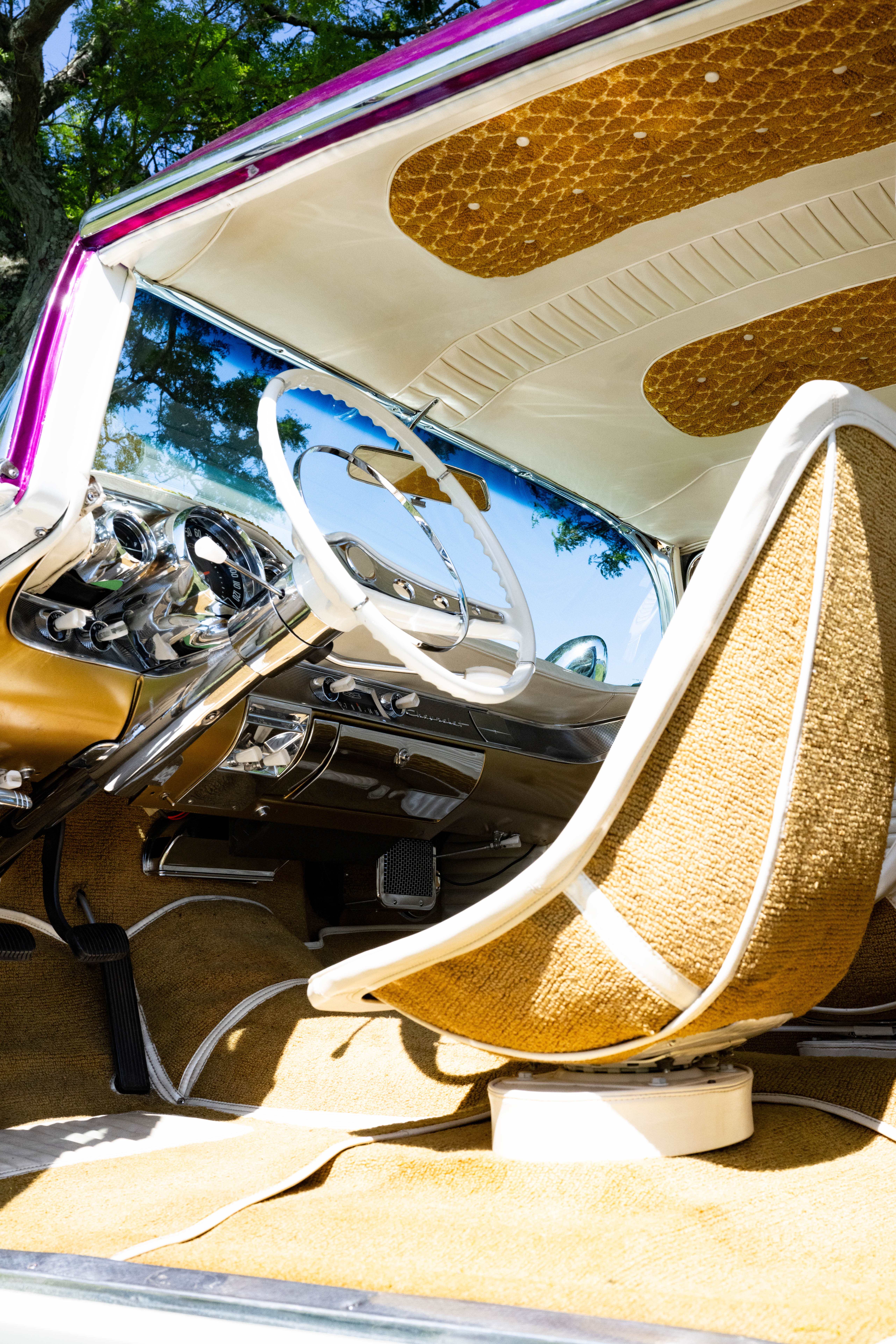 Nevertheless, after the restoration, El Capitola began to look even better. And despite the garish colors characteristic of George Barris' style of the 60s, Sam Barris' hand is undoubtedly traced in the lines and features of the body: the elder Barris, on the one hand, does not do anything radical and follows the laws of the custom scene of the coming reactive era - and at the same time inexorably brings his own features, defining new elements of the upcoming style. George Barris, again, did not miss the moment and sent several practical manuals to the press, which described in detail several techniques used in the construction of El Capitola. But, by the way, numerous articles demonstrating how to pull off one or another technique when building a car with your own hands is one of those things for which many on the custom stage are unconditionally grateful to Comrade George.
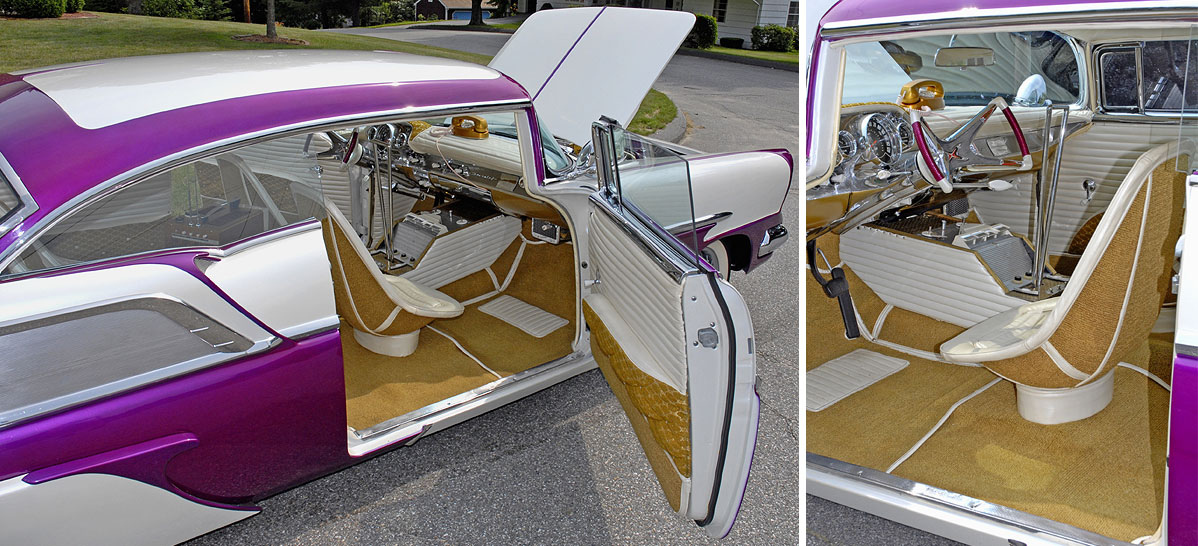 Nevertheless, after the restoration, El Capitola began to look even better. And despite the garish colors characteristic of George Barris' style of the 60s, Sam Barris' hand is undoubtedly traced in the lines and features of the body: the elder Barris, on the one hand, does not do anything radical and follows the laws of the custom scene of the coming reactive era - and at the same time inexorably brings his own features, defining new elements of the upcoming style. George Barris, again, did not miss the moment and sent several practical manuals to the press, which described in detail several techniques used in the construction of El Capitola. But, by the way, numerous articles demonstrating how to pull off one or another technique when building a car with your own hands is one of those things for which many on the custom stage are unconditionally grateful to Comrade George.
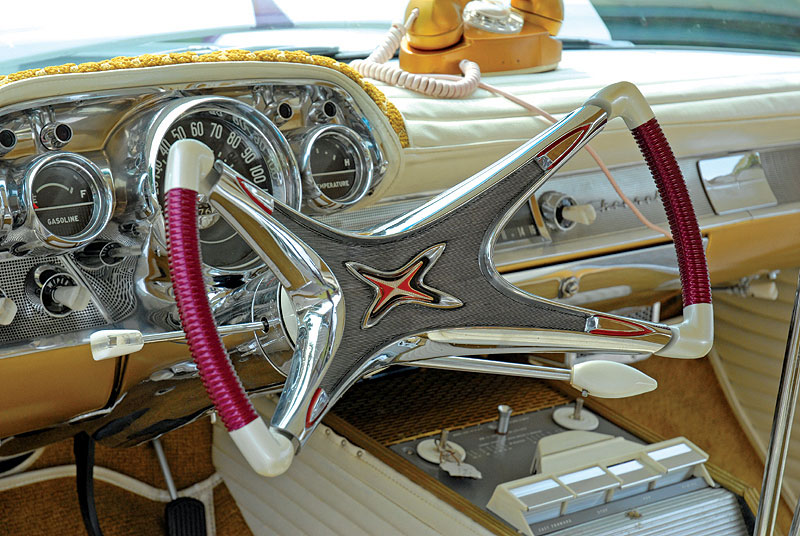 Nevertheless, after the restoration, El Capitola began to look even better. And despite the garish colors characteristic of George Barris' style of the 60s, Sam Barris' hand is undoubtedly traced in the lines and features of the body: the elder Barris, on the one hand, does not do anything radical and follows the laws of the custom scene of the coming reactive era - and at the same time inexorably brings his own features, defining new elements of the upcoming style. George Barris, again, did not miss the moment and sent several practical manuals to the press, which described in detail several techniques used in the construction of El Capitola. But, by the way, numerous articles demonstrating how to pull off one or another technique when building a car with your own hands is one of those things for which many on the custom stage are unconditionally grateful to Comrade George.
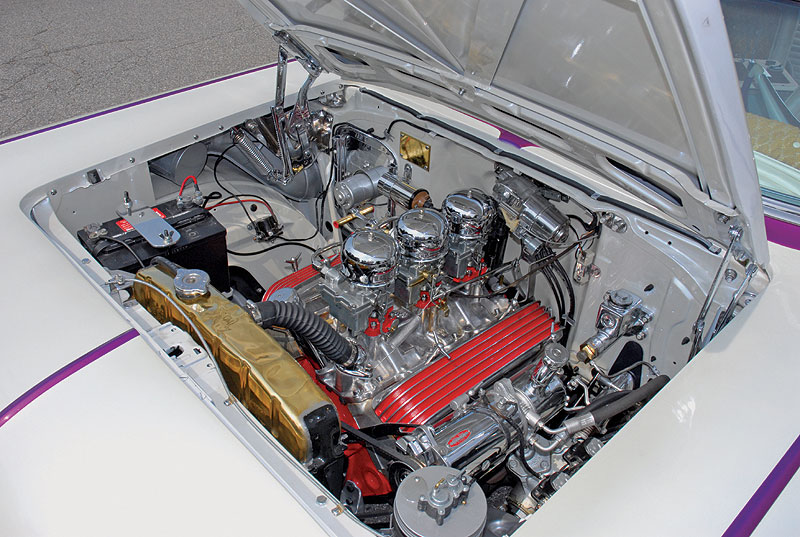 Nevertheless, after the restoration, El Capitola began to look even better. And despite the garish colors characteristic of George Barris' style of the 60s, Sam Barris' hand is undoubtedly traced in the lines and features of the body: the elder Barris, on the one hand, does not do anything radical and follows the laws of the custom scene of the coming reactive era - and at the same time inexorably brings his own features, defining new elements of the upcoming style. George Barris, again, did not miss the moment and sent several practical manuals to the press, which described in detail several techniques used in the construction of El Capitola. But, by the way, numerous articles demonstrating how to pull off one or another technique when building a car with your own hands is one of those things for which many on the custom stage are unconditionally grateful to Comrade George.
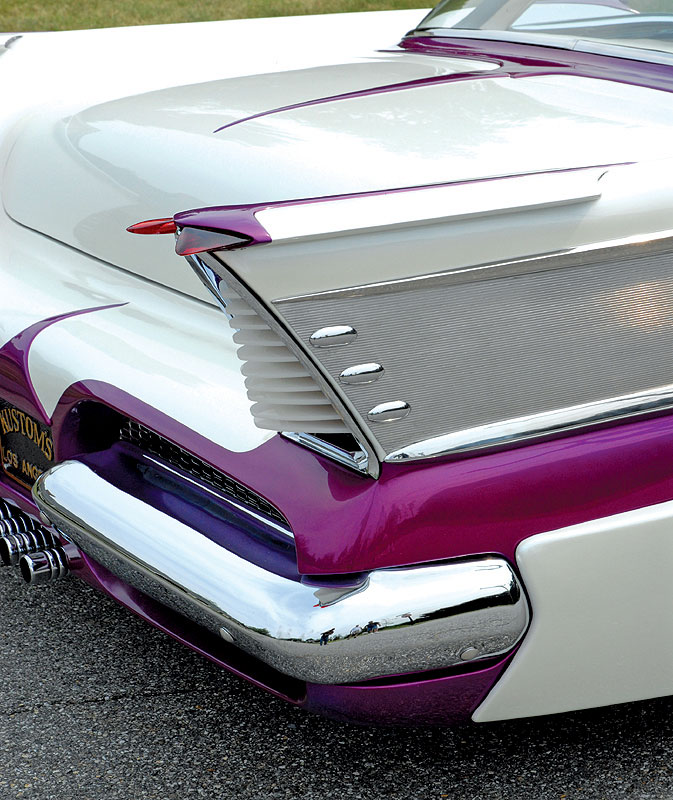 Nevertheless, after the restoration, El Capitola began to look even better. And despite the garish colors characteristic of George Barris' style of the 60s, Sam Barris' hand is undoubtedly traced in the lines and features of the body: the elder Barris, on the one hand, does not do anything radical and follows the laws of the custom scene of the coming reactive era - and at the same time inexorably brings his own features, defining new elements of the upcoming style. George Barris, again, did not miss the moment and sent several practical manuals to the press, which described in detail several techniques used in the construction of El Capitola. But, by the way, numerous articles demonstrating how to pull off one or another technique when building a car with your own hands is one of those things for which many on the custom stage are unconditionally grateful to Comrade George.
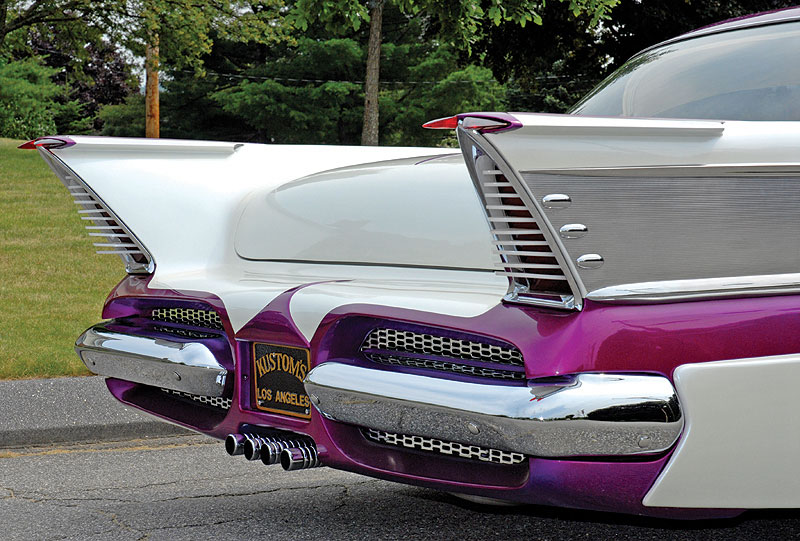 Nevertheless, after the restoration, El Capitola began to look even better. And despite the garish colors characteristic of George Barris' style of the 60s, Sam Barris' hand is undoubtedly traced in the lines and features of the body: the elder Barris, on the one hand, does not do anything radical and follows the laws of the custom scene of the coming reactive era - and at the same time inexorably brings his own features, defining new elements of the upcoming style. George Barris, again, did not miss the moment and sent several practical manuals to the press, which described in detail several techniques used in the construction of El Capitola. But, by the way, numerous articles demonstrating how to pull off one or another technique when building a car with your own hands is one of those things for which many on the custom stage are unconditionally grateful to Comrade George.
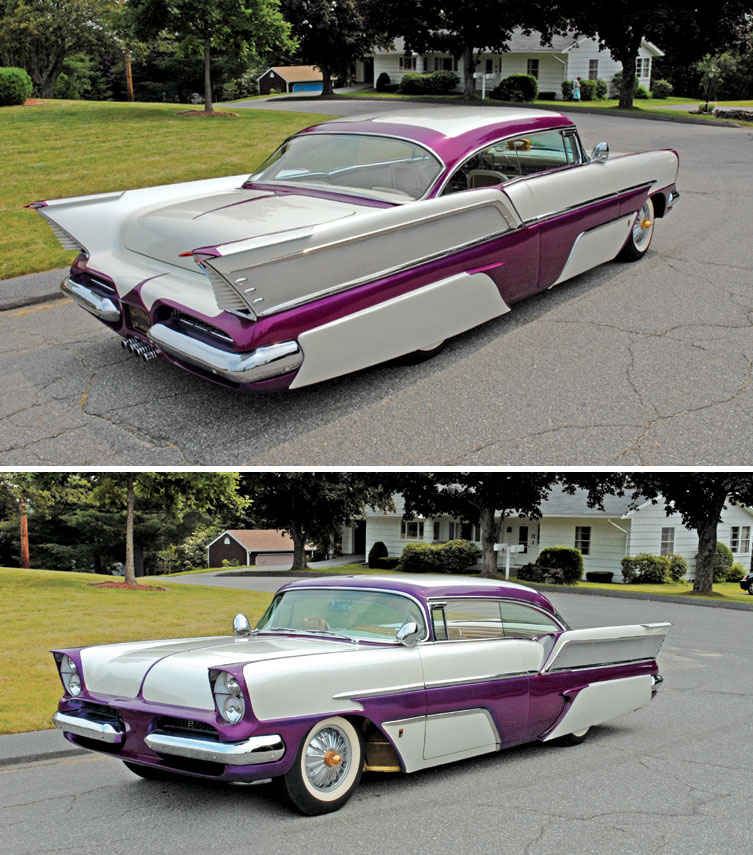 Nevertheless, after the restoration, El Capitola began to look even better. And despite the garish colors characteristic of George Barris' style of the 60s, Sam Barris' hand is undoubtedly traced in the lines and features of the body: the elder Barris, on the one hand, does not do anything radical and follows the laws of the custom scene of the coming reactive era - and at the same time inexorably brings his own features, defining new elements of the upcoming style. George Barris, again, did not miss the moment and sent several practical manuals to the press, which described in detail several techniques used in the construction of El Capitola. But, by the way, numerous articles demonstrating how to pull off one or another technique when building a car with your own hands is one of those things for which many on the custom stage are unconditionally grateful to Comrade George.
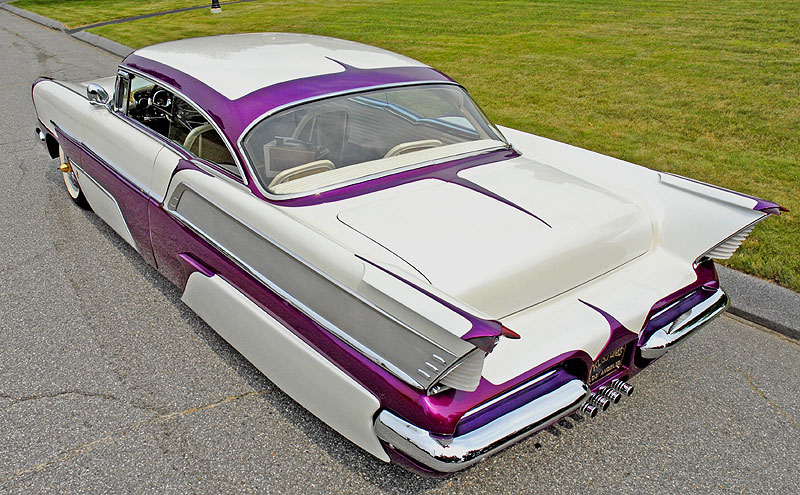 Nevertheless, after the restoration, El Capitola began to look even better. And despite the garish colors characteristic of George Barris' style of the 60s, Sam Barris' hand is undoubtedly traced in the lines and features of the body: the elder Barris, on the one hand, does not do anything radical and follows the laws of the custom scene of the coming reactive era - and at the same time inexorably brings his own features, defining new elements of the upcoming style. George Barris, again, did not miss the moment and sent several practical manuals to the press, which described in detail several techniques used in the construction of El Capitola. But, by the way, numerous articles demonstrating how to pull off one or another technique when building a car with your own hands is one of those things for which many on the custom stage are unconditionally grateful to Comrade George.
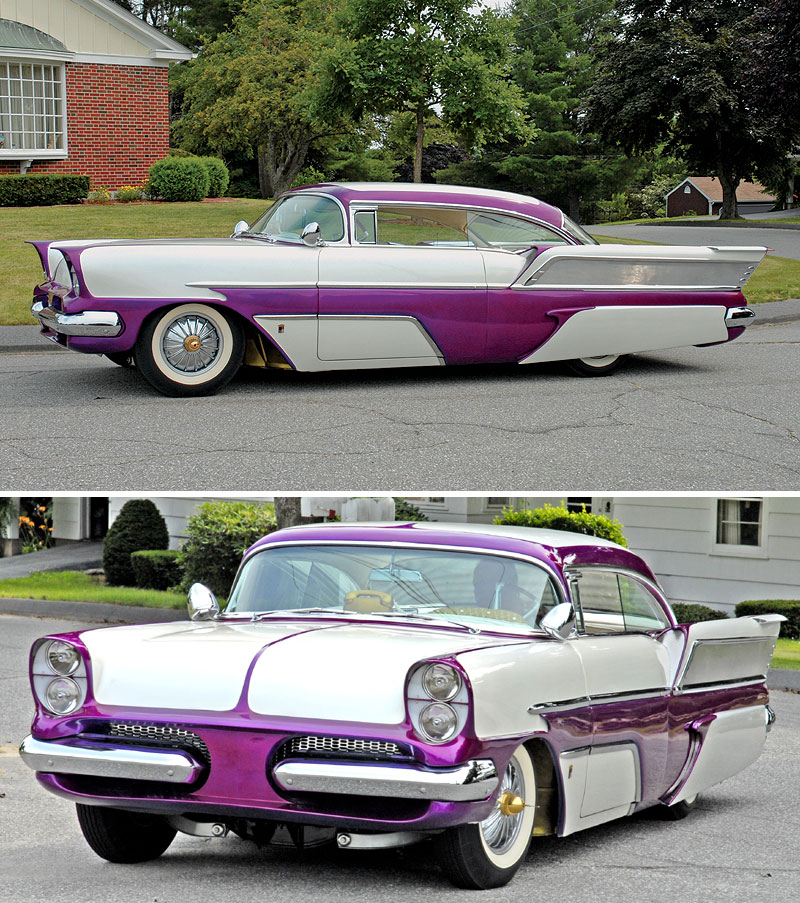 Nevertheless, after the restoration, El Capitola began to look even better. And despite the garish colors characteristic of George Barris' style of the 60s, Sam Barris' hand is undoubtedly traced in the lines and features of the body: the elder Barris, on the one hand, does not do anything radical and follows the laws of the custom scene of the coming reactive era - and at the same time inexorably brings his own features, defining new elements of the upcoming style. George Barris, again, did not miss the moment and sent several practical manuals to the press, which described in detail several techniques used in the construction of El Capitola. But, by the way, numerous articles demonstrating how to pull off one or another technique when building a car with your own hands is one of those things for which many on the custom stage are unconditionally grateful to Comrade George.
George Barris lived to be 89 years old and left us peacefully, in his sleep, in 2015. Without George, his irrepressible energy and willingness to take on even the most controversial projects without the slightest shame, Barris Kustoms did not live long, and in February 2024, the closure of the famous workshop was announced. The era ended quietly, like the rustle of an overturned page. And yet – again, thanks to George’s desire to break into all possible niches – the Barris brothers’ cars will live on for a long time: if not even in their original form, then in books, magazines, on monitors and TV screens. And, most importantly, they will continue to inspire future generations of car fans, continue to attract people to the custom scene – and therefore Barris’ contribution to automotive culture, if it is possible to evaluate it in any unambiguous way, then it is still very, very early.