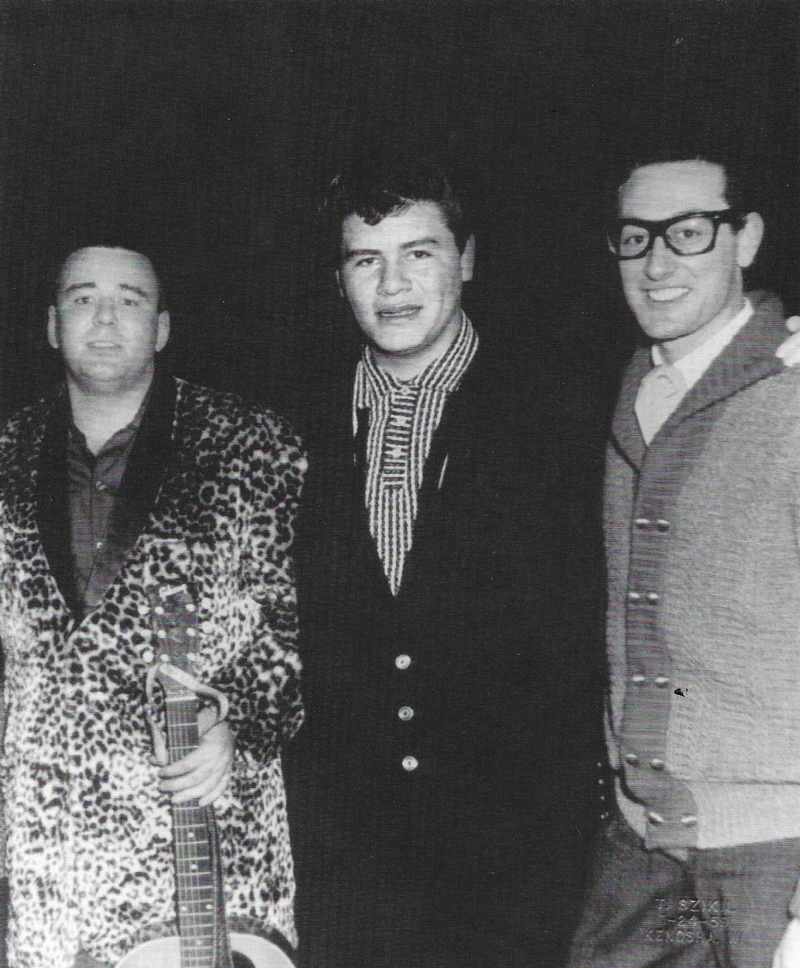

Dear friends, today is February 3rd, exactly 67 years ago in 1959, music died. We all know this sad date and what it is marked by. But despite repeated investigations and general cultural significance, this day is primarily associated with the death of Buddy Holly. And what do we know about the other two stars that literally fell to the sinful earth, besides their names? Today I want to offer you a reflection on the cultural footprint of the third of this sad list of rock’n’roll fathers, Jiles Perry Richardson Jr., better known as The Big Bopper.
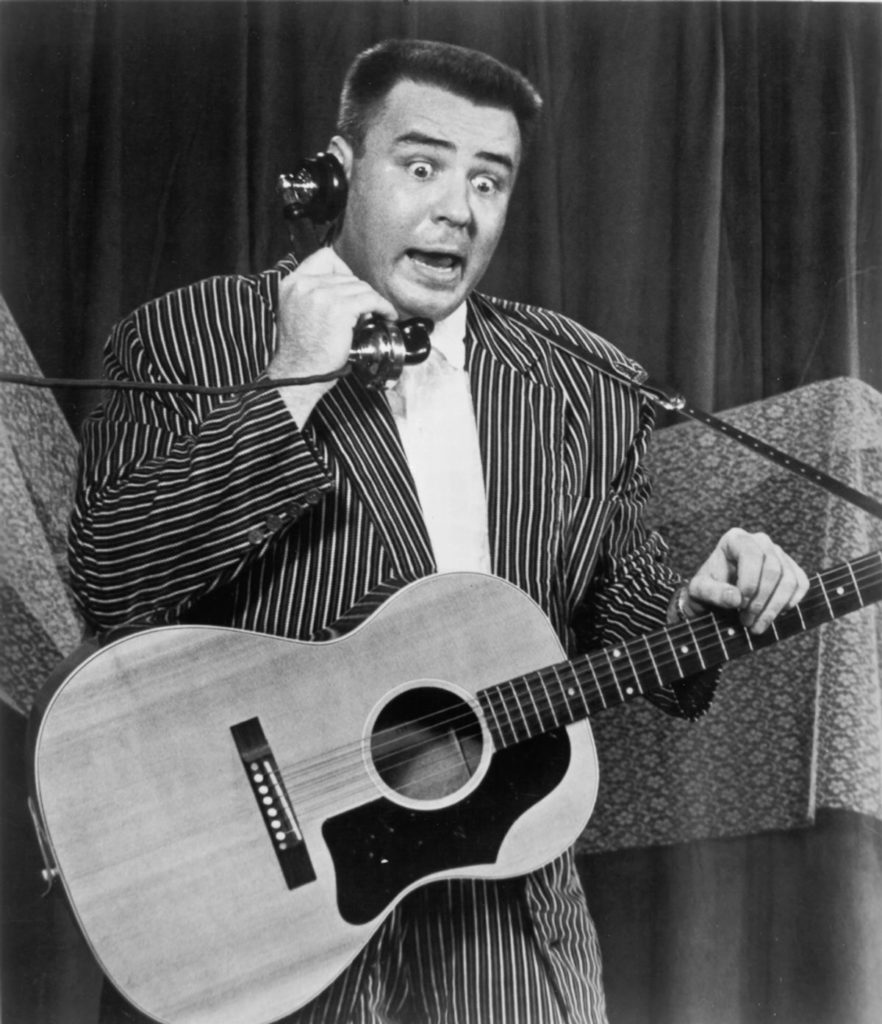
The first association with the work of this artist, except for his most powerful stage name, is the legendary number with a phone call to the song Chantilly Lace. This song itself was released a year before the death of the artist, in 1958. And the most important thing is not her staged artistry, but the fact that for the first time a video was added to the music as an integral part of it.
As a radio DJ who adopted his catchy pseudonym while working on radio, Jiles foresaw that music videos would be the next step in the world of musical entertainment. Video clips in a completely modern sense, as an independent multimedia genre, and not as a simple documentation of a musical performance. And this is a couple of decades before the beginning of the MTV era and a little less than 3/4 of a century before its end. Of course, the Ed Sullivan show has already been broadcast for a good decade, but a video clip and a live performance in front of the camera are two different things.
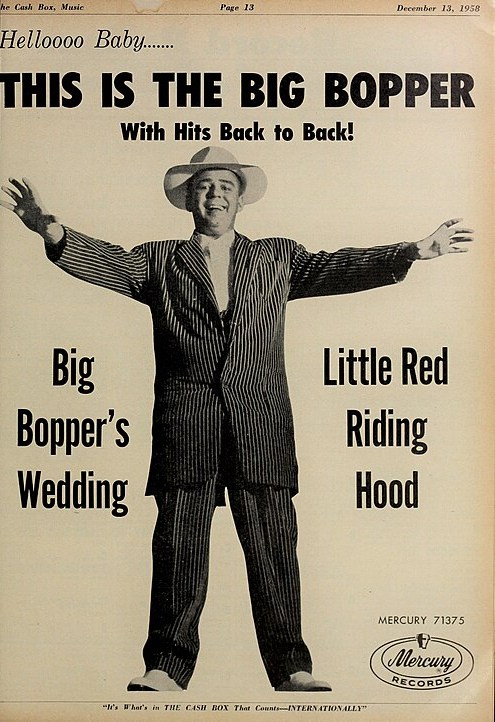
Big Bopper’s innovative approach to entertainment technology was quite modern. After shooting his three music videos, which he also packed into one shooting day, Bopper not only intended to put this business on stream, but also thought about unique distribution and monetization mechanisms. According to Bill Griggs, editor-in-chief of Rockin’50s magazine, The Big Bopper had the idea of creating a video music machine in his head. This retrofuturistic marvel of technology was supposed to work exactly the same as the classic jukebox, but with one obvious difference.
What could be modern about it? Approach. If Jiles had lived in the late USSR, he would have been the first to open video salons. And if you lived in our time, you would become the star of short videos on the screens of our smart mobile phones. And if Jiles were alive right now, he would generously use artificial intelligence, performing duets with Suno and other neural networks. And not out of laziness and thirst for “cost optimization”, but for the purpose of creative search.
The Big Bopper – White Lightning
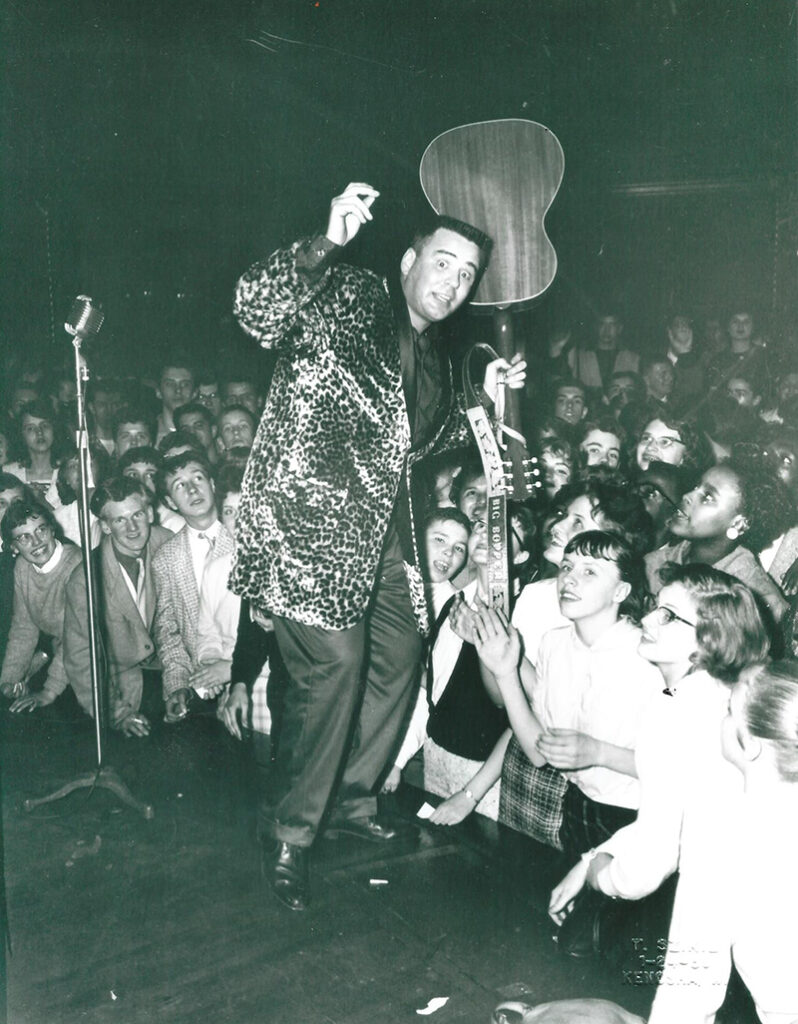
Another thing that became the standard for us, which was brought by the Big Bopper world, was the Big Bopper himself. Or rather, the concept of an artist-character. Yes, it wasn’t something completely new in the history of art, but making a mask out of your face and coming up with an alternative character story in a musical key was probably not the case. Well, now it looks like something self-evident, not only for musicians performing on stage, but also for such children of the unforeseen future from the fifties, like video bloggers.
In the same piggy bank of the first steps, you can add such a thing as challenges. Because 122 hours of continuous broadcasting as a radio DJ is a record set by Big Bopper in 1957 – what is it like a challenge?! It’s pointless, risky, and wild, but I really want to get a glimpse of it. I am sure that if Jiles were alive, he would have set a lot of wild records already on stage, then he would have organized something like the first reality show. For example, the casting of brides called The Big Bopper’s Wedding.
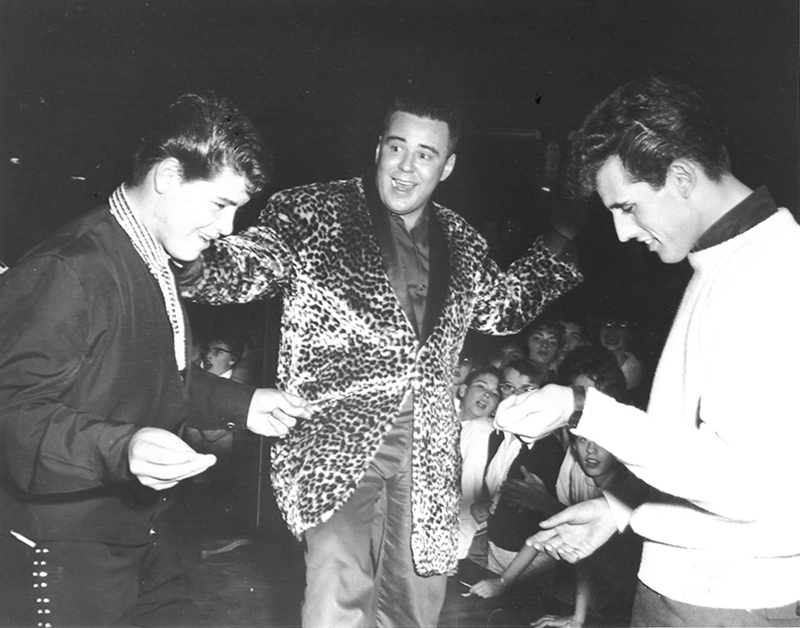
If Buddy Holly was able to make rock’n’roll romantic and diverse, then Big Bopper was able to make it fun and shocking. Something that is difficult to break away from and capable of capturing a very wide audience.
Thus, in my opinion, Big Bopper is the forerunner and godfather of all modern entertainment media, and we can hear the echo of his work in the most unexpected places, both secret and explicit. For example, one of the classics of cyberpunk in his quadrology “Ware” called boppers a race of intelligent robots. Guess what the name of the leaders of this nation was.
Well, now I’m going to ask you to put aside this stuffy profundity and do what Big Bopper himself would like us to do: have a lot of fun and listen to music. Music that has died, but is still more alive than all the living.